Wooden Swing Set for Toddlers: Honest Review
The moment my four-year-old spotted the KidKraft Appleton Wooden Swing Set through the back window, she pressed both palms flat against the glass and said nothing, which was somehow louder than anything she’d said all week.
It was a Saturday in late April, the kind that smells like cut grass and sunscreen even before noon, when my daughter finally understood that the thing her father and I had been assembling in the backyard for two weekends running was actually, finally, hers to climb. She launched herself out the back door still wearing her pajama top. No shoes. She grabbed the swing chain before we’d even finished our coffee, and the next three hours were a blur of pumping legs and bark mulch and the particular creak of new wood settling into itself. That sound, I’d learn, would become the background track of our entire spring.
The First Time I Saw It
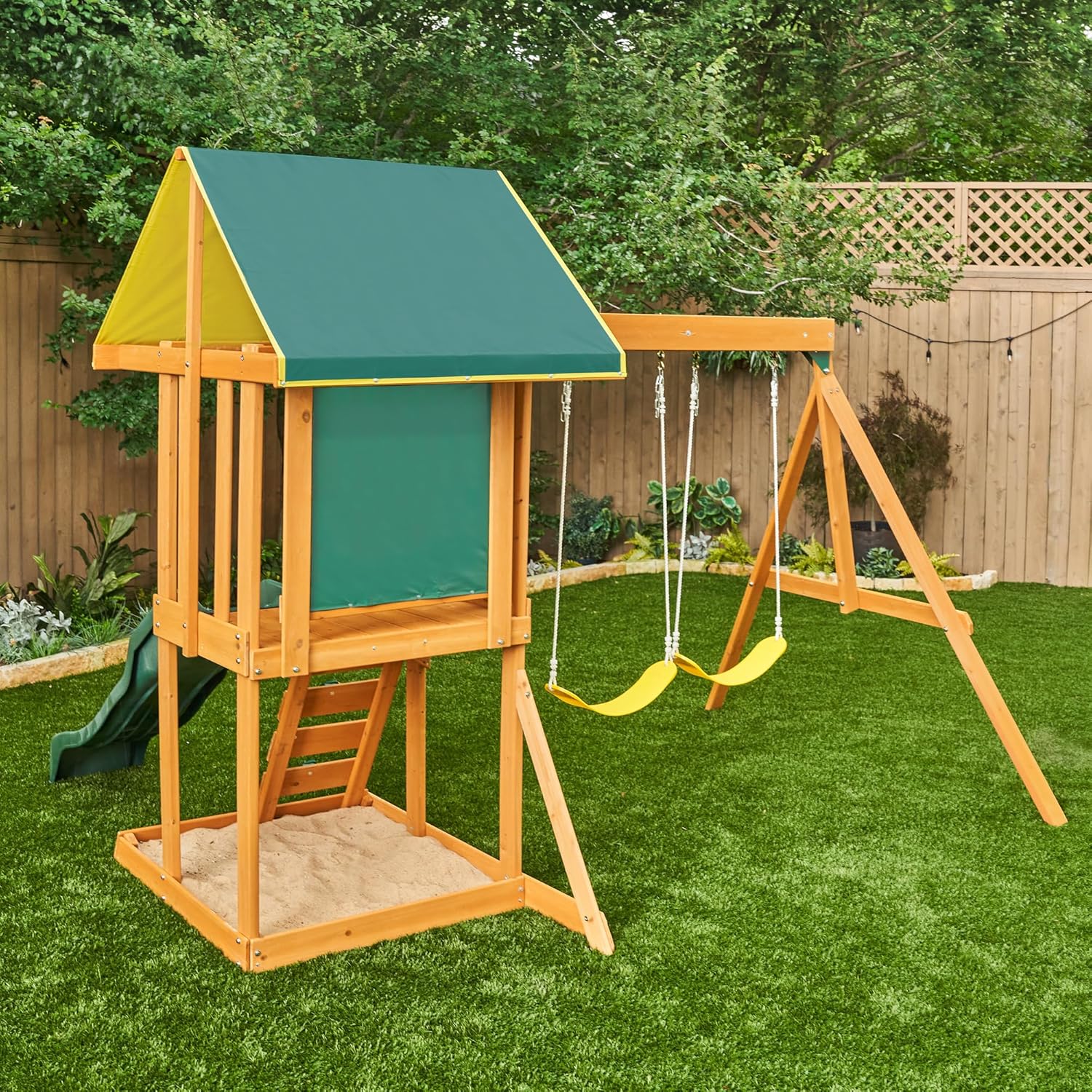
I found the KidKraft Appleton Wooden Swing Set the way I find most things I eventually love: at someone else’s house, slightly envious. A friend had one installed in her backyard for her twin boys, and every playdate ended the same way, with the kids refusing to come in and the adults extending the visit by another forty-five minutes because honestly, why not. I went home and searched it up the same night. The classic silhouette, the warm natural wood finish, the lack of plastic primary colors screaming from every angle. It looked like something out of a catalog spread for a farmhouse children’s line, except it was real and apparently available and shipping to my zip code.
I added it to my cart and stared at it for eleven days before committing. Then my daughter turned four, and the decision made itself.
How It Actually Plays / Works
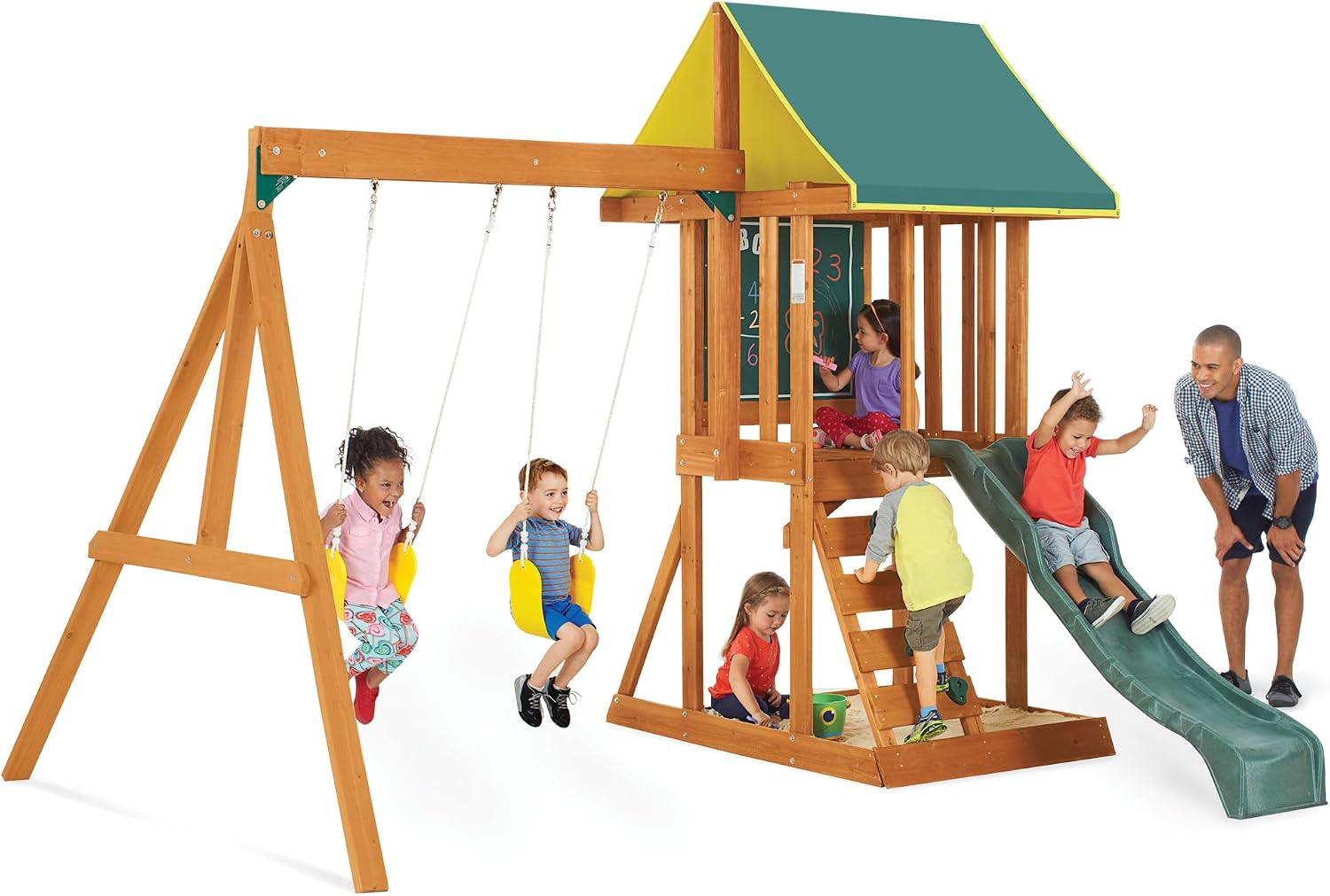
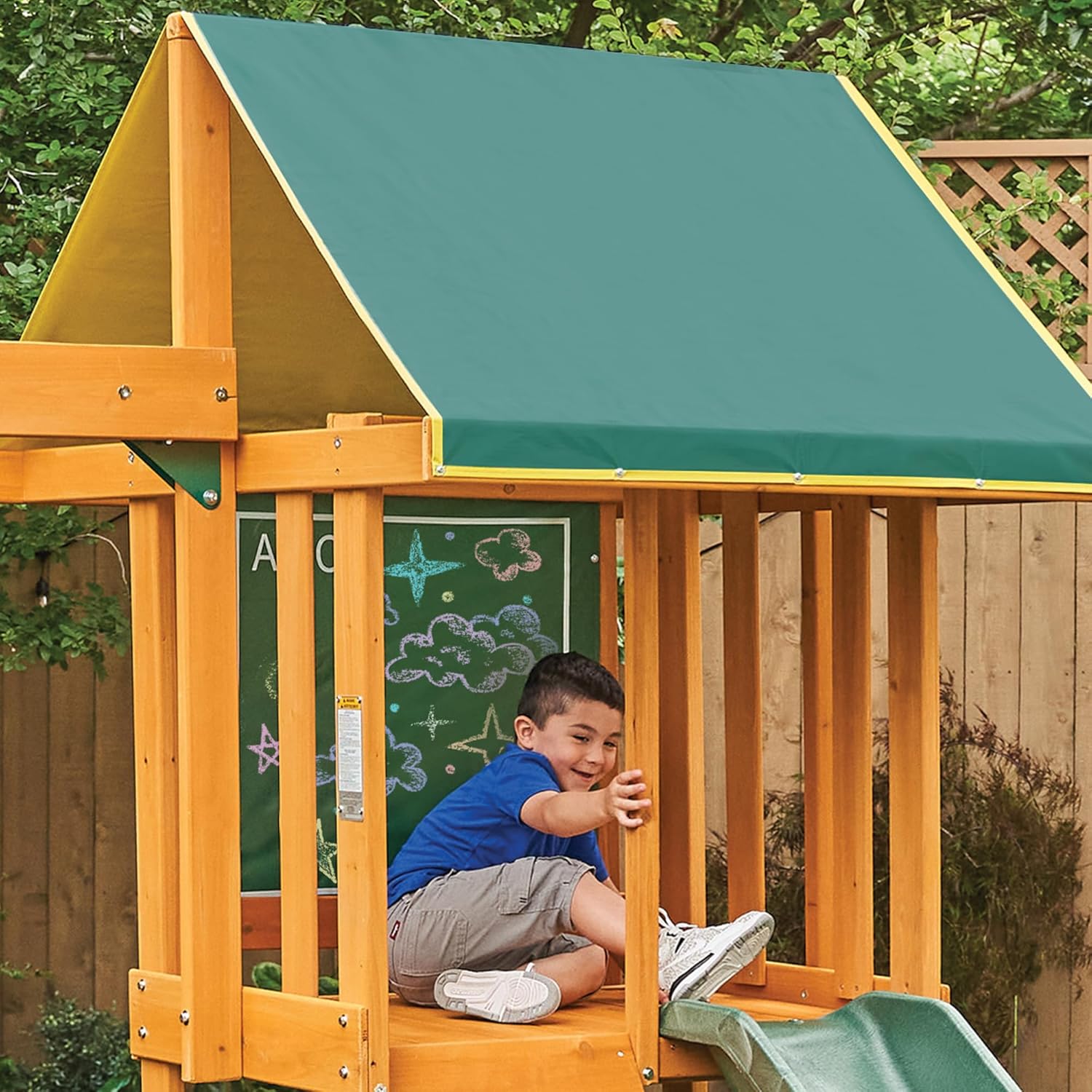
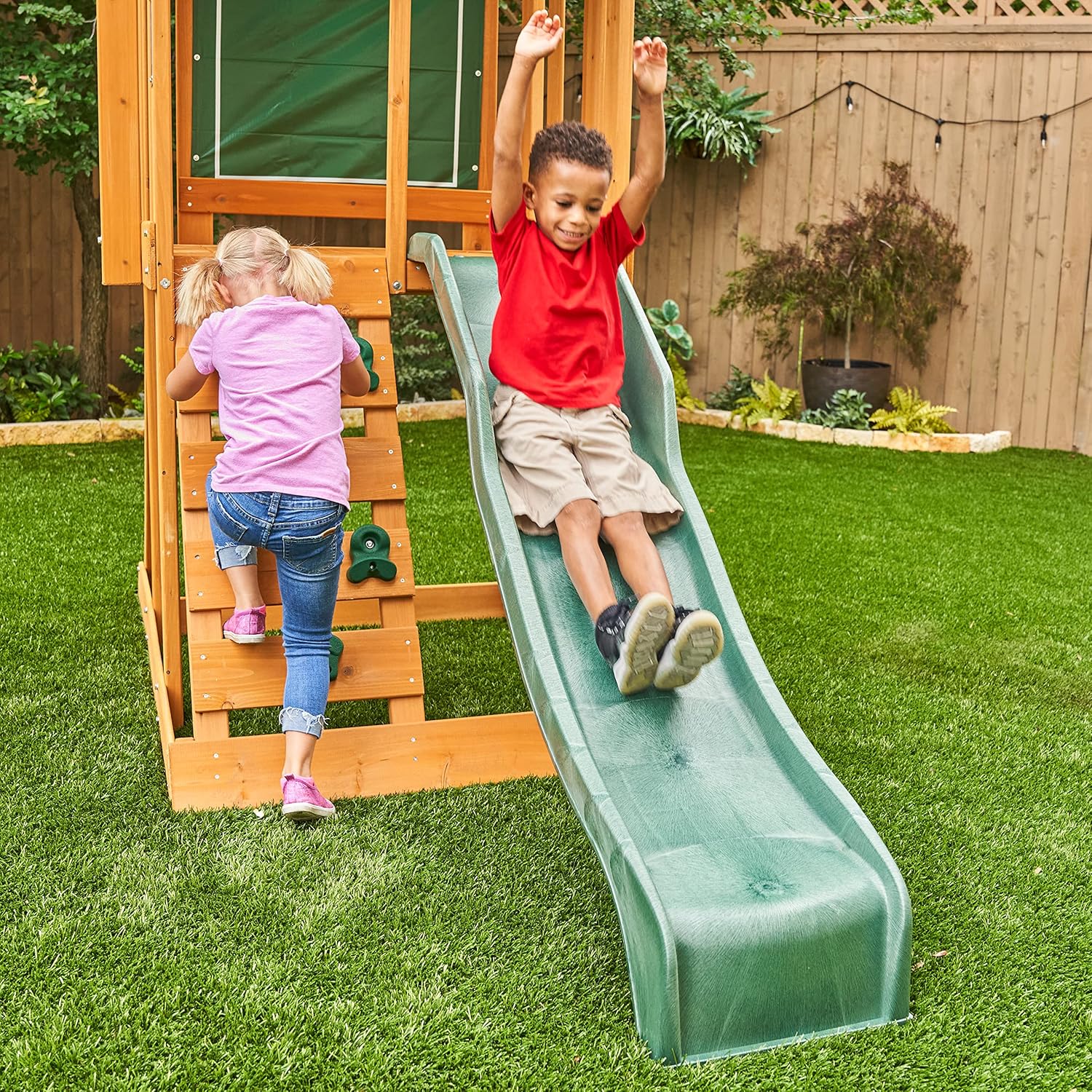
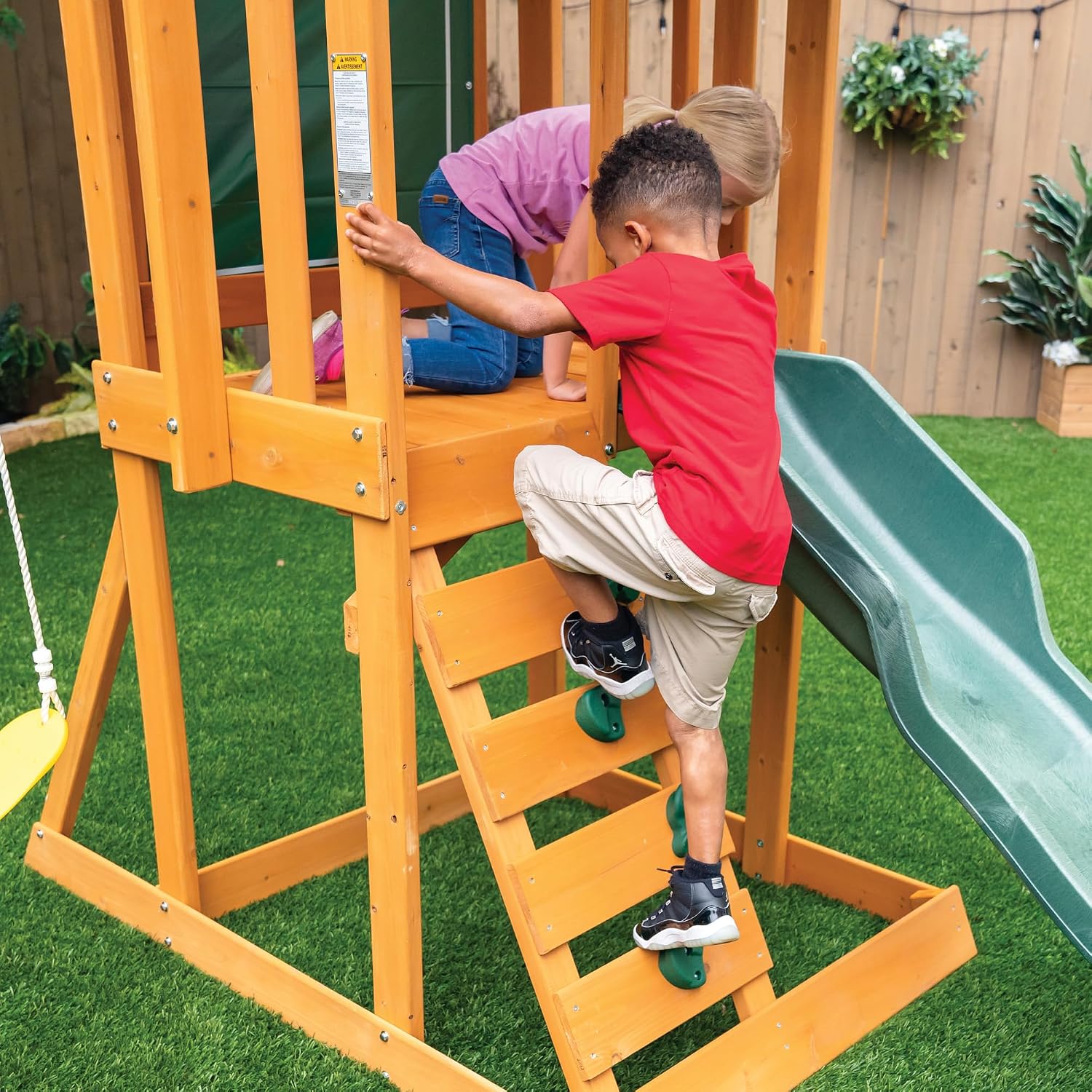
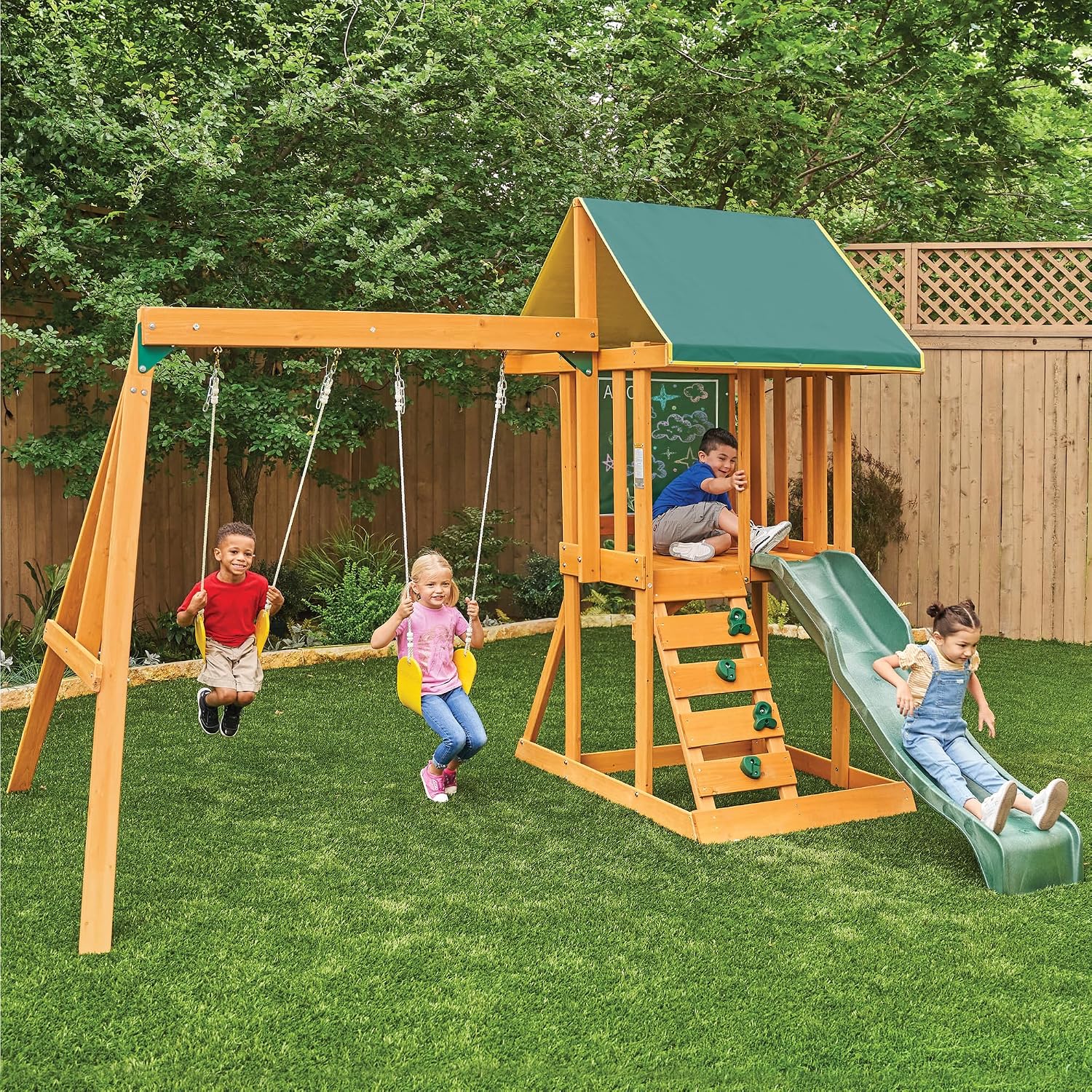
The Appleton is a preschool outdoor play structure built around the things kids ages three to five actually want to do: swing, slide, and climb something that feels just risky enough to be exciting. The set includes two belt swings, a wave slide, and a lower-level activity panel. The wood is solid, not composite, and the finish has that slightly rough-hewn texture that somehow communicates durability before you’ve even read a single spec. In the first hour, my daughter used the slide approximately thirty times and did not touch the activity panel once. By week two, the activity panel had become a “ticket booth.” By month two, the swing was the main event, and she’d taught herself to pump her legs independently, which, if you’ve witnessed that developmental click happen in real time, you know is one of those small enormous moments.
“This is the kind of toddler outdoor play structure that earns its footprint by becoming part of the family routine, not just the backyard scenery.”
The wood does require some seasonal maintenance. We applied a water-sealant coat after the first summer, which the instructions recommend but don’t exactly emphasize. Worth knowing going in. According to the American Academy of Pediatrics’ guidelines on outdoor play and physical activity, consistent access to active outdoor equipment meaningfully supports gross motor development in the preschool years, and in practice, this set delivers exactly that kind of daily-use access without requiring a field trip to a public park.
The Real-Life Scenarios I Used It In
Scenario 1: Sunday Morning, Pajama Tops and No Plans
Sunday mornings at our house are slow by design. Coffee, cartoons, the general chaos of small-child weekend energy with nowhere to direct it. The Appleton became our Sunday morning exhaust valve. I’d open the back door, my daughter would beeline for the swing, and I’d get a full twenty minutes to drink something warm while watching her through the kitchen window. The set is stable enough that I wasn’t running outside every two minutes, which matters more than people admit when you’re trying to hold onto the last scraps of a slow morning. The natural wood blends into the yard rather than demanding visual attention, which I’d underestimated as a feature until I saw how it looked against the fence.
Scenario 2: Tuesday After Preschool Pickup
Preschool pickup is a specific kind of chaos, the kid is simultaneously exhausted and wired, a combination that makes indoor play nearly impossible. On Tuesdays especially, we go straight to the backyard. The transition from carseat to swing set takes about forty-five seconds, and something about the physical motion of swinging genuinely seems to regulate her after a long school day. This tracks with what HealthyChildren.org notes about proprioceptive play and its role in sensory processing for preschool-age kids. Whether it’s the science or just the fresh air, I don’t overthink it. It works.
Scenario 3: The Grandparent Visit Weekend
When my in-laws visited in July, the swing set became the unexpected centerpiece of the entire weekend. My father-in-law, who has opinions about everything built from wood, spent ten minutes inspecting the joints and post anchoring before declaring it “solid.” My daughter performed for her grandparents on the slide approximately forty-seven times. There’s something about outdoor play equipment that creates a natural audience moment, kids showing off, grandparents applauding, everyone outside instead of arranged awkwardly in the living room. The Appleton gave the visit a shape and rhythm it wouldn’t have had otherwise. Genuinely did not expect that.
What Other Parents Are Saying
With over 2,200 ratings and a 4.3 average, the pattern in the feedback is consistent: parents love the look, kids love the swings, and the assembly process is the universal caveat that comes up in nearly every detailed review.
The assembly note is worth taking seriously. Multiple reviewers describe a two-adult, full-weekend commitment, and that tracks with our experience. Factor that time in before the birthday morning reveal.
Who Should Skip It
If your backyard is small, sloped, or fenced in a way that limits clearance, this isn’t the right fit. Preschool active play structures at this scale require meaningful fall-zone clearance on all sides, and the Appleton is not a compact set. If you have a child under three, the belt swings and the climbing entry point are not developmentally appropriate yet, and the age range of three to five is genuinely the sweet spot, not a marketing stretch. Families looking for a set that grows with kids into elementary school will likely feel the limitations by age six or seven, when the structure starts to feel too small for bigger kids. And if you’re not prepared for adult assembly that takes real time and two sets of hands, this one will frustrate you. This is not a quick Saturday afternoon project.
What It Replaces (or Complements) at Home
Before the Appleton, we had a small plastic slide that had been living on our back patio for two years past its useful life. It wobbled. The color had faded from primary red to a sad coral. My daughter had stopped using it before she turned three. The Appleton replaced it entirely, and also replaced a significant number of “can we go to the park?” requests that used to require me to pack a bag and drive somewhere. We still go to the park. But now the backyard is a destination in its own right. If you’re already working with a preschool pretend play setup indoors, this is a natural extension of that imaginative energy into the outdoor space. The swing set becomes a ship, a castle, a ticket booth, a stage. The structure is the starting point; the narrative is whatever your kid decides it is that afternoon.
FAQ
Is the Appleton actually appropriate for three-year-olds, or is that age a stretch?
Three is genuinely within range, with supervision. The belt swings accommodate smaller bodies, and the slide height is appropriate for the lower end of the preschool age bracket. That said, younger threes will need an adult nearby for the swing and slide transitions until they’ve built confidence with the structure.
Does the wood hold up through rain and winter?
Solid wood will weather without some maintenance. Applying a UV-protective sealant at the end of summer and again in early spring extends the finish significantly. We’ve kept ours through one full winter with no structural issues, though some surface weathering is normal and, honestly, looks fine against a natural backyard setting.
Will my kid still use it after the novelty wears off?
In our experience, yes, though the way they use it shifts. The first month is high-frequency novelty play. By month three, it becomes part of the daily outdoor routine rather than the main event. The swing specifically retains long-term appeal, and the pretend play that develops around the structure tends to get more elaborate, not less, over time.
Is this toddler outdoor play structure worth it given the investment?
For an active preschooler with outdoor space, the replay value is exceptional. This is not a toy that cycles out of rotation in a season. Given how long the three-to-five window actually is and the daily use ours gets, the value reads well above what you’d expect for a single-use backyard addition. It’s the kind of piece you photograph every year and realize, at some point, has become part of how your kid remembers early childhood.
Is this a good gift for a birthday or holiday?
It is the big centerpiece gift for a preschooler with outdoor space. If you’re shopping as a grandparent or extended family member, this is the answer to “what does she actually need that will matter.” Coordinate the purchase with the parents first to confirm the yard setup, and build in lead time for assembly before the reveal date.
The Verdict
Six months from now, I have no doubt my daughter will still be on that swing, probably going higher than I’m comfortable with, probably convincing whatever neighborhood kid is over that afternoon to race her down the slide. The KidKraft Appleton Wooden Swing Set is not a product that peaks on unboxing day. It’s one that gets better as your kid gets braver, and as the structure weathers into the yard and starts to look like it was always there. For preschool-age kids between three and five, it fits the developmental window with real precision, supporting gross motor skill-building in a way that feels natural rather than engineered. If you want to explore how it compares across the broader category, our editor-curated outdoor play recommendations break down the full landscape. And if you’re pairing a backyard setup with indoor options, our preschool STEM picks and gift idea guides round out the picture. For the right backyard and the right age, this is a considered, durable, genuinely well-designed choice. The verdict: buy it before the birthday, build it before the morning, and plan to be outside a lot more than you expected.
Every Angle
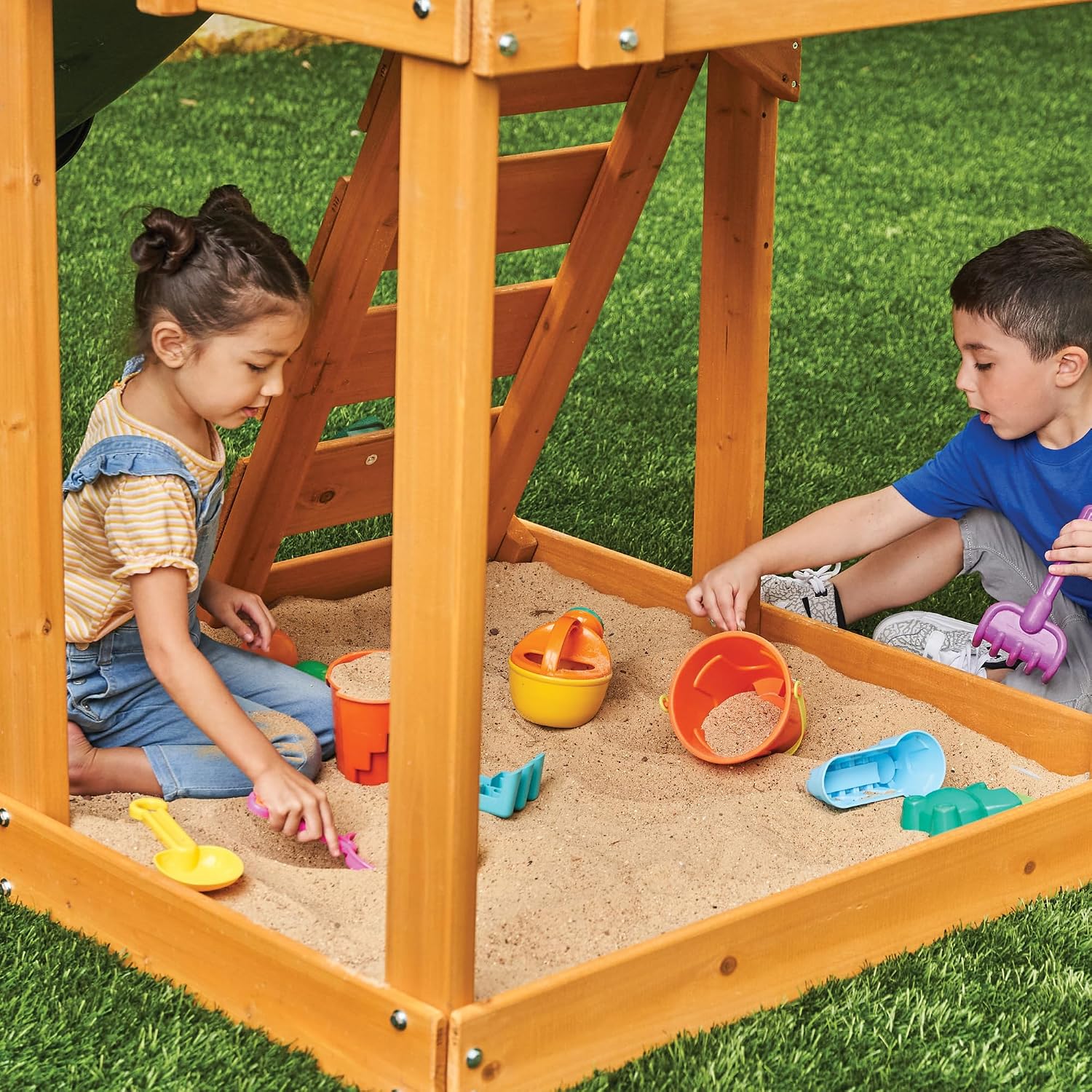
The product as photographed for Amazon — front, side, detail, in use.

As an Amazon Associate I earn from qualifying purchases.