Wooden Busy Board with LED Switches for Toddlers: Worth It?
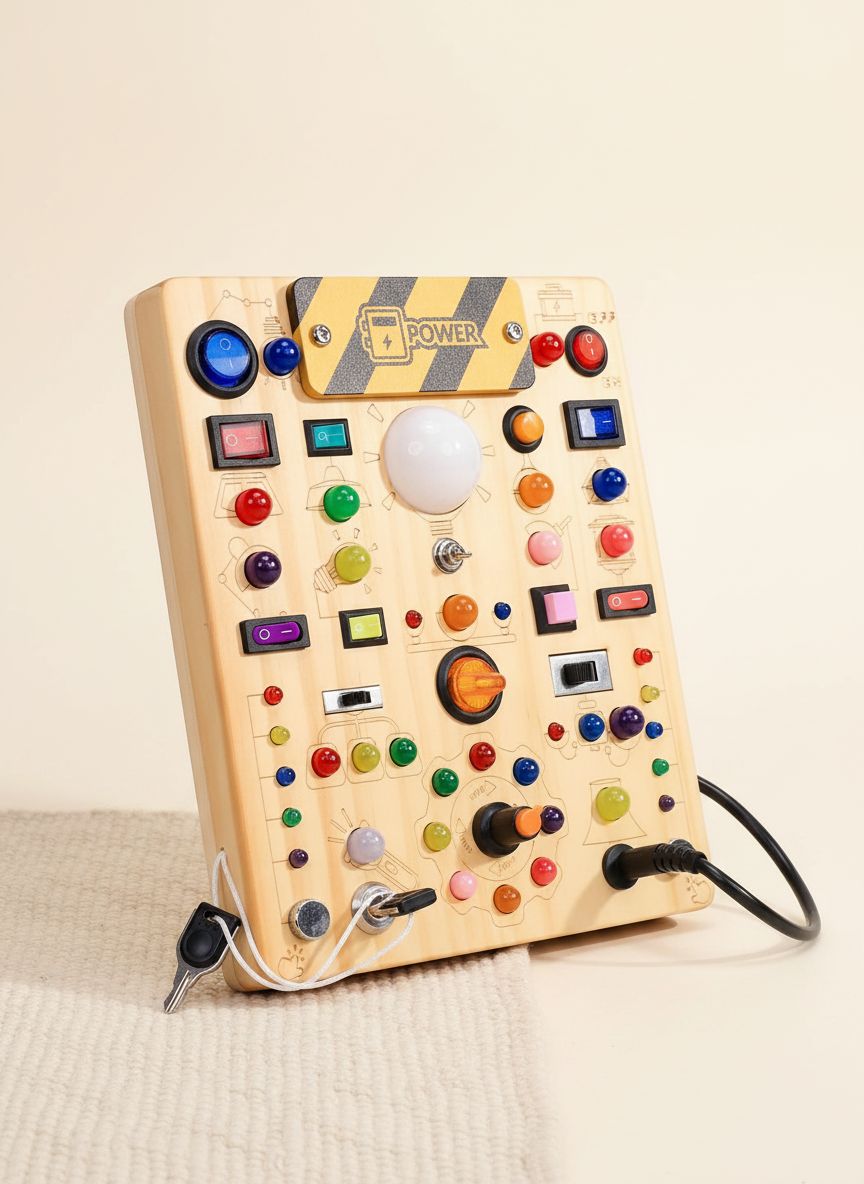
The HarVow Busy Board sat on our coffee table for exactly four minutes before my fourteen-month-old dropped everything, crawled over, and flipped her first switch, lighting up the room and her entire face at once.
It was a rainy Wednesday, the kind where the living room becomes a full-scale disaster zone by nine in the morning and every toy in the basket has already been mouthed, thrown, and rejected. I had pulled out the HarVow Busy Board with LED Light Switches mostly out of desperation, honestly, setting it on the floor between a scattered board book and a forgotten wooden spoon. What I didn’t expect was the silence that followed. Not the ominous silence of a child getting into something she shouldn’t, but the focused, brow-furrowed, completely absorbed quiet of a toddler who has found something genuinely interesting. She sat cross-legged in her footed pajamas, working through each of the 19 switches with the concentration of someone doing very important work. Which, developmentally speaking, she was.
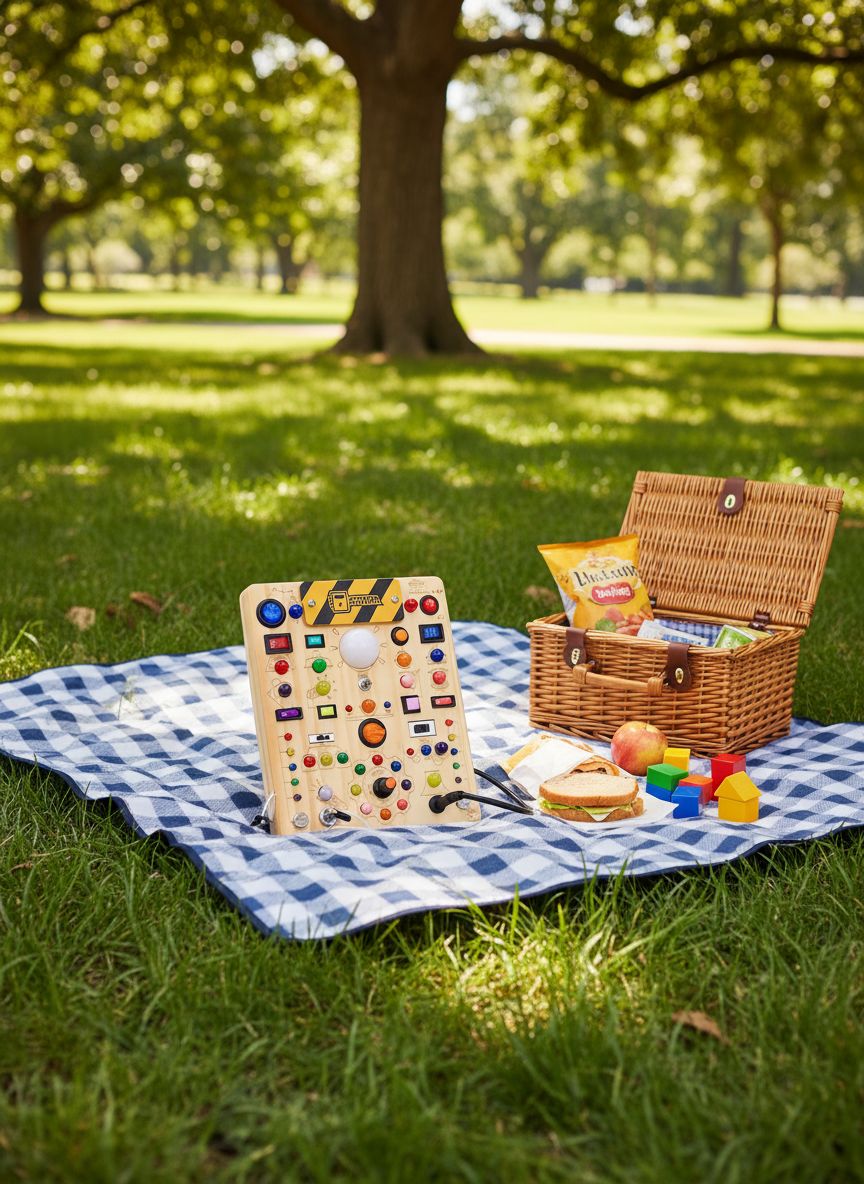
The First Time I Saw It
I first encountered this board on a friend’s kitchen table during a playdate. Her eighteen-month-old son was stationed at one end, systematically flipping every switch while the adults talked, and I kept waiting for him to wander off. He didn’t. For twenty minutes. I asked her about it almost immediately, because twenty minutes of independent engagement from a toddler is the kind of thing that makes a parent’s ears perk up faster than anything. She said she’d found it while searching for toddler learning toys that weren’t screen-based, and it had shipped in two days.
I went home, looked it up that night after bedtime, and ordered it before I’d even finished reading the description. The LED element is what got me, because there is something irresistible to a one-year-old about things that light up, and I was curious whether the cause-and-effect payoff would hold attention the way my friend’s son had suggested it would.
How It Actually Plays / Works
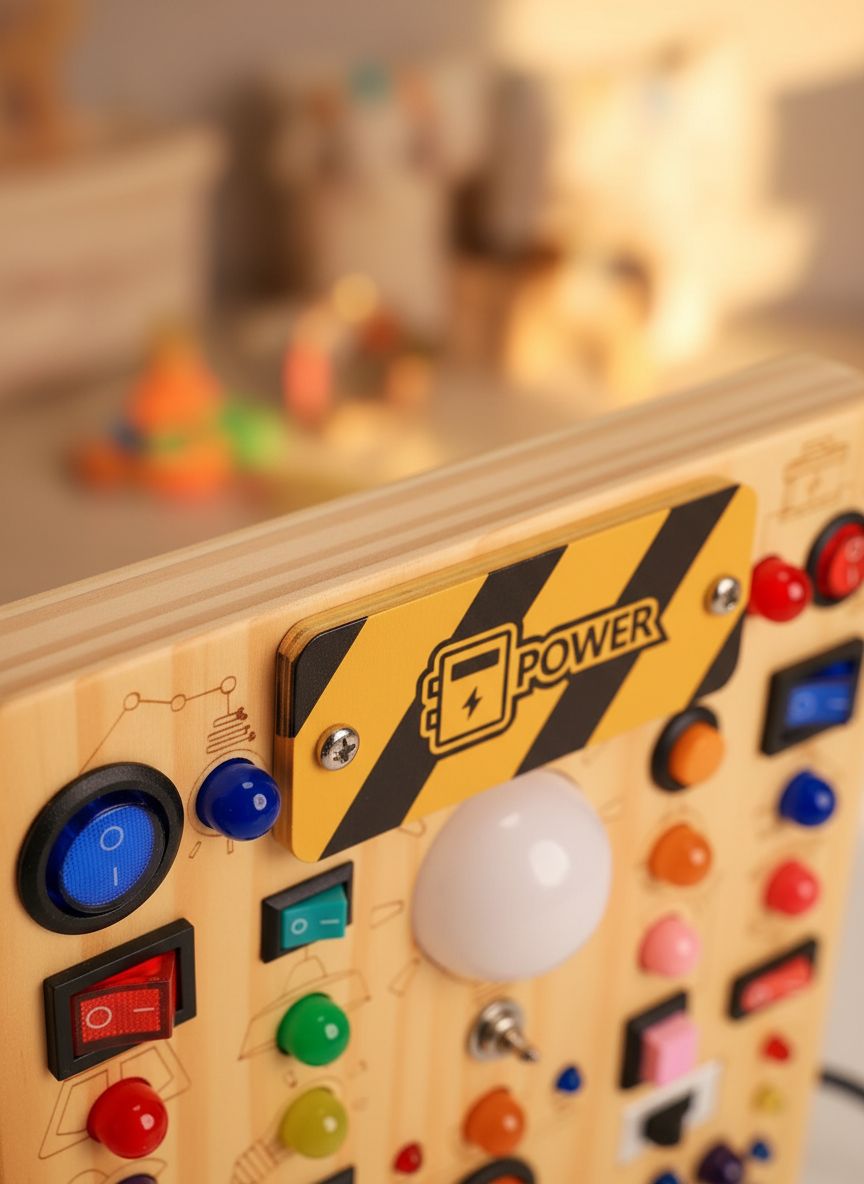
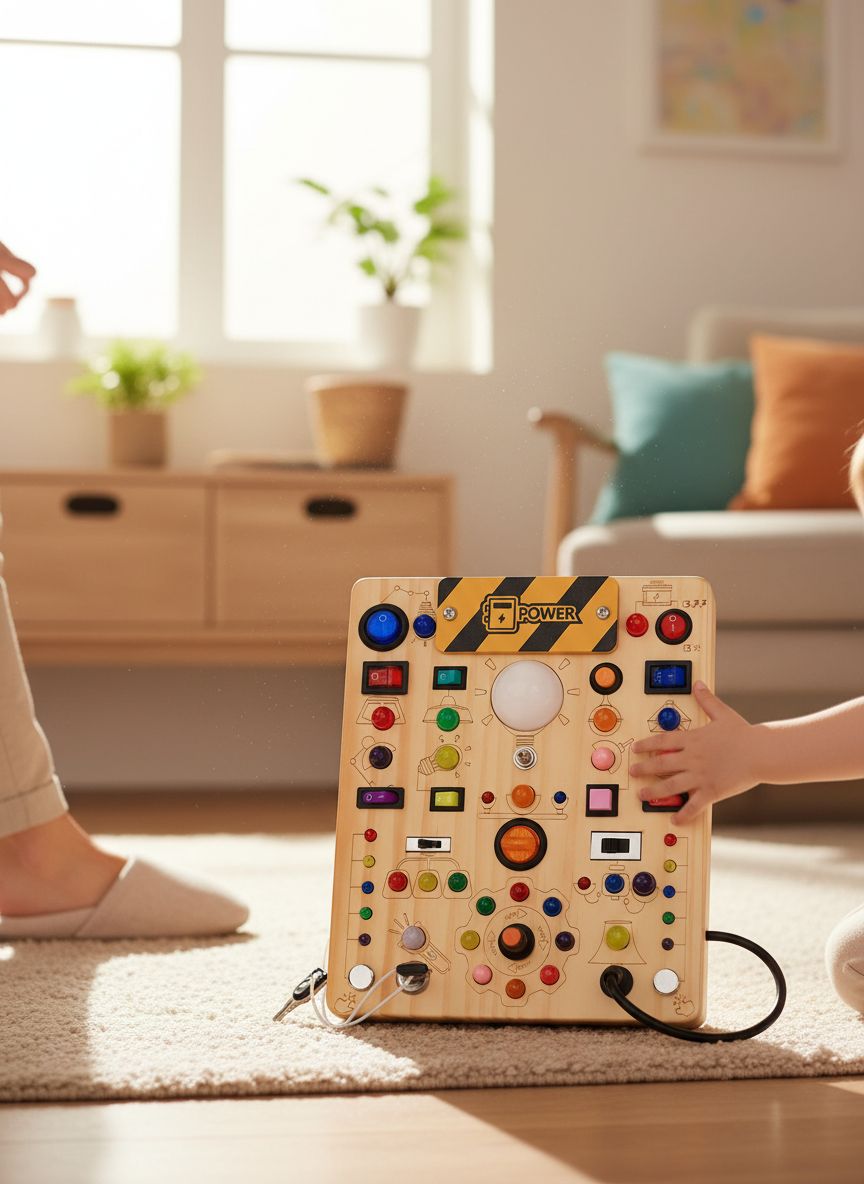
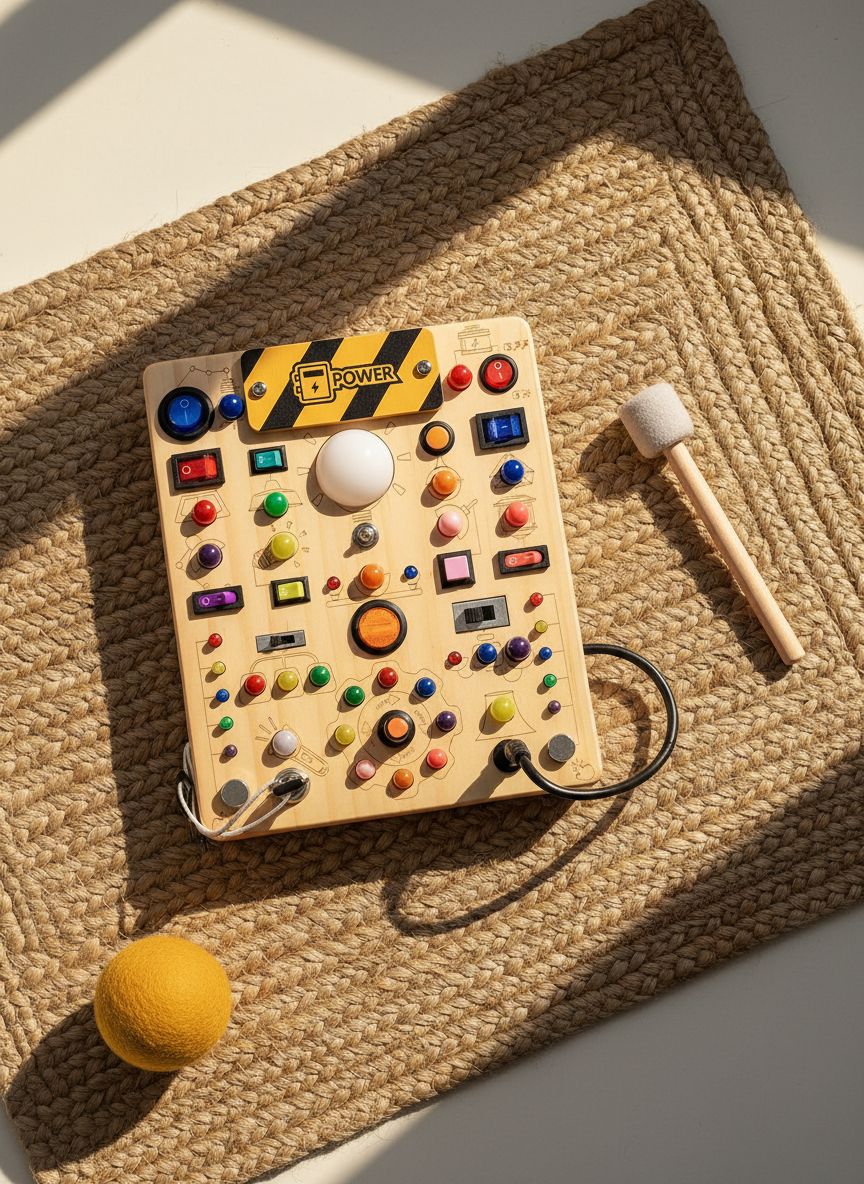
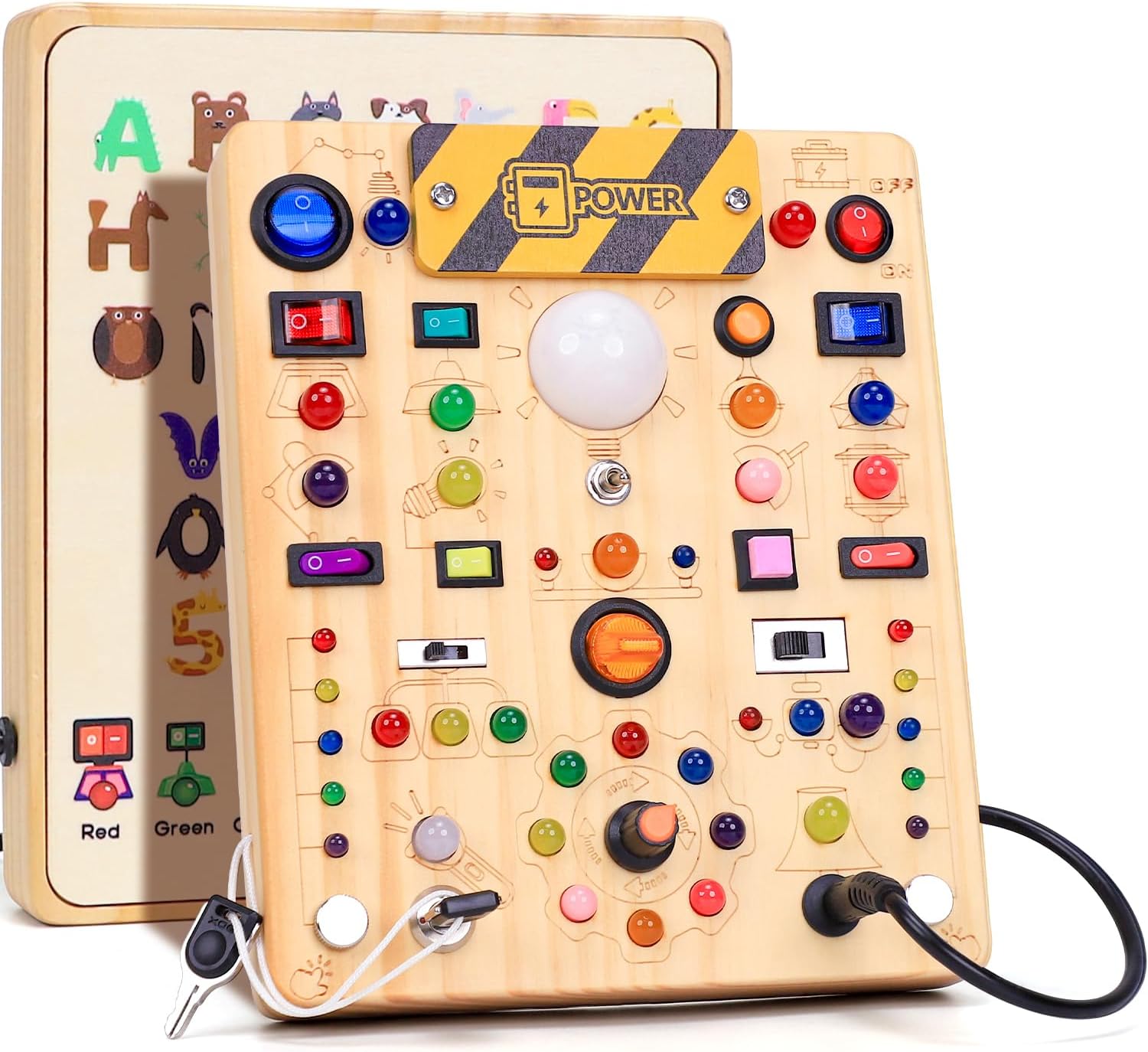
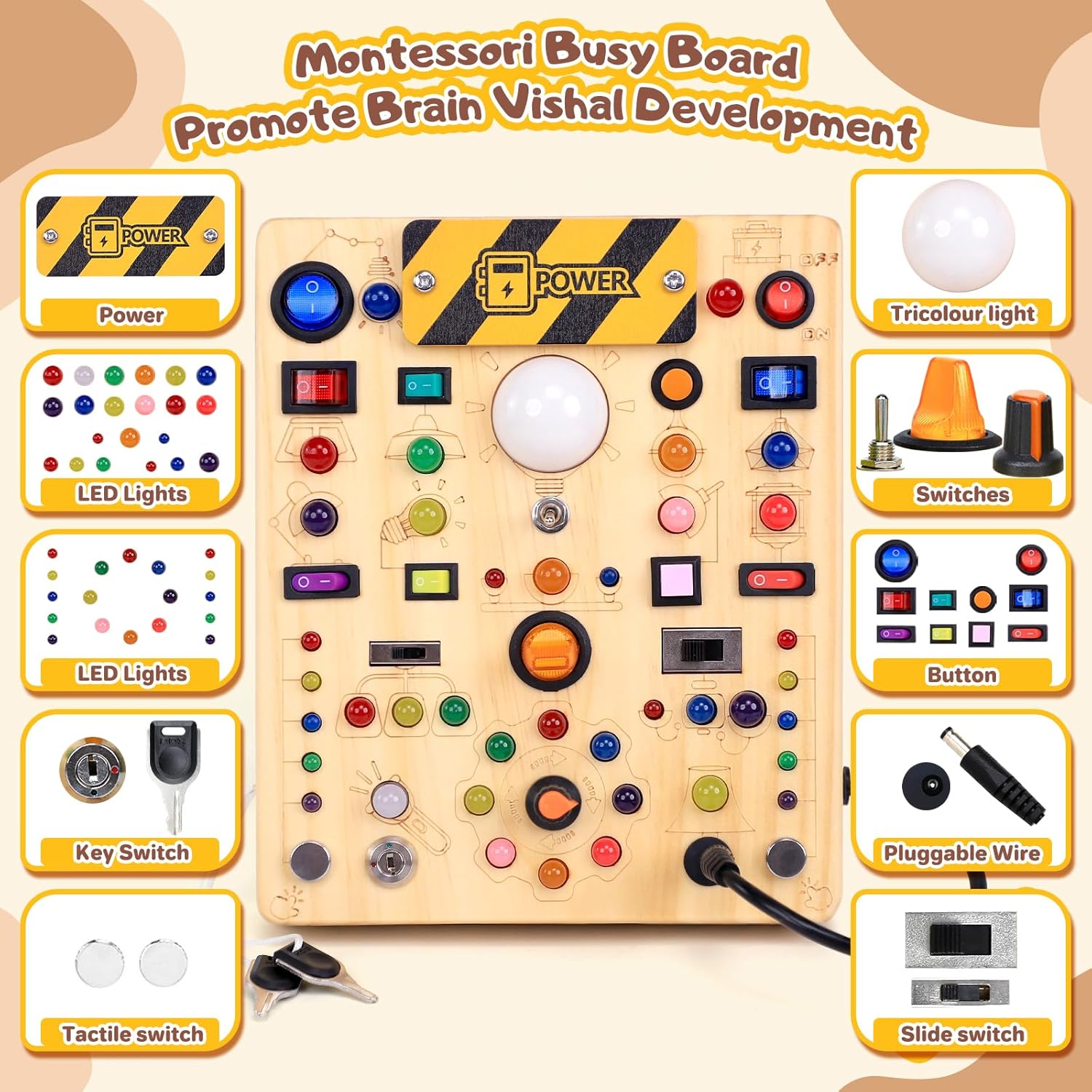
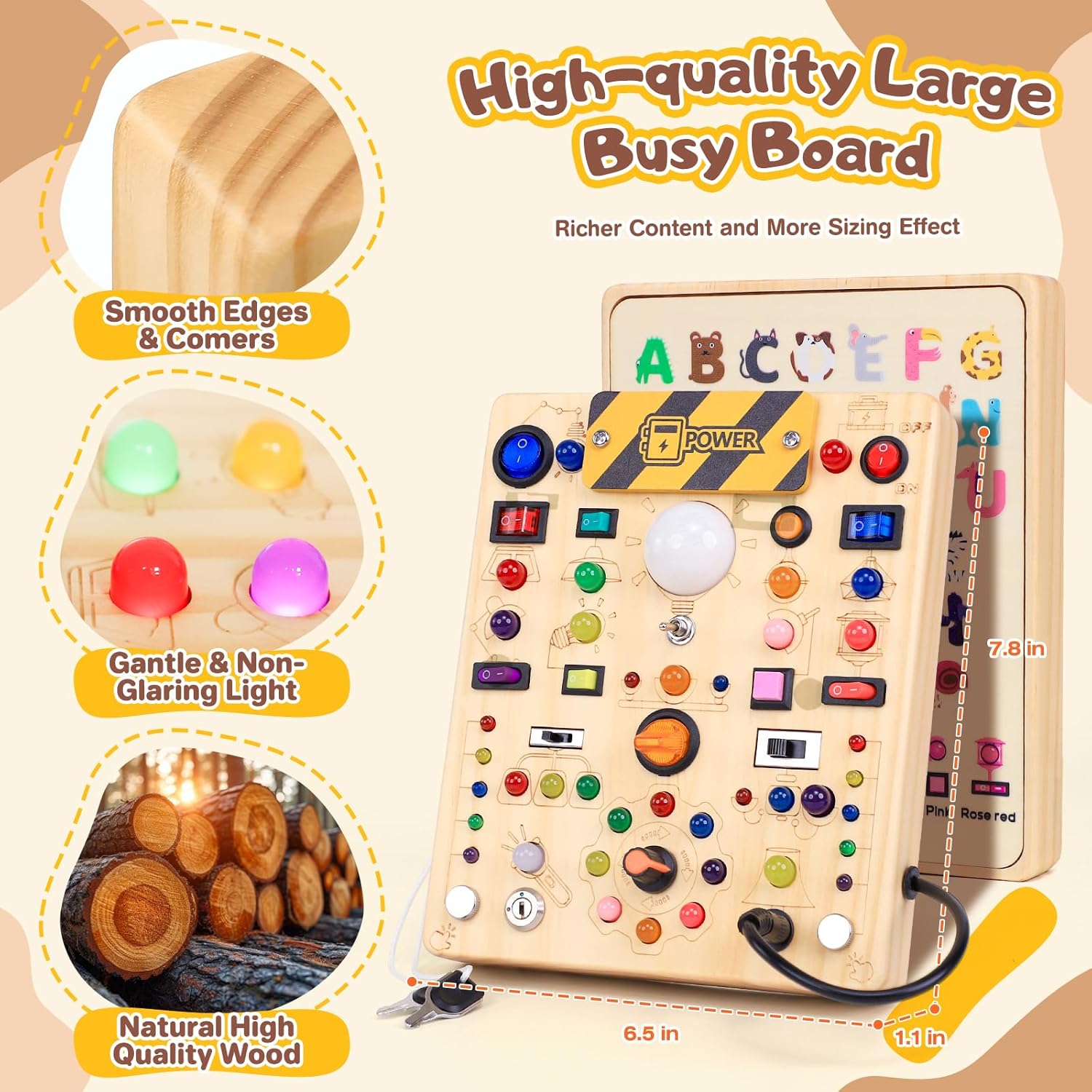
The board itself is solid wood, heavier than you’d guess from photos, and that weight is actually a feature rather than an inconvenience because it doesn’t scoot across the floor when a determined baby leans into it. The 19 switches vary in style and resistance, some toggle smoothly, some require a firm little finger to click, and a handful reward the effort with a satisfying LED glow in different colors. The variety of switch types is the whole point, because each one requires a slightly different grip, a different amount of force, a different motion, which is exactly the kind of fine motor work that a one-to-two-year-old’s hands need to practice.
“Nineteen switches sounds like chaos, but in practice it reads as a complete, self-contained world for a toddler’s hands.”
In the first week, my daughter worked through maybe six of them consistently and ignored the rest. By week three, she had opinions about which ones to flip first. By month two, she was doing them in order, top to bottom, like a tiny pilot running a preflight check. Child development researchers have long noted that cause-and-effect toys are among the most developmentally rich options at this age stage, and watching her connect the action of flipping to the outcome of light was exactly that process, made tangible and tactile.
The Real-Life Scenarios I Used It In
Scenario 1: Sunday Morning, Pajamas Still On, Coffee Not Ready
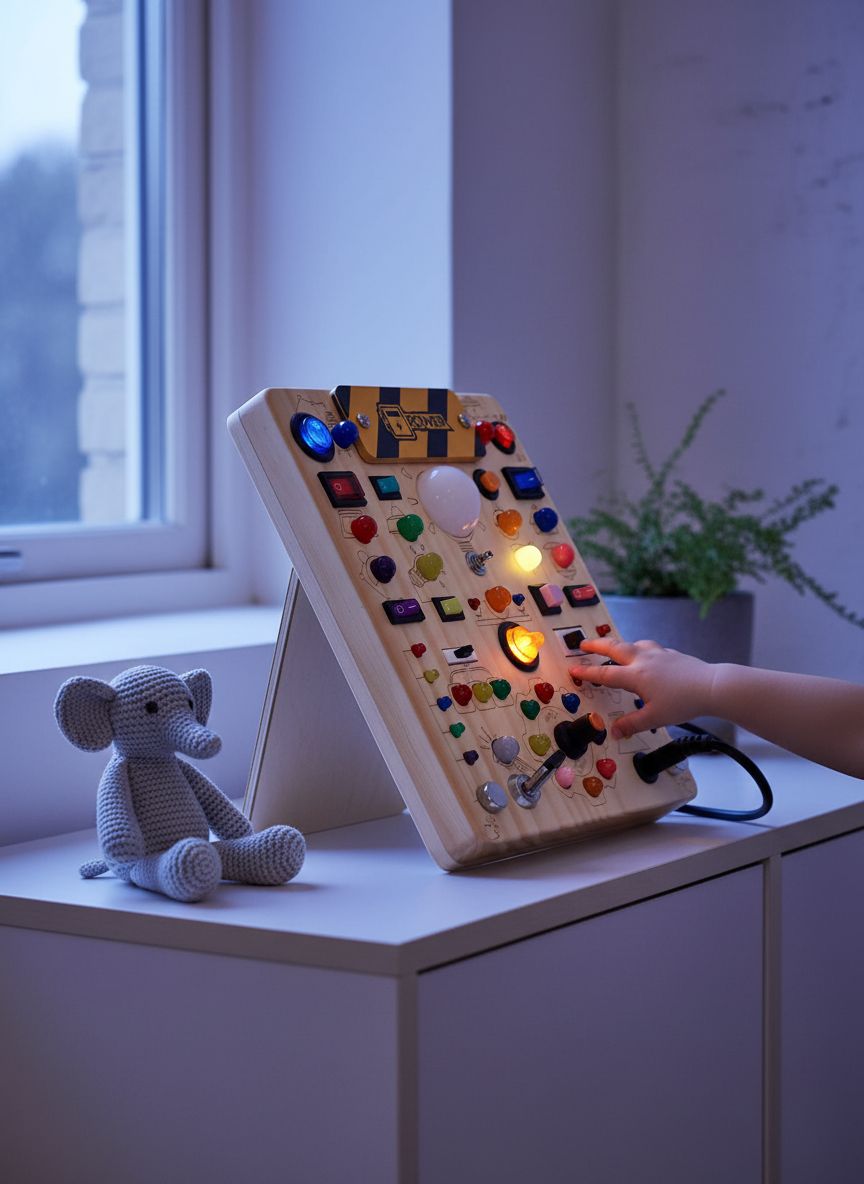
The window light was coming in sideways, the kind that makes everything in a living room look softened and golden. I put the board on the rug with her before I’d made breakfast, half-expecting her to prefer crawling after the cat. She chose the board. The LEDs looked genuinely beautiful in that morning light, each little glow catching differently depending on which switch she’d landed on, and she kept looking up at me with this expression that said: are you seeing this? I was. It’s one of those low-key weekend moments that sticks around in your memory precisely because nothing dramatic happened, she just played, and I got to watch.
Scenario 2: Tuesday After Preschool Pickup, Meltdown on the Horizon
Every parent knows the late-afternoon hour. Everyone is overtired, understimulated in the wrong ways, and slightly feral. I set the board on the back seat on a whim during a longer errand run, and the shift in energy was noticeable within about ninety seconds. The portable format, roughly the size of a hardcover book, makes it genuinely practical as a toddler travel toy, which the branding promises and the real-world dimensions actually back up. There’s no rolling parts, no pieces to lose between car seats, nothing that makes a sound so loud it becomes its own problem. Just switches, light, and a toddler who is now occupied.
Scenario 3: Grandparent Visit, All Eyes On
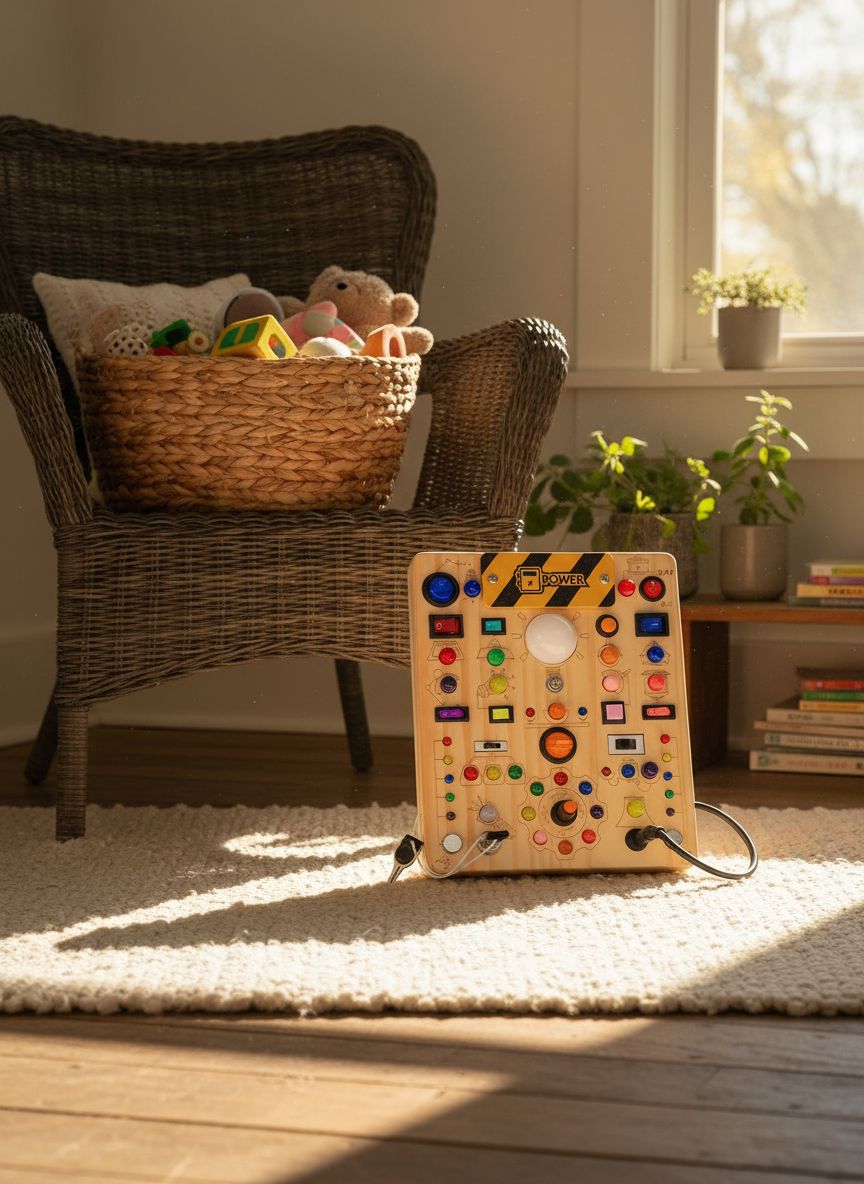
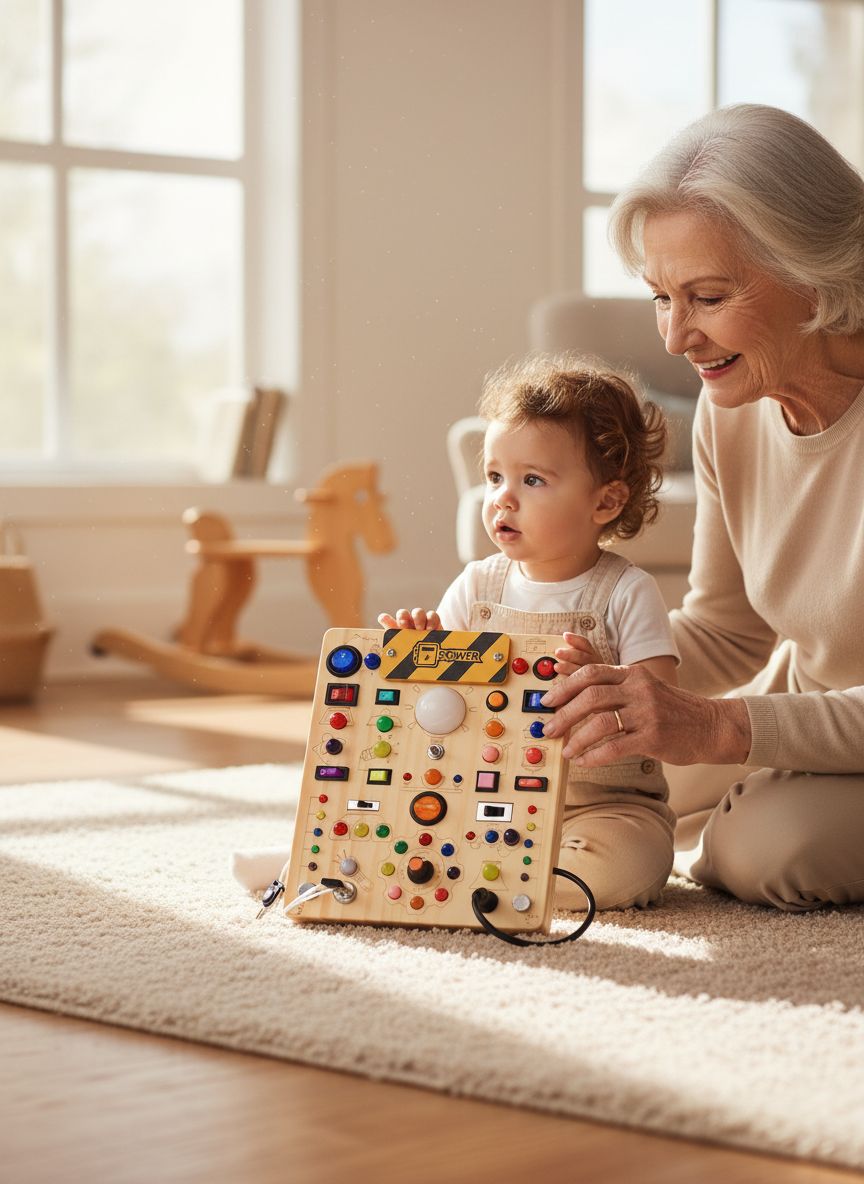
When my parents visited, my daughter immediately brought the board over to show my father, which is a form of toddler endorsement I take seriously. He spent a full ten minutes exploring it alongside her, the two of them flipping switches back and forth, which was genuinely sweet and also confirmed something I’d suspected: this isn’t a toy that only works for the kid. The interaction it prompts between a child and any nearby adult is easy and organic. No instructions needed, no batteries to manage mid-visit, no app to download. You just sit down and start flipping. For grandparents especially, that kind of frictionless engagement is worth noting.
What Other Parents Are Saying
This product has logged over eight hundred ratings with a strong overall score, and the patterns in the feedback tell a consistent story. Parents of one-year-olds mention the immediate engagement, parents of two-year-olds mention the sustained interest, and the recurring note across both groups is that the LED element specifically is what hooks kids fastest. A handful of reviewers mention using it primarily as a toddler travel toy for flights and long car rides, which tracks with my own back-seat experience.
The minority of lower ratings cluster around switch durability after several months of heavy use, which feels like honest feedback worth flagging. A toddler learning toy rated 4.6 across 865 reviews has clearly earned its reputation, but it’s fair to expect wear on the most-loved switches over time. Check our editor’s top toddler picks if you want to compare it against other options in this developmental tier before deciding.
Who Should Skip It
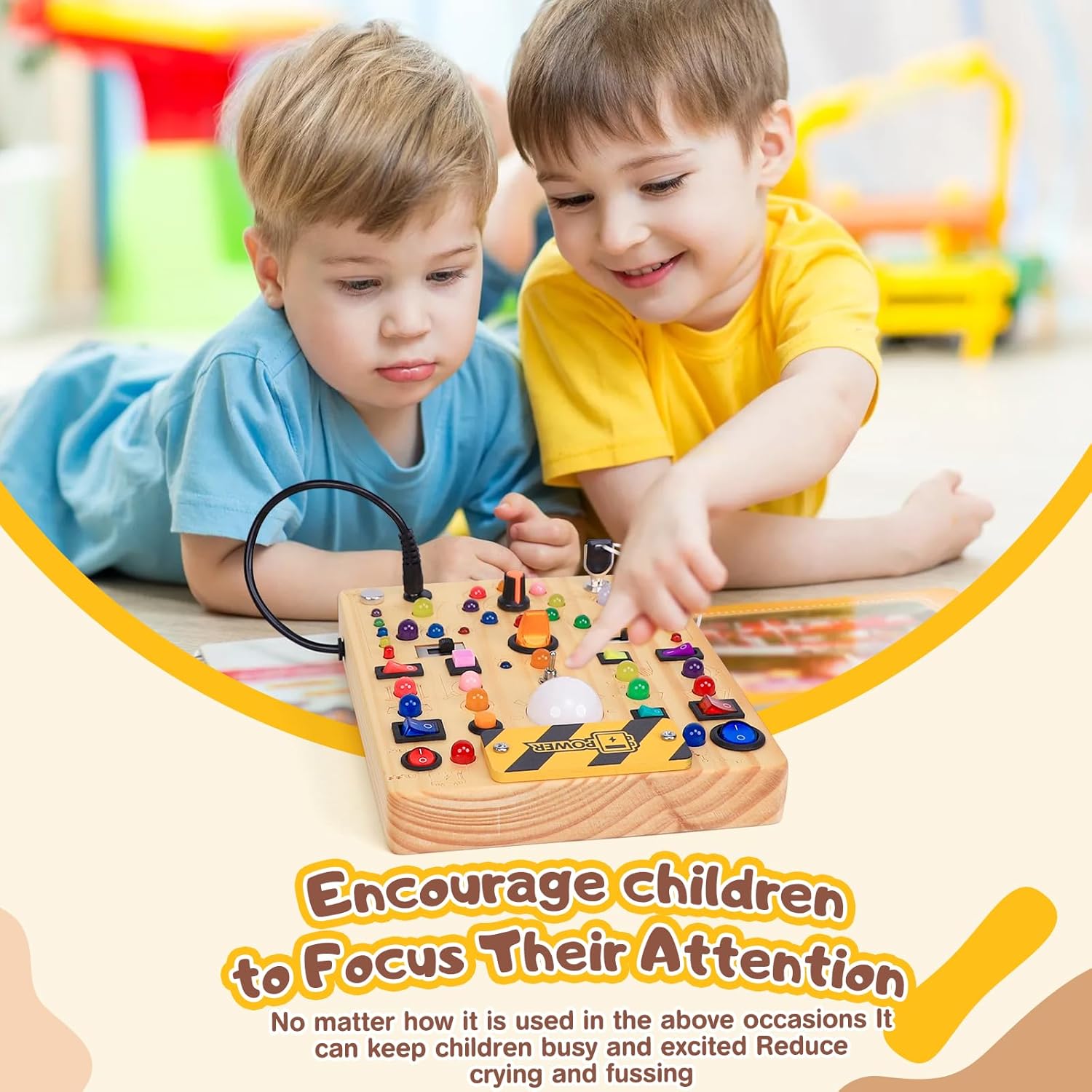
If your child is already past the twenty-four-month mark and showing strong fine motor skills, the switches may not offer enough resistance or complexity to hold interest for long. This is genuinely a baby and young toddler sensory board, designed for the twelve-to-twenty-four-month window, and it peaks in that range. Households with children under twelve months who mouth aggressively should wait, because while the LEDs are integrated, the board’s edges and switch housings warrant supervision at that younger stage. And if your toddler is the type who processes new toys by throwing them, the wood construction is reasonably sturdy but not indestructible, so a high-impact-play household may see faster wear than average.
What It Replaces (or Complements) at Home
For us, this largely replaced a set of plastic cause-and-effect toys that had become background noise, the ones that played the same four-note song until a parent quietly removed the batteries at nine p.m. The HarVow board produces no sound, which I did not anticipate appreciating as much as I do. It also replaced what I’d been reaching for during those long afternoon stretches: the tablet. Not because I think screen time is catastrophically bad, but because the HealthyChildren.org guidelines on screen-free play for under-twos are clear, and having a compelling alternative that actually held her attention made choosing the screen-free option easy rather than effortful.
It complements our other toddler age-stage gear well, sitting alongside stacking toys and shape sorters as something that occupies the hands differently. If you’re building out a full sensory rotation, it pairs naturally with textured books and open-ended blocks, not because it needs companions, but because variety across tactile experiences is the actual goal at this stage. You might also want to browse our curated gift ideas for toddlers if you’re shopping this as a birthday or shower present, because it packages and presents beautifully.
FAQ
Is this board actually safe for twelve-month-olds?
Yes, with supervision. The LED switches are integrated rather than removable, which reduces the choking-hazard concern meaningfully. The main caveat is ensuring the battery compartment remains properly closed, as the American Academy of Pediatrics consistently flags battery access as a safety priority for children under three. Keep it as a supervised play item at the younger end of the age range and you’re in reasonable territory.
Does the wood finish hold up, and is the paint safe?
The paint is labeled non-toxic and the wood construction feels sealed rather than raw, which is appropriate for a toddler sensory board in this category. It wipes clean with a damp cloth. Do not submerge it or run it under water, because the LED components are not waterproof.
Will my toddler still be interested in this after the first month?
Based on my own experience and the review pattern, yes, particularly in the twelve-to-twenty-four-month window. The variety of switch types means the interaction evolves as their hands get more skilled. My daughter’s engagement actually increased around the six-week mark once she’d figured out the simpler switches and started working on the more resistant ones.
Does the quality justify what you’re paying?
The value reads meaningfully above what you’d expect at this price point. The wood construction, the variety of 19 distinct switches, and the LED integration would suggest a higher-tier item if you encountered it without a price tag. Given how long it holds attention across the full twelve-to-thirty-six-month stretch, the replay value is strong, and it’s the kind of toy that passes cleanly to a younger sibling or a friend’s new baby without looking worn out.
Is this a good birthday or baby shower gift?
It’s one of the better options in the toddler first birthday gift category precisely because it looks intentional and considered rather than generic. It fits neatly into a gift bag, it reads as a Montessori-aligned choice for parents who care about that, and it works immediately without setup, assembly, or an app. Also worth exploring: our toddler learning toy roundup for complementary gift ideas if you want to bundle it with something.
The Verdict
Six months from now, I can picture this board exactly where it lives right now: propped against the end of the couch, slightly scuffed on one corner from being dragged across a hardwood floor, with two or three switches that get flipped approximately eighty times a day and a few that remain mysteriously less popular. That specificity, the fact that a toddler develops preferences within a toy, is a good sign. It means the object has become part of her world rather than just passing through it. For families looking for the best Montessori toddler sensory board for one-year-olds, this one earns its place in the rotation not through novelty alone but through genuine developmental fit. And if you’re still building out your collection of open-ended toddler learning toys, the HarVow Busy Board belongs on that shortlist. Nineteen switches, one focused toddler, and the kind of quiet that actually means something: this one delivers.
Every Angle
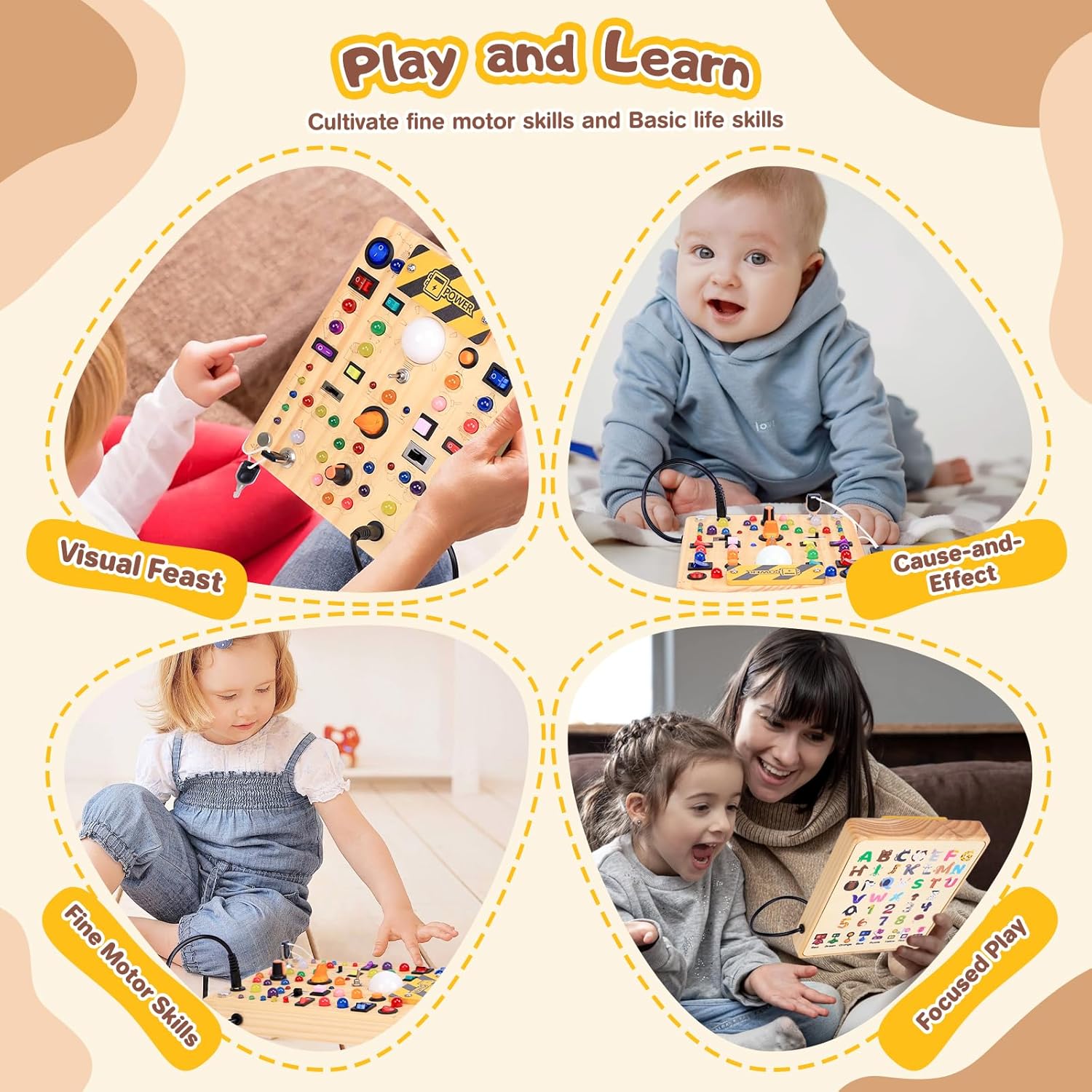
The product as photographed for Amazon — front, side, detail, in use.
As an Amazon Associate I earn from qualifying purchases.