Wooden Playhouse for Toddlers: Honest Review
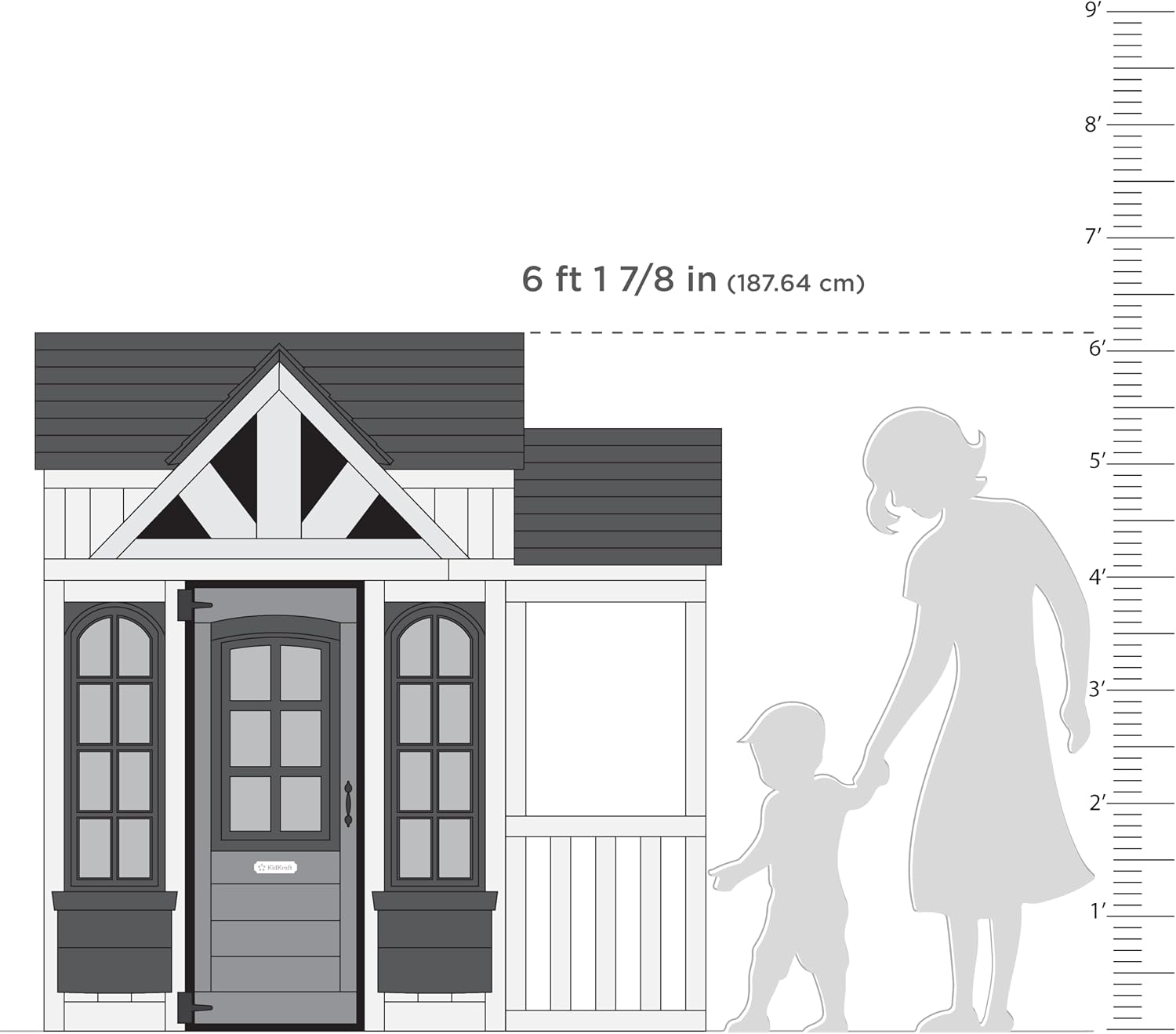
The moment my daughter discovered the secret door on the KidKraft Lantana Lane Wooden Playhouse, she disappeared inside and didn’t come out for forty-five minutes — and I didn’t want her to.
It was a Saturday in late April, the kind of morning where the backyard smells like wet mulch and new leaves, and my four-year-old was already in her rain boots at 7 a.m. We had spent the better part of the previous evening doing what I will generously call “furniture-grade assembly,” following instructions that required two adults, a rubber mallet, and one very long episode of something we’d been meaning to watch. But when the KidKraft Lantana Lane Wooden Playhouse finally stood upright in the corner of our yard, tall and white and almost absurdly charming, my daughter made a sound I can only describe as a small gasp. She walked toward it slowly, like she was approaching something sacred. **That gasp is the whole review, honestly.** She touched the planter boxes first, then the clock face, then she found the secret door — and that was it. She was gone.
The First Time I Saw It
I came across the Lantana Lane on a late-night scroll, somewhere between researching outdoor gift ideas for preschoolers and accidentally buying a linen tablecloth I didn’t need. The white wooden facade with the working clock and those little planter boxes stopped me immediately. It didn’t look like a toy. It looked like something out of a Scandinavian children’s book, the kind where the illustrations are soft and the children always have rosy cheeks and meaningful adventures in the garden.
I screenshot it, sent it to two friends, and both of them replied with the same word: “Oh.” That kind of oh. The one that means you already know you’re buying it.
How It Actually Plays / Works
The Lantana Lane stands a full six feet tall, which means it doesn’t feel like a squat plastic dome my kid has outgrown in eight months. The solid wood construction has real heft. The walls have a satisfying thunk when you knock on them. Inside, there’s enough room for a four-year-old and two stuffed animals and all the imaginative weight of whatever scenario is currently unfolding. The first week, my daughter used it as a bakery. The second week, it was a veterinary clinic. By the third week, it was simply “her house,” and I was only allowed in if I knocked.
“It doesn’t feel like a toy. It feels like a space she actually owns — and that changes how she plays in it.”
The BBQ grill on the exterior side has become the social hub of the whole setup. My daughter uses it to “cook” for anyone who will sit on the grass and pretend to be hungry, which is a remarkable catalyst for cooperative pretend play in the preschool years. The chalkboard panels are one of the details I underestimated. She writes menus on them. She draws doors. She writes her name in oversized letters and then erases it and writes it again. The chalkboards have been used more than I expected and cleaned less often than I’d prefer, which feels about right.
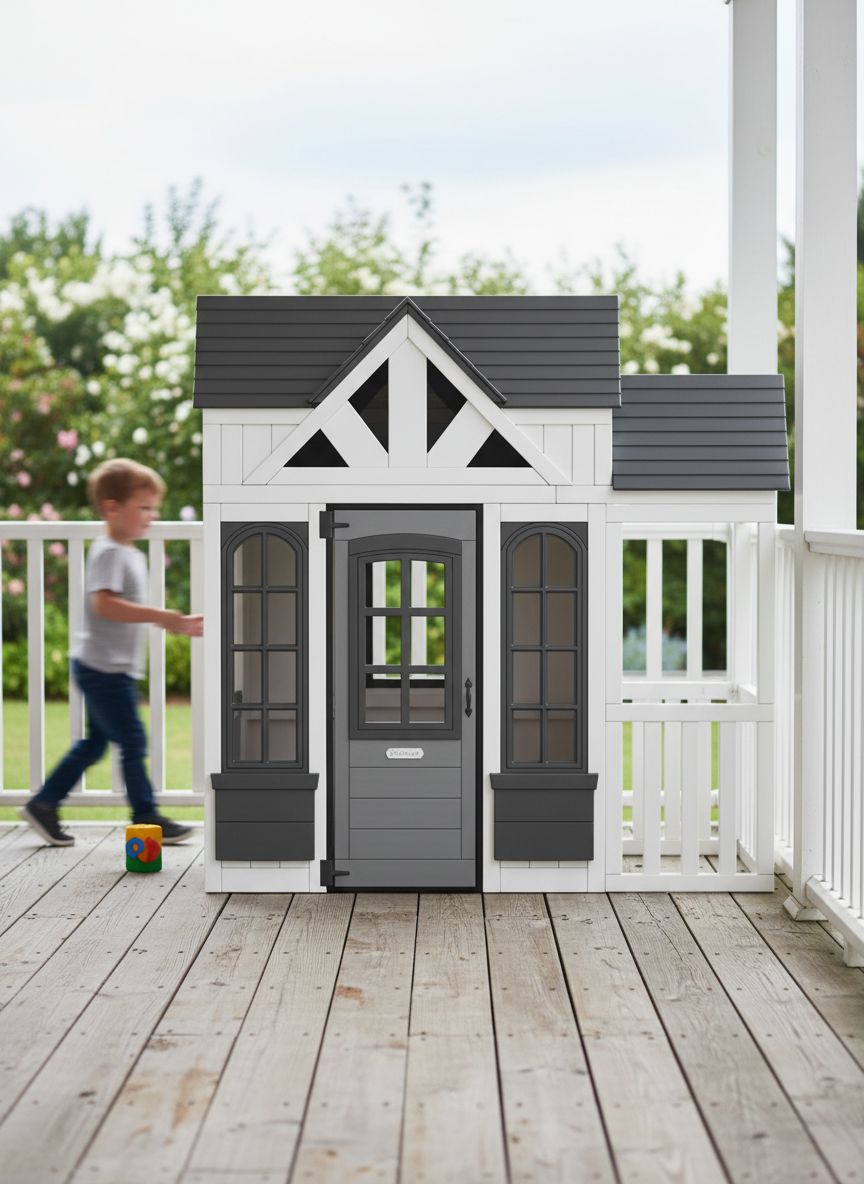
The Real-Life Scenarios I Used It In
Scenario 1: Sunday Morning, Pajamas Still On
Before breakfast, before anyone had brushed their teeth or made a decision about the day, my daughter was outside in her pajamas running the Lantana Lane as a flower shop. She had gathered every dandelion in the yard and arranged them in the planter boxes with the seriousness of a professional florist. **The planter boxes, which I had thought were mostly decorative, turned out to be one of her favorite features.** She filled them with real dirt at some point. We made peace with that. The morning had a slow, unhurried quality that I associate with the best kind of weekend, where everyone is just doing their thing and no one needs anything from anyone else.
Scenario 2: Tuesday After Preschool Pickup
The post-preschool window is the trickiest hour of the day in our house. My daughter comes home overstimulated and emotionally unpredictable, needing to decompress but not willing to sit still. On the Tuesdays since we set up the playhouse, that transition has been noticeably smoother. She goes straight to the backyard, goes into the playhouse, closes the secret door, and does whatever she needs to do in there for about twenty minutes. I stand nearby with my coffee and we don’t really talk. **The secret door, it turns out, is less of a novelty feature and more of a genuine architectural gift to children who need a place that’s theirs.** Pediatric development guidance consistently underscores how much preschoolers benefit from defined personal spaces, and this playhouse delivers that outdoors in a way that feels organic rather than prescribed.
Scenario 3: The Grandparent Visit
When my parents came for a long weekend, I watched my father, who is a tall man, crouch through the main door with genuine amusement and then straighten up inside and announce that he could “almost stand.” That “almost” was doing a lot of work, but the point is he tried. The six-foot height and the solid build meant that **adults can get in there alongside their kids without the whole thing wobbling or feeling precarious.** My mother sat on the little step outside and played “customer” at the bakery window for an hour. The Lantana Lane has a way of pulling adults into the play rather than positioning them on the sidelines. That’s rarer than it sounds.
What Other Parents Are Saying
With 32 reviews and a 3.8 rating, the Lantana Lane sits in an interesting middle place. The warmth in the positive reviews is consistent: parents mention the aesthetic, the quality of the wood, the way it holds up through seasons. The friction points cluster around assembly. Multiple reviewers flagged that setup is a genuine undertaking and recommend dedicating a full afternoon, recruiting a second adult, and reading the instructions twice before touching a single piece.
The aesthetic appeal is almost universally praised. Nobody seems to regret the look of it once it’s standing. **The complaints are about the journey to standing, not the destination.** That’s useful context.
Who Should Skip It
If your child is younger than three, the Lantana Lane is not the right fit yet. The elevated interior area and the nature of the play it invites, imaginative, semi-independent, spatially aware, aligns with the preschool pretend play stage rather than toddlerhood. For younger siblings who might wander over, supervision near the structure is genuinely important, particularly on any raised elements. This is not a set-it-and-forget-it situation for families with under-threes in the yard.
It also requires flat, stable ground and a yard of meaningful size. If your outdoor space is small, a balcony, or an apartment courtyard situation, this won’t work physically or proportionally. And if you are a single parent without help or without a solid afternoon free for assembly, that’s worth weighing honestly. The assembly reports in the reviews are not exaggerating. **This is a project, not a quick setup.**
What It Replaces (or Complements) at Home
We had a plastic play kitchen that had been living in the corner of our living room for two years, slowly accumulating crayon marks and occupying an amount of square footage I resented every time I tried to host anyone. The Lantana Lane made retiring it feel logical rather than sad. **The outdoor BBQ grill and the interior space together do everything the plastic kitchen was doing, but outside, at a scale that actually matches where my daughter is developmentally right now.** She’s four. She wants space and narrative and props she can move around. She doesn’t want a toy that feels like it belongs to a younger version of herself.
If you’re building out a backyard play zone, the Lantana Lane pairs naturally with open-ended outdoor elements: a mud kitchen nearby, some sand tools, maybe a water table for the summer. It anchors the space. Everything else can orbit it. For families also exploring preschool STEM toys or preschool art and craft supplies to rotate indoors, this becomes the outdoor complement to a broader creative play setup.
FAQ
Is the Lantana Lane appropriate for a newly-turned three-year-old?
Technically yes, given the listed age range of 3 to 5. In practice, a confident and physically coordinated three-year-old will thrive in it, but the pretend play scenarios it invites tend to really bloom closer to four, when narrative thinking and social play get more complex. Supervise closely in those early months.
How does the wood hold up in wet or cold climates?
Solid wood with an outdoor-grade finish is built for the elements, but it’s not impervious. In very wet or very cold climates, a seasonal protective sealant and a breathable cover during deep winter months will significantly extend its lifespan. Don’t leave chalked surfaces wet for extended periods.
Will my kid actually still use this at five, or is it a four-year-old peak?
The parents who report the longest use tend to be the ones who let the child lead the narrative evolution of the space. At five, some kids use it as a reading nook. Some use it as a clubhouse with the neighbor kids. The physical scale means it doesn’t visually “age out” the way smaller play structures do, which gives it a longer runway than you might expect.
Does the quality justify what you’re spending on it?
For an outdoor wooden play structure intended to last multiple years and potentially pass to younger siblings, the value reads above what you’d expect in this tier. Solid wood construction ages differently than plastic: it can be sanded, re-sealed, repainted. **Given how long it will realistically get used, the per-season cost becomes genuinely reasonable.** The assembly investment is real, but the durability is too.
Is this a good birthday gift, and how much lead time do I need?
It is an excellent birthday gift for a child turning three, four, or five, particularly if the gift-giver is a parent or grandparent who can coordinate delivery and assembly as part of the gift. Plan for at least a few days of lead time for shipping and block out a full assembly afternoon before the reveal. Wrapping a photo of it to open on the day is a completely valid strategy and probably more dramatic anyway.
The Verdict
Six months from now, I expect the Lantana Lane will still be the gravitational center of our backyard. The chalkboard will have been erased and redrawn so many times the chalk dust has become part of the wood’s character. The planter boxes will have gone through at least one season of real flowers and one season of dirt and one season of whatever my daughter decides she’s growing next. The secret door will have its own mythology by then, a whole story about who is and isn’t allowed to use it and under what circumstances.
**This is the kind of outdoor preschool play structure that earns its place in your yard rather than just occupying it.** For children in that three-to-five window, especially the imaginative, social, let-me-run-a-small-business-from-my-backyard type, the Lantana Lane is a serious investment in the quality of their outdoor play. If you are shopping for a preschool-age child who spends real time outside and needs a space that can hold the full weight of their imagination, this is the one. Check out our full editor’s picks for outdoor preschool play if you want to see how it fits into a broader outdoor setup.
The assembly is real. The wood is real. **The gasp your kid makes when they first see it is also very, very real.** For an investment-tier outdoor centerpiece that you’ll still be glad you bought three summers from now, the KidKraft Lantana Lane Wooden Playhouse delivers exactly what it promises, which is a place that feels like it actually belongs to your child.
As an Amazon Associate I earn from qualifying purchases.