Montessori Climbing Gym for Toddlers: Honest Review
The moment my two-year-old scaled the climbing wall for the first time, arms shaking, jaw set with pure determination, I understood exactly why this thing lives in my living room now.
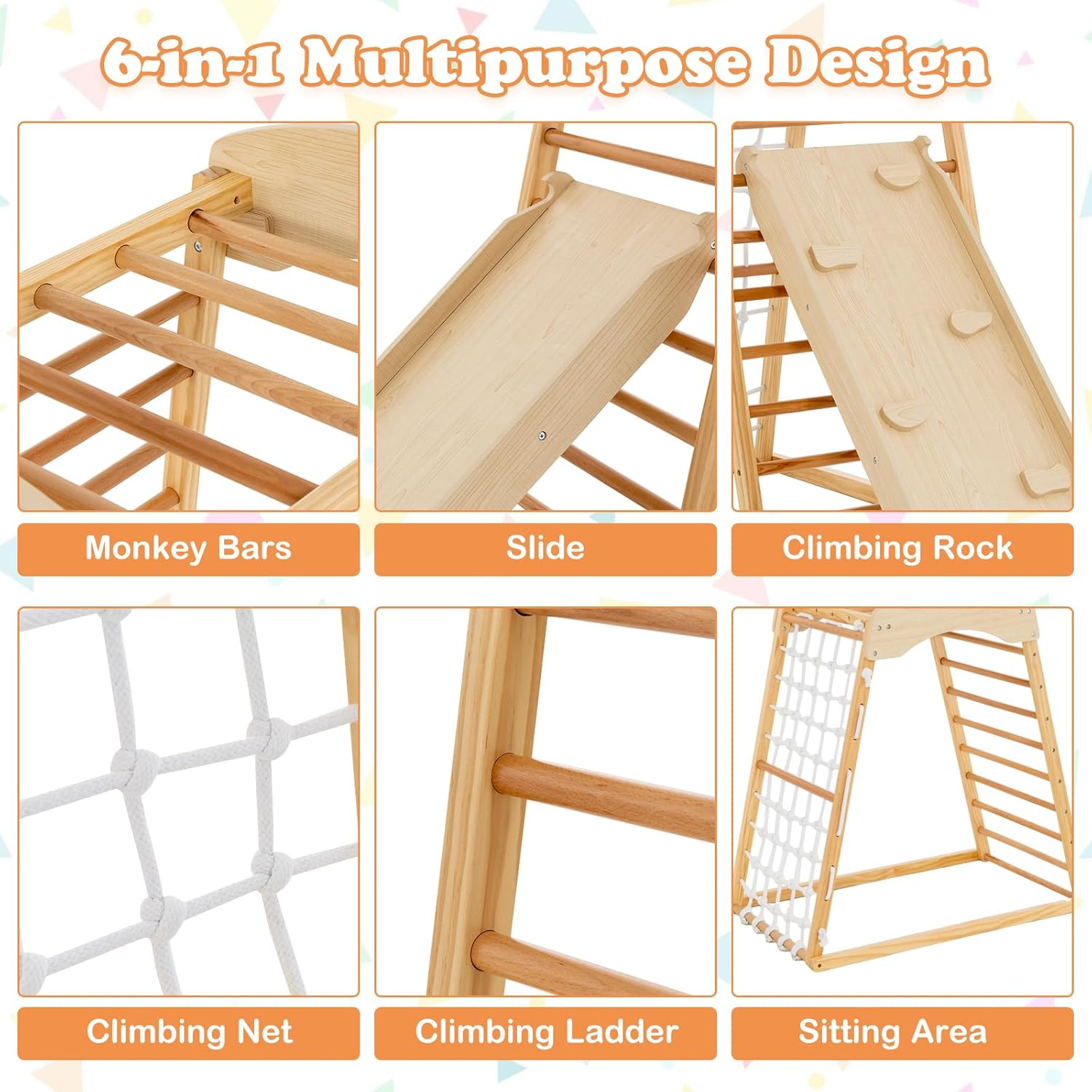
It started on a rainy Wednesday when the walls were, quite literally, closing in. My toddler had lapped the apartment three times, launched himself off the couch cushions twice, and was eyeing the bookshelf with the focused intensity of a tiny mountaineer scouting a summit. We needed something. Not a screen, not another puzzle with three pieces already missing, but something with real physical challenge built into it. That afternoon, the Costzon Indoor Jungle Gym, a 6-in-1 Montessori climbing toy for toddlers, arrived in a box so large it blocked the front hallway. My son helped me unpack it. By the time we had finished, he was already climbing before I’d torqued the final bolt.
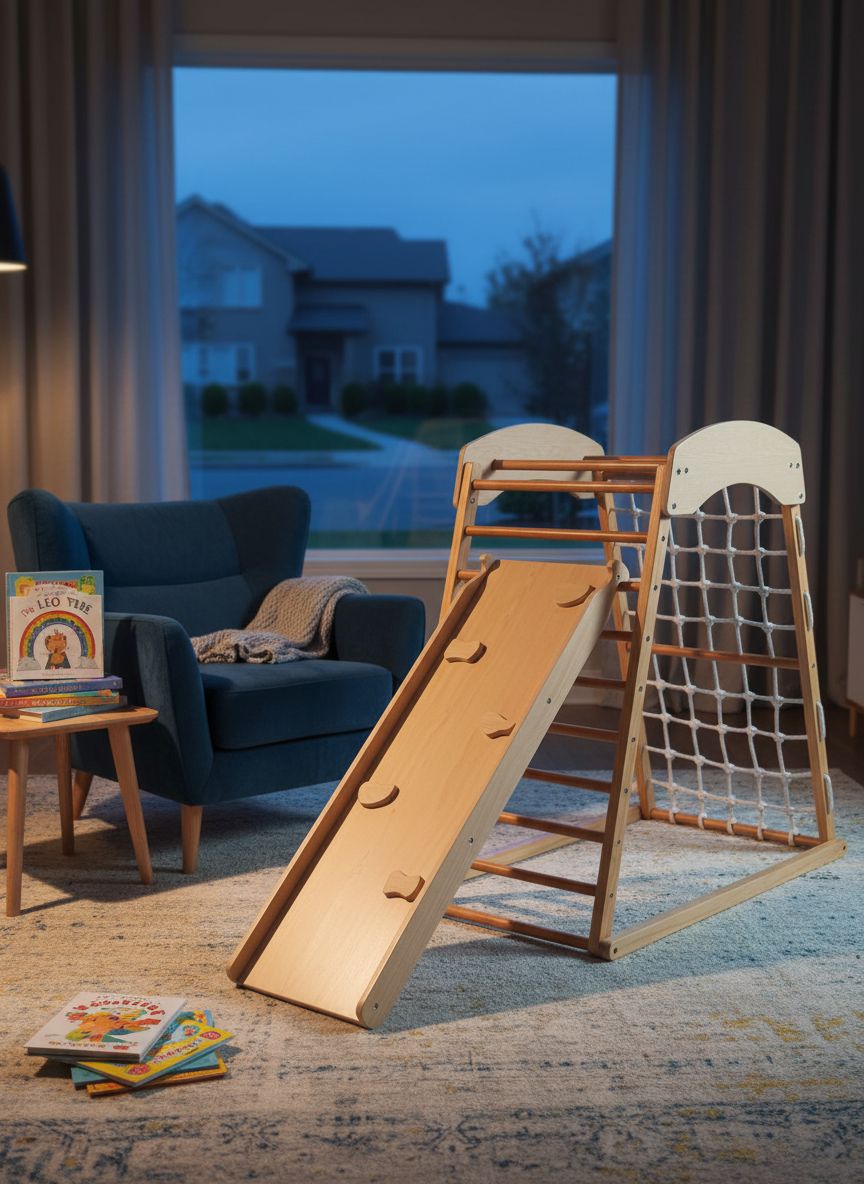
The First Time I Saw It
I found it the way most parents find things these days: scrolling at eleven-thirty on a Thursday night while my kid slept and I convinced myself I was “doing research.” A friend had posted a video of her three-year-old flying down a wooden slide in their apartment, hair chaotic, completely delighted, and I asked immediately what that structure was. She sent me the link. I stopped scrolling. The six-in-one configuration caught my eye first, because one piece of furniture doing the work of six felt like the most parent-brained argument for any purchase I’d ever encountered.
I cross-referenced it against our editor’s top toddler picks and realized it fit squarely in the category of gear I’d been circling for months. The solid wood construction sealed it. I ordered it the same night.
How It Actually Plays / Works
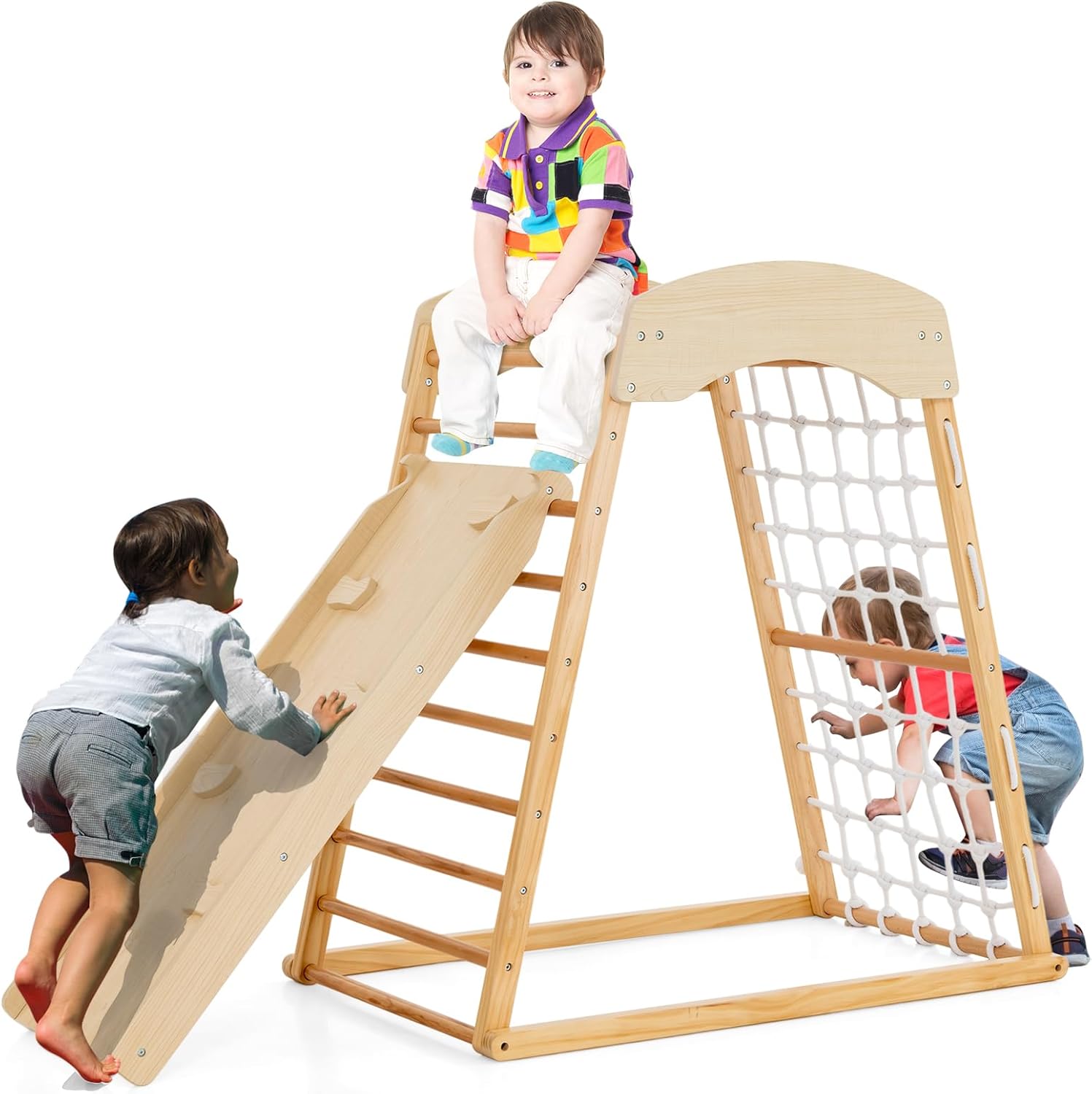
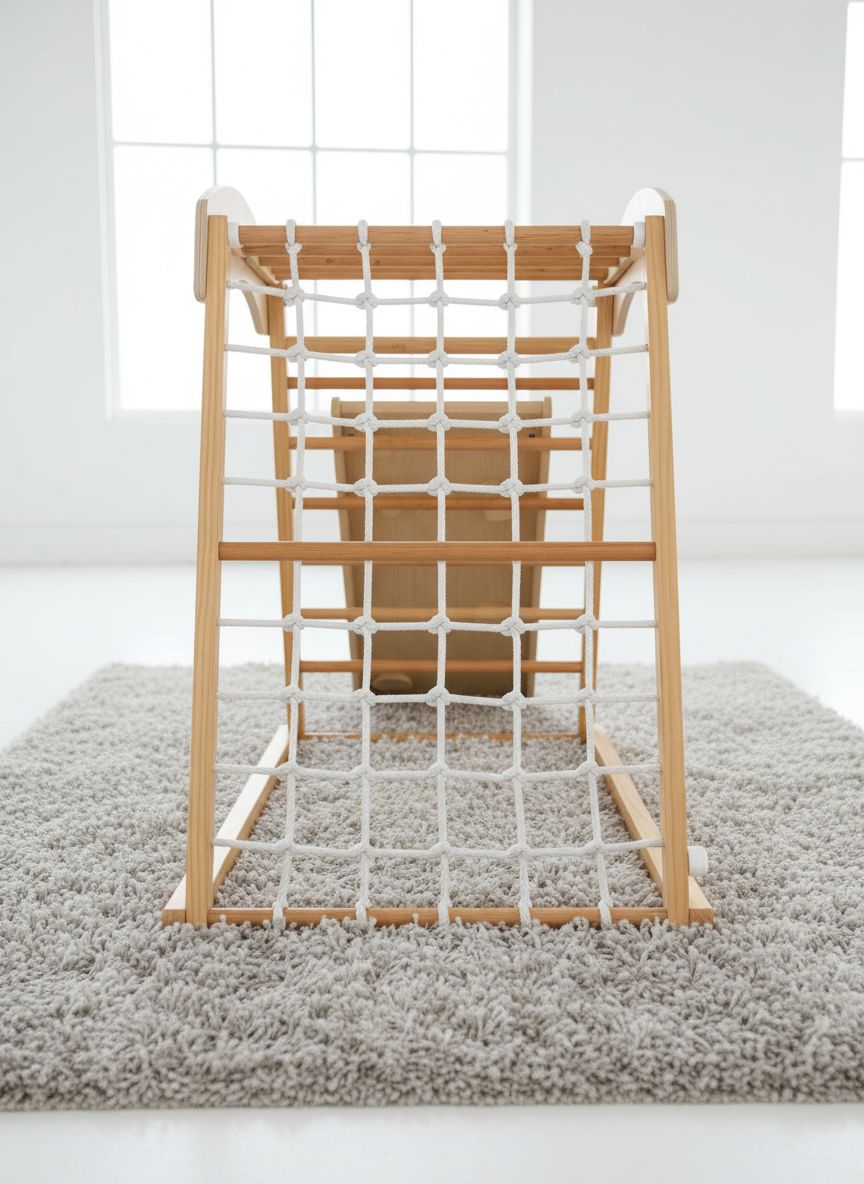
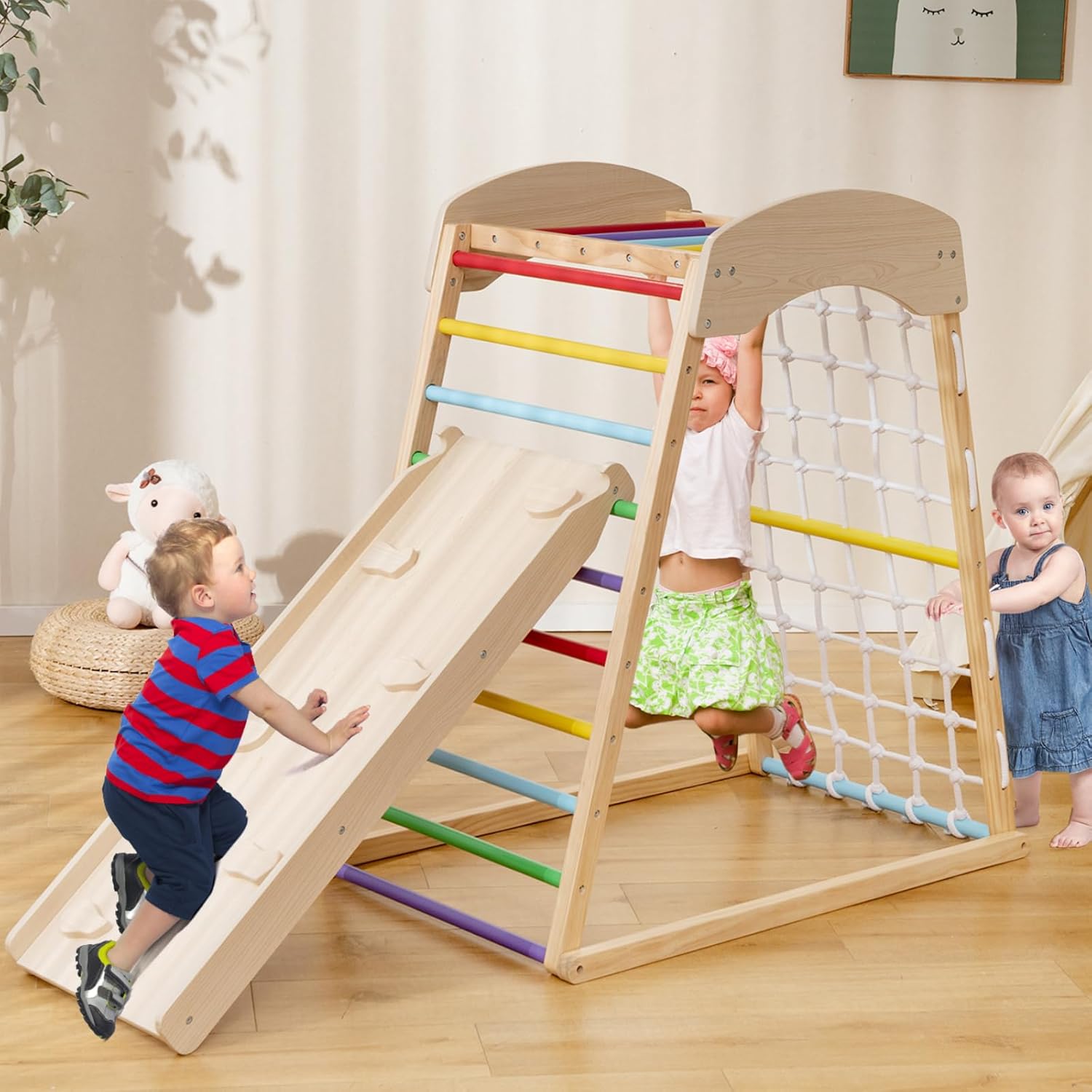
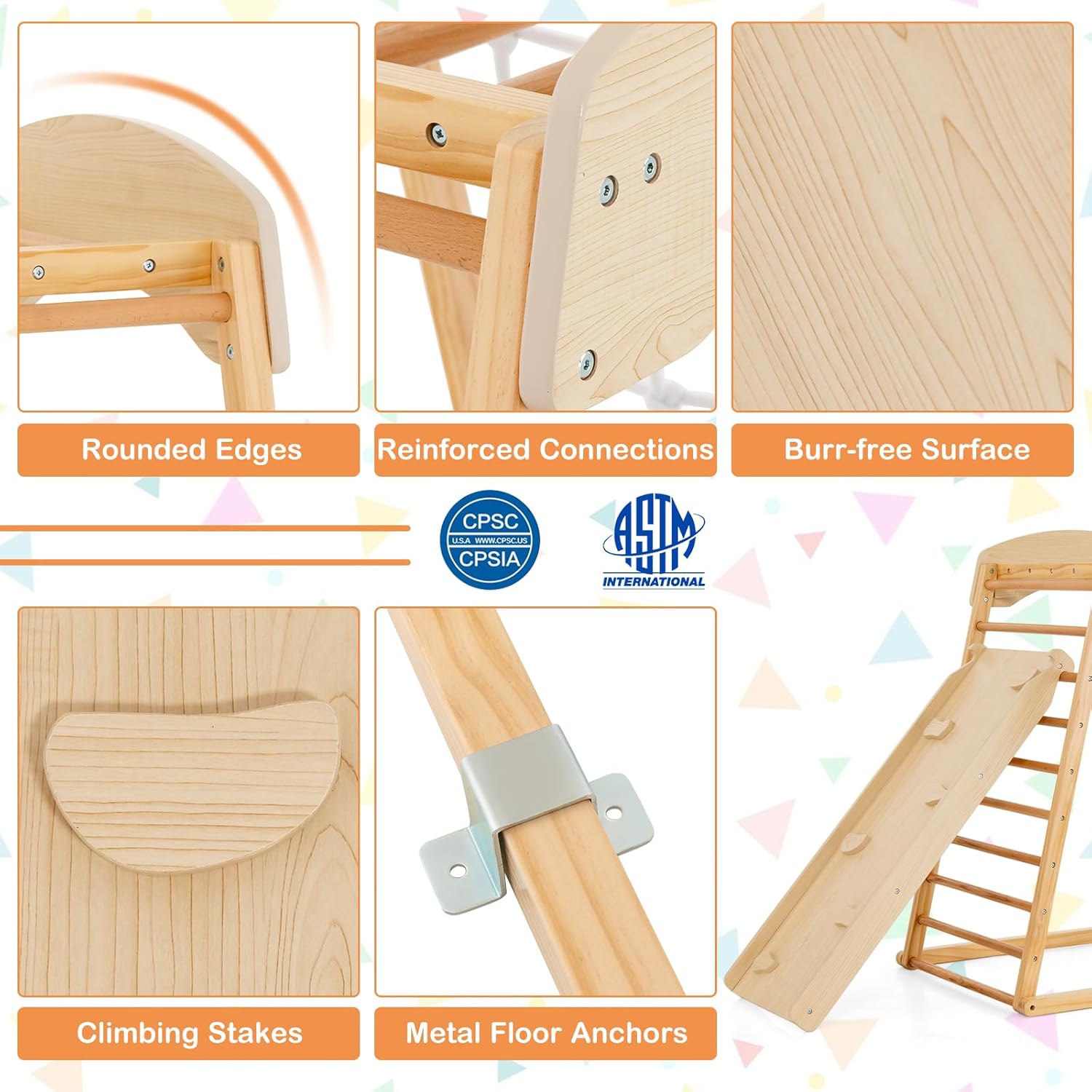
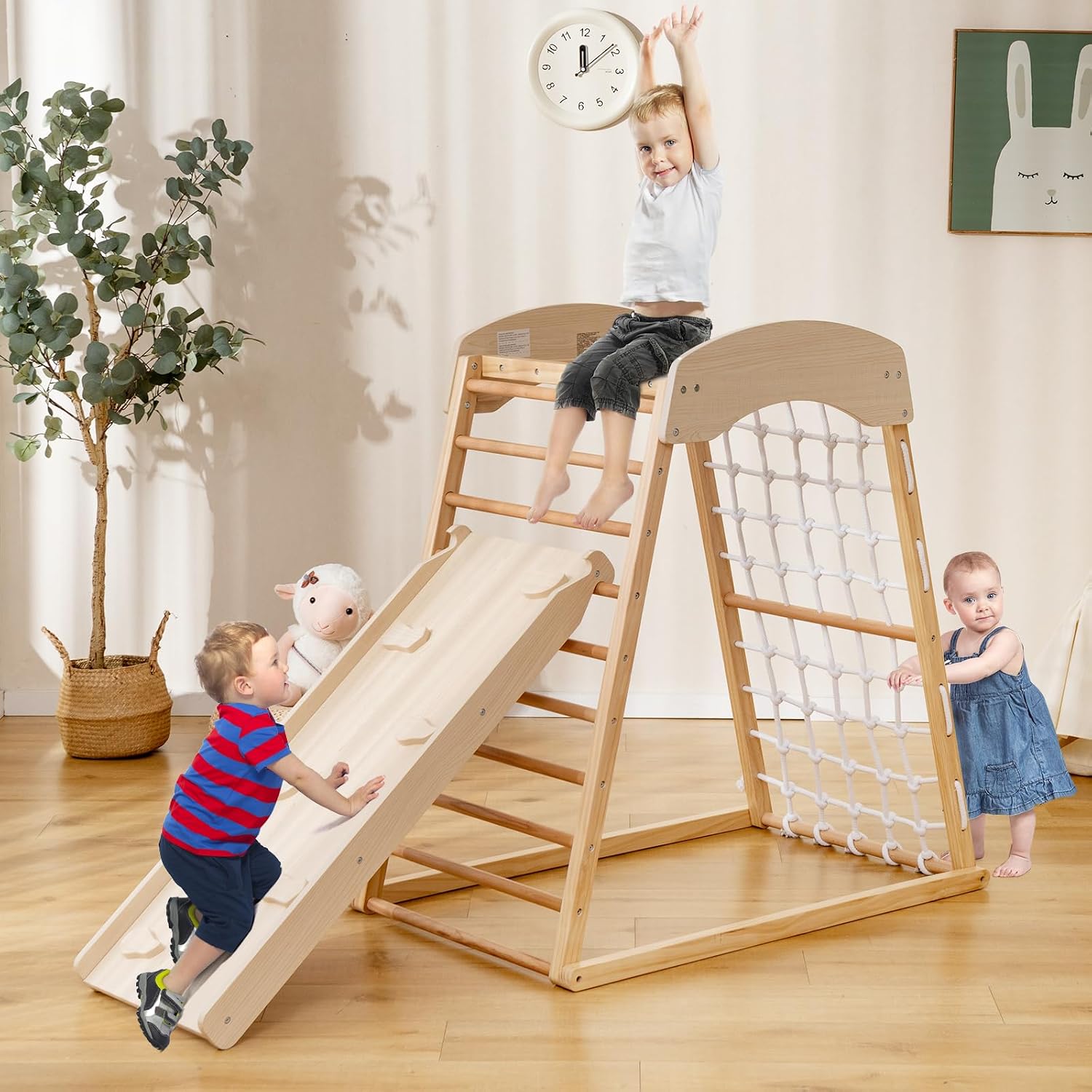
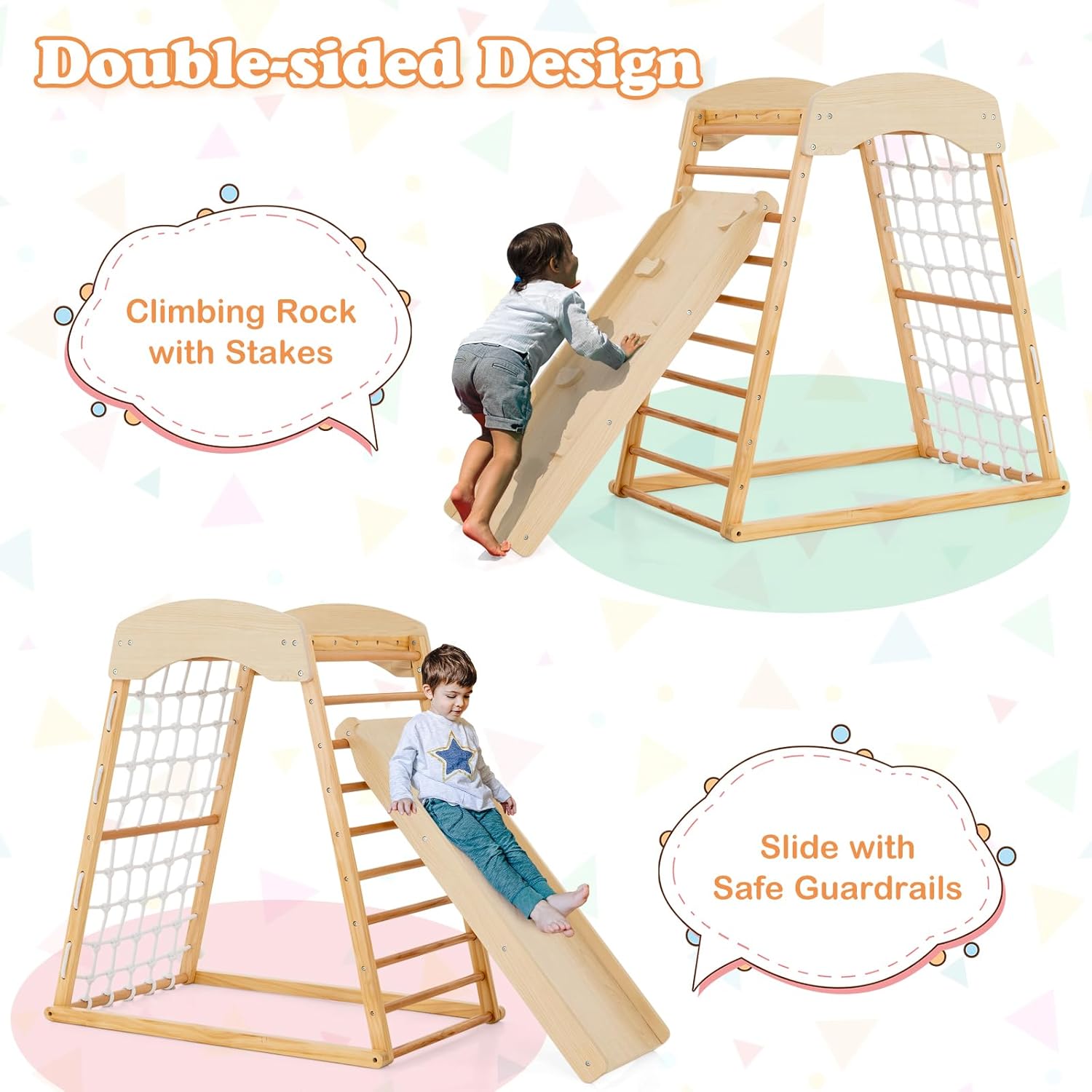
The Costzon toddler climbing gym arrives with more pieces than you expect, but the build is methodical and genuinely doable for one adult on a Sunday afternoon with a podcast playing. Once assembled, the structure is substantial in the best way, heavy enough that it doesn’t skitter across hardwood when a kid throws their full body weight at it, which, for the record, happens constantly. The double-sided slide gets used in both directions immediately. The climbing rock side is textured with grip-friendly handholds, and the climbing net offers a completely different physical challenge: that slight unpredictable sway that forces a child to recalibrate balance mid-climb.
“This is the first indoor toddler learning toy that has made my child sweat, and I mean that as the highest compliment.”
By week three, my son had developed a specific rotation: net first, slide down, scramble back up the rock wall, repeat. The Montessori philosophy of child-led physical challenge is genuinely embedded in the design here, not just invoked as a marketing term. It’s worth noting that the surrounding floor area needs to be clear. We pulled our coffee table to the other side of the room, and I don’t miss it.
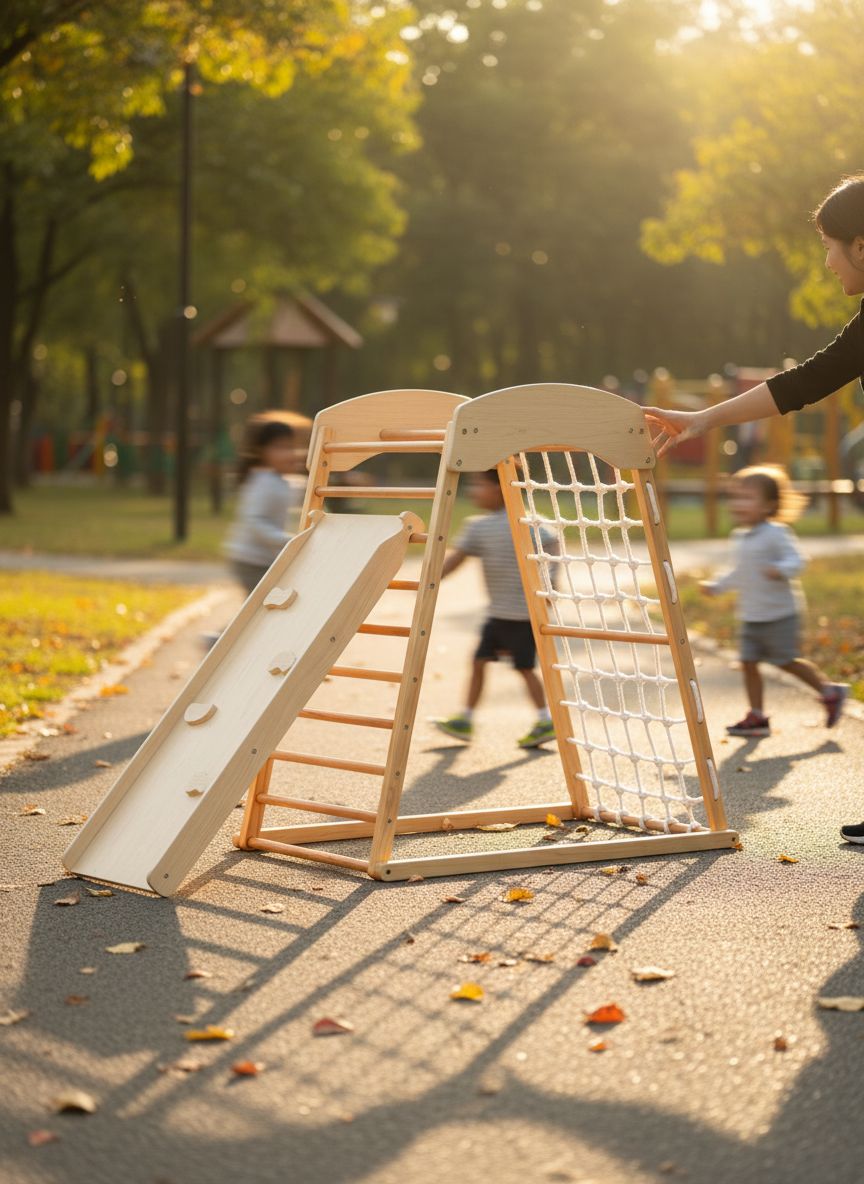
The Real-Life Scenarios I Used It In
Scenario 1: Saturday Morning, Pajamas Still On
This is the gym’s natural habitat. Eight-fifteen, no plans yet, both kids still in their sleep clothes, the apartment soft and quiet in that golden-hour weekend way. My two-year-old walked directly to the climbing structure before he’d even asked for breakfast, which told me everything I needed to know about how it registers in his imagination. He worked the net side for a solid twenty minutes while I made coffee. There was no prompting, no “okay, now try the slide.” He had a whole internal agenda I wasn’t privy to. By the time breakfast was ready, his cheeks were flushed and he was genuinely tired in the way that only real physical effort produces.
Scenario 2: Tuesday After Preschool Pickup
The after-school window is the danger zone in our house. Too tired to play nicely, too wired to sit still. I used to dread it. Now I just open the door and point toward the indoor wooden playground climber and let decompression happen organically. There’s something about climbing that seems to metabolize the overstimulation of a school day in a way that no quiet activity can replicate. According to HealthyChildren.org, children in the toddler and early preschool years need daily vigorous physical activity for both motor development and emotional regulation. This thing delivers that without requiring me to bundle anyone into a coat.
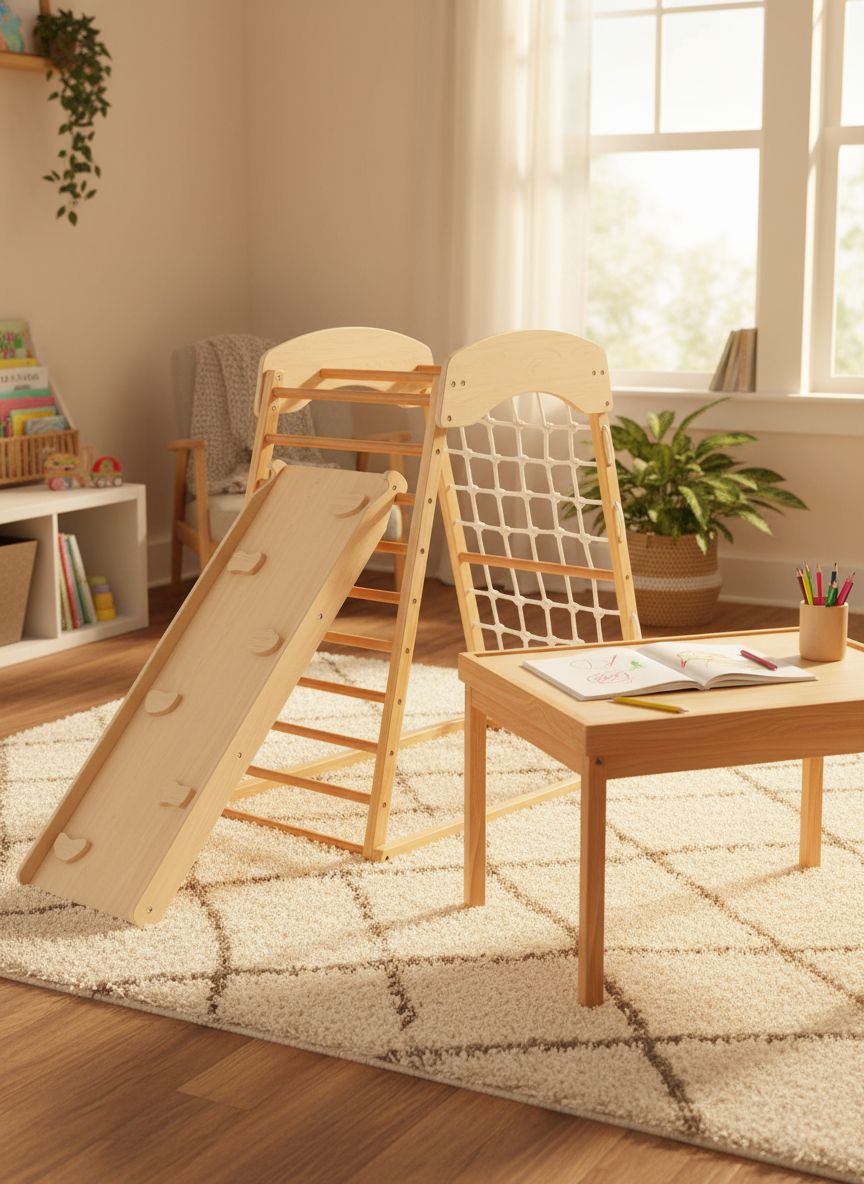
Scenario 3: The Grandparent Visit
My mother-in-law arrived skeptical. She looked at the structure in our living room the way people look at furniture they’ve decided is ugly but are too polite to say so out loud. Then my son grabbed her hand and walked her through every feature with the gravity of a small docent. She watched him navigate the climbing rock and net sequence three times in a row. By the end of the visit, she had taken a photo of the thing and sent it to my sister-in-law. The big-gift gifting potential here is real. This is the kind of present that gets talked about at the birthday party and remembered at the next one.
What Other Parents Are Saying
With thirty-four reviews averaging four and a half stars, the pattern that emerges is consistent: parents are surprised by how sturdy the finished structure feels, and kids are using it more than parents predicted. A few reviewers note the assembly takes longer than the instructions imply, which tracks with my own experience. Plan for ninety minutes, not forty-five.
The recurring phrase in the positive reviews is “worth the space,” which is exactly the calculation every apartment or small-house parent runs before committing to a full indoor toddler climbing playset. The consensus seems to be: yes, it is.
Who Should Skip It
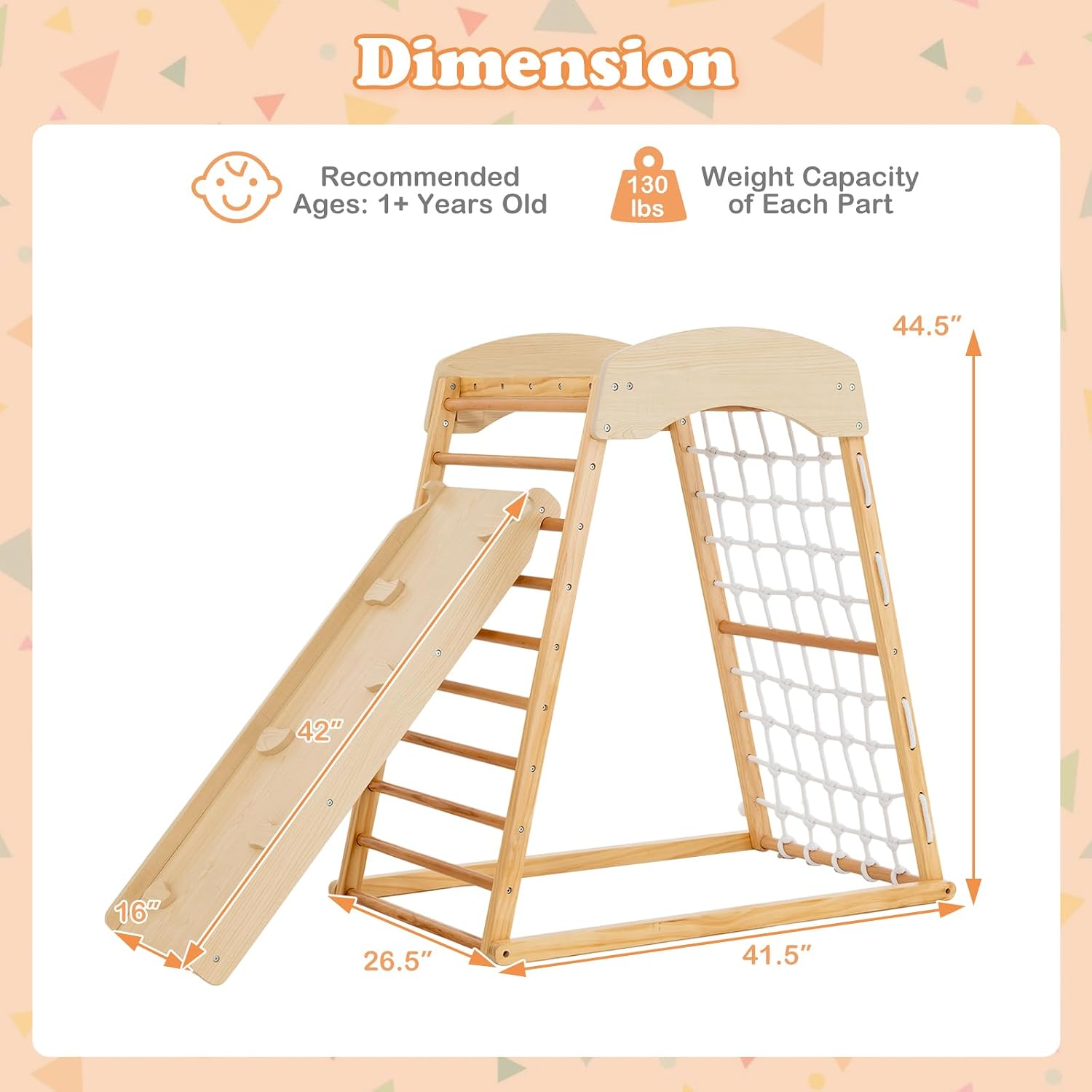
If your child is under two, this is not the right fit yet. The American Academy of Pediatrics guidance on physical play and motor readiness suggests that certain climbing challenges require a baseline of balance and upper-body coordination that most kids develop closer to the two-year mark, and the climbing net in particular demands that kind of control. If your living space is genuinely compact, the footprint here requires honest measurement before you buy. This is not a foldaway item. It also isn’t suitable for households where a child cannot be supervised during use, because independent climbing on a structure this size carries real fall risk. Parents looking for a passive, no-supervision-needed activity should look elsewhere.
What It Replaces (or Complements) at Home
We retired a foam climbing block set that had served us well until my son outgrew it somewhere around twenty-two months. The blocks were great starter toddler learning toys for early motor development, but they stopped offering any real challenge once he could clear them in a single step. The Costzon gym stepped directly into that gap. It also replaced approximately four hundred trips to the indoor playground during cold months, which I’m not going to pretend isn’t its own financial and logistical argument. We kept one balance board alongside it, because the two complement each other beautifully: the board for quiet, focused balance work and the gym for full-body, high-energy climbing sessions.
FAQ
Is this safe for a just-turned two-year-old?
Yes, with supervision. The lower climbing features, including the rock wall handholds and the slide, are well-suited to a child who has solid walking and basic climbing confidence. The net requires a bit more coordination, so younger two-year-olds may need a spotter for the first several sessions.
Does the wood finish hold up over time?
The non-toxic paint finish has held up well in our house across several months of daily use, with no peeling or significant scuffing. Wiping it down with a damp cloth is all the maintenance it has needed.
Will my kid actually still use this at age four or five?
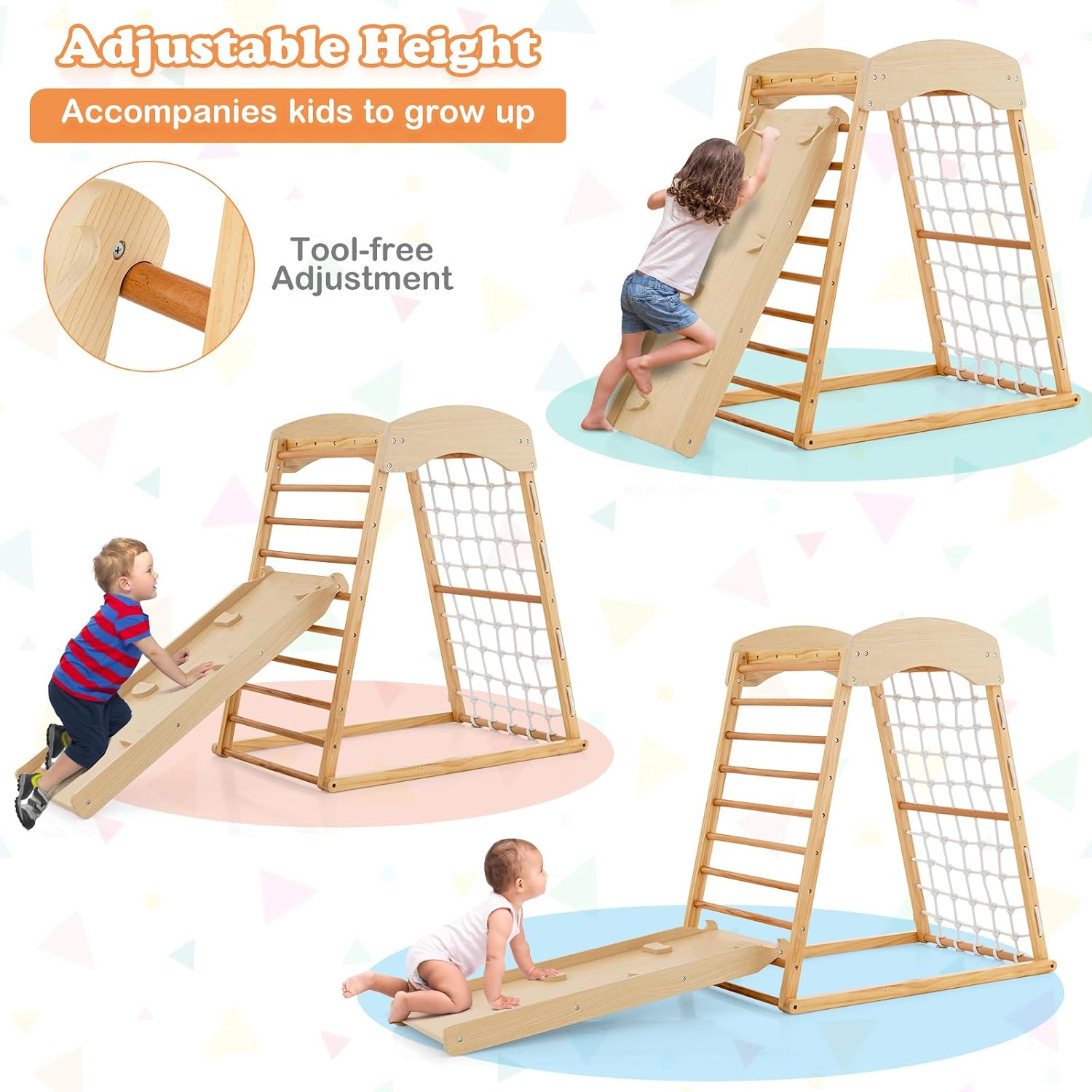
In our experience, yes. The rated age range goes up to six, and the physical challenges scale because kids continue to find faster, more complicated ways to use the same structure. My son now attempts to climb the slide upward, which is a whole new skill set entirely.
Does the quality justify the investment for something that lives in your living room?
Given the daily use frequency, the solid wood durability, and the realistic potential to hand it down to a younger sibling or resell in good condition, the value reads noticeably above what you’d expect at this price point. This is not a toy you’ll replace in a year.
Is this a reasonable birthday gift idea?
It’s the kind of centerpiece gift that makes other gifts look modest by comparison. For a second or third birthday, it lands exactly right, especially if the family has indoor space and a child who burns energy constantly.
The Verdict
Six months from now, I fully expect this structure to still be the first place my son goes on a Sunday morning. The Costzon Indoor Jungle Gym delivers on its core promise as a toddler learning toy and indoor climbing playset in a way that feels durable, thoughtful, and genuinely Montessori in spirit rather than just in label. It builds the gross motor skills, balance, and physical confidence that early childhood development research consistently flags as foundational, and it does it in a format that fits into an actual living room without demanding you sacrifice your entire aesthetic. The assembly requires patience, the floor clearance requires planning, and the supervision requirement is real. But for a child between two and five with energy to burn and a parent who wants something built to last, this is a considered, worthwhile addition to your toddler active play setup. Check out our full toddler category for more picks across every developmental stage.
Bottom line: this is the indoor toddler climbing playset I’d recommend to any parent who’s watched their kid eye the bookshelf one too many times.
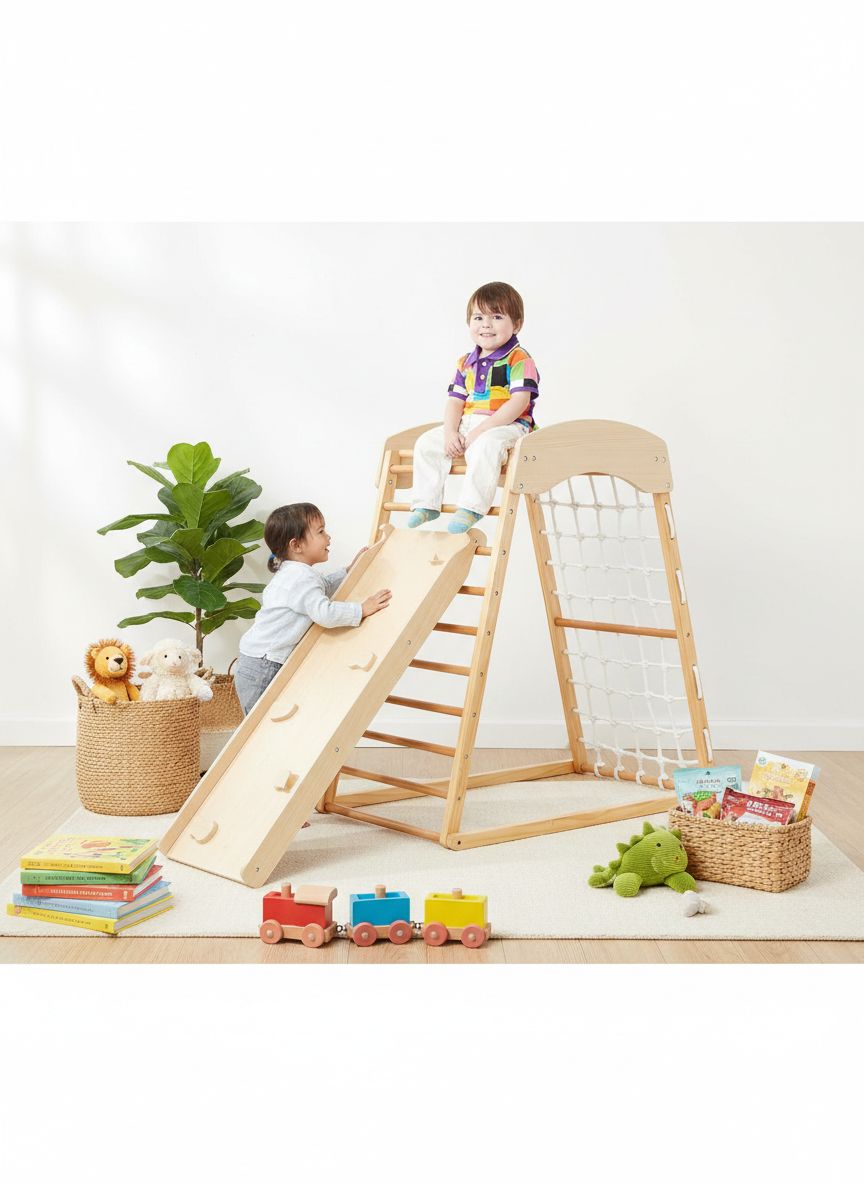
Every Angle
The product as photographed for Amazon — front, side, detail, in use.
As an Amazon Associate I earn from qualifying purchases.