Wooden Activity Cube for Toddlers: Honest Review
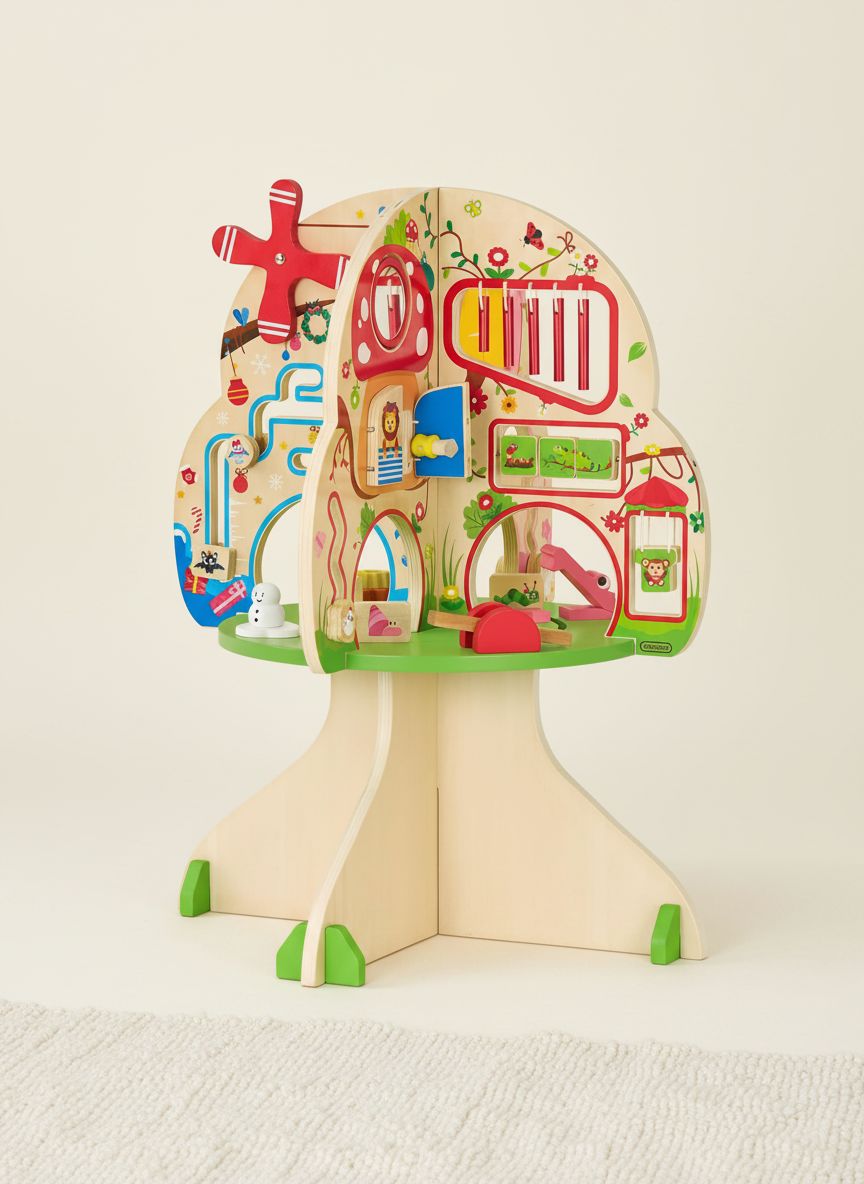
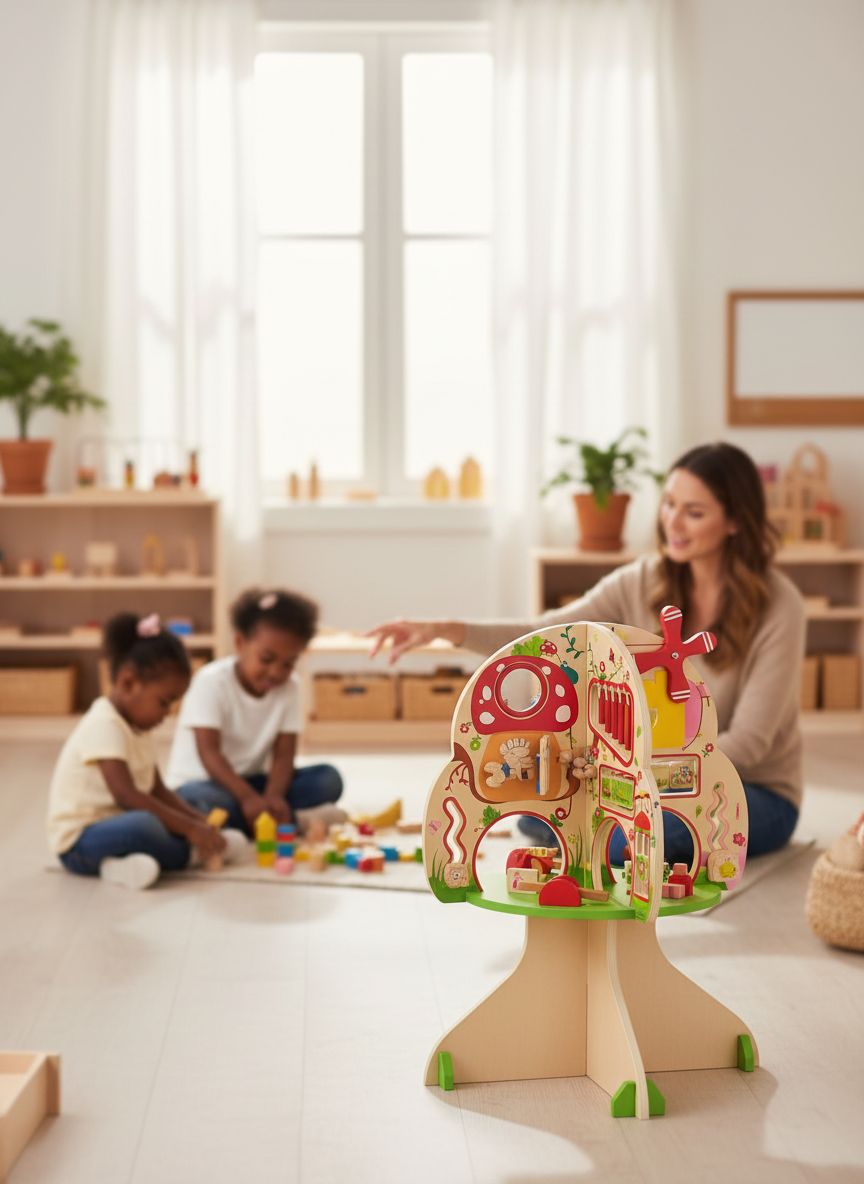
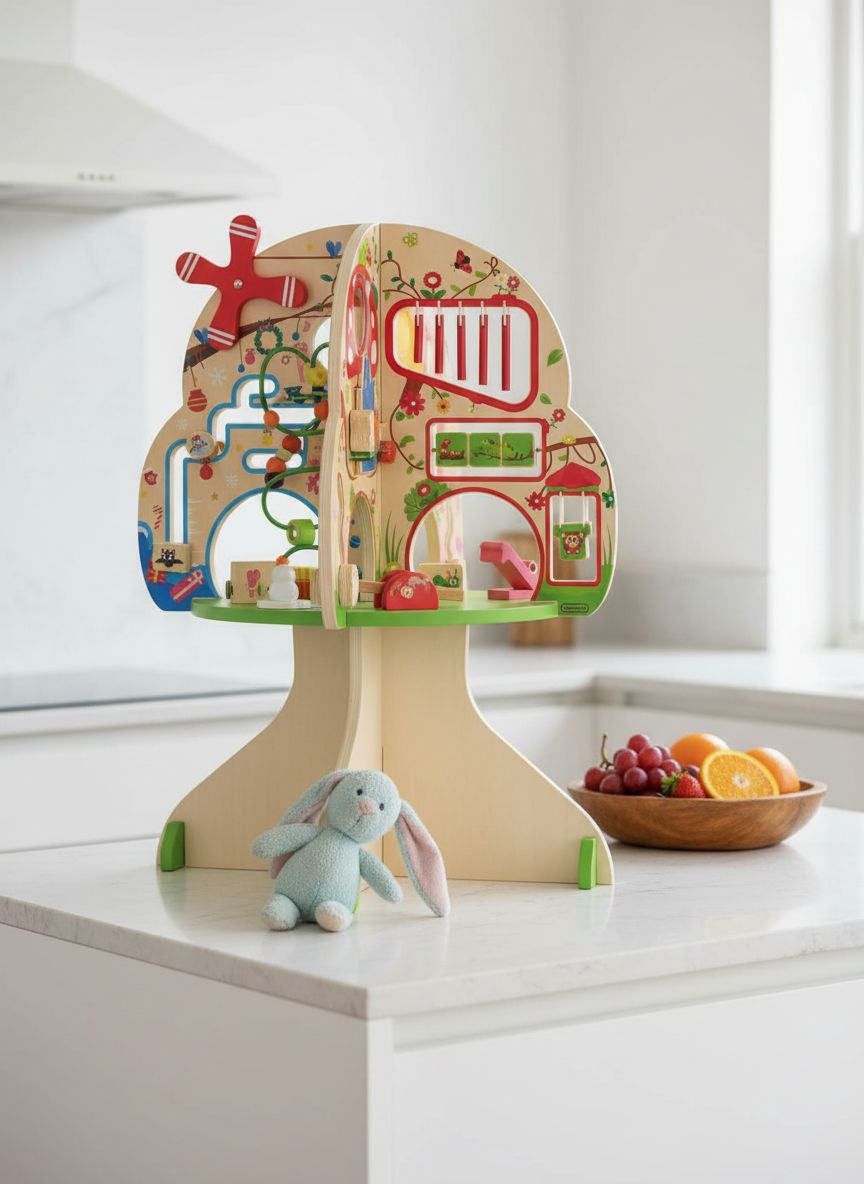
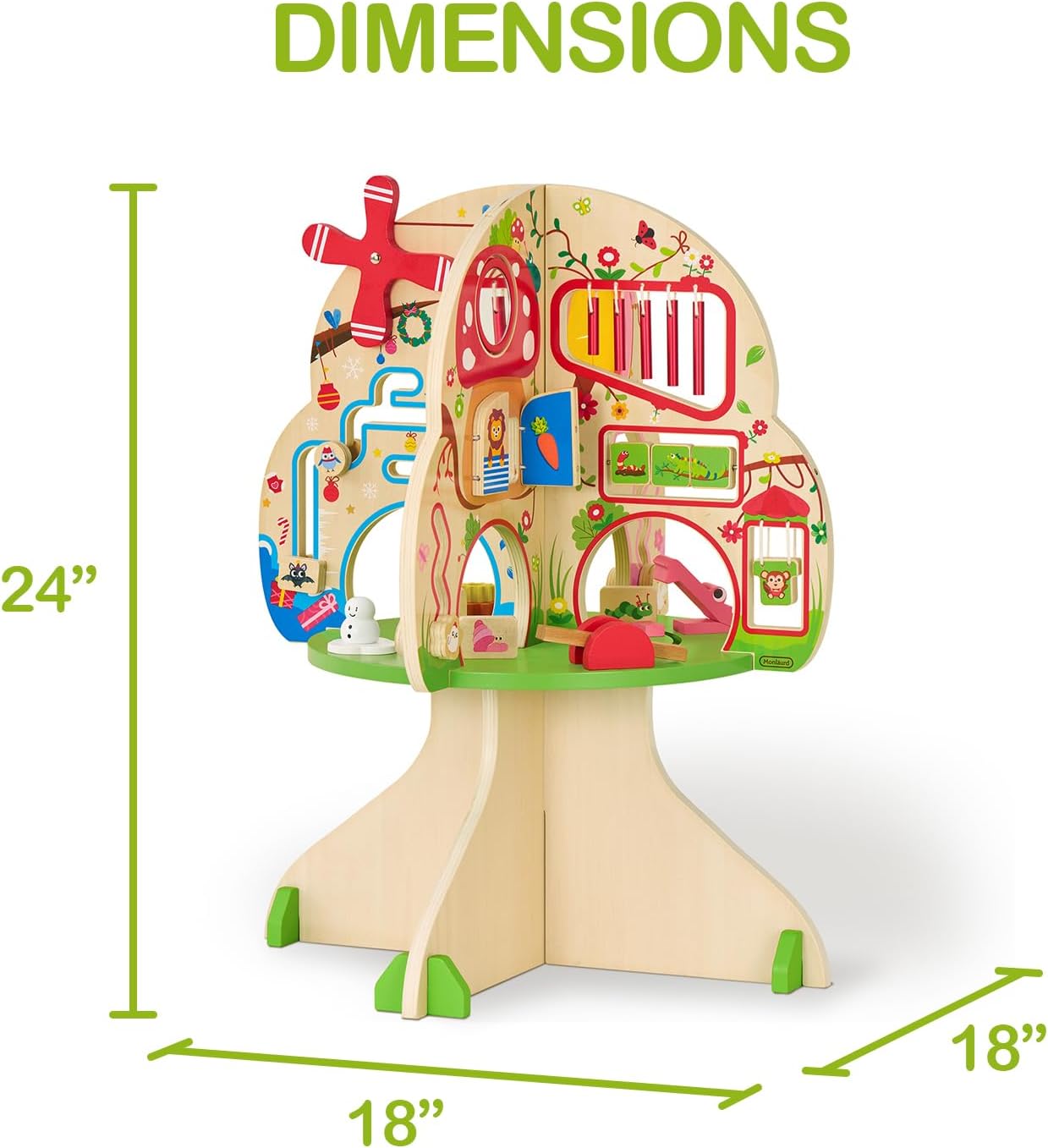
The Monläurd Montessori Wooden Tree Activity Center arrived on a Wednesday, and by Thursday morning my fourteen-month-old had abandoned every other toy in the living room like it no longer existed.
It started the way most toddler toy discoveries do: a low-stakes Tuesday, the kind where the play mat feels stale and your kid keeps dragging the spatulas out of the kitchen drawer because apparently that is more interesting than anything you own. I had the Monläurd Montessori Wooden Tree Activity Center sitting in its box by the couch, half-assembled, because I’d run out of steam mid-setup the night before. My daughter spotted it before I did. She walked straight over, grabbed the edge of the tree trunk cutout, and started working a wooden peg with the focused intensity of someone filing her taxes. She did not look up for eleven minutes. Eleven minutes of uninterrupted independent play from a toddler who usually treats solo time like a personal affront. I counted.
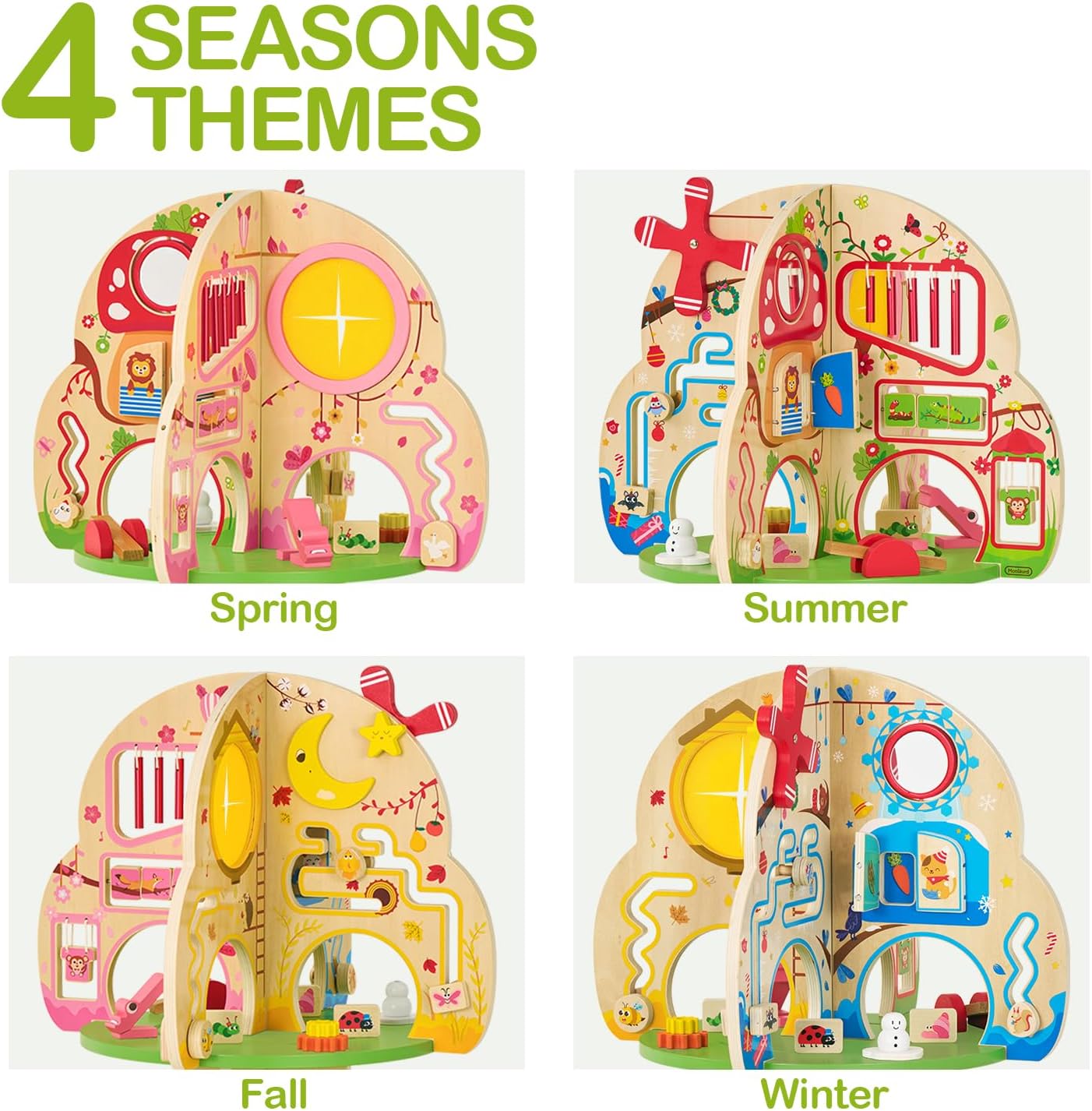
The First Time I Saw It
I found the Monläurd activity center on a late-night scroll, the kind you do when you’re technically trying to fall asleep but end up researching toddler learning toys because the algorithm knows you too well. What made me pause wasn’t a flashy ad. It was a photo of the thing in someone’s Scandinavian-looking playroom, all natural wood tones and clean seasonal imagery, looking like it belonged on a shelf in a Danish toy shop rather than a warehouse fulfillment center.
It looked like something a pediatric occupational therapist would have on their waiting room table. That was enough for me to dig deeper.
How It Actually Plays / Works
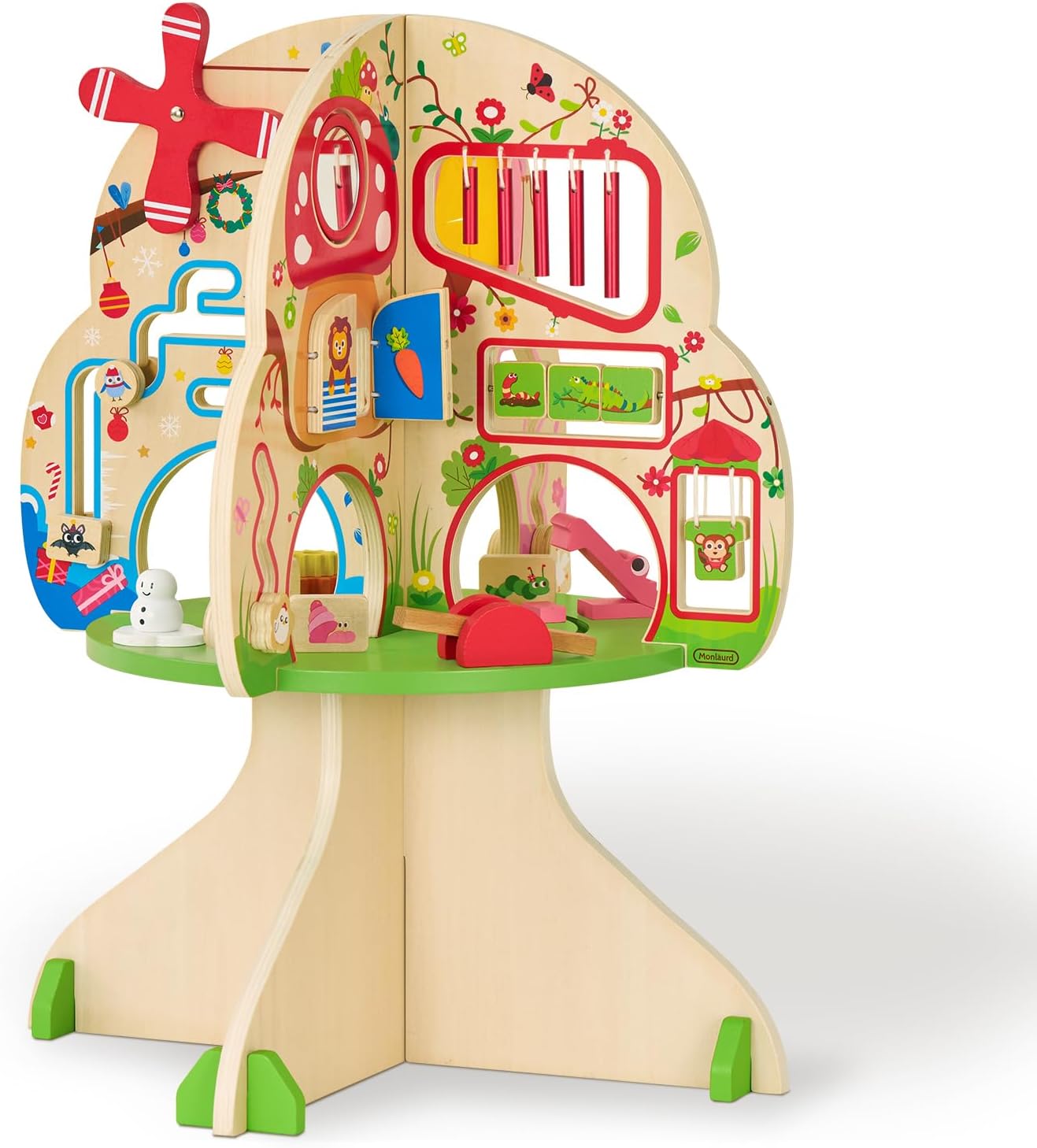
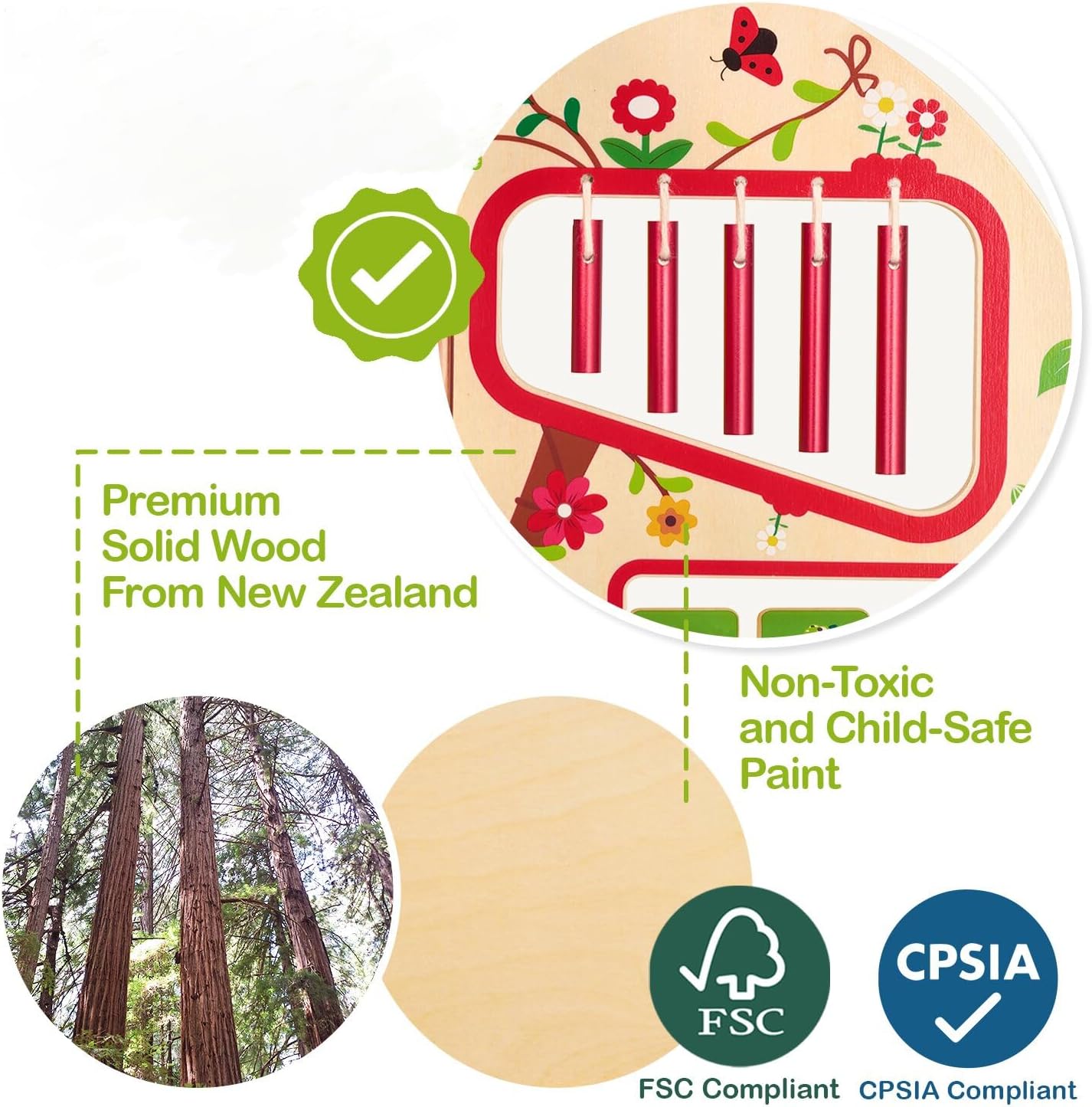
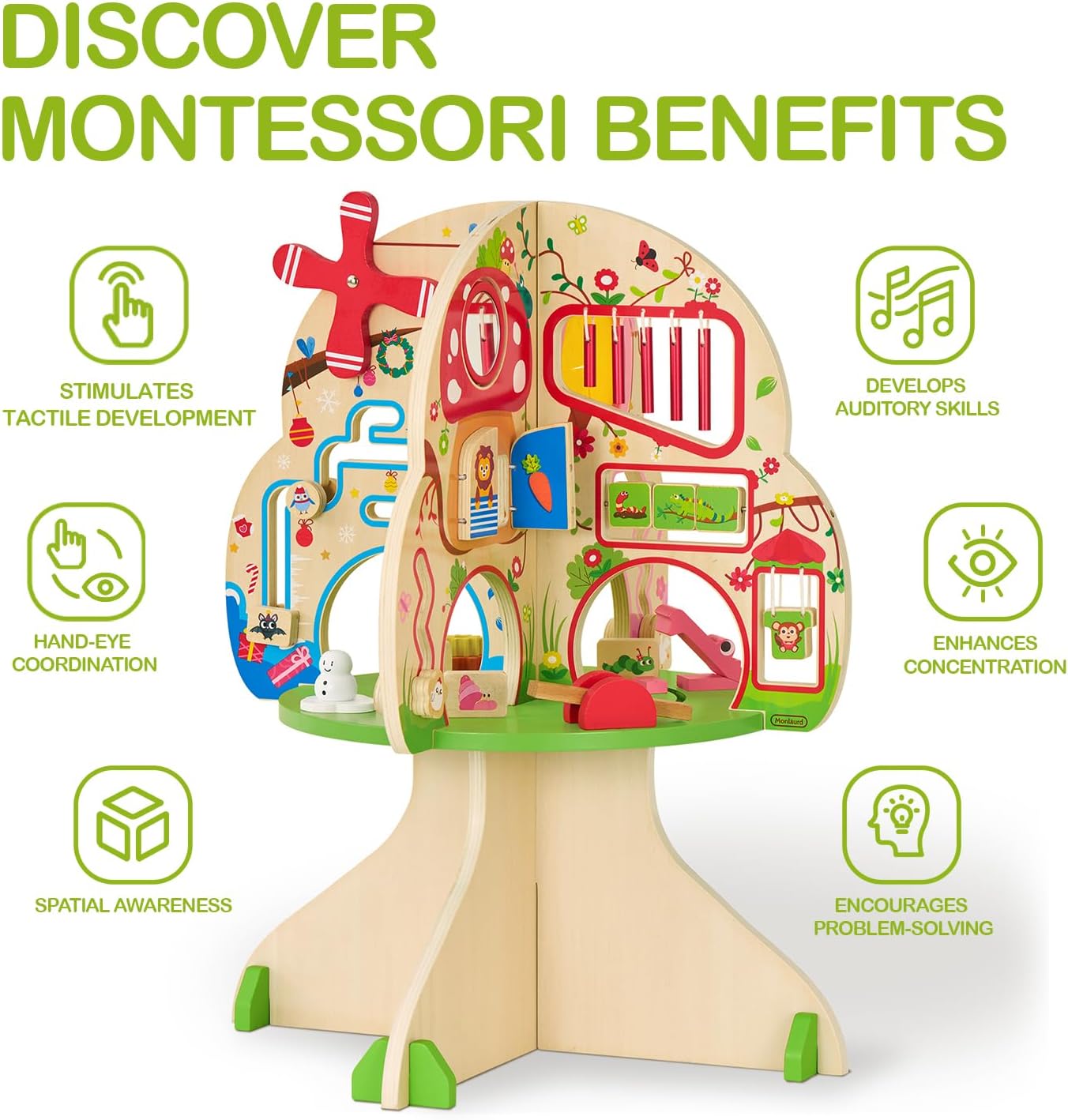
The design is structured around a four-season tree theme, which sounds whimsical until you realize how much sensory and fine-motor work is packed into each panel. There are spinning gears, sliding beads, shape-sorting components, and textured surfaces that feel genuinely different from one another under small fingers. The wood has that satisfying heft that cheap plastic toys never manage, and the non-toxic paint finishes are smooth without being slippery. Nothing rattles, nothing catches, nothing feels like it was assembled to survive exactly three months of use.
“This is the rare toddler toy that looks like it belongs in your home, not just in your kid’s chaos zone.”
The activity cube format means your toddler can orbit it, approach from different angles, and self-direct the experience, which is core to the Montessori approach to child-led exploration. I’ll be honest: the first few days, my daughter mostly chewed the corner of it and ignored the gears entirely. By day five, she was working the bead track with both hands. That progression felt real, not rushed. The learning curve is the point.
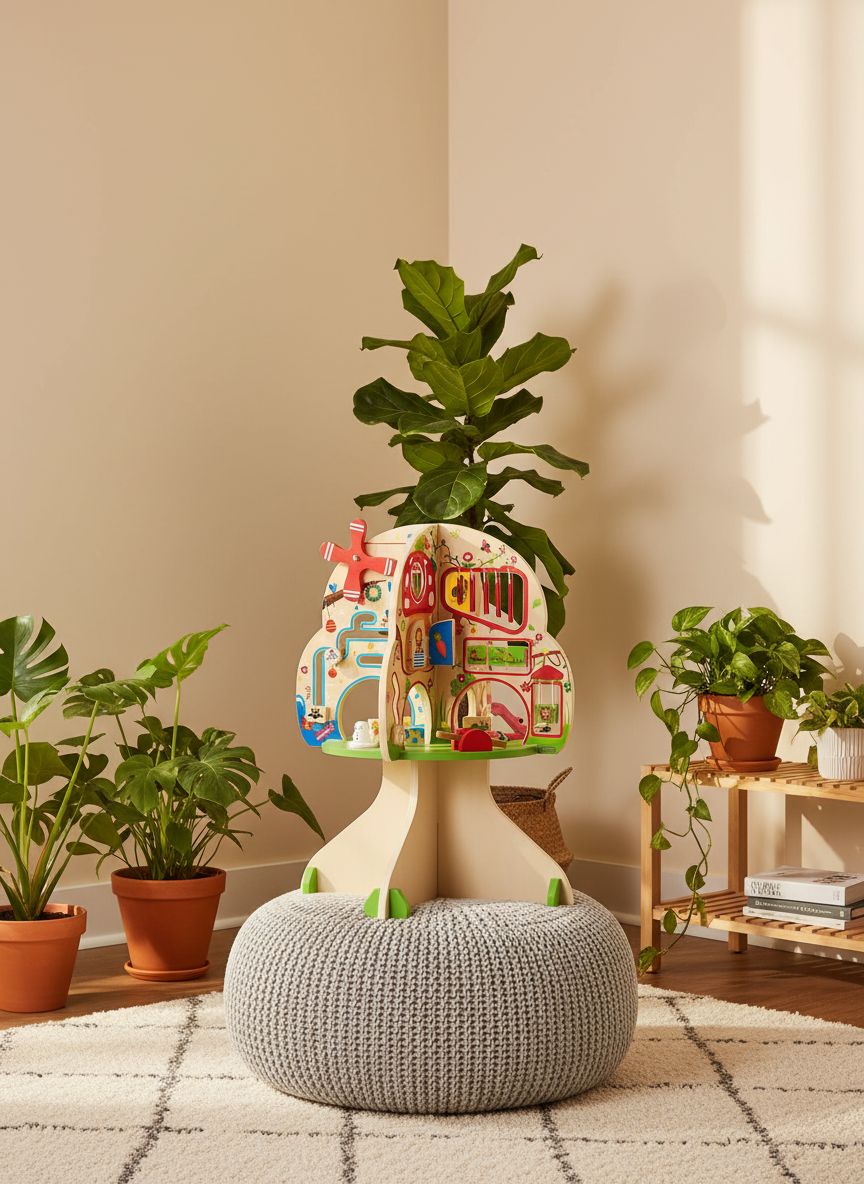
The Real-Life Scenarios I Used It In
Scenario 1: Sunday Morning, Pajamas Still On
Sunday mornings in our apartment involve coffee, the soft chaos of a toddler who woke up ready to perform, and the desperate search for something to occupy her while I drink said coffee while it is still hot. The Monläurd sensory table for toddlers has become our anchor for exactly this scenario. I set it up near the living room window where the light comes in, put on something ambient, and she gravitates to it like it’s a task she remembered she had. The spinning components seem to be especially compelling in morning light, maybe because of the shadows they cast on the floor. I don’t know the science. I just know I finished my coffee.
Scenario 2: After Preschool Pickup, Full Feelings Energy
The post-pickup window is a particular kind of toddler weather system. My daughter arrives home overstimulated, slightly feral, and needing to do something with her hands that is not pulling things off shelves. What I’ve noticed is that the tactile repetition of the busy board elements, running the beads back and forth, spinning the seasonal gears, seems to help her land. A pediatric occupational therapist I spoke with described this kind of sensory-rich, hands-on play as a natural self-regulation tool for toddlers in the one-to-three range. That tracks completely with what I see at 4 p.m. in my kitchen.
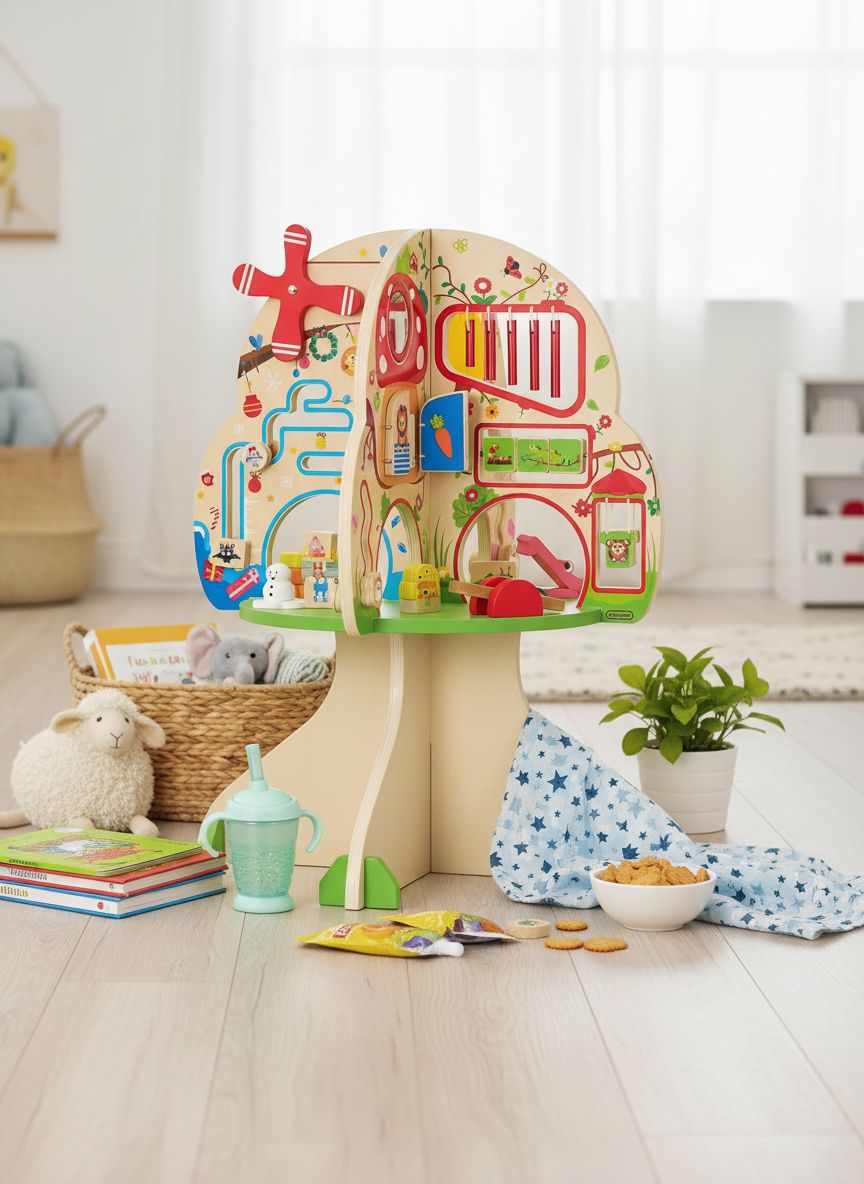
Scenario 3: Grandparent Visit, Audience of Four Adults
My mother and mother-in-law both visited on the same weekend, which was its own experiment in competing grandparenting styles. The Monläurd toddler activity center became the unexpected common ground. Both grandmothers spent a solid twenty minutes working the panels themselves before my daughter reclaimed it. What struck me was how intuitive the design read to people across age groups: no batteries, no instructions required, no blinking lights demanding attention. It’s the kind of toy adults actually enjoy interacting with, which tells you something about how well it’s built. My mother-in-law called it “a real toy,” which, coming from her, is the highest possible endorsement.
What Other Parents Are Saying
The Monläurd Montessori wooden activity center review pool is still relatively small, which reflects how recently this product entered the market rather than anything about its quality. Early ratings sit solidly at 4.6, and the pattern in written feedback points consistently to longevity and design quality over novelty. No one is talking about it breaking. That alone is a signal worth noting in the toddler learning toy category, where construction complaints are usually the first thing to surface in reviews.
The absence of complaints about durability in the early review window suggests the build quality is holding up in real homes, not just in staged photographs.
Who Should Skip It
If your child is under twelve months, this is not the right moment. The components are engaging precisely because they require intentional fine-motor manipulation, and most children under one don’t have the hand control to get much from it yet. This is a toddler learning toy built for the twelve-to-thirty-six-month window, and the design earns that range honestly. Families in very small spaces may also find the cube footprint more than they bargained for; it’s substantial, and it reads as a statement piece in a room. If you want something that tucks into a corner invisibly, this is not it. And if your toddler is firmly in a “throw everything” phase rather than a “manipulate everything” phase, you may want to wait a few months before introducing it.
What It Replaces (or Complements) at Home
Before this arrived, we had a plastic shape-sorter that had been chewed into abstraction and a stacking ring set my daughter had lost interest in somewhere around month eleven. Both are now in a donation bag. The Monläurd busy board for toddlers fills the fine-motor gap that both of those were meant to address, but does it with more depth and more longevity. It also layers in the kind of spatial reasoning and cause-and-effect learning that single-purpose toys can’t replicate. I’d pair it with open-ended building materials for a well-rounded setup, and you can explore more combinations through our editor’s top toddler picks.
FAQ
Is this activity center actually appropriate for twelve-month-olds, or is that a stretch?
The twelve-month lower bound is accurate in practice. Younger one-year-olds will gravitate toward the tactile and sensory elements first, the textures, the spinning components, before they work up to the more complex fine-motor tasks. The design supports both entry points.
Is the non-toxic paint safe if my toddler chews the wood?
The non-toxic paint finish is the relevant safety feature here, and it’s a real one, not marketing language. That said, no wooden toy is designed to be chewed indefinitely, so if your child is in a heavy mouthing phase, supervise accordingly and wipe surfaces regularly with a damp cloth.
Will my toddler still be interested in this at age two-and-a-half?
Based on the design complexity and the four-season learning framework built into the activity center, yes. The components that feel like a challenge at fourteen months become satisfying mastery moments at twenty-four months, and the open-ended format means there’s no single “correct” way to interact with it that gets exhausted quickly.
Does the quality justify choosing this over less expensive toddler activity centers?
The solid wood construction, non-toxic finish, and multi-year developmental range mean this reads as a value-forward investment when you calculate cost-per-month of actual use. For what you’re paying, the build quality and replay potential are meaningfully above what you’d expect in this tier of the toddler learning toy market. It also passes down well to a sibling or younger cousin without looking like a secondhand toy.
Is this a good birthday or holiday gift for a one-year-old?
It’s an excellent one-year birthday gift specifically, because it arrives at exactly the right developmental window and has the visual presence of something worth unwrapping. The natural wood aesthetic also photographs well, which, whether we admit it or not, factors into gift-giving decisions. Check our toddler gift ideas guide for more age-specific options at this stage.
The Verdict
Six weeks in, the Monläurd Montessori Wooden Tree Activity Center is still the first thing my daughter walks to when she enters the living room. That is not a small thing. Toddler attention is ruthlessly honest, and the toys that hold it past the first week are the ones worth talking about. I can see this being relevant through her third birthday, maybe beyond, as the seasonal learning structure continues to give her new frameworks for what she already knows how to do mechanically. It fills a specific and real gap in the toddler developmental toy category: it’s tactile without being chaotic, educational without being instructional, and beautiful without being precious. The consumer safety and quality benchmarks it meets are legitimate, not incidental. For parents building out a Montessori-inspired toddler learning environment at home, this is the piece that anchors the room. If your child is between twelve and thirty-six months and you want one toy that earns its floor space every single day, this is it.
Every Angle
The product as photographed for Amazon — front, side, detail, in use.
As an Amazon Associate I earn from qualifying purchases.