Soft Climbing Blocks for Toddlers: Honest Review
The morning my fourteen-month-old figured out she could summit the big rainbow arch, dust herself off, and immediately climb it again, I understood exactly why this set was worth every inch of living room floor space it swallowed.
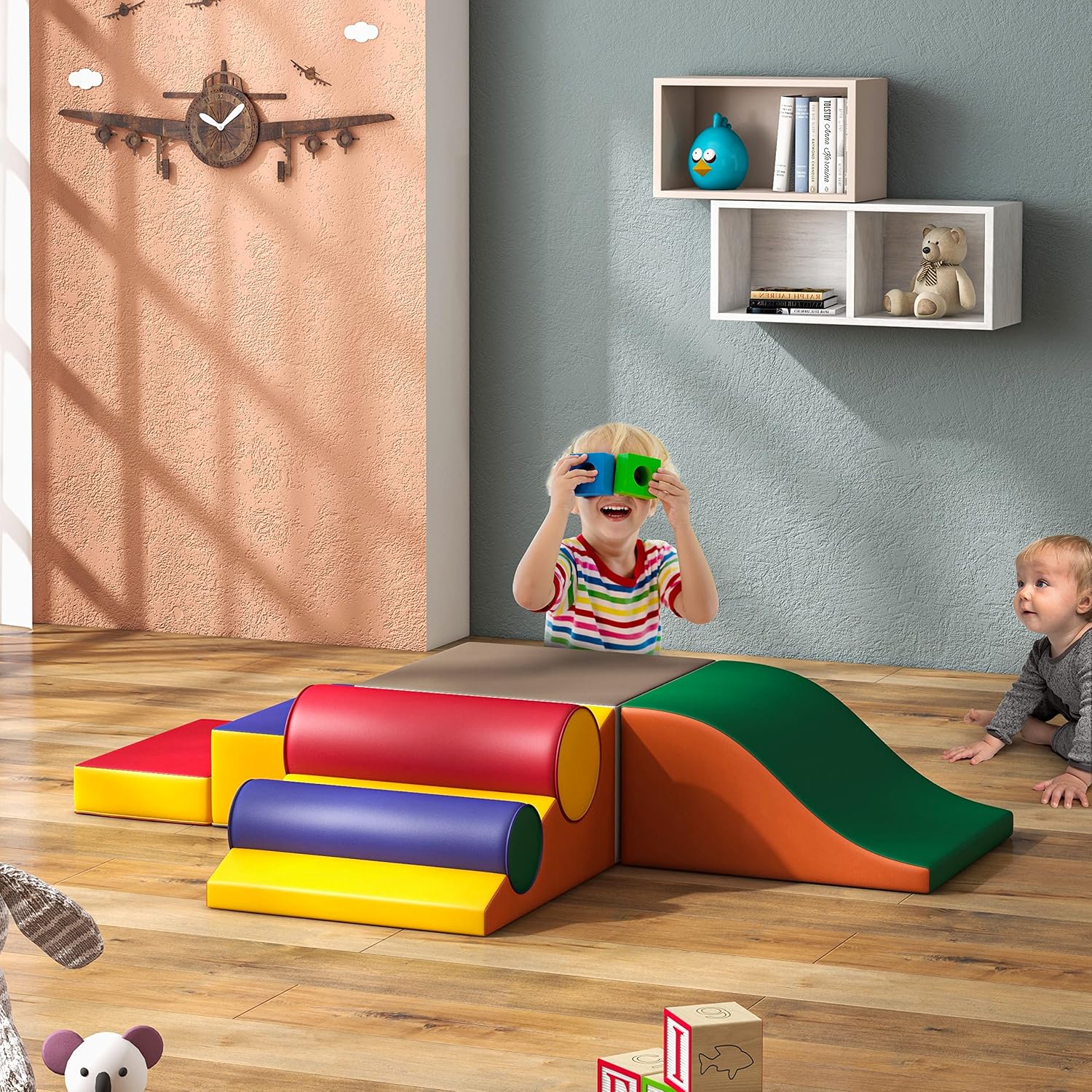
It was a Saturday in February, the kind where you’ve already exhausted the shape sorter, vetoed another episode of the penguin cartoon, and are running low on indoor ideas before nine in the morning. I dragged the Betterhood Climbing Blocks for Toddlers out of the corner where I’d half-assembled them the night before, clicked the last wedge into place, and stepped back. My daughter stood in the doorway in footie pajamas, blinked at the colorful foam mountain range sitting in the middle of our living room, and walked straight toward it like she’d been waiting her whole life for this exact obstacle course. Within four minutes she was facedown on the slide wedge, giggling into the carpet. Within ten, she was trying to figure out the arch. I have not put these blocks back in their bag once since that morning.
The First Time I Saw It
I stumbled across the Betterhood set the way I find most things now: through a friend’s living room photo on a group chat, where I spotted a very familiar-looking rainbow foam structure in the background and immediately sent a string of question marks. She sent back a link and three enthusiastic voice memos. That was enough. I’d been circling the idea of toddler active play equipment for months, but most of the sets I’d found were either enormous, required outdoor space I don’t have, or had foam that looked suspiciously thin.
The Betterhood photos showed thick, dense blocks in a multi-rainbow colorway that honestly looked good enough to leave out as a design choice. I ordered it that afternoon.
How It Actually Plays / Works
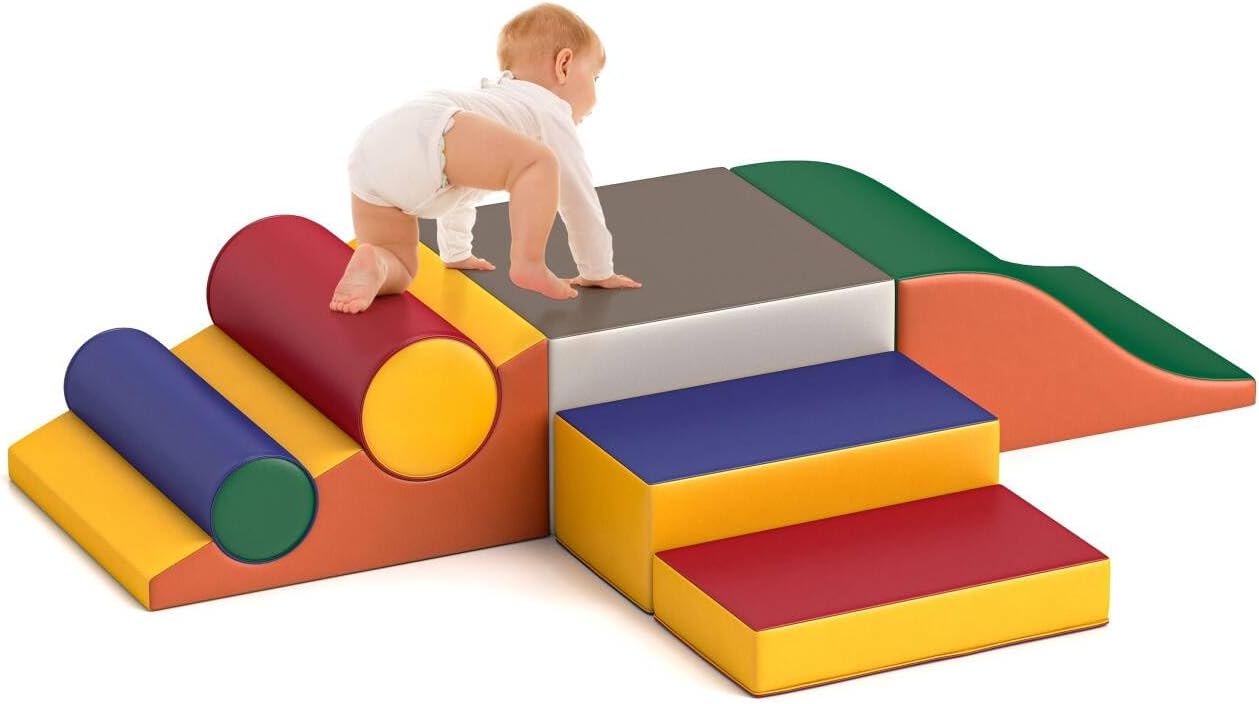
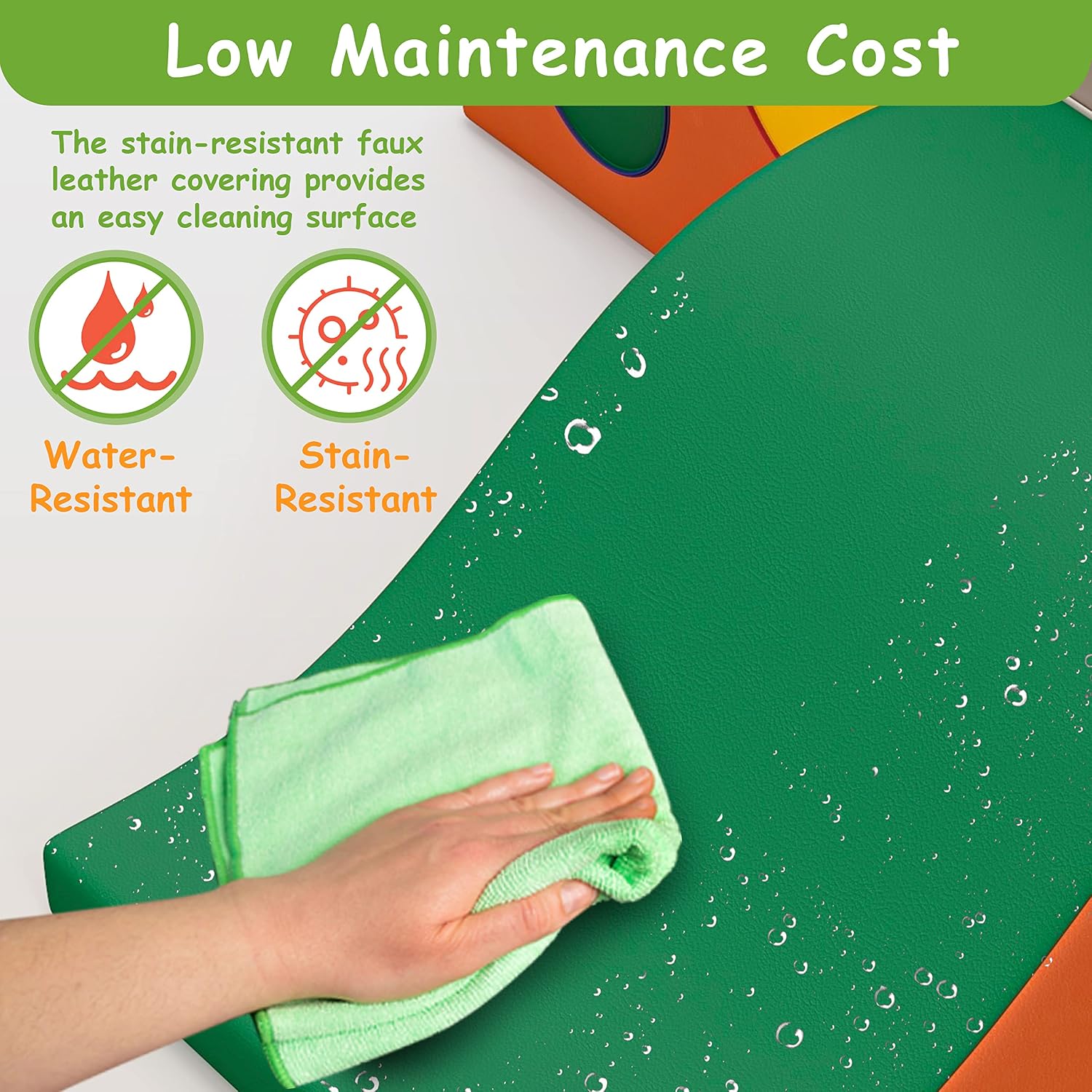
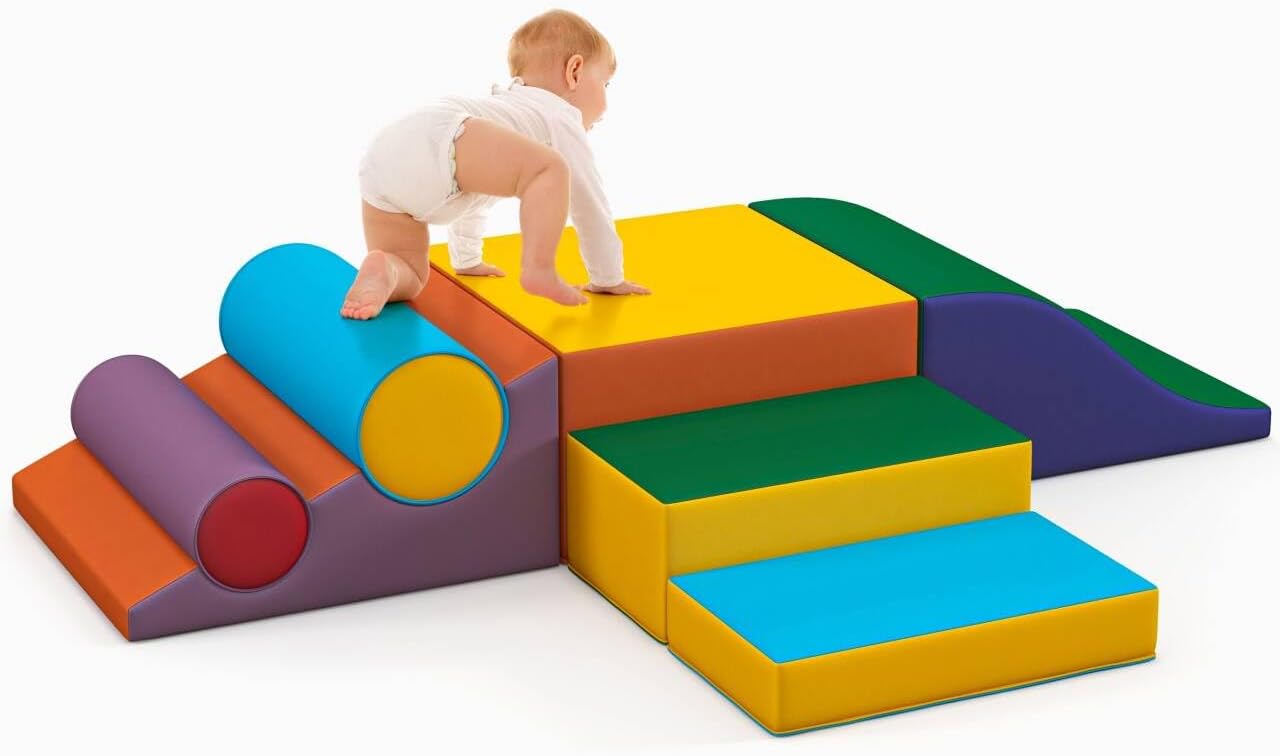
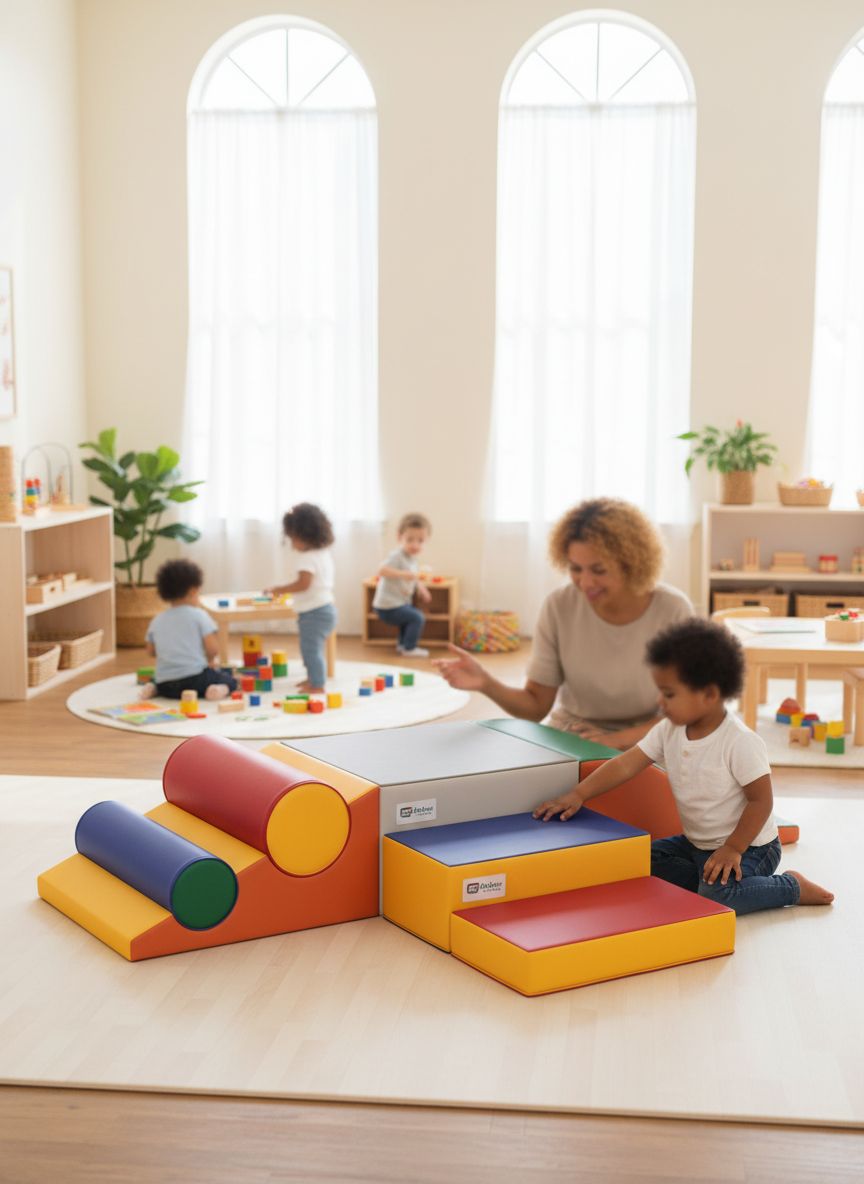
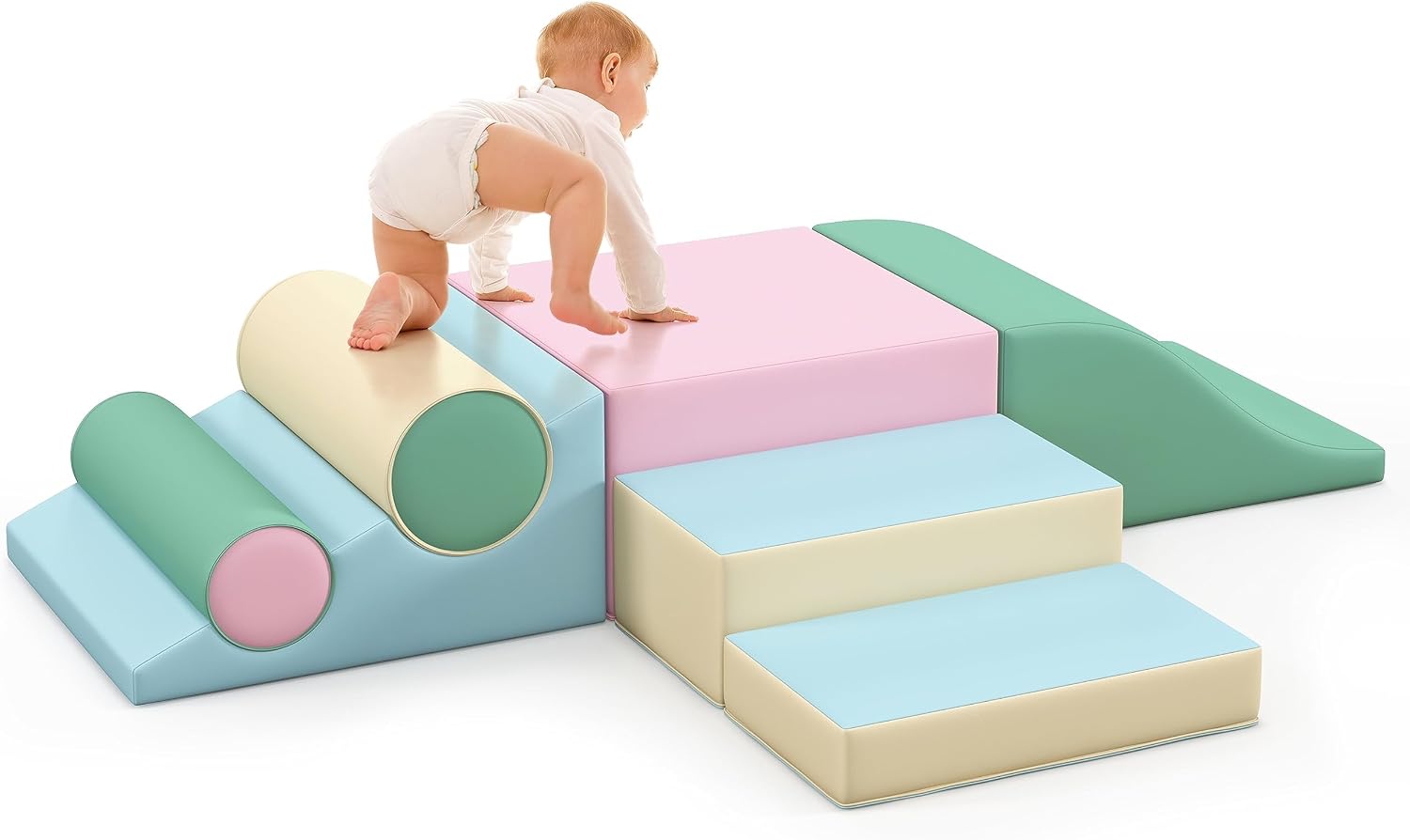
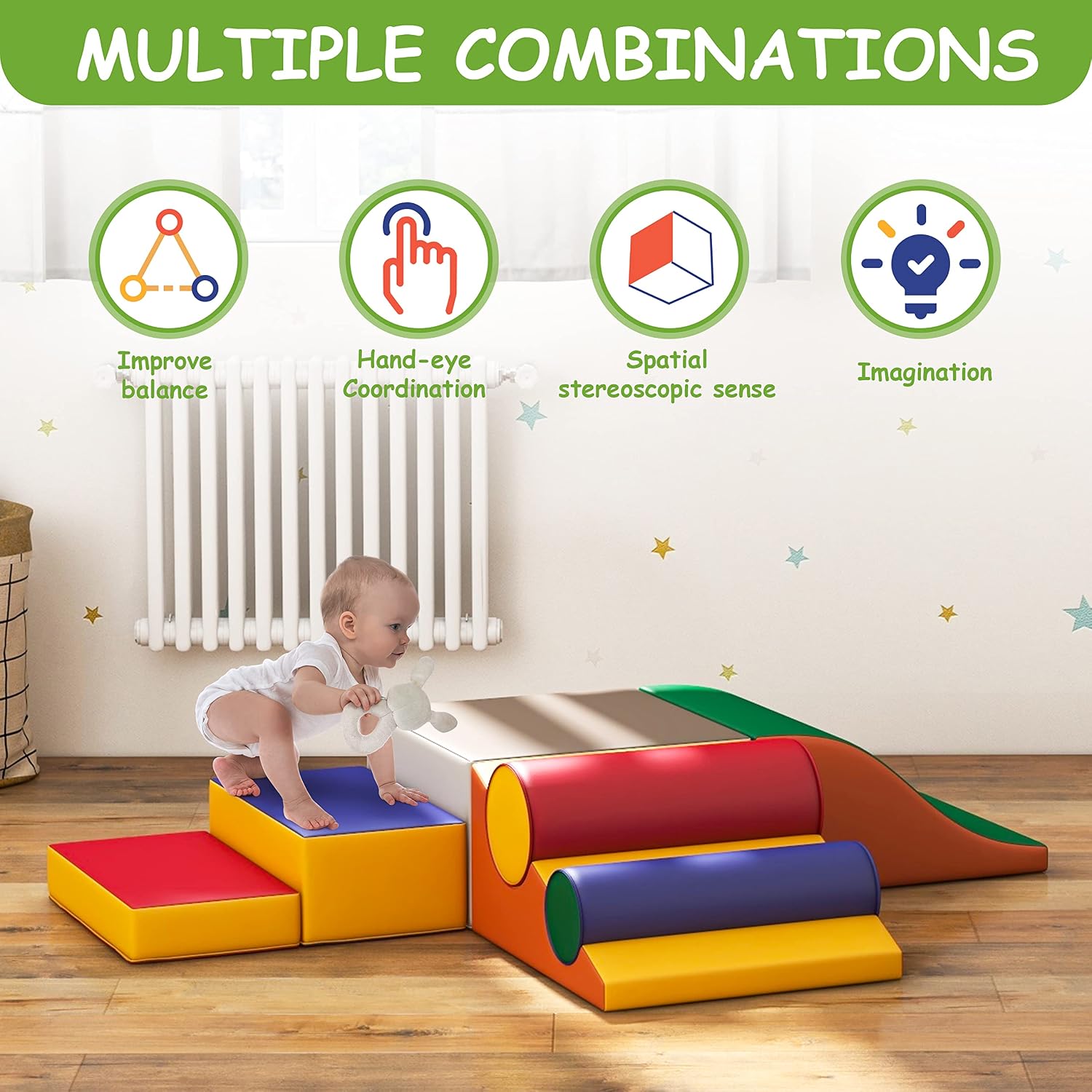
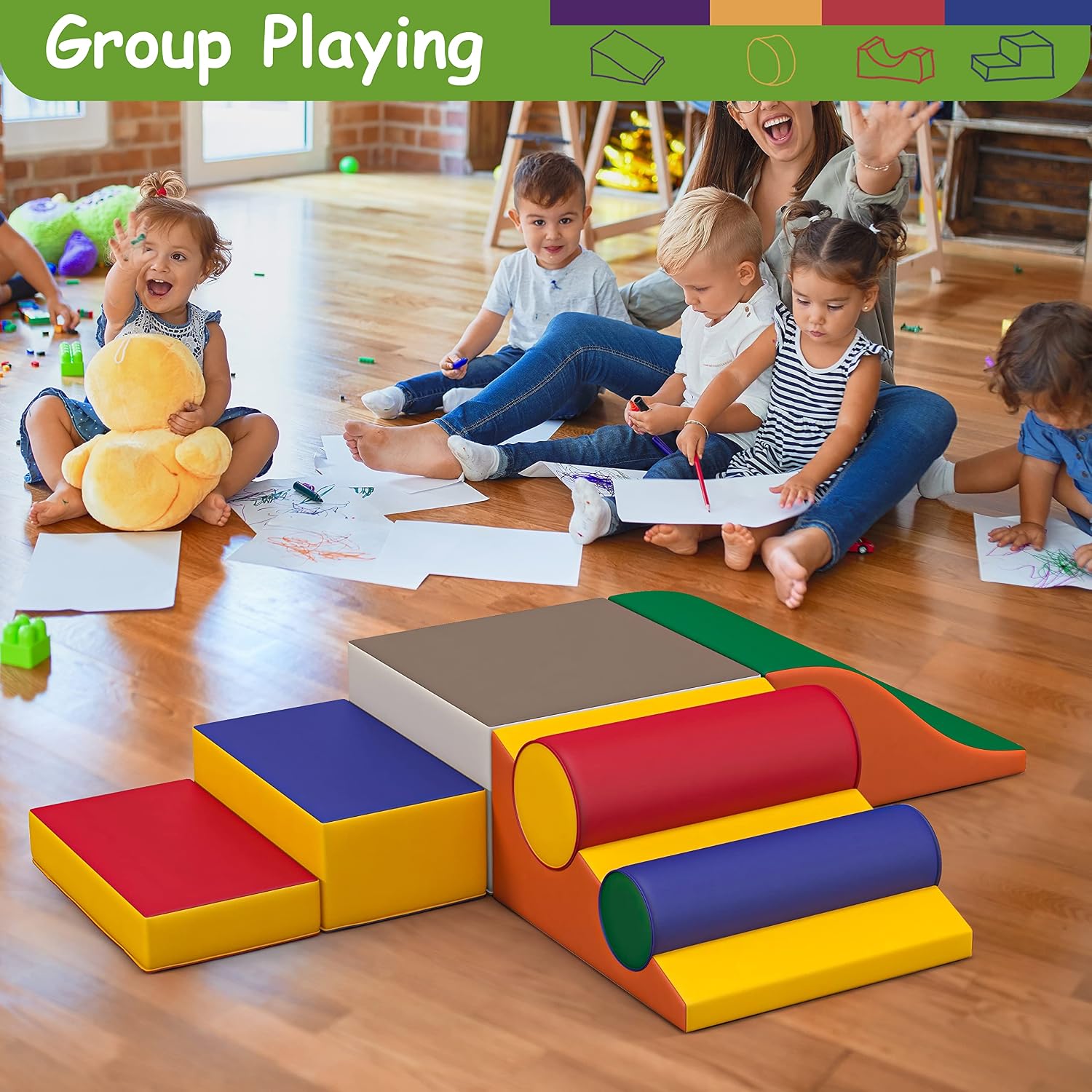
The 7-piece set arrives as a collection of foam shapes: a large arch, a slide wedge, a climbing ramp, and several supporting blocks and cushion sections, all covered in what turns out to be genuinely soft, slightly stretchy fabric that’s machine-washable. The foam itself is dense enough to hold a toddler’s full body weight through repeated launching, landing, and general chaos, but forgiving enough that a tumble off the side doesn’t produce any drama beyond mild surprise. My daughter uses it differently almost every single day, which I did not anticipate. Some mornings it’s a mountain to crawl up and barrel down. Some afternoons the blocks get reconfigured into a couch-fort system she supervises from the top of the arch like a very small general.
“This is the toddler learning toy that finally made me stop feeling guilty about not having a backyard.”
The play patterns align well with what pediatric developmental guidance recommends at this age: unstructured, physically active, self-directed exploration that builds balance and spatial awareness without requiring adult-led instruction. The honest caveat is that setup takes a few minutes to get right the first time, and the pieces do migrate across the room during a committed play session. You will be kicking foam wedges back into formation. That is simply the life you’ve chosen.
The Real-Life Scenarios I Used It In
Scenario 1: Sunday Morning, Pajamas Still On
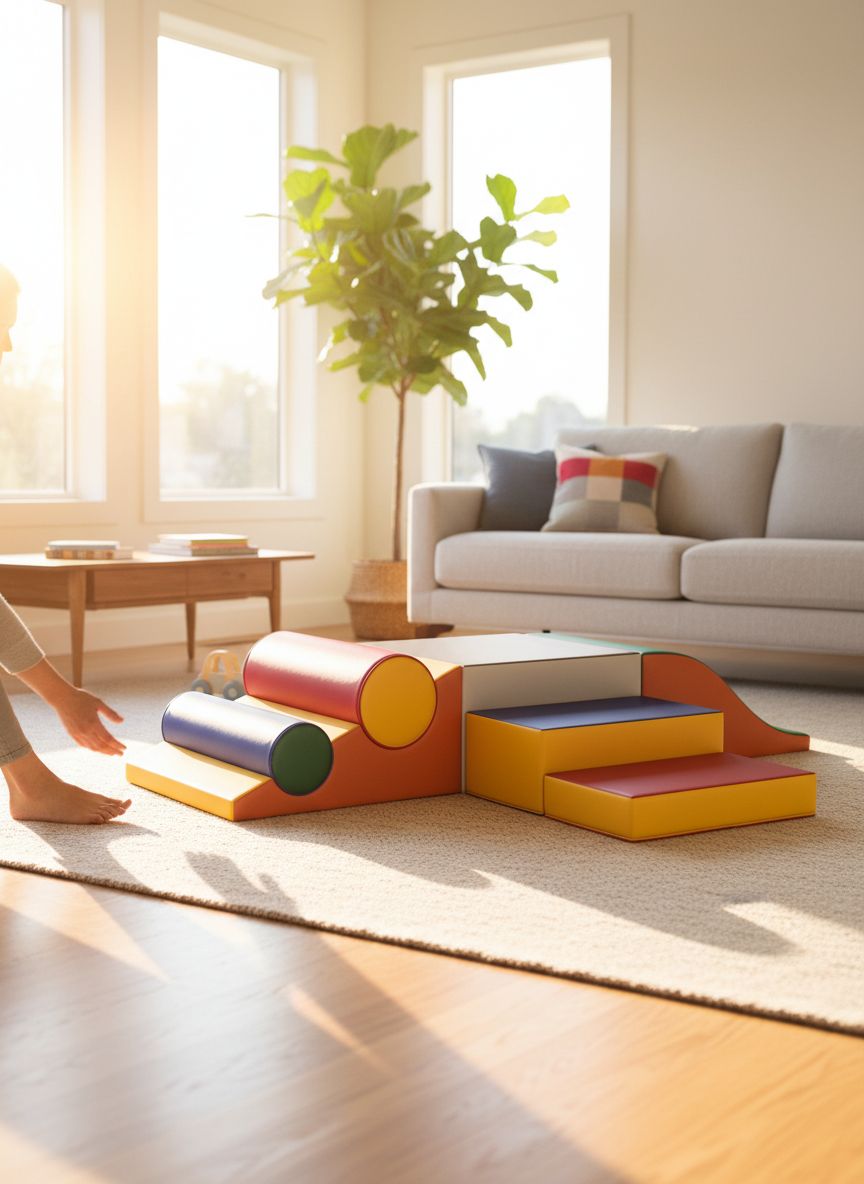
This is the Betterhood climbing blocks’ natural habitat. It was early, the light was low, and I had about thirty minutes before I needed to start thinking about breakfast. I pulled out the full set, and my daughter immediately began her routine: crawl up the ramp, pause dramatically at the top, slide down the wedge, look at me for applause, repeat. The foam is warm to the touch in a way that cold plastic never is, and she clearly noticed. She kept pressing her cheek against the arch cushion between climbs. By the time I brought her oatmeal out, she’d built enough momentum to keep going through the meal and into the mid-morning.
Scenario 2: Tuesday After Preschool Pickup
Anyone who has picked up a toddler from a half-day program knows the specific chaos of that 12:30 p.m. window: overtired, overstimulated, desperately in need of physical release but not yet ready for nap. The soft foam climbing set became our decompression ritual. I’d set it up while she was taking off her shoes, and by the time she wandered in, the course was ready. The physical exertion of crawling, climbing, and sliding seemed to metabolize that midday restlessness in a way that sitting on the couch never could. We started making it a standing part of the Tuesday afternoon routine.
Scenario 3: The Grandparent Visit
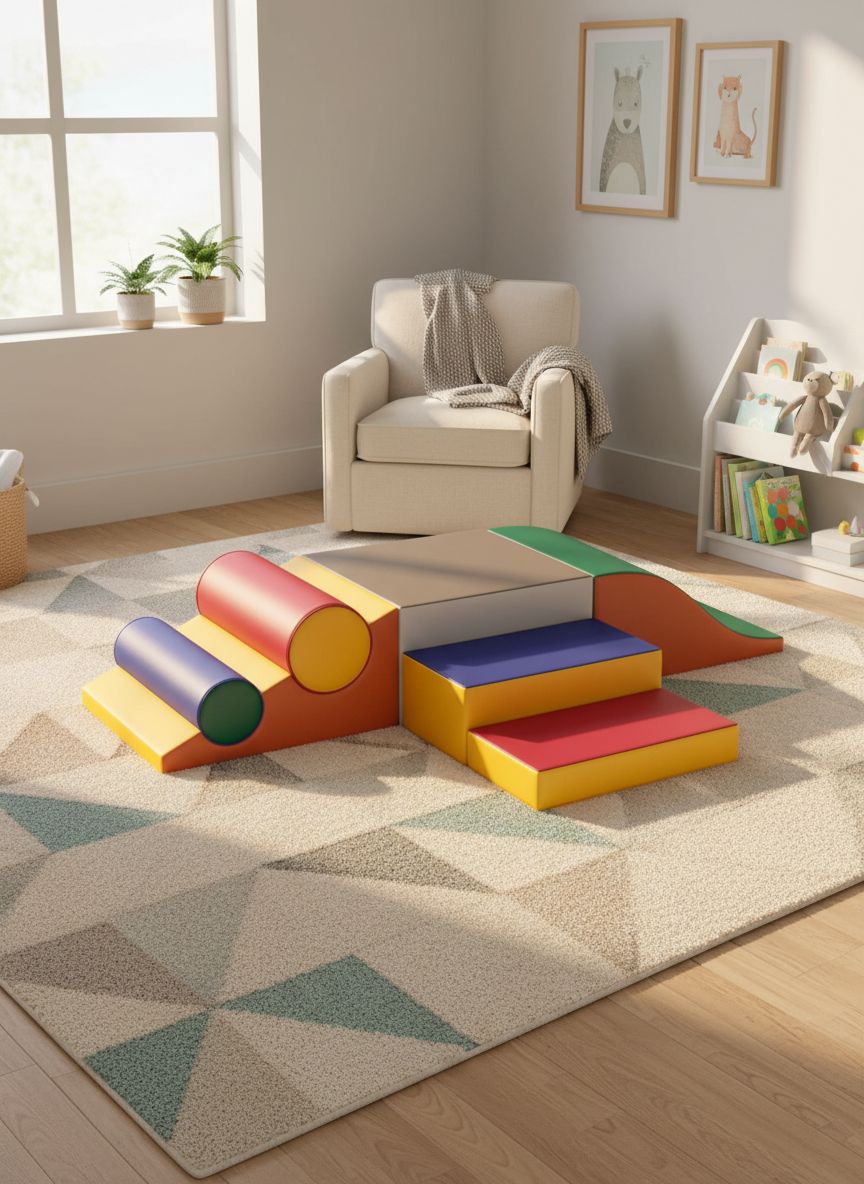
My mother-in-law visited for a long weekend and was, to put it diplomatically, skeptical of “foam furniture.” She spent the first morning giving the arch a look that suggested she had thoughts. By the second morning, she was sitting cross-legged on the floor next to it, holding a hand out as my daughter navigated the ramp for the fourteenth time, and had started using the wedge as a backrest. Multigenerational play equipment sounds like marketing language until you watch it happen in your own living room. My daughter showed off for an audience who actually got down on her level, and everyone went to bed earlier and happier than they had any right to.
What Other Parents Are Saying
With over a hundred ratings sitting at a 4.6 average, the pattern in the feedback is consistent: parents note how much longer their toddlers engage with this than with table-top or seated toys, and how the physical confidence their kids develop over the first few weeks is visible and measurable.
The few lower ratings cluster around assembly confusion on first setup and the inevitable space requirement. Both are real. Neither is a dealbreaker once you’ve watched the thing in action for a week.
Who Should Skip It
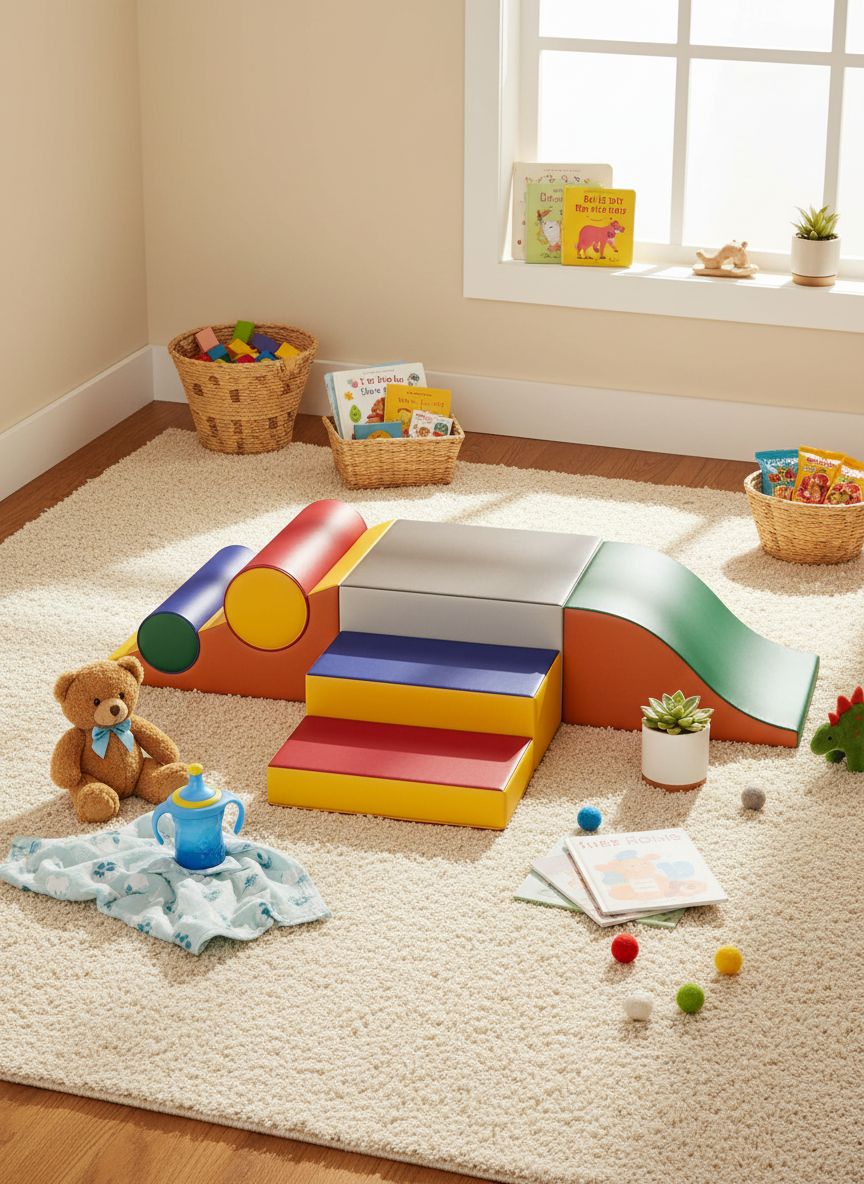
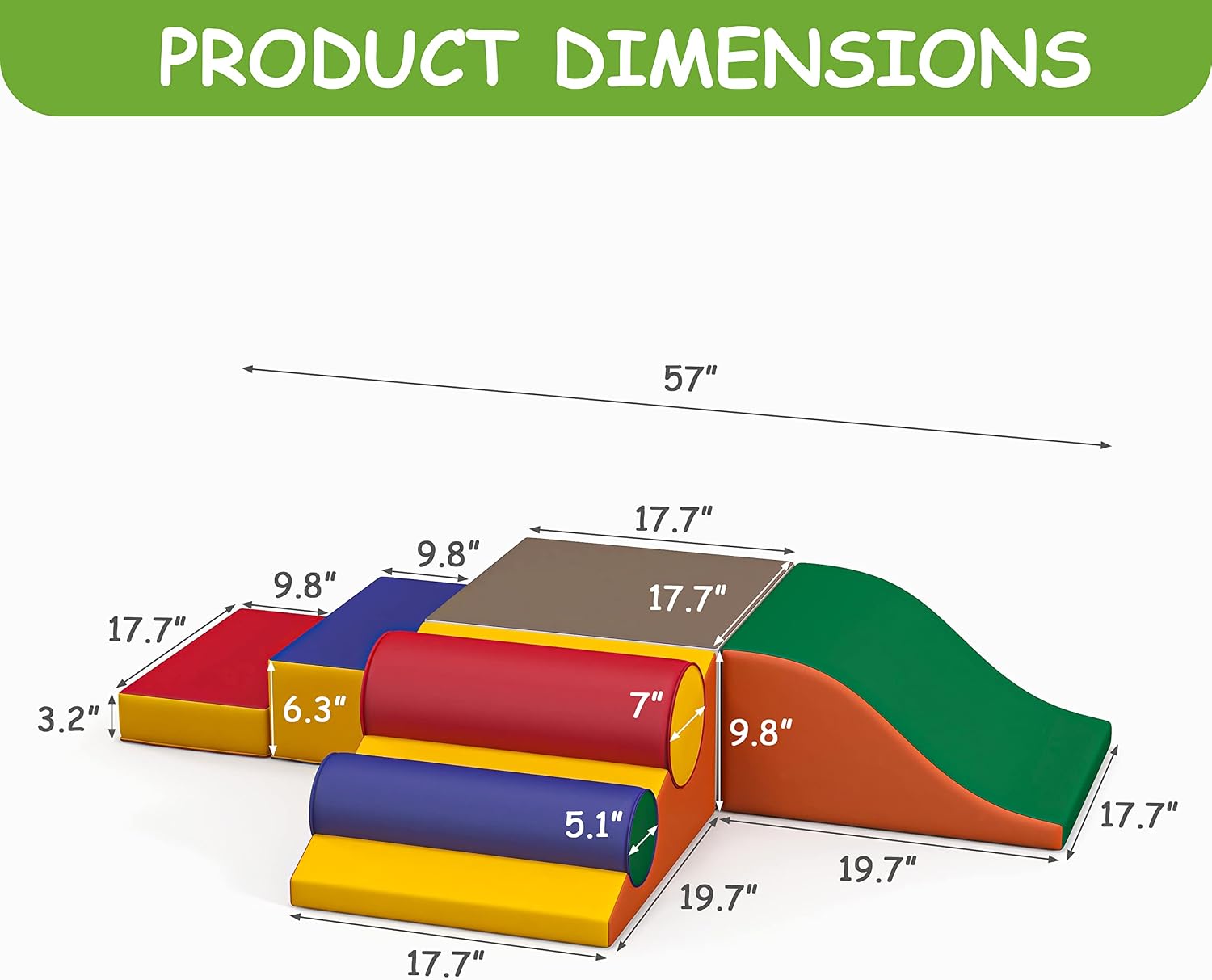
If your toddler is on the younger end of twelve months and not yet pulling to stand with confidence, this set may be a few weeks ahead of where they are developmentally. It is absolutely not a leave-them-alone-while-you-make-coffee situation at any age in this range. Supervision is non-negotiable, particularly for children under eighteen months who are still figuring out how their bodies respond to height and momentum. It also requires a genuine footprint of floor space, so apartment dwellers with very small living rooms should measure before ordering. And if your household already has a more structured climbing gym setup, some of these pieces may overlap in function enough to make the full set redundant.
What It Replaces (or Complements) at Home
Before this, we had a foam play mat and a fairly uninspiring collection of push toys that my daughter had mostly lost interest in by month thirteen. The Betterhood soft play set filled the gap between “sitting and batting at things” and “ready for an outdoor climber,” which turned out to be a longer developmental stretch than I’d anticipated. I retired the push activity cube to the closet after the first week. We’ve kept the play mat underneath the climbing set as a landing pad, which is exactly the right use for it. For parents building out a more complete toddler active learning toy rotation, this pairs well with lower-to-the-ground sensory and manipulative toys that offer a counterpoint when your kid needs to sit and focus rather than move.
FAQ
Is it actually appropriate for twelve-month-olds, or is that a stretch?
It works well for confident walkers and strong crawlers around twelve months, but it really opens up between fourteen and eighteen months when toddlers have the balance to navigate the arch independently. Starting younger is fine with close hand-over-hand support, and according to typical gross motor development milestones, this age range is precisely when children benefit most from structured physical challenges at floor level.
How well do the covers actually wash?
Very well. I’ve run them through a standard warm-water cycle three times and they come out looking new. The zipper closures are sturdy enough that I haven’t had any foam migration into the wash.
Will my toddler still want to use this past the first month?
In my experience, yes, specifically because the configurations change. Once your toddler figures out they can rearrange the pieces, the play extends significantly. My daughter is four months in and still approaches the set with visible enthusiasm most mornings, which is not something I can say about most toys in the rotation.
Does the quality justify the price point?
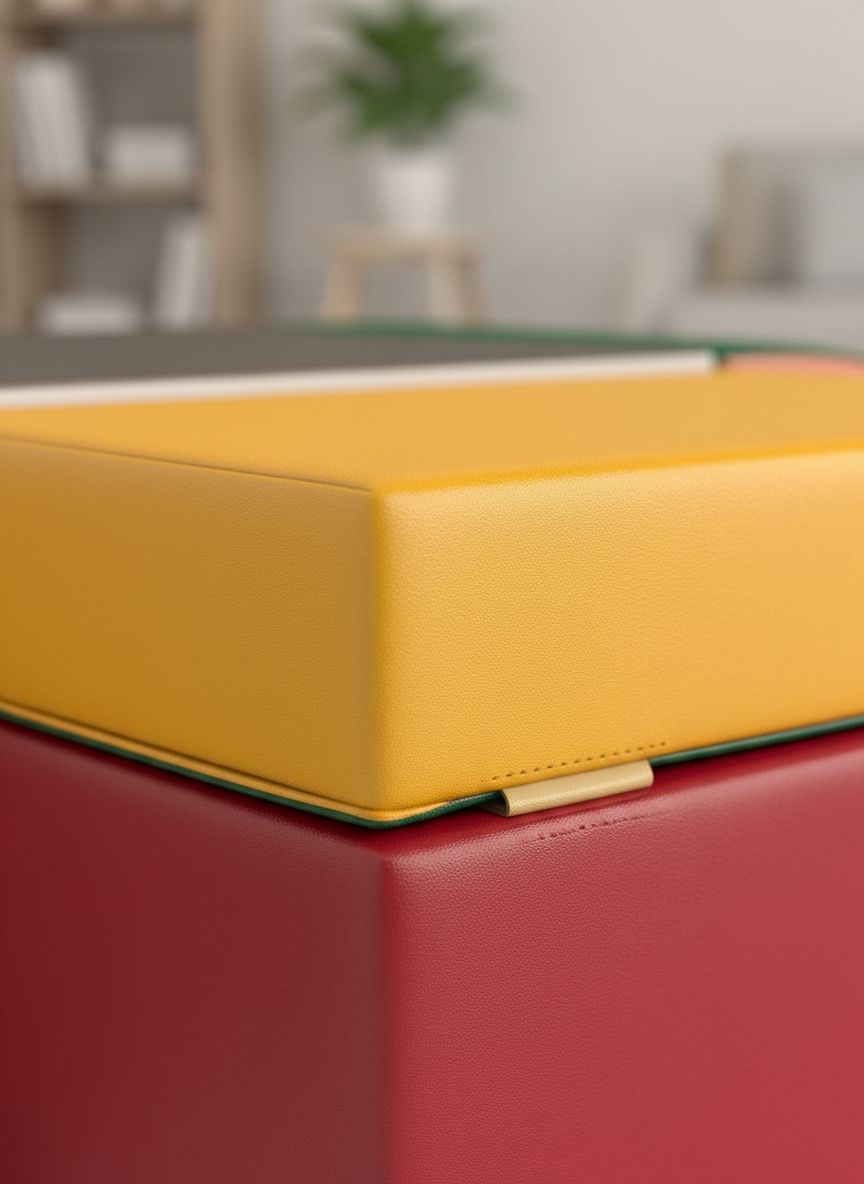
The foam density, the quality of the stitching on the covers, and the fact that I’ve watched a 28-pound child hurl herself onto these blocks repeatedly for months without any visible compression or wear, all suggest this is built to last well past the age the box suggests. Given how long this realistically gets used and the developmental work it’s doing in the meantime, the value reads considerably above what you’d expect at this tier. It’s not a stocking-stuffer impulse buy, but it’s not big-ticket investment gear either. It sits comfortably in the everyday-essential middle.
Is this a good birthday gift for a one-year-old?
It’s one of the more reliably satisfying one-year birthday gifts I’ve encountered, precisely because it’s immediately usable, visually appealing when it arrives, and builds skills that matter throughout the toddler years. If you’re shopping for a first birthday gift with genuine developmental staying power, this is the kind of set that parents genuinely appreciate rather than politely smile at. For a reference point on what pediatric experts say about age-appropriate physical play gifts, the American Academy of Pediatrics guidance on active play is worth a quick read before you shop.
The Verdict
Six months from now, I expect my daughter to be running laps over this set with a confidence and body awareness that wasn’t there before. I already see it in the way she approaches the arch: no hesitation, no reaching for my hand, just a calculation happening behind her eyes and then the decision to go. The Betterhood Climbing Blocks for Toddlers did something that I genuinely did not expect from a foam play set: they gave her a place to practice being brave in a context that was entirely hers. This is the kind of toddler gross motor development gear that quietly does serious developmental work without looking like it’s trying to. It’s not the smallest item in the living room, and it requires your attention when it’s in use. But for active toddlers between twelve and thirty-six months who need to move the way other kids need to sit, this set is one of the more considered ways to spend that floor space. For parents comparing options on a Betterhood climbing blocks review for ages 1 to 3, or looking for the best indoor climbing toy for toddlers under two, this one earns its place in the rotation honestly.
Bottom line: if your toddler treats every surface in the house like an obstacle course, give them one that was actually designed for it.
Every Angle
The product as photographed for Amazon — front, side, detail, in use.
As an Amazon Associate I earn from qualifying purchases.