Gift Guide
Sensory Picks We Love
Because the right toy doesn’t just entertain — it meets a child exactly where their nervous system is.
Picture this: it’s Saturday morning, your toddler woke up at 5:47, and you’re standing in the living room in yesterday’s socks wondering how to make the next three hours feel less like survival mode. Or maybe you’re the grandparent scrolling your phone at midnight, trying to find something genuinely useful for the new baby shower next weekend — not another stuffed animal that will live under the couch. We’ve all been there.
Sensory play is one of those things that sounds clinical until you actually watch it happen. A baby locked in on a high-contrast mirror during tummy time. A five-year-old who’s been bouncing off the walls suddenly calm inside a compression swing. These moments aren’t magic — they’re just the right input at the right time. And finding the gear that delivers that consistently? That’s what this list is for.
We pulled together four picks across a wide age range — from newborns doing their first tummy time to school-age kids who need a movement break. Each one earns its place for a specific reason, and we’ll be honest about the tradeoffs along the way.
The Picks
Baby Einstein
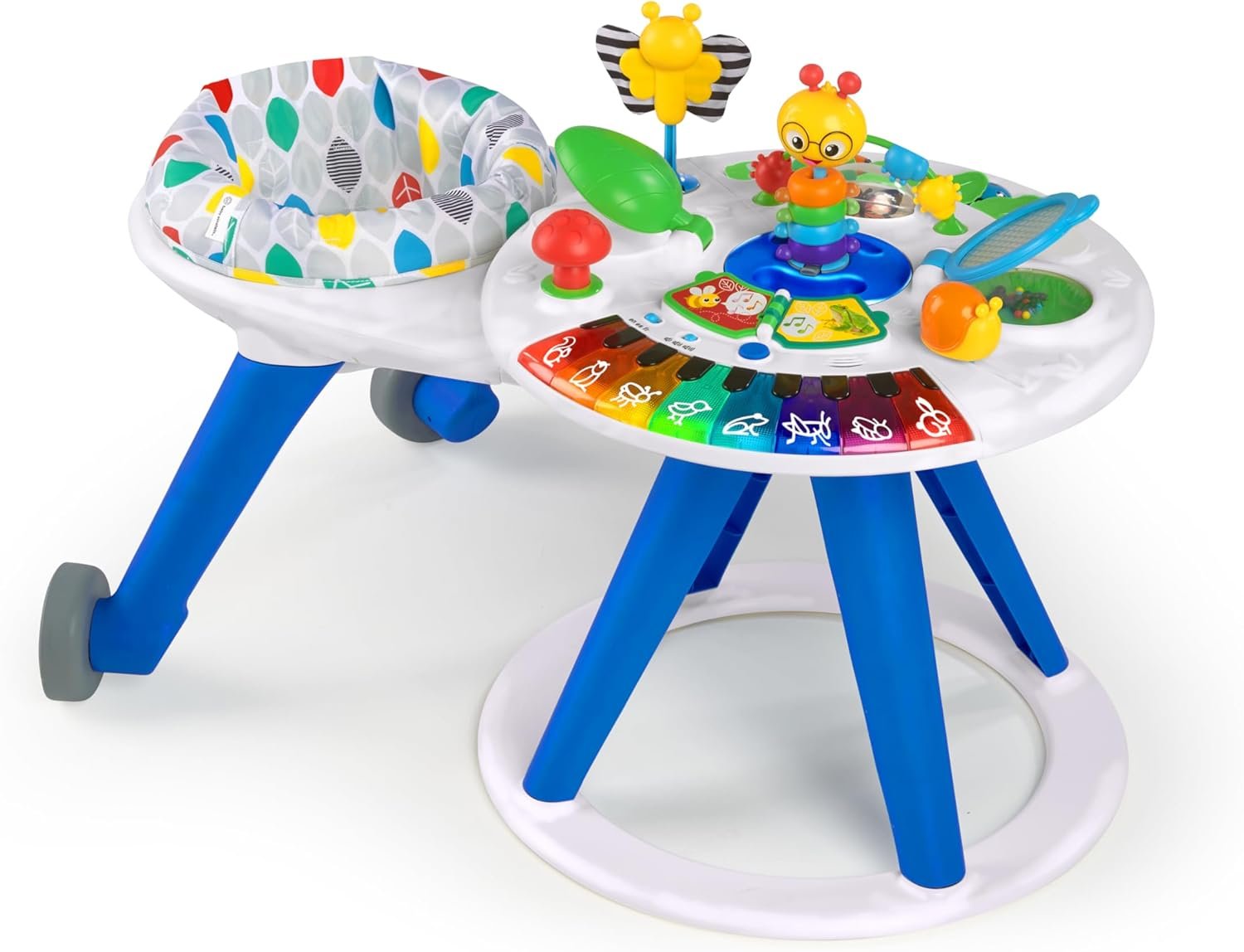
Baby Einstein 4-in-1 Activity Center & Walker with Piano, Age 6M+ | 4 ways to grow: walker, discovery table, art table & floor play—entertains babies 6-36 months with 15+ activities
We pulled out the Baby Einstein 4-in-1 Activity Center for our six-month-old during that in-between phase — too alert for just lying on a mat, not ready to stand at a table. The ability to drop the base flat for floor play and then raise it as she gained trunk strength meant it didn’t gather dust after six weeks the way so many things do. The piano keys give satisfying cause-and-effect feedback, and the 15-plus activities are varied enough that she kept finding new things to mouth, spin, and bang. The walker function works well on hard floors — carpeted rooms slow it down noticeably, so keep that in mind. It’s a bigger footprint in your living room, no question, and the price reflects that. But for babies 6 through roughly 18 months, the developmental range you get out of one piece of gear is genuinely hard to beat. ASTM-tested and BPA-free throughout.
As an Amazon Associate I earn from qualifying purchases.
Inbeby
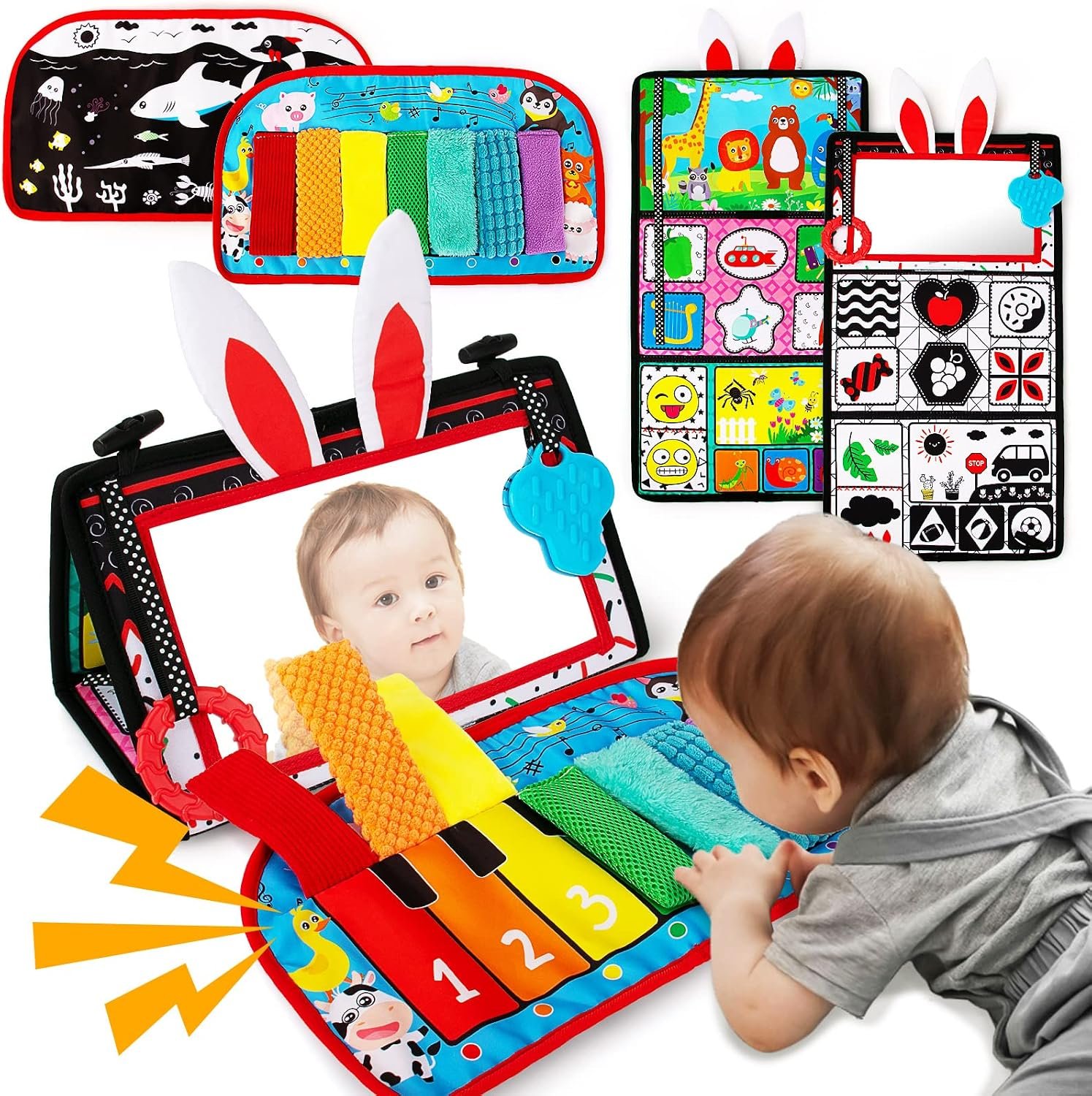
Tummy Time/Baby Mirror Toys, Black and White High Contrast Tabletop Mount Baby Newborn Toys 0 3 6 Months Brain Development, Sensory Texture Piano Infant Toys 0 3 6 Months with Squeaker
The Inbeby tummy time mirror was one of those quietly brilliant shower gifts that I didn’t fully appreciate until week three, when my newborn actually needed something to look at during floor time. The black-and-white high-contrast patterns are specifically designed for newborn vision — babies this age can’t resolve pastels or complex color yet, and the bold graphic panels hold attention in a way that a regular toy simply doesn’t. The squeaker element adds an auditory layer, and the textured surfaces give little fingers something to feel when they start swiping. It tabletop-mounts or stands independently, which is handy. Small parts aren’t a concern at this age since it’s designed for 0–6 months, but I’d retire it once your baby is sitting and mouthing aggressively. At an accessible price point, it’s one of the easier shower gift decisions on this list.
As an Amazon Associate I earn from qualifying purchases.
Onyoloy
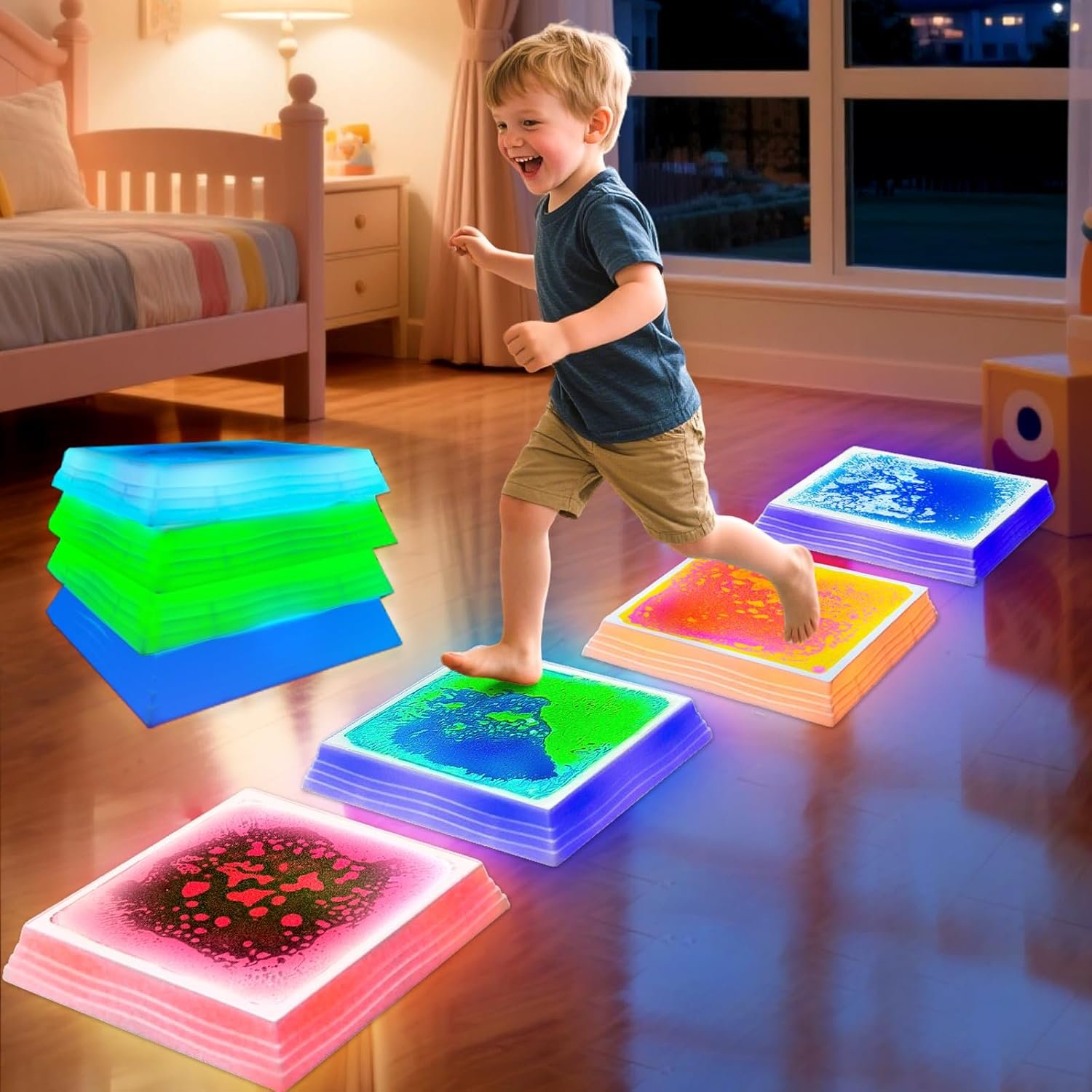
Light Up Sensory Floor Tiles for Kids – 12×12 Inch Liquid Play Mat with 7 Colors Led Lights, Non-Slip Puzzle Play Mat for Home and Classroom, Autism Sensory Toys for Toddlers Ages 3-7 (Pack of 4)
I’ll be honest — I was skeptical about LED floor tiles before I saw a group of preschoolers completely absorbed in them for forty minutes straight. The Onyoloy tiles connect puzzle-style into whatever shape fits your space, and the liquid-filled surface shifts color when kids press and step on it. For ages 3–7, especially kids who seek heavy proprioceptive input, the combination of visual feedback and physical pressure is genuinely engaging. Each tile cycles through seven LED colors and responds to touch in real time, which keeps the experience feeling interactive rather than passive. The non-slip surface held up on our hardwood floors without any sliding. Worth noting: this is the big-ticket centerpiece of the list, so it makes more sense as a birthday or holiday gift than an impulse buy. The lower review count means less long-term data, but early ratings are strong.
As an Amazon Associate I earn from qualifying purchases.
DreamGYM
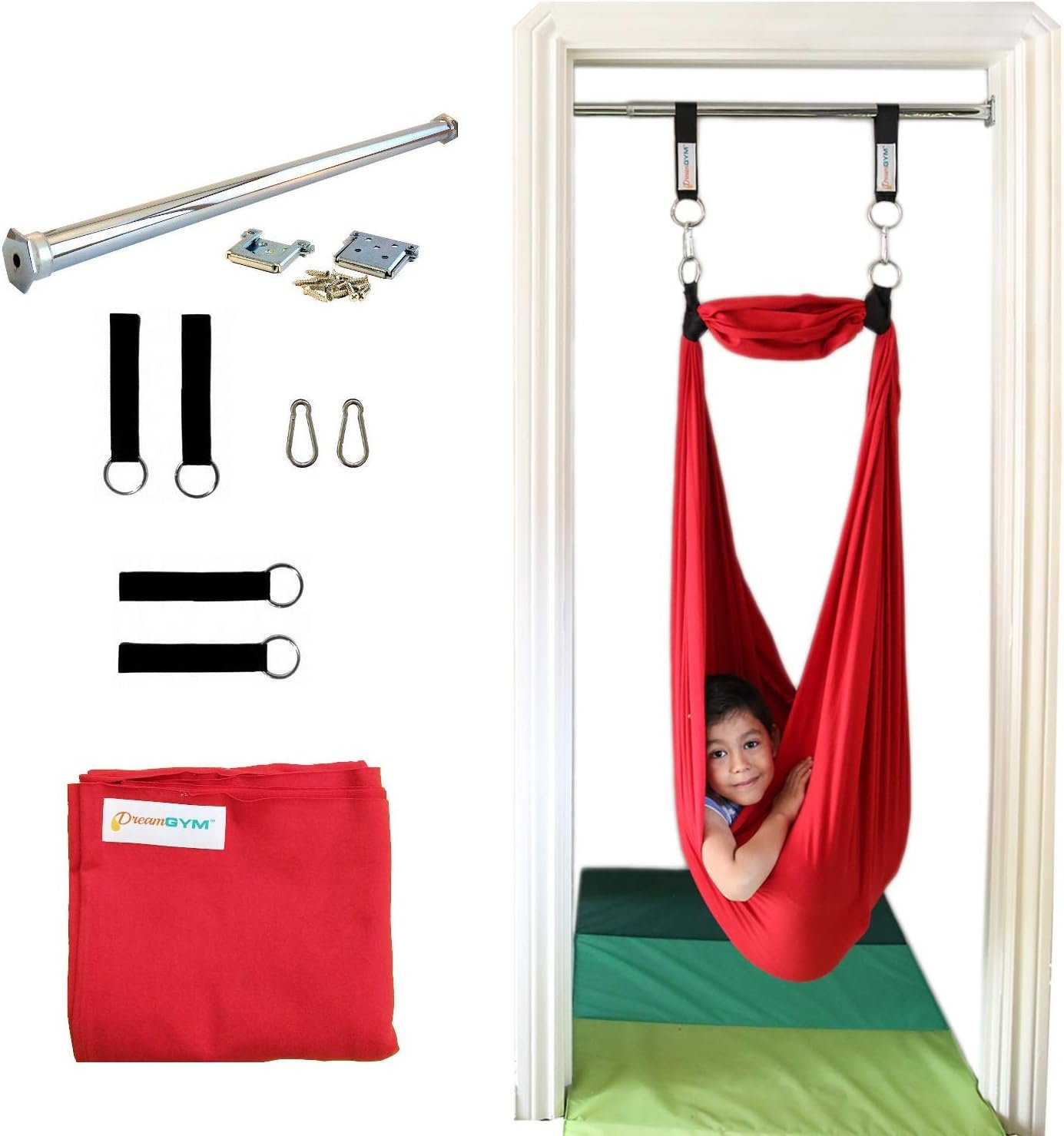
DreamGYM Doorway Sensory Swing – Supports 220lbs, Steel Bar Secured by Brackets – 95% Cotton Compression Swing for Self-Regulation (Red)
The DreamGYM compression swing lives in our hallway doorframe, and I genuinely didn’t expect it to become the thing my five-year-old asks for before dinner every single night. The cotton cocoon shape provides that full-body squeeze that a lot of sensory-seeking kids crave, and the swinging motion layers vestibular input on top of that. Installation requires you to trust the steel bar and bracket system — follow the weight guidelines carefully, as it’s rated to 220 pounds but correct mounting matters. Setup took us about twenty minutes with a drill. The 95% cotton fabric is soft and breathable, which matters when a kid is fully wrapped inside it. This is designed as a therapeutic tool for ages 3-plus, so I’d keep it supervised with younger kids. It’s an investment price-wise, but if you have a child who struggles with self-regulation, the daily calm it can provide makes it worth serious consideration.
As an Amazon Associate I earn from qualifying purchases.
Frequently Asked Questions
At what age should I start sensory play with my baby?
You can start from day one, honestly. Newborns respond to high-contrast visuals, soft textures, and gentle sounds right away. Tummy time with a black-and-white mirror is appropriate from the first weeks of life. The key is matching the input to where your baby’s nervous system actually is — simple and high-contrast early on, more complex and layered as they grow toward toddlerhood and beyond.
How do I know if my toddler needs more sensory input or less?
Kids who seek more input often run, crash into things, chew non-food items, or have a hard time settling. Kids who are sensitive to input may cover their ears, avoid certain textures, or become dysregulated in busy environments. Most kids land somewhere in the middle and benefit from having both calming tools (like a compression swing) and stimulating ones (like light tiles) available depending on the day and their mood.
Are sensory toys only useful for kids with sensory processing differences?
Not at all. Every child has a sensory system that’s still developing, and sensory play supports that development regardless of whether a child has a diagnosis. That said, kids with sensory processing differences, ADHD, or autism often benefit more noticeably and consistently. The picks on this list were chosen because they work well across the full spectrum — neurotypical kids included.
Is a doorway compression swing safe for home use?
Yes, when installed correctly. The DreamGYM uses a steel bar secured by brackets — not a pressure-mount system — which provides more stability. Read the installation instructions fully before letting kids use it, check the mounting points regularly, and stay within the weight limits. Supervised use is the right call, especially while kids are still learning how to get in and out of the cocoon shape on their own.
What’s a reasonable budget for building a home sensory play space?
It depends entirely on what your child needs most. You can start small and meaningfully — a tummy time mirror and a few texture toys cover the newborn and infant stages without a big outlay. As kids get older, one or two larger investments like floor tiles or a swing tend to see heavy daily use and justify the higher price over time. You don’t need to buy everything at once. Layer in pieces as your child grows and you get a clearer picture of what engages them.
Final Thoughts
Sensory gear doesn’t have to be complicated to be useful. The best pick is simply the one that fits your child’s age, your home’s space, and whatever that particular week is throwing at your family. A newborn on a tummy time mat and a five-year-old in a compression swing are doing the same essential thing — finding the input that helps their nervous system feel right. These four products cover a lot of that ground between them.
Start with one. Watch how your kid responds. You’ll know pretty quickly whether it clicks. And if something sits unused for a month, that’s useful information too — it just means their sensory diet needs something different right now. The goal was never a perfect setup. The goal is a kid who feels a little more settled, and a parent who gets to be present for that. That’s the whole thing, really.