Montessori Sensory Teether Set for Infants: Honest Review
A set of soft, pastel silicone rings landed on my coffee table one Wednesday morning, and by the time my six-month-old had gummed through the first texture bump, I understood why this category has taken over every new-parent registry I’ve seen lately.
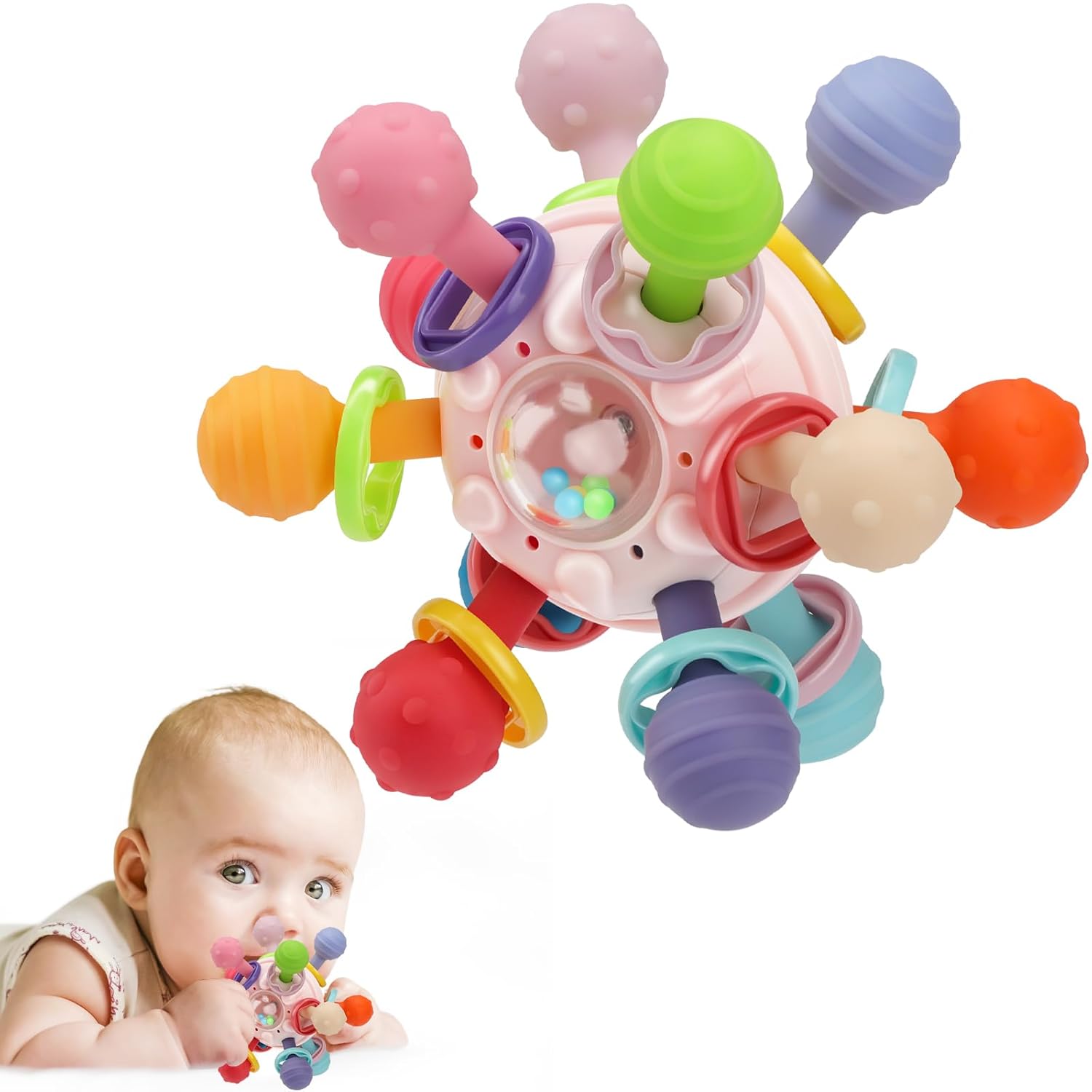
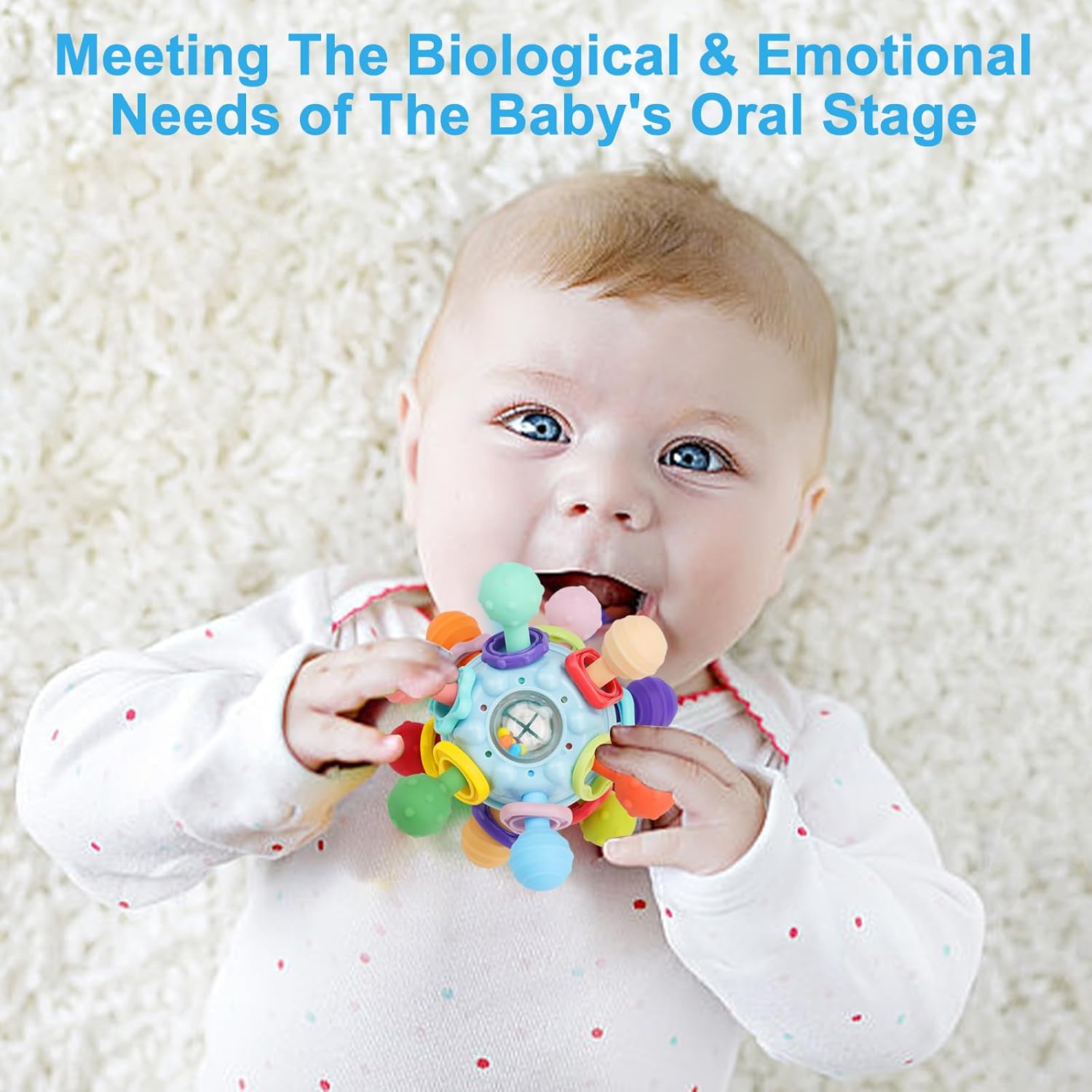
There is a very specific kind of Tuesday-afternoon chaos that defines the fourth trimester and the slow crawl toward twelve months. The baby is fussy but not hungry. The bouncer has lost its novelty. The black-and-white flash cards are scattered across the rug and no one is looking at them. I was standing in exactly that scene, still in yesterday’s dry shampoo, when I dropped the TOHIBEE Baby Montessori Sensory Toys onto the play mat for the first time. My daughter reached for the softest ring immediately, brought it to her mouth with the focused intensity that only babies and competitive eaters possess, and the fussing stopped. Just like that.
The First Time I Saw It
I spotted the TOHIBEE set in a baby shower gift ideas roundup that a pediatric occupational therapist friend had shared in our group chat. She was specific about it in a way that made me pay attention. She said she looks for multi-texture silicone teethers that do double duty, soothing gum pressure while giving babies something genuinely interesting to feel and explore. That combination is rarer than you’d think at this price point. I added it to my cart while waiting for coffee to brew and forgot about it until the box arrived.
When I opened it, the pastels were softer and more considered than I expected. Nothing neon, nothing that looks like it belongs in a fast-food kid’s meal. I set the pieces out on the kitchen counter and stood there for a moment longer than I needed to, which is how I know the design team earned their keep.
How It Actually Plays / Works
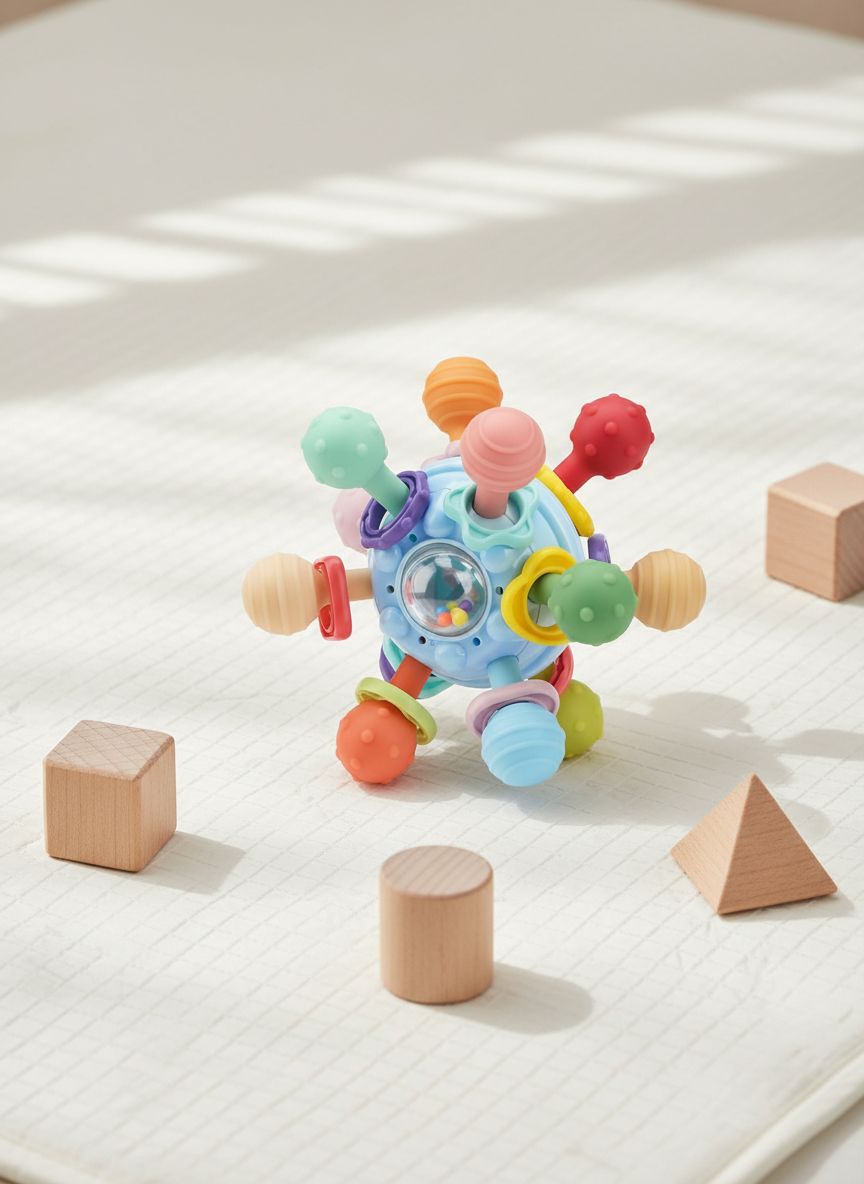
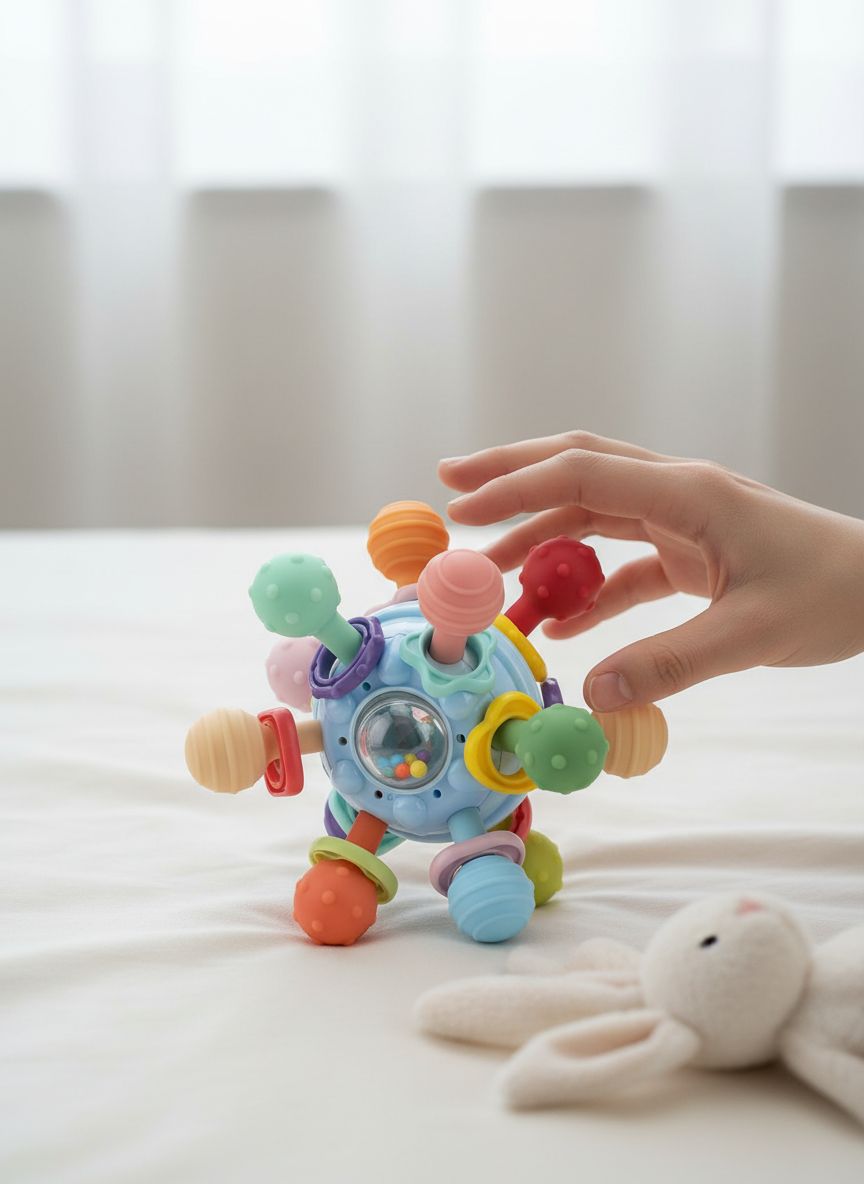
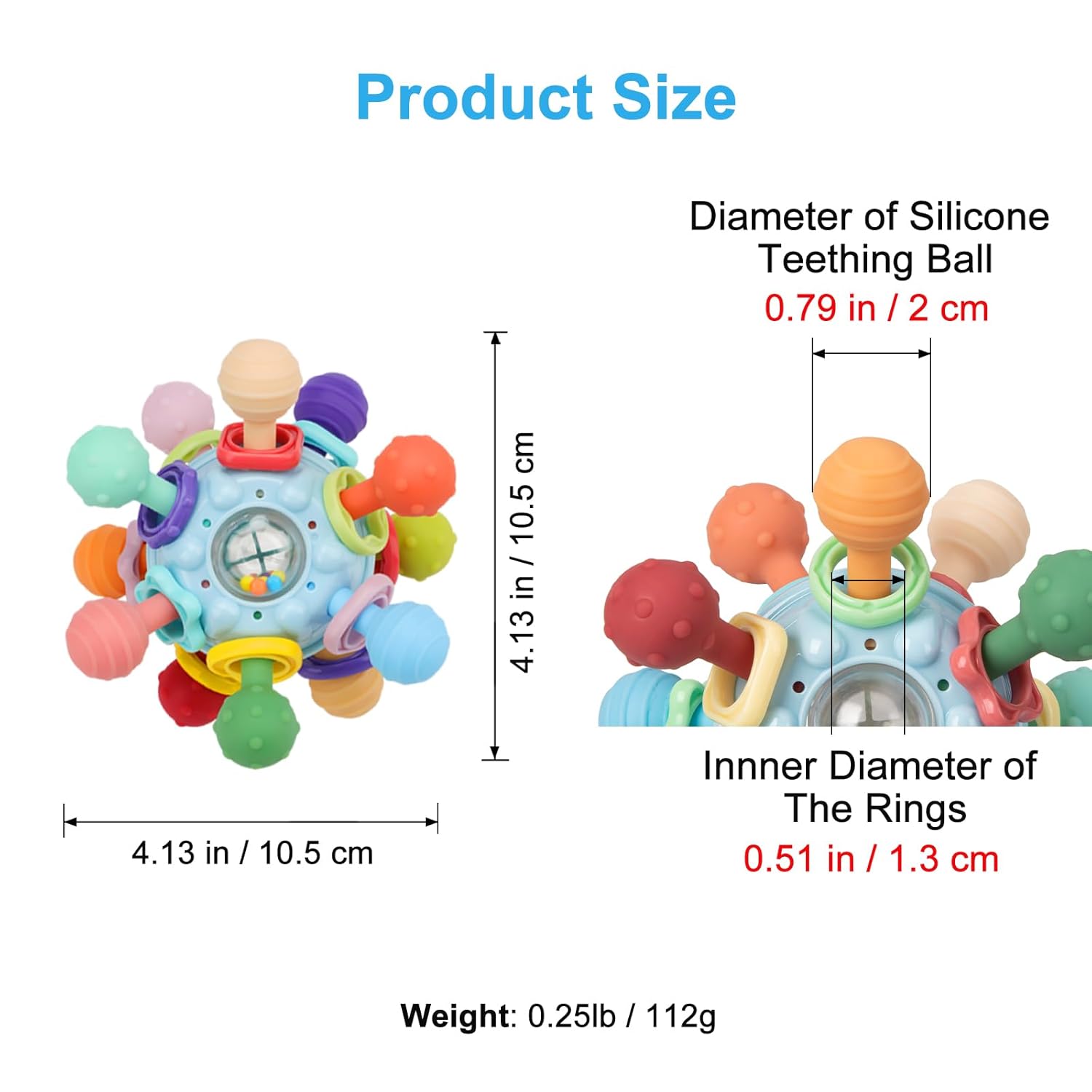
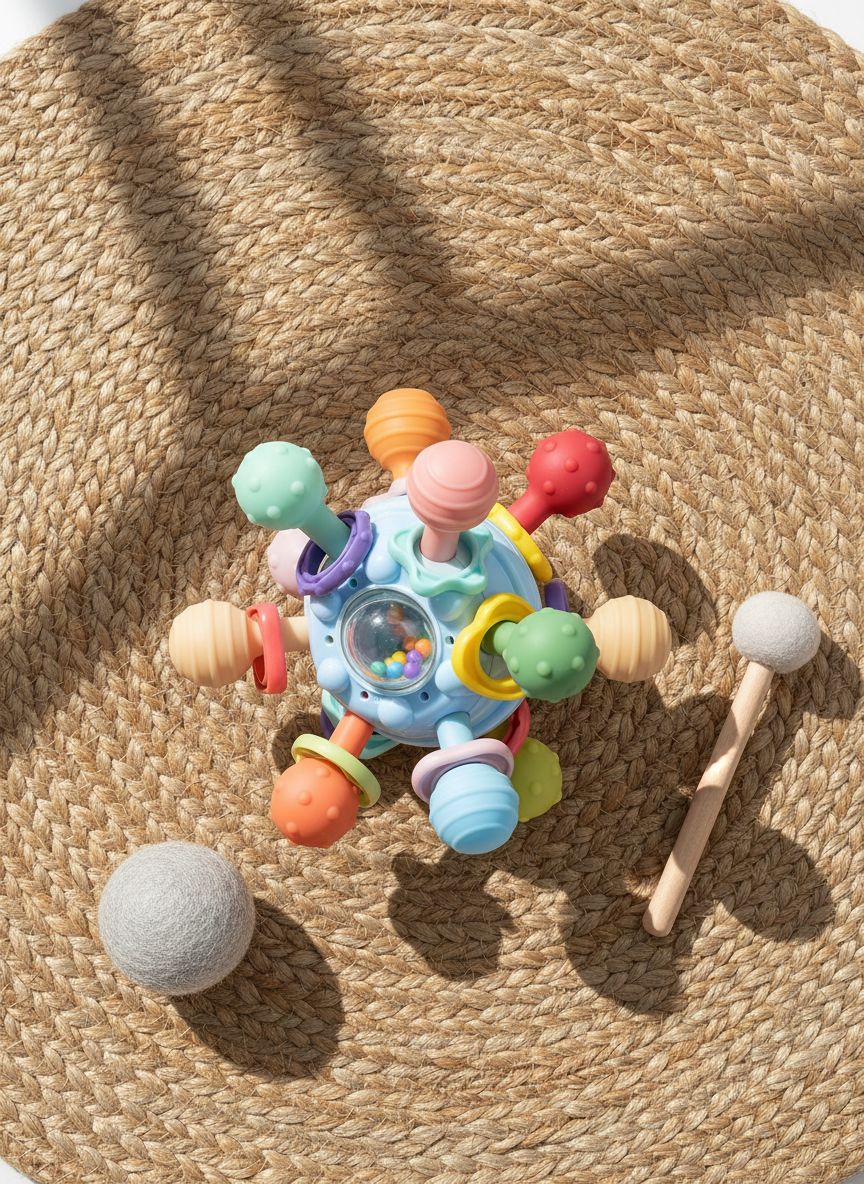
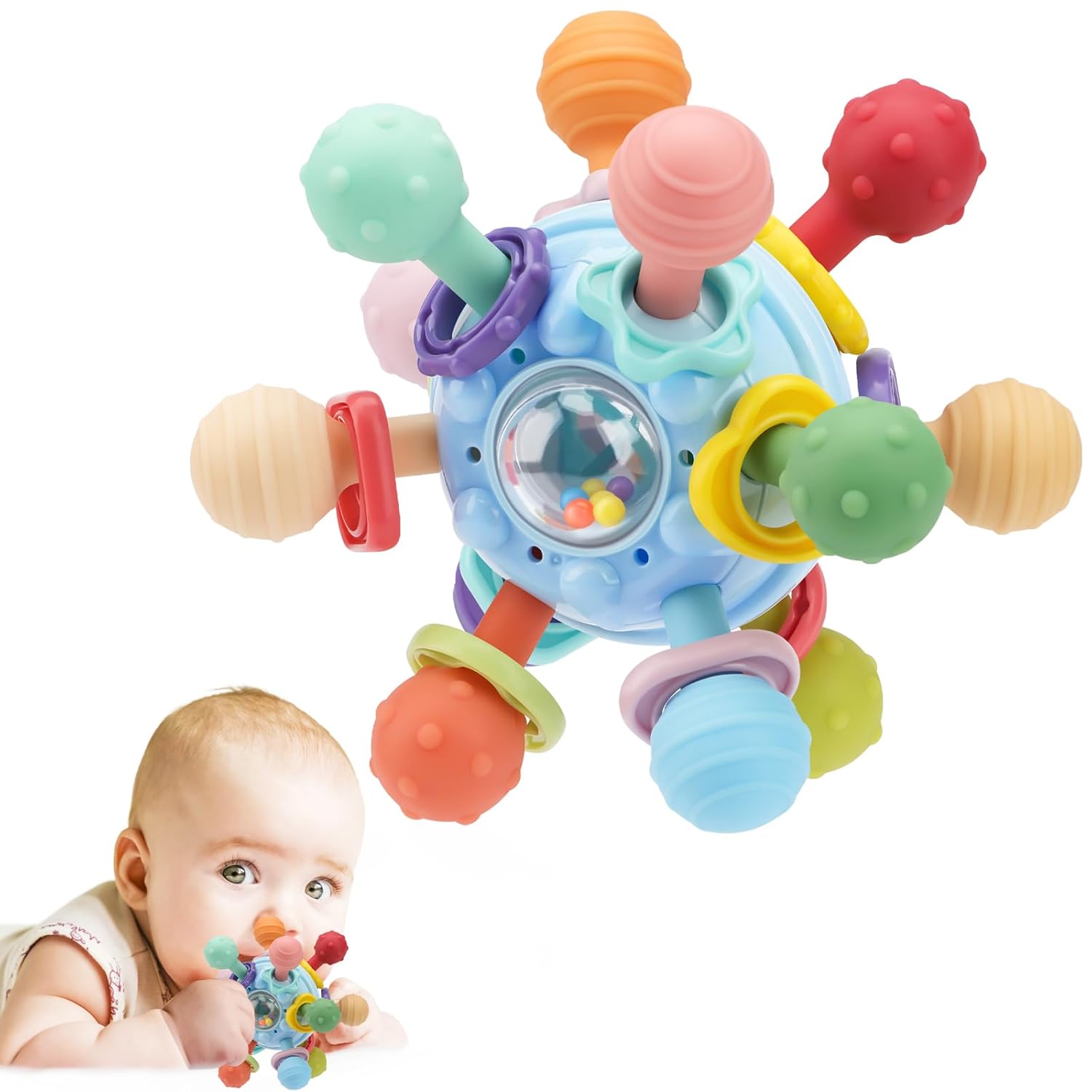
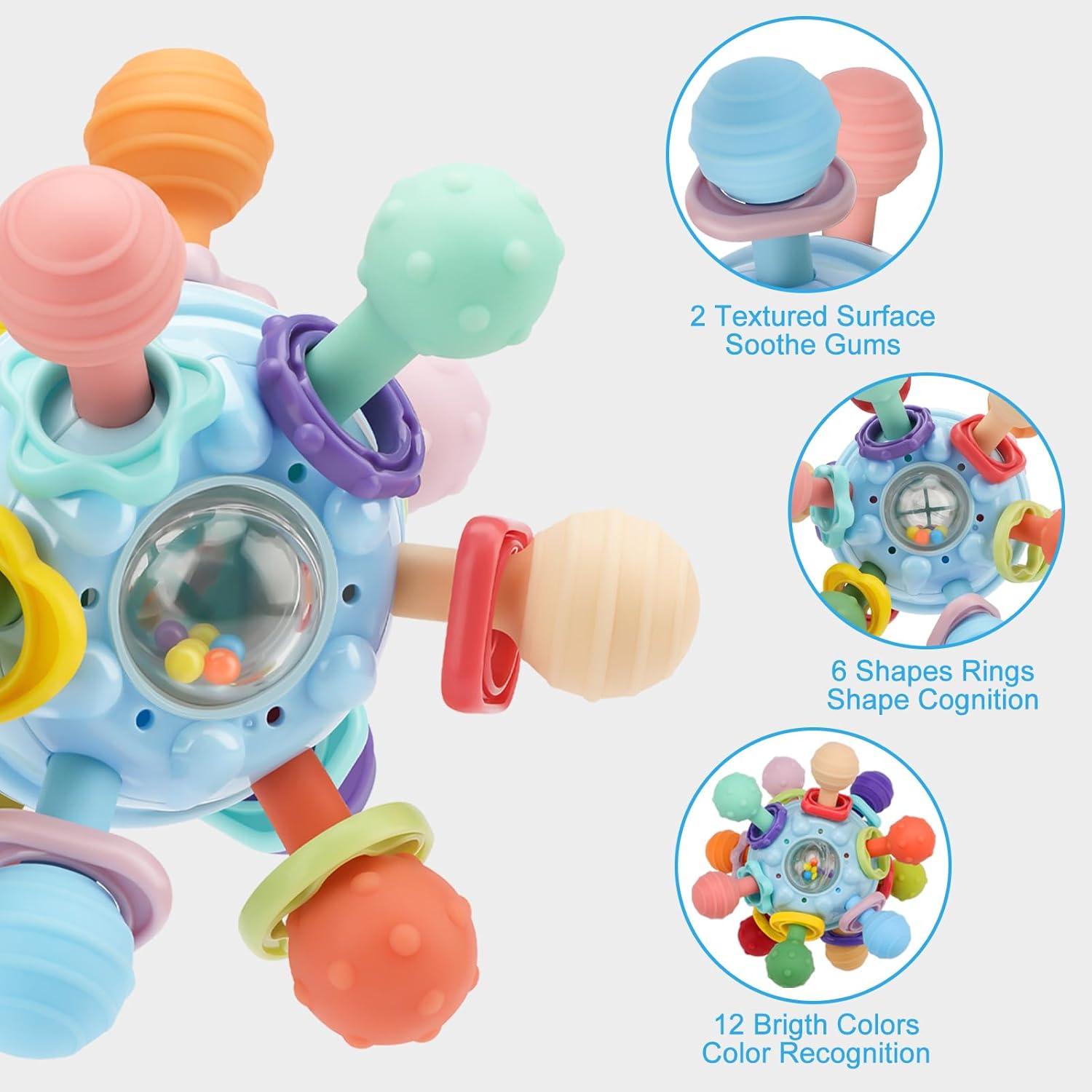
The set includes several silicone pieces in different shapes, each with its own surface texture: raised nubs, rippled ridges, smooth curves, and edges designed for a gummy little mouth to press against with some satisfying resistance. The BPA-free, phthalate-free silicone feels substantial without being heavy. My daughter is six months old and can hold the smaller ring pieces independently, which matters more than it sounds because independent grip is exactly what her hands are practicing right now. The ABS plastic pieces have a slightly different firmness, which adds sensory variety rather than redundancy.
“The texture variety is doing more developmental work than the average parent realizes when they’re just trying to stop the drool spiral.”
By week two, she was transferring pieces between hands and mouthing them in a way that felt deliberate rather than reflexive. It’s a small observation, but it tracks with what the American Academy of Pediatrics recommends about hands-on sensory play in the first year, which is that texture exploration builds the neurological foundation for fine motor coordination. I will say: one of the smaller accent pieces gave me a brief pause on whether my daughter had the grip strength to control it well, so I held that one back until closer to seven months.
The Real-Life Scenarios I Used It In
Scenario 1: Six A.M., Everybody Awake Too Early
My husband and I have a rotation system for early mornings that we call the Survivor Alliance and mostly pretend is fair. On his days, I can hear him from the bedroom, doing the low-stakes narration parents do when they’re trying to stay awake and seem engaged simultaneously. I came downstairs one morning to find him sitting on the floor with the TOHIBEE pieces spread out in a semicircle while our daughter sat propped between his knees, methodically picking up each one and attempting to eat it. He looked at me and said, “She’s been doing this for twenty minutes.” Twenty uninterrupted minutes of independent engagement before seven a.m. is nothing to qualify with asterisks.
Scenario 2: The Car Seat Handoff Situation
Every parent I know has a version of this: the baby is fine until the car seat buckle clicks, and then suddenly it is a five-alarm situation. We started tucking one of the softer TOHIBEE rings into the car seat pocket as a default. The silicone is easy to wipe clean, which is critical because it lives in a cup holder and touches every surface known to humanity. On a recent forty-minute drive to my in-laws, my daughter held the ridged piece the entire time, alternating between chewing on it and studying the texture pattern with the focused suspicion of a very small art critic. No crying past the first traffic light. I am not saying correlation is causation. I am saying we have not gone anywhere without it since.
Scenario 3: Grandparent Visit, Living Room Floor
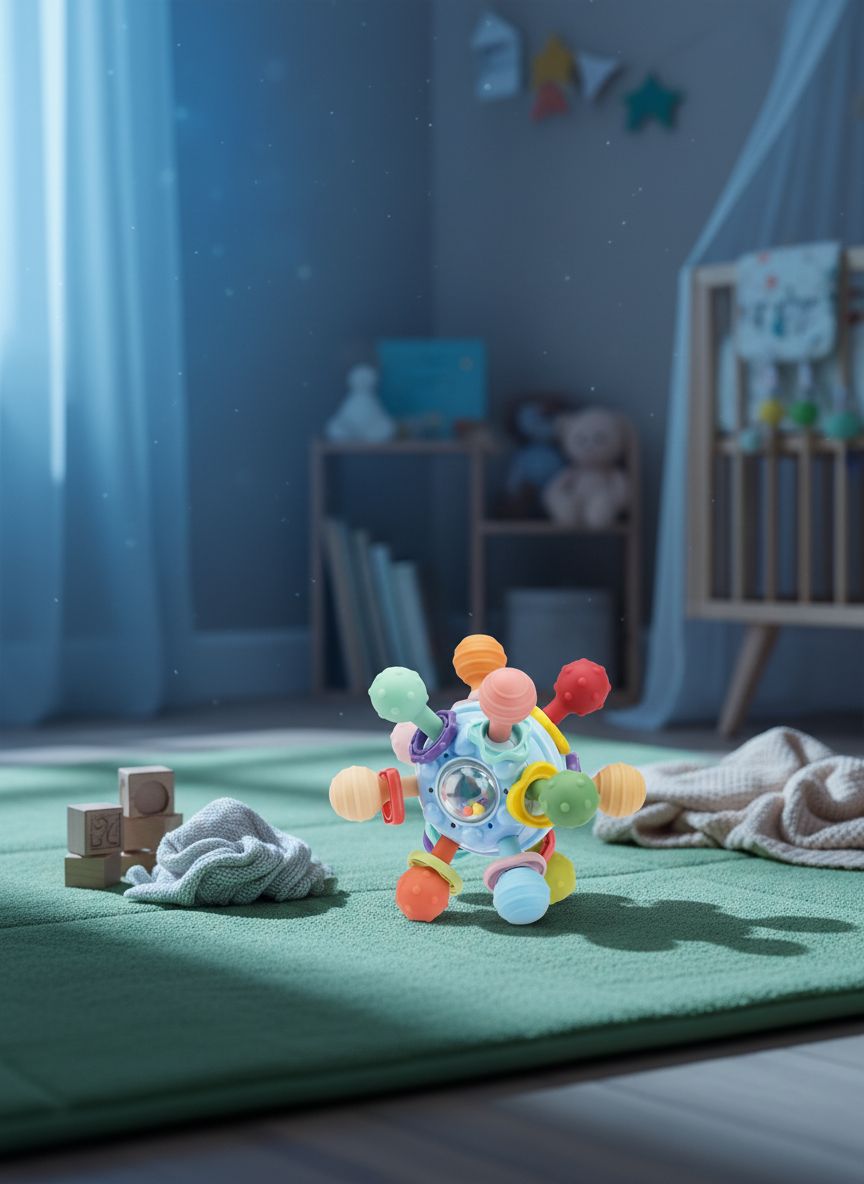
My mother-in-law has opinions about baby toys, most of them involving battery-powered things that play songs at frequencies specifically designed to erode adult sanity. When she visited last month, she picked up one of the TOHIBEE silicone pieces, turned it over in her hands, and said, “This is it? This is what she plays with?” And then she sat on the floor for forty-five minutes doing exactly what my daughter does: handing her pieces, watching her mouth them, handing them back. The simplicity is the feature, not a gap. By the end of the visit, my mother-in-law was narrating the texture swap like a play-by-play commentator and genuinely engaged in a way that the battery-powered drum set had never quite managed.
What Other Parents Are Saying
With nearly twelve thousand ratings averaging at 4.7, the consensus lands in a pretty specific place: parents are consistently surprised by how much use they actually get out of this baby Montessori sensory toy set compared to more elaborate options. The themes that keep surfacing are the texture variety holding babies’ attention across different developmental stages, the easy-clean factor for exhausted caregivers, and the baby teething toy relief that actually registers during peak gum-pressure months.
What I find telling is how many reviewers mention gifting multiples. Something this approachable in terms of size, portability, and material story tends to become a default shower gift, and the review pattern reflects that. This is a registry staple for a reason.
Who Should Skip It
If your baby is under three months and you do not plan to be within arm’s reach during play, this is not the right moment. The manufacturer and common sense both agree that supervised use is non-negotiable in the newborn stage, and the smaller pieces in the set require an adult nearby for babies who haven’t yet developed reliable grip or head control. Parents looking for something with electronic feedback, lights, or music will find this set too quiet for their purposes. It is deliberately analog, and that is a feature for some families and a dealbreaker for others. Also, if your toddler is aggressively past the infant learning toy phase and you’re shopping for a three-year-old, the design intention here is genuinely for the zero-to-twelve-month window, and there are better options for the preschool set.
What It Replaces (or Complements) at Home
We retired a set of hard plastic teether rings that had been handed down from my sister and that my daughter showed approximately zero interest in. The surface texture was uniform and offered nothing for her to explore beyond “this is a ring and I am chewing it.” The TOHIBEE pieces replaced those almost immediately and also filled a gap I hadn’t named: something light and non-precious enough to take to the pediatrician’s office, the grocery store, and my friend’s sectional without anxiety. Our baby playtime rotation has gotten more intentional since I started thinking about texture variety as its own category, and this set anchors the sensory corner of that rotation. It complements the sleep and soothing tools we already had, because the familiar mouthing motion during fussy periods has a genuinely calming effect that tracks with what I know about oral sensory input in infants.
FAQ
Is this set actually safe from birth, or is the zero-month claim marketing?
The materials are safe from birth in terms of composition, but the practical safe use age depends on caregiver supervision. Newborns should only interact with any teether while an adult is directly present and watching, and the smaller pieces in this set are better suited to babies who have developed some grip strength, typically around four to six months.
How do you clean these between uses?
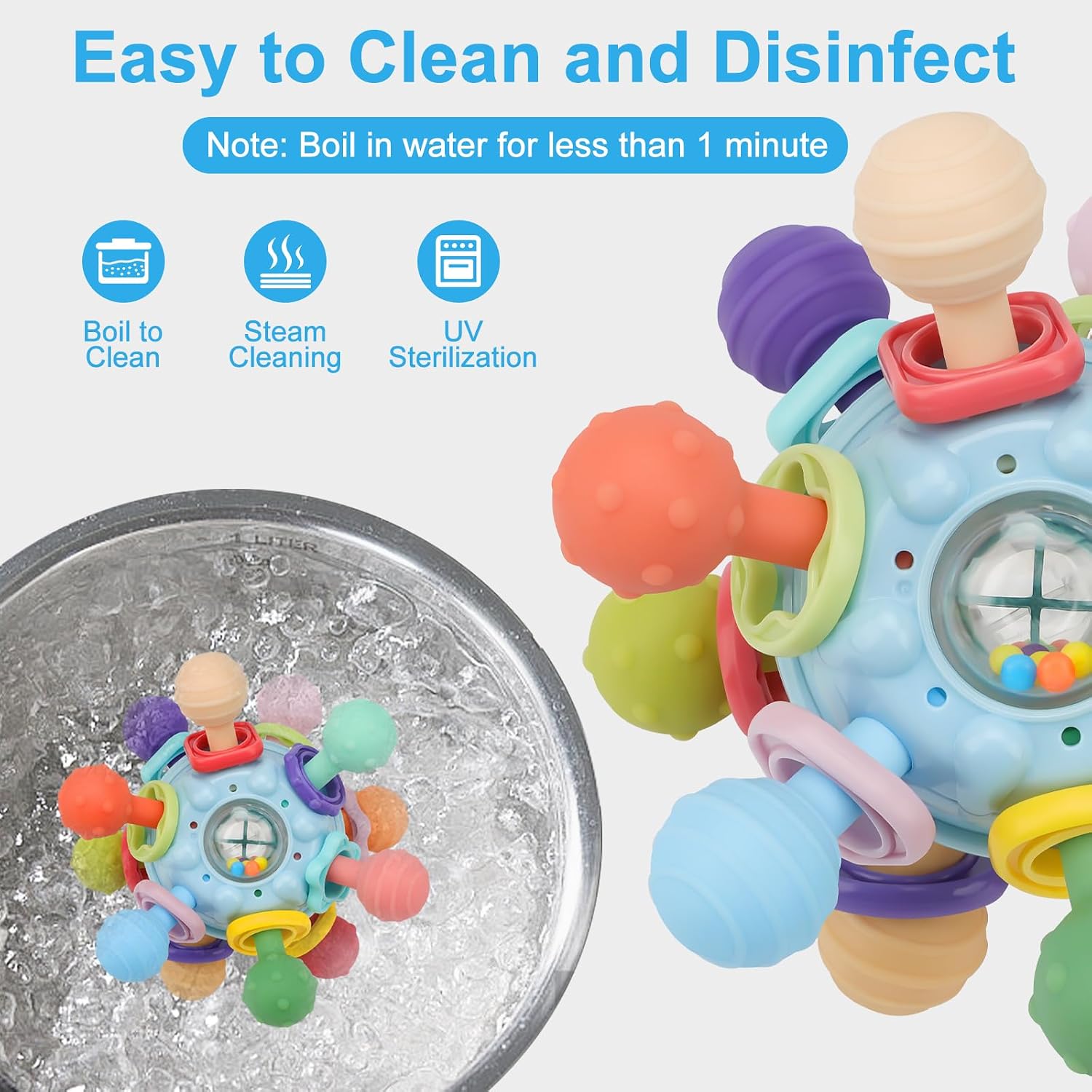
The silicone pieces wipe down easily with a damp cloth and mild soap, and they tolerate a rinse under warm running water without warping. The ABS plastic pieces should not be boiled or put in a dishwasher at high heat, as this can degrade the material over time. A quick surface clean after each mouthing session is realistic and sufficient.
Will a baby stay interested in this past the first few weeks?
In my experience, yes, with the caveat that you rotate which pieces are out at a given time rather than offering all of them simultaneously. Babies are novelty-seekers, and reintroducing a piece after a few days of absence tends to extend the engagement window considerably across the full newborn to twelve-month developmental arc.
Is the quality here worth it relative to what you’re paying?
For what you’re getting in terms of material safety credentials, texture variety, and how long this set can stay useful across the first year, the value reads above what you’d expect in this tier. The durability holds up across the kind of daily use that infant teething toys endure, which is aggressive and relentless.
Is this a good baby shower gift if I don’t know the exact age of the baby yet?
It is one of the more versatile shower gifts precisely because it covers the zero-to-twelve-month range and works at multiple developmental stages. Pair it with a note about rotating the pieces as the baby grows and you’ve given something that will actually get used rather than sitting in a closet waiting for the right moment.
The Verdict
I can picture my daughter at nine months, sitting in that patch of afternoon light that hits the living room rug around three o’clock, working through the TOHIBEE pieces with the focused competence of someone who has grown into her own hands. The Montessori-inspired infant learning toy design philosophy here is not a branding flourish. It reflects a genuine understanding that babies this age do not need stimulation so much as they need texture, weight, and the satisfaction of figuring out how something feels against their palms and gums. This is a foundational baby category item done without unnecessary complexity, and that restraint is the right call. The sensory exploration that defines the first year of child development is best served by objects that invite engagement rather than demand it. Explore our full editor recommendations for the first year if you’re building out a complete rotation. This is the kind of baby teething and sensory toy set that earns its place in the diaper bag and stays there.
Every Angle
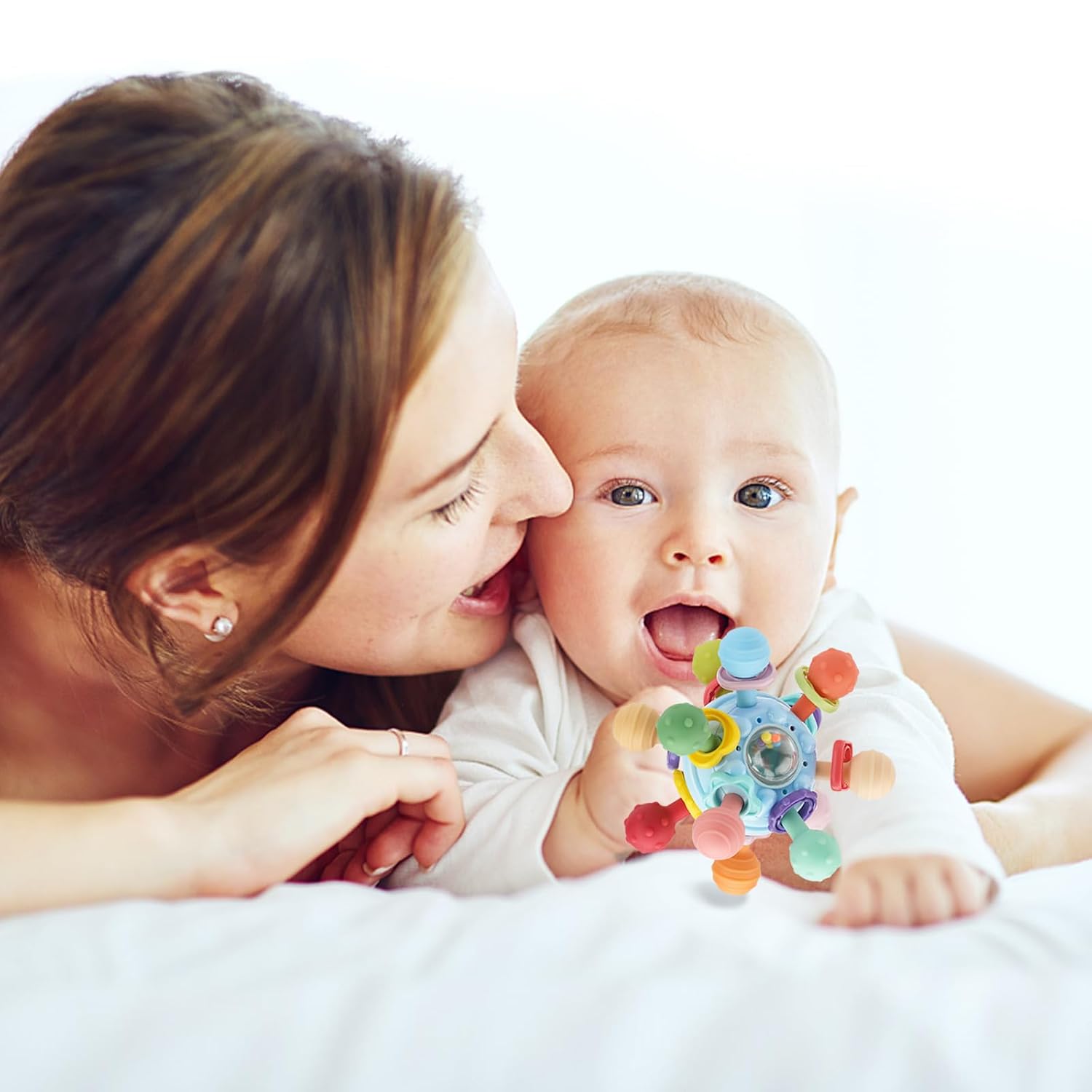
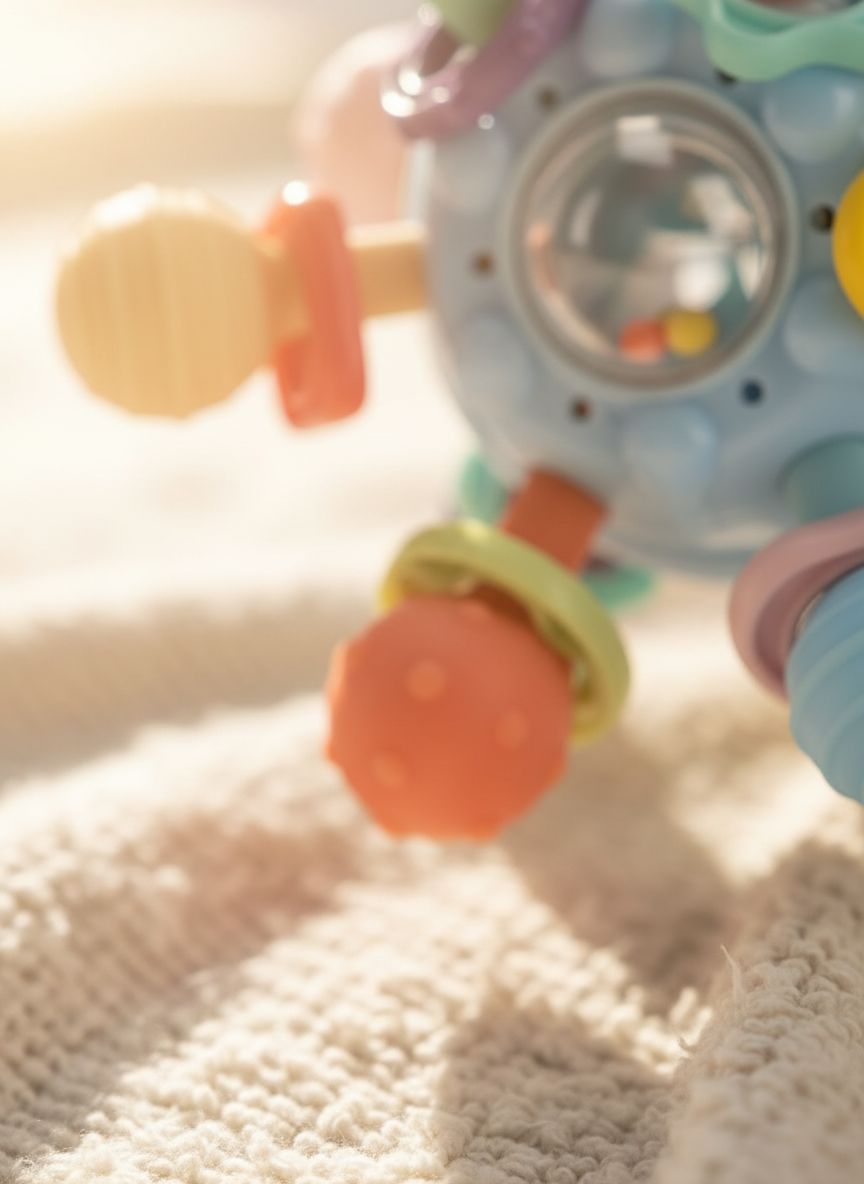
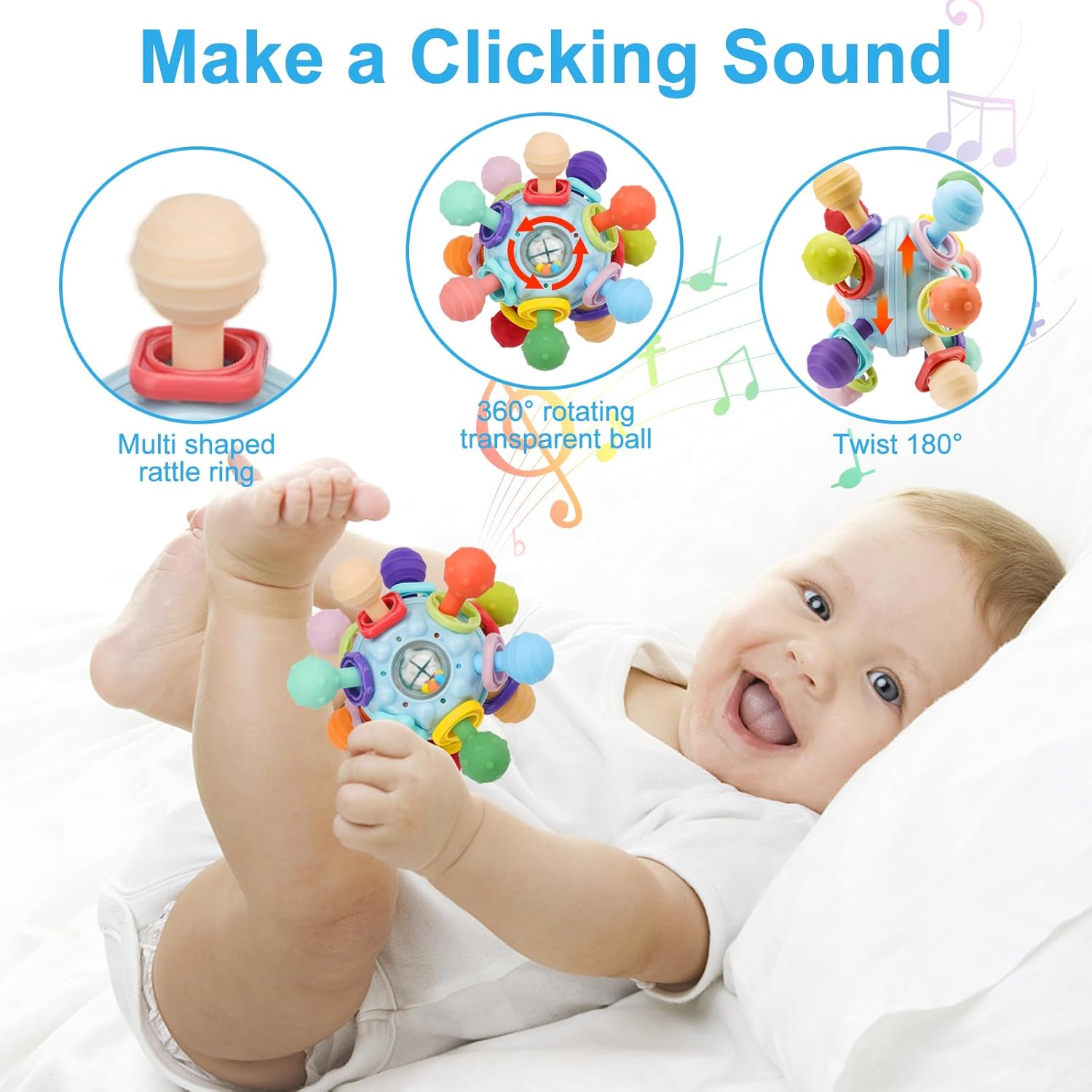
The product as photographed for Amazon — front, side, detail, in use.
As an Amazon Associate I earn from qualifying purchases.