Light Up Sensory Floor Tiles for Toddlers: Honest Review
The moment my three-year-old stepped onto the first glowing tile and froze, mouth open, completely forgetting she’d been crying about a snack two seconds earlier, I knew we were onto something.
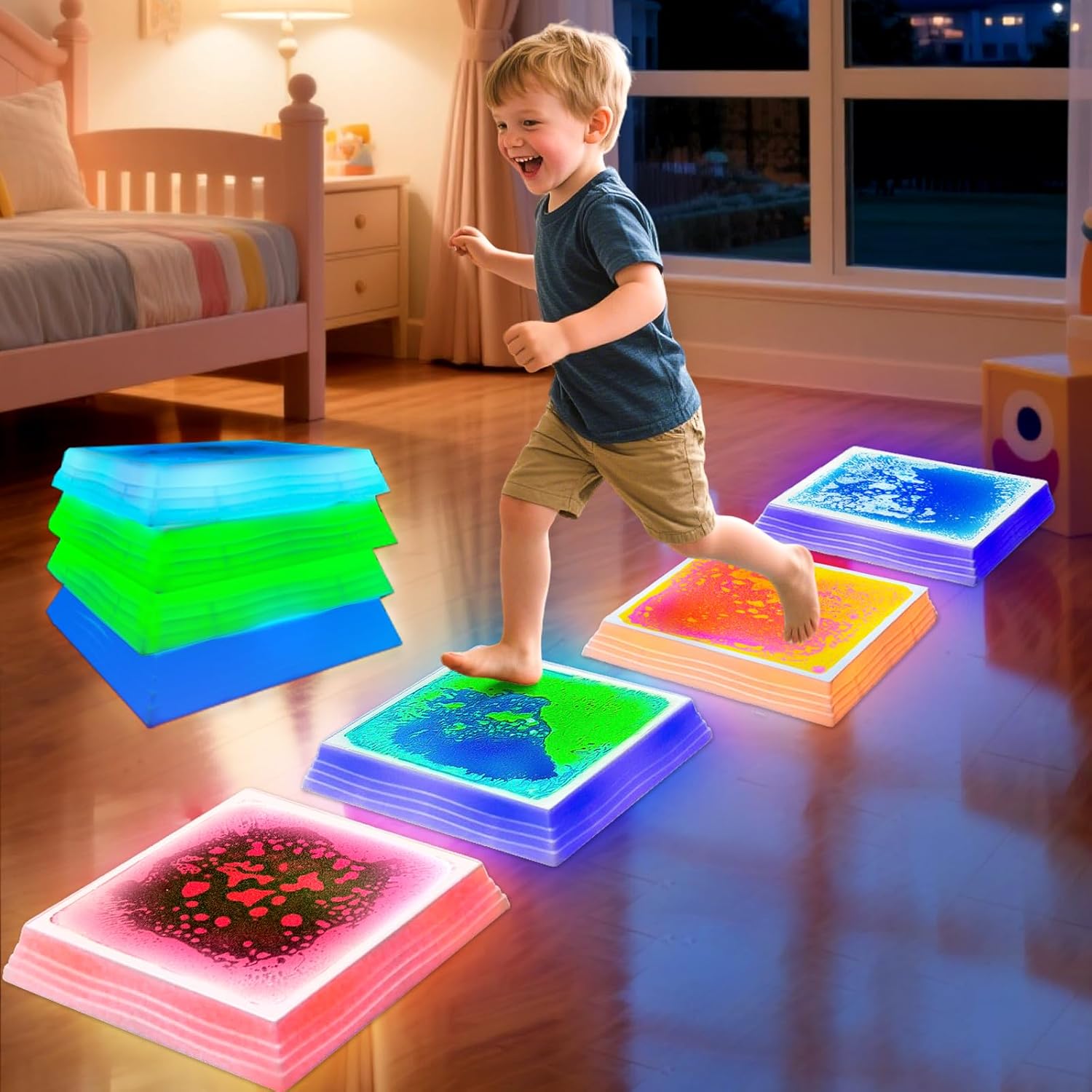
It was a grey Tuesday in February, the kind where the apartment feels smaller by the hour and every toy has already been dumped, ignored, and stepped on at least three times before noon. I had just unboxed the Onyoloy Light Up Sensory Floor Tiles, arranging the four interlocking 12×12 inch squares into a little glowing square on the living room rug. My daughter walked over in her socks, pressed one foot down, watched the liquid swirl and the LEDs pulse beneath her weight, and stood completely still for a solid thirty seconds. For a child who treats stillness like a personal insult, that was remarkable.
The First Time I Saw It
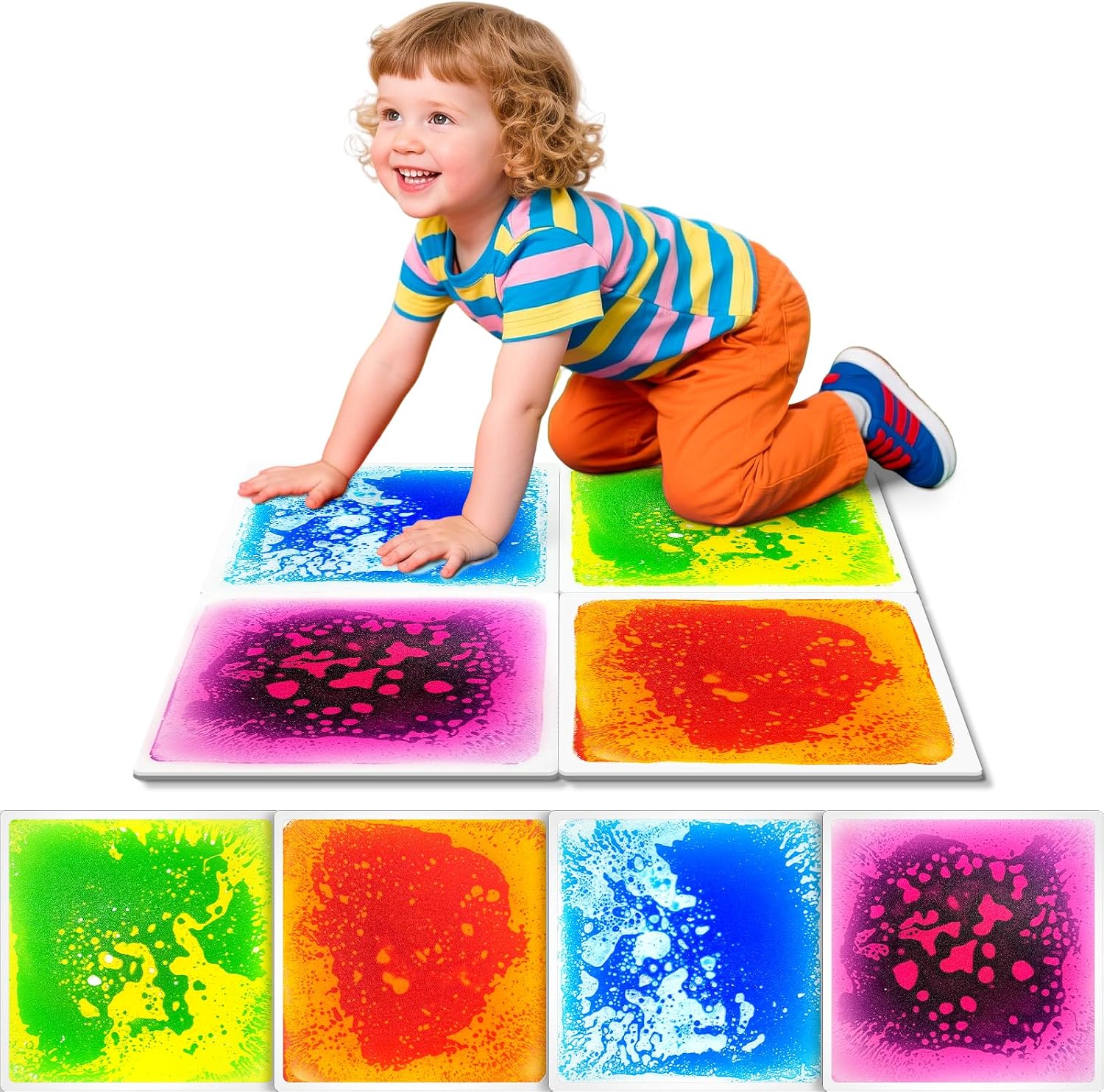
I spotted these on a late-night scroll through a sensory toy roundup, which I’d landed on after falling down a rabbit hole about Montessori-inspired sensory play environments for preschoolers. The listing image caught me immediately: four tiles glowing in rainbow hues against a wood floor, a small child’s feet centered in the frame like a tiny disco. I’d seen foam puzzle mats before, obviously. This was something different.
The liquid-filled centers were what made me pause. The idea that a toddler learning toy could combine tactile liquid feedback, color-shifting LED light, and interlocking floor mat functionality in a single product felt almost too clever. I added it to cart and then stared at it for a week before actually ordering.
How It Actually Plays / Works
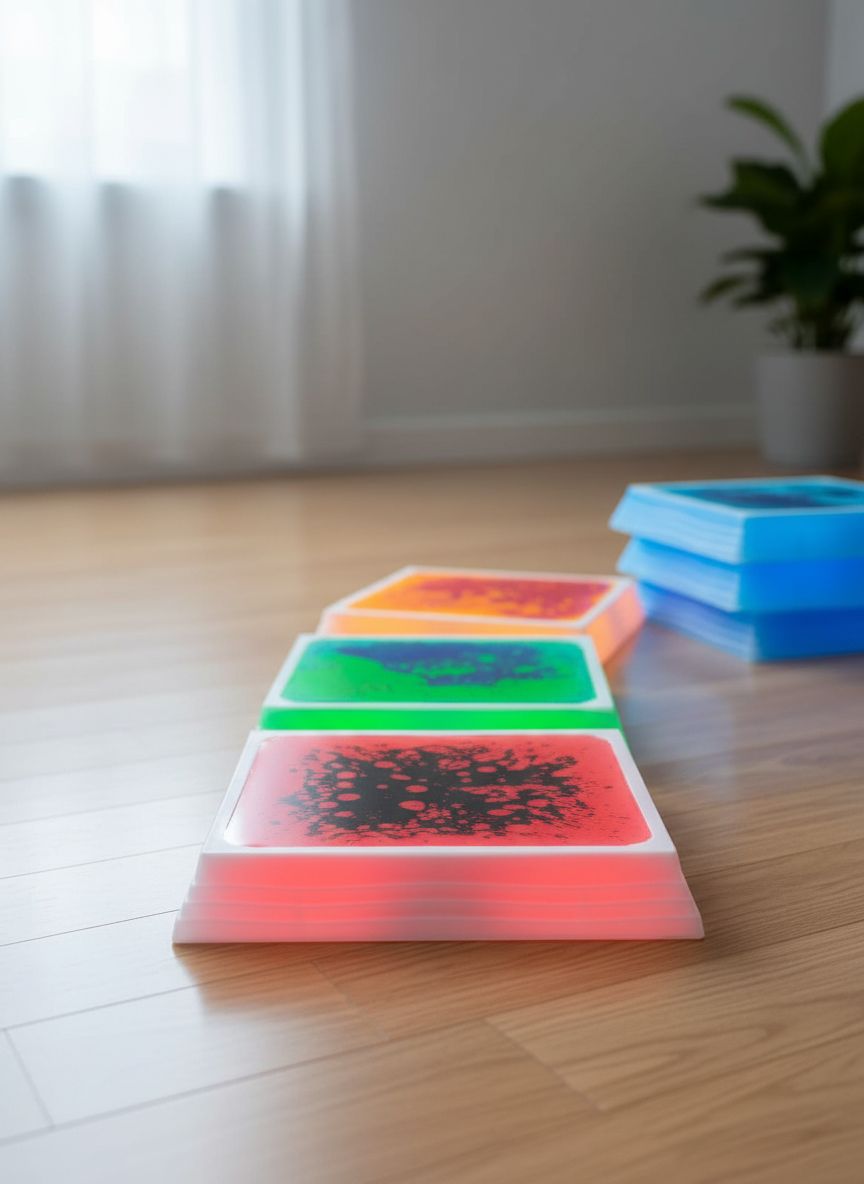
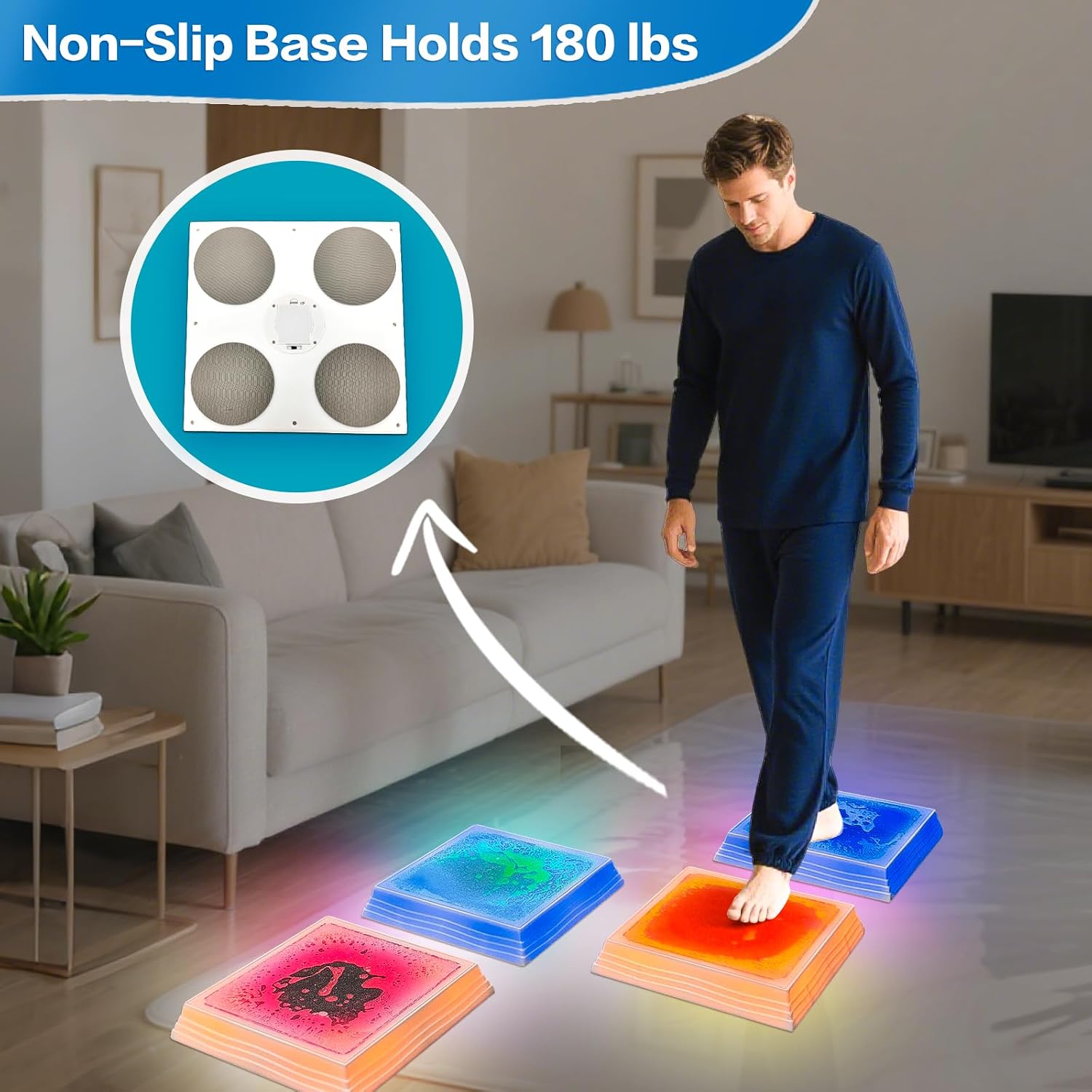
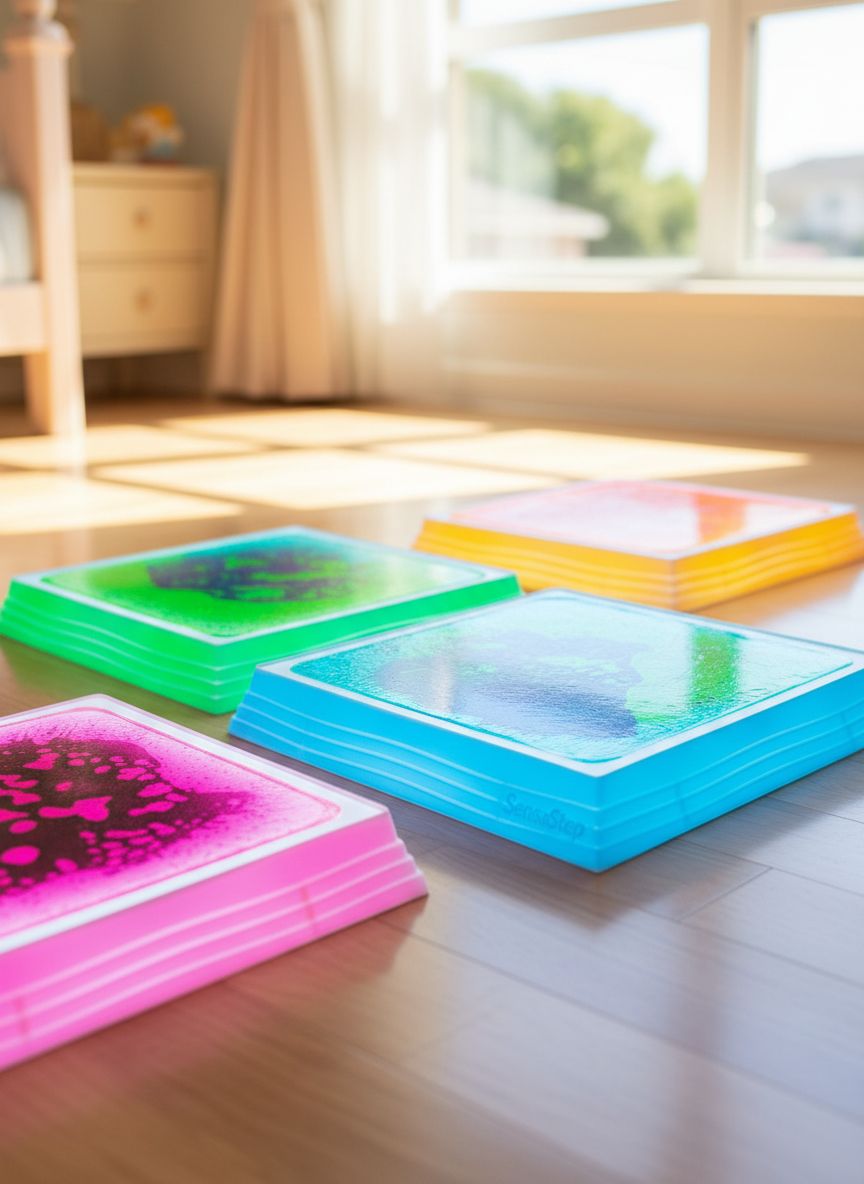
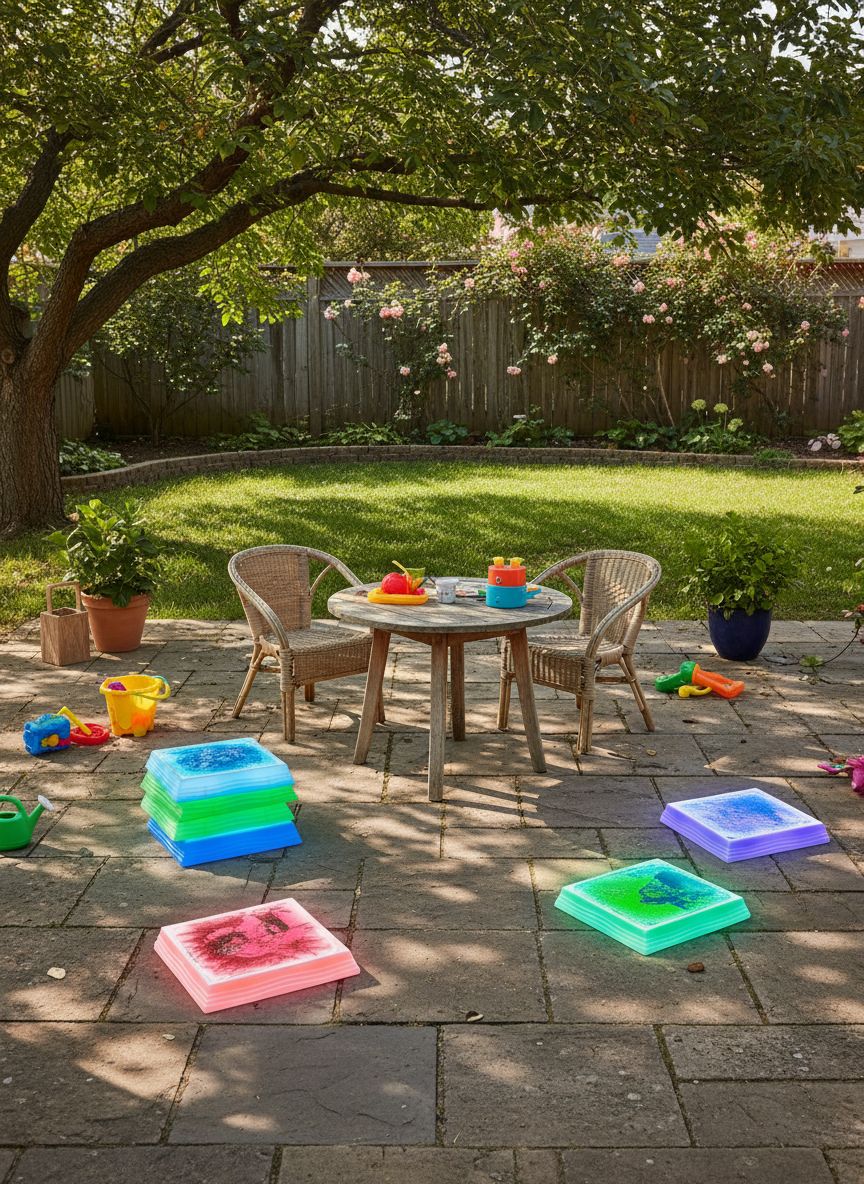
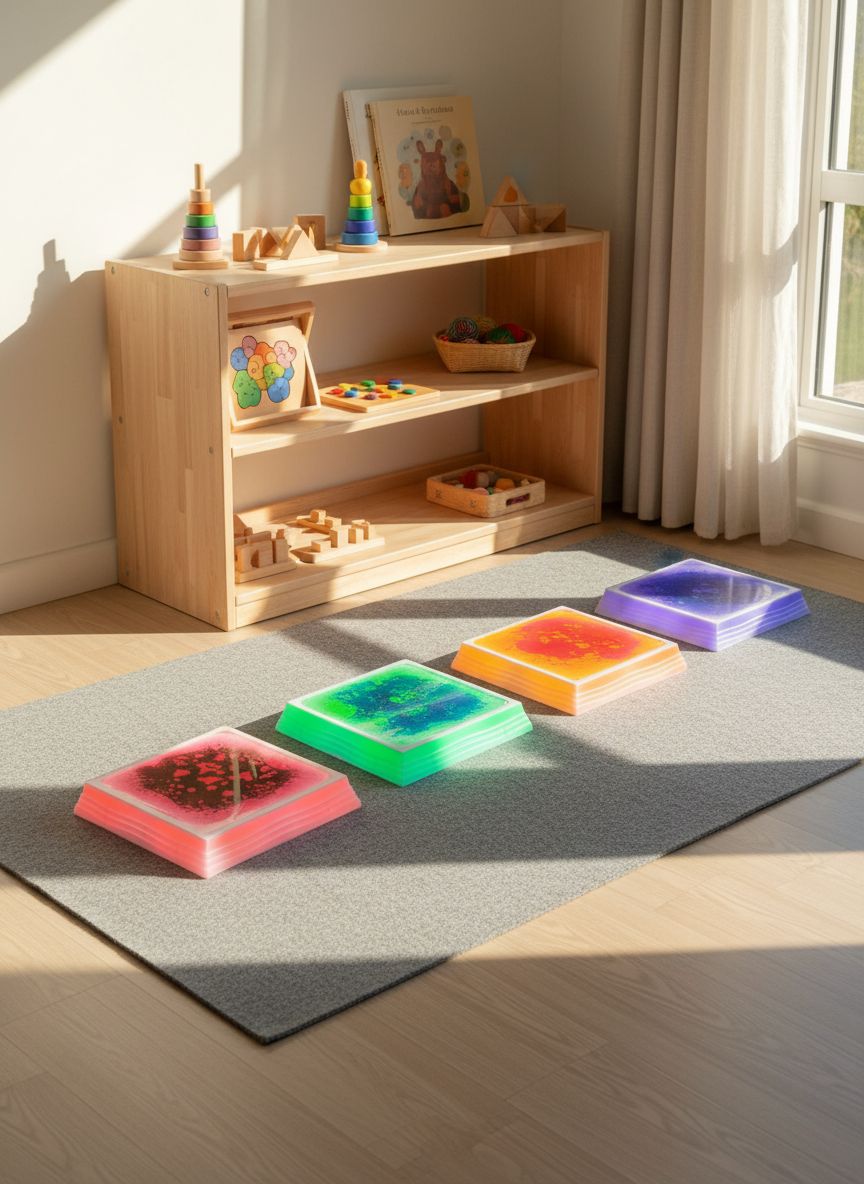
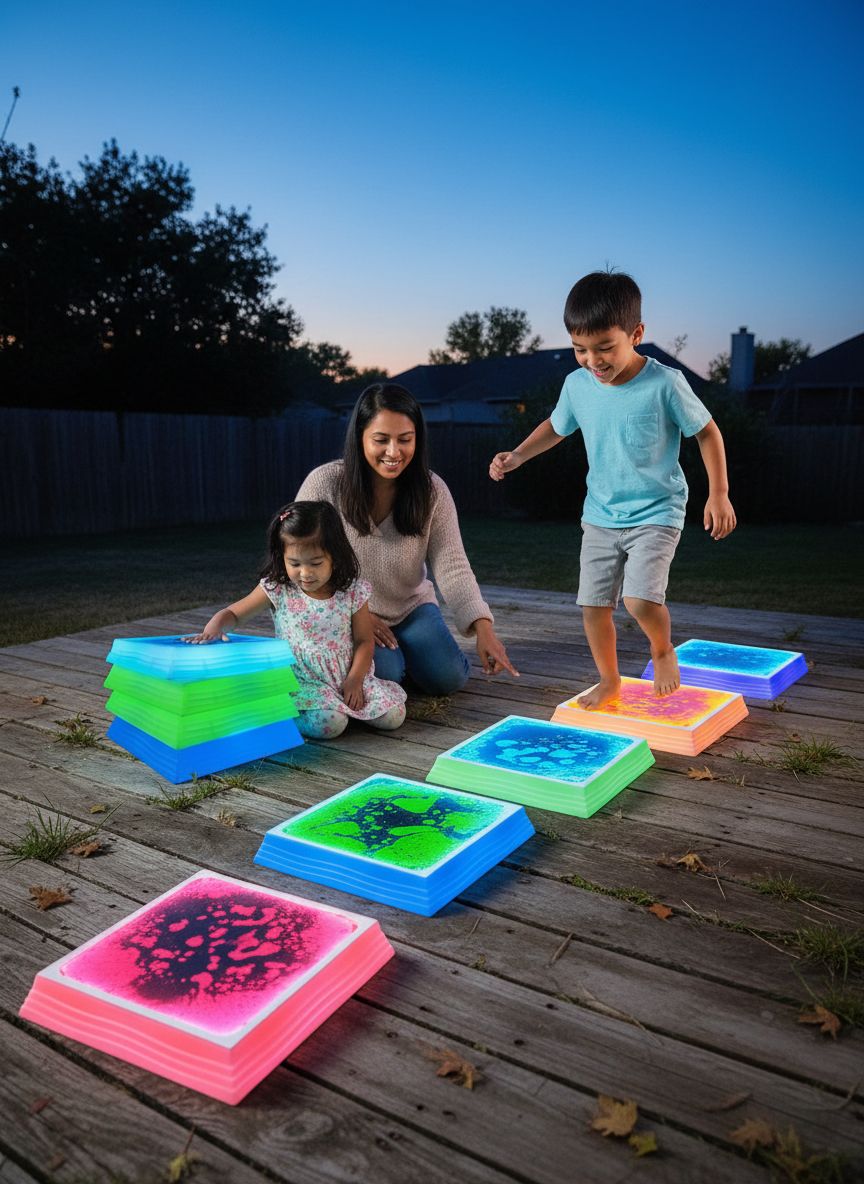
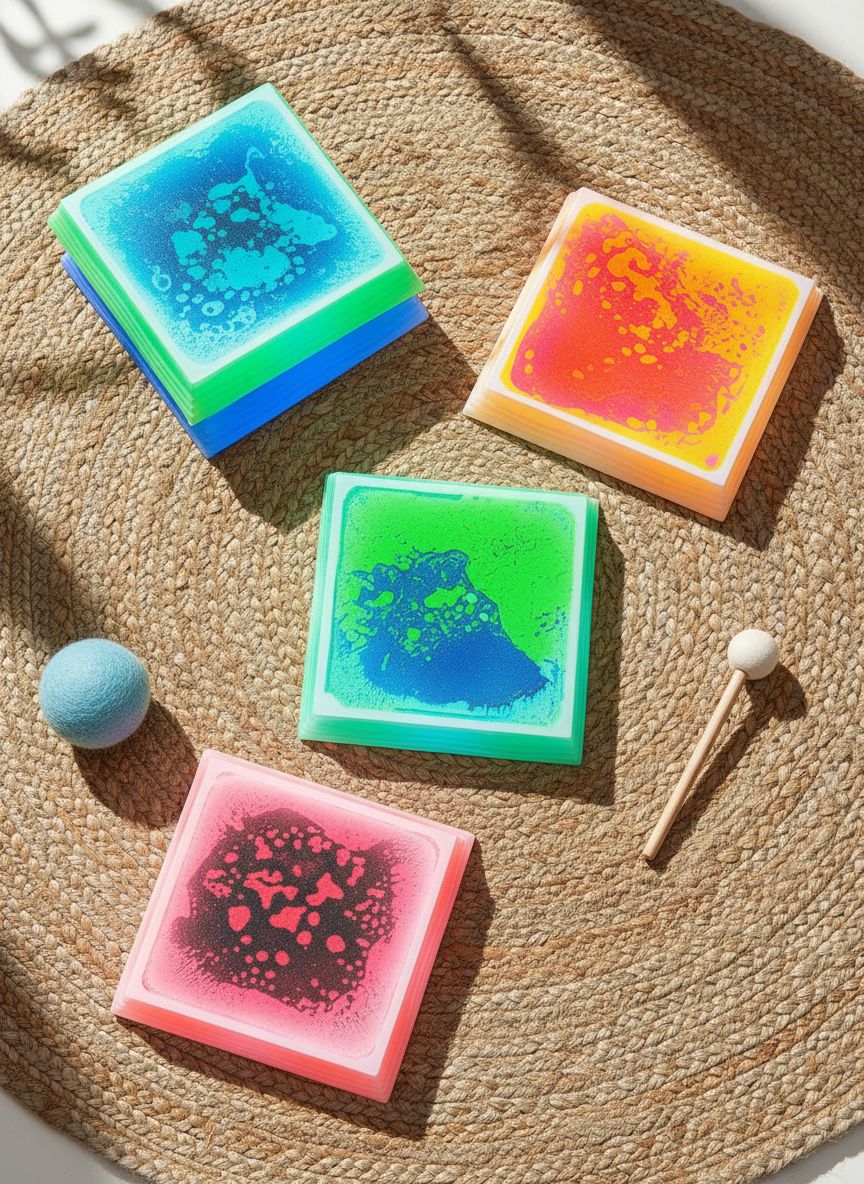
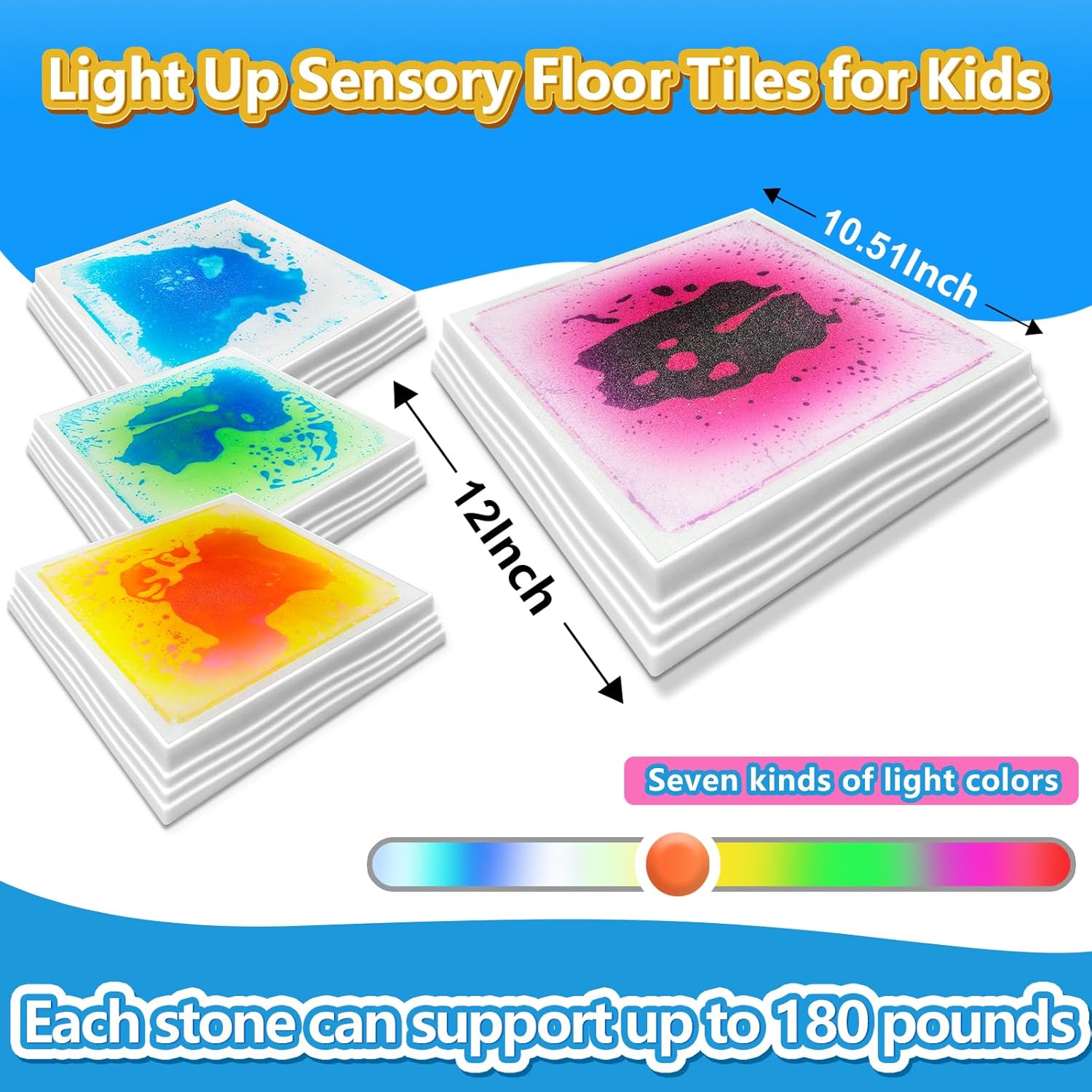
Each tile is a firm foam square with a clear liquid-filled center panel. Step on it and the liquid shifts, pressing against the edges in that satisfying slow-motion way, while the LED lights respond to pressure and cycle through seven colors. The interlocking edges click together like a standard foam puzzle mat, though the fit is snug enough that the tiles stay put on hardwood. The surface texture is matte and slightly grippy, which matters when small people are jumping on it in socks.
“This is the first floor toy my kid has asked for by name, every single morning, for three weeks straight.”
The lights aren’t blinding or harsh. They glow with the kind of soft, diffused quality that looks more like a nightlight than a strobe, which matters for the sensory-sensitive kids this preschool sensory toy is designed to support. That said, pediatric development guidelines suggest that light-responsive toys work best in moderately lit rooms rather than full brightness, where the effect registers more clearly and holds attention longer. Worth noting if you’re setting this up in a sun-drenched playroom.
The Real-Life Scenarios I Used It In
Scenario 1: Sunday Morning, Pajamas Still On
This is peak unstructured time in our house. No agenda, no plan, just two kids in pajamas orbiting the kitchen waiting for pancakes. I laid out the four tiles in a line across the hallway connecting the kitchen to the living room. Within minutes, my three-year-old had invented a game involving only stepping on the purple-glowing square, and my five-year-old was lying flat on his stomach pressing each tile with his palm and watching the liquid move. Nobody asked to watch a video. Nobody asked me for anything for a solid twenty minutes. I stood in the kitchen in something approaching peace.
Scenario 2: Tuesday After Preschool Pickup
The post-preschool window is a known danger zone. Tired, overstimulated, and running on the last fumes of a morning snack eaten at 10am, my daughter comes home like a weather system. This particular Tuesday, she’d had a hard drop-off and a harder pickup conversation in the car. I had the tiles already set up in the living room corner when we came in. She dropped her backpack, walked to the tiles without a word, and spent the next fifteen minutes pressing each one slowly and watching the colors. It acted as a reset in a way I hadn’t anticipated. This is exactly the kind of toddler sensory toy that earns its floor space.
Scenario 3: Grandparent Visit, Mixed-Age Situation
My parents visited last month and brought my seven-year-old nephew, who is on the autism spectrum and has specific preferences around tactile input. He gravitates toward things he can press, squeeze, or feel shift under his hands. Within ten minutes of arriving, he and my daughter were both lying on the tiles, pressing them in patterns and narrating what colors appeared. My mother, who was skeptical of “another light-up thing,” sat on the floor and joined them. It was one of those unexpectedly easy afternoons where the toy did the social work. These active sensory play tiles consistently bridged the age gap in ways that impressed me.
What Other Parents Are Saying
This product has collected a strong rating across more than a hundred reviews, with parents consistently flagging two things: the light response feels more satisfying than expected, and the build holds up better than the price point suggests it might. The critical notes cluster around tile count, with several reviewers wishing the pack included more pieces for covering a larger floor area.
Across the review consensus, the phrase that appears most often in some form is “my kid won’t leave it alone,” which, honestly, tracks with my own experience entirely.
Who Should Skip It
If your child is under three, I’d hold off. The interlocking tile edges and the liquid-filled panels are sturdy, but the American Academy of Pediatrics’ guidelines on age-appropriate play equipment are clear about supervised use for children who are still mouthing objects or testing surfaces in unpredictable ways. The tiles also require adult assembly, and the interlocking edges need to be properly snapped together every single time, because a partially connected tile on hardwood moves underfoot. If you have a runner, an impulsive jumper, or a kid who treats all surfaces as trampolines without warning, add a non-slip rug pad underneath the whole setup. Also: four tiles cover a roughly 24×24 inch area. If you’re imagining a room-filling sensory floor, you’d need multiple packs, and the cost climbs accordingly.
What It Replaces (or Complements) at Home
We retired a basic foam alphabet mat that had been living under the coffee table, unloved, for about eight months. Same footprint, completely different energy. The Onyoloy tiles occupy the same physical space but generate a level of self-directed play the foam alphabet mat never did. They also sit alongside our preschool pretend play setup without competing with it aesthetically, which matters more than I expected in a small apartment. The glow is subtle enough that it doesn’t dominate the room.
If you’re already building out a sensory corner or calm-down space for a preschooler or a child who benefits from sensory input, these tiles are a natural anchor piece. They work harder than a light table (more tactile) and take up less space than a full sensory bin setup. For parents exploring preschool STEM and sensory tools, they slot in well alongside color-mixing and cause-and-effect toys.
FAQ
Is this safe for children under three?
The brand labels these for ages three and up, and I’d agree with that floor. The tiles are not a choking hazard in normal use, but the liquid-filled panels and LED components make close supervision important for any child still in a mouthing phase.
How do I clean them?
A damp cloth works well on the foam surface and the clear panels. Avoid submerging the tiles or running water over the LED components, as these are not waterproof units.
Will my kid actually use this past the first week?
In my experience, yes, more so than most novelty floor toys. The combination of liquid movement and color response gives kids multiple sensory loops to explore, which extends engagement beyond the initial discovery phase. My daughter still returns to it daily at the three-week mark.
Does the quality justify what you’re paying?
For what you’re getting at this price point, the build quality reads above what you’d expect. The tiles haven’t warped, the LED response hasn’t dimmed, and the liquid seals have held through enthusiastic daily use from two children. Given how long this kind of durable sensory play gear tends to get used across the three-to-five window, the value calculus works.
Is this a good gift for a child you don’t know well?
It’s one of the stronger inclusive gift options I’ve come across, particularly for a birthday in the three-to-five range. It works across a wide range of play styles and developmental needs, and it lands well on our editor’s gift picks for exactly that reason. The rainbow colorway and the light-up element read as exciting without being gender-specific or niche.
The Verdict
I picture my daughter at four, maybe four and a half, still returning to the corner of the living room where these tiles live. I picture her walking on them in that deliberate, heel-first way she already does, watching the liquid move, narrating the colors to herself in a small private monologue. This Onyoloy light up sensory floor tile set has become one of those pieces of kit that quietly holds space in our daily rotation without demanding attention from me. It is, to be specific, one of the most low-maintenance high-return editor-recommended preschool sensory toys I’ve tested this year.
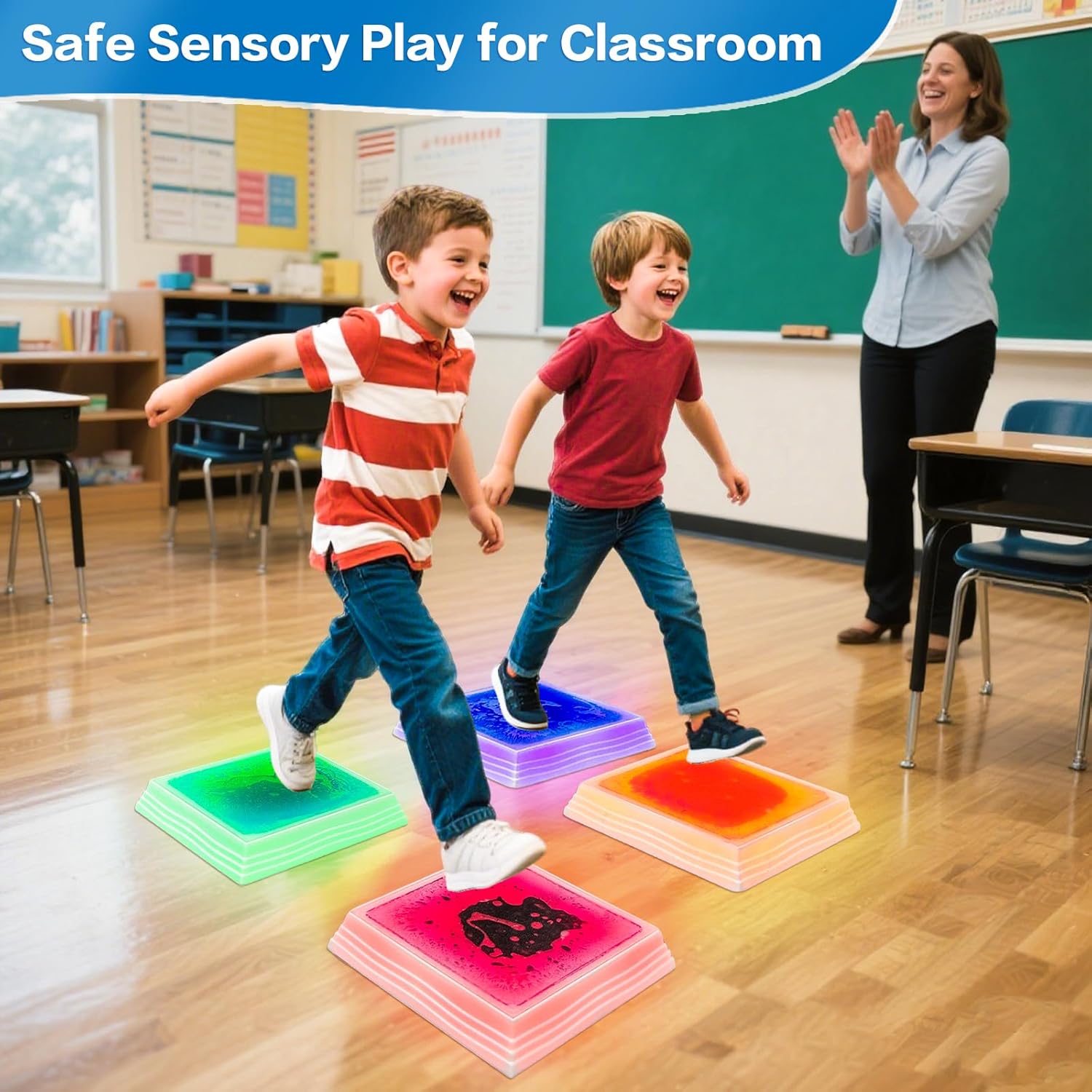
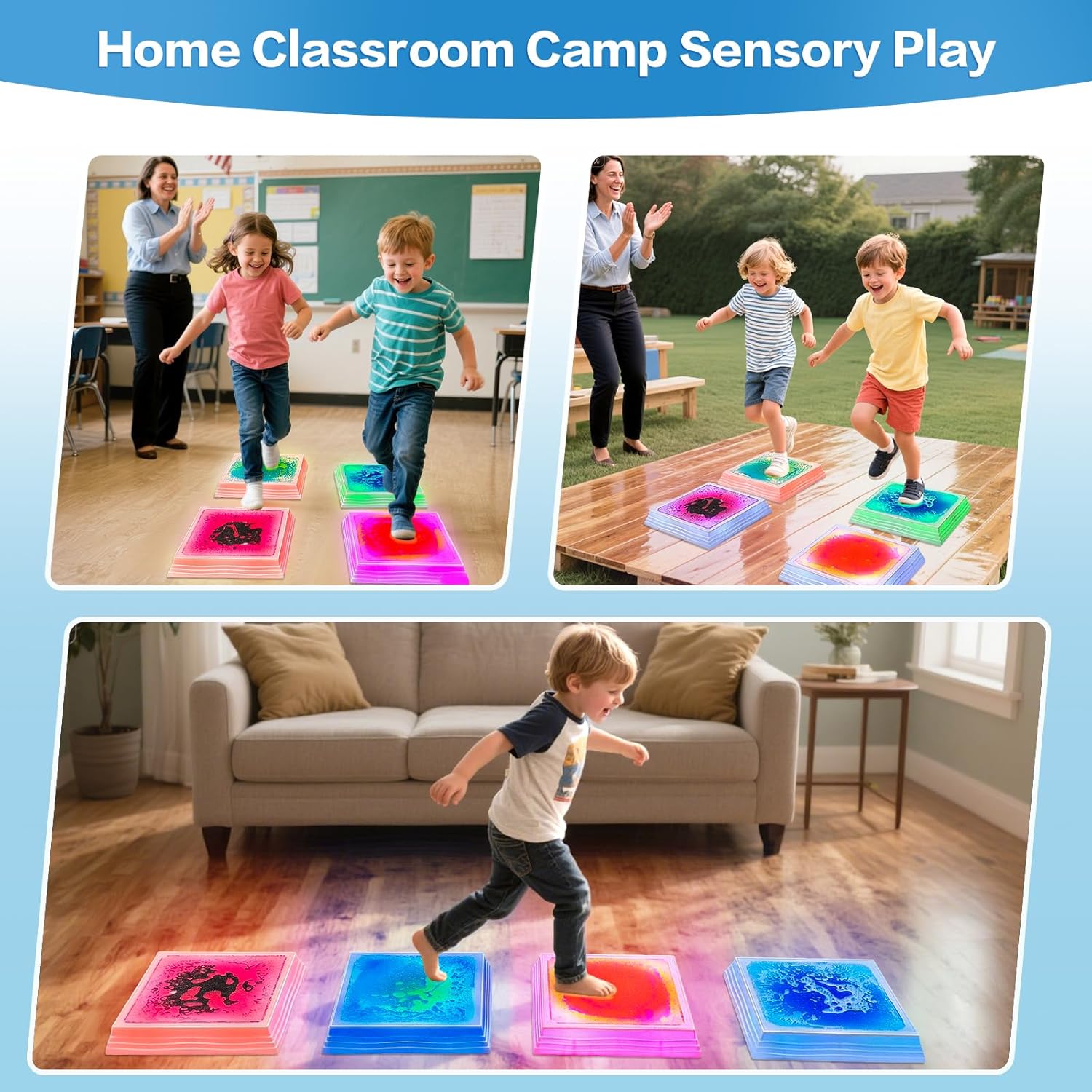
For the three-to-five window, especially for children who seek tactile input, who benefit from sensory regulation tools, or who simply need something that holds focus during the long unstructured hours of a weekend afternoon, this delivers. It works in a preschool-age home setup and in a classroom environment equally well. The pack-of-four format is enough to get started, honest about its limits, and easy to expand.
For the autism sensory toy category specifically, where so many products overpromise and underwhelm, this one is refreshingly straightforward in what it does. You can cross-reference the developmental case for this kind of multi-sensory play equipment in the research on early childhood sensory development, and the principles hold up.
Bottom line: if your floor has been looking for a reason to exist beyond storage and stepping on Lego, this is it.
Every Angle
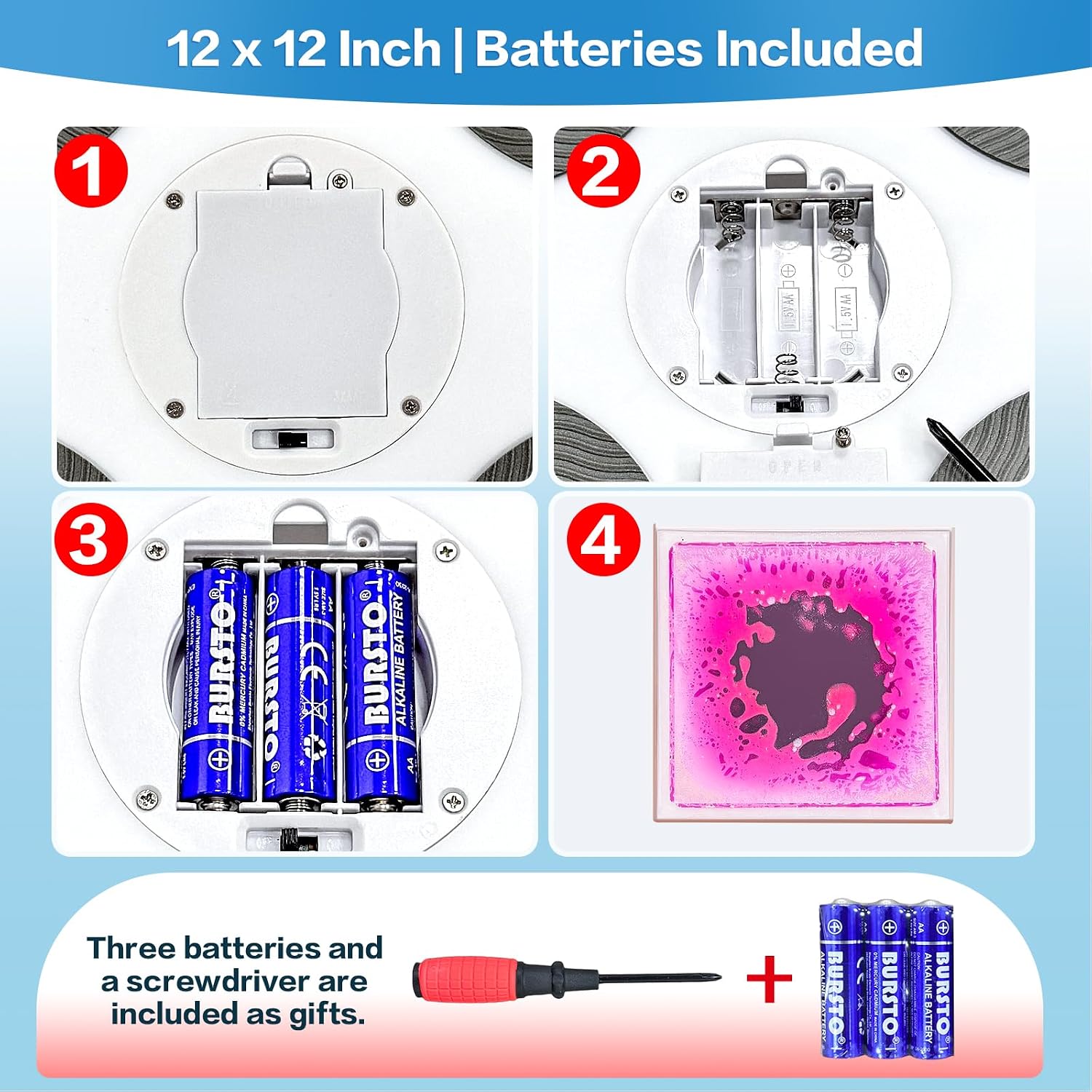
The product as photographed for Amazon — front, side, detail, in use.
As an Amazon Associate I earn from qualifying purchases.