Doorway Sensory Swing for Preschoolers: Honest Review
The moment my four-year-old climbed inside the DreamGYM Doorway Sensory Swing and let out a slow, audible exhale, I understood exactly why occupational therapists have been quietly recommending these for years.
It was a Thursday afternoon, the kind where preschool pickup had gone sideways before we even hit the parking lot. My daughter was spinning, literally spinning, in the kitchen while I tried to put away groceries, her voice pitching up with every rotation like a kettle about to boil. I had maybe four minutes before full dysregulation. I unhooked the DreamGYM Doorway Sensory Swing from the hallway frame, held it open, and she crawled in without being asked. Within two minutes, she was still. Not asleep. Not distracted by a screen. Just. Still. That was six weeks ago, and I’ve thought about that moment almost every day since.
The First Time I Saw It
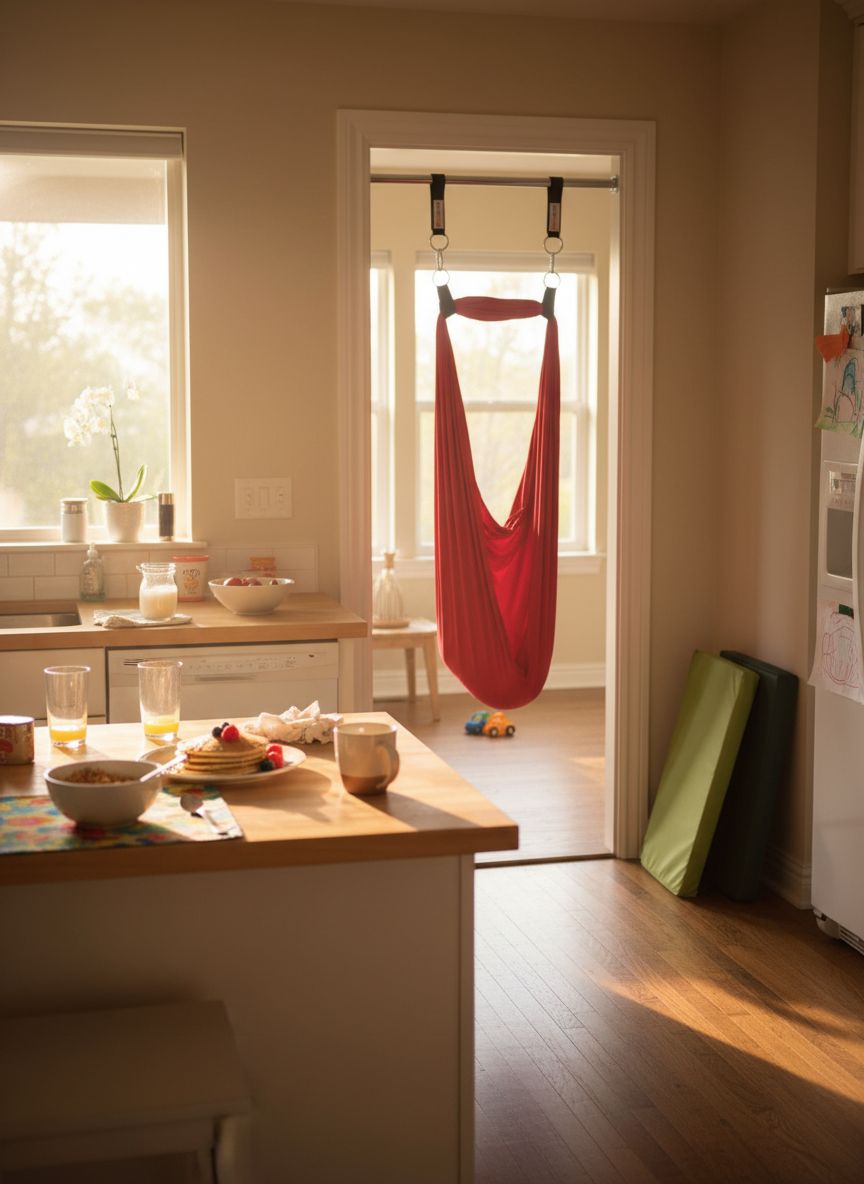
I first noticed a compression swing in the corner of a friend’s living room about a year ago. Her son, who was four at the time and has sensory processing differences, had one hanging from a reinforced doorway near the playroom. I remember thinking it looked almost architectural, a deep red cotton cocoon suspended at just the right height, like something between a hammock and a hug. Her son climbed in mid-conversation, swung gently for about three minutes, and came back to the table calmer than I’d seen him all afternoon.
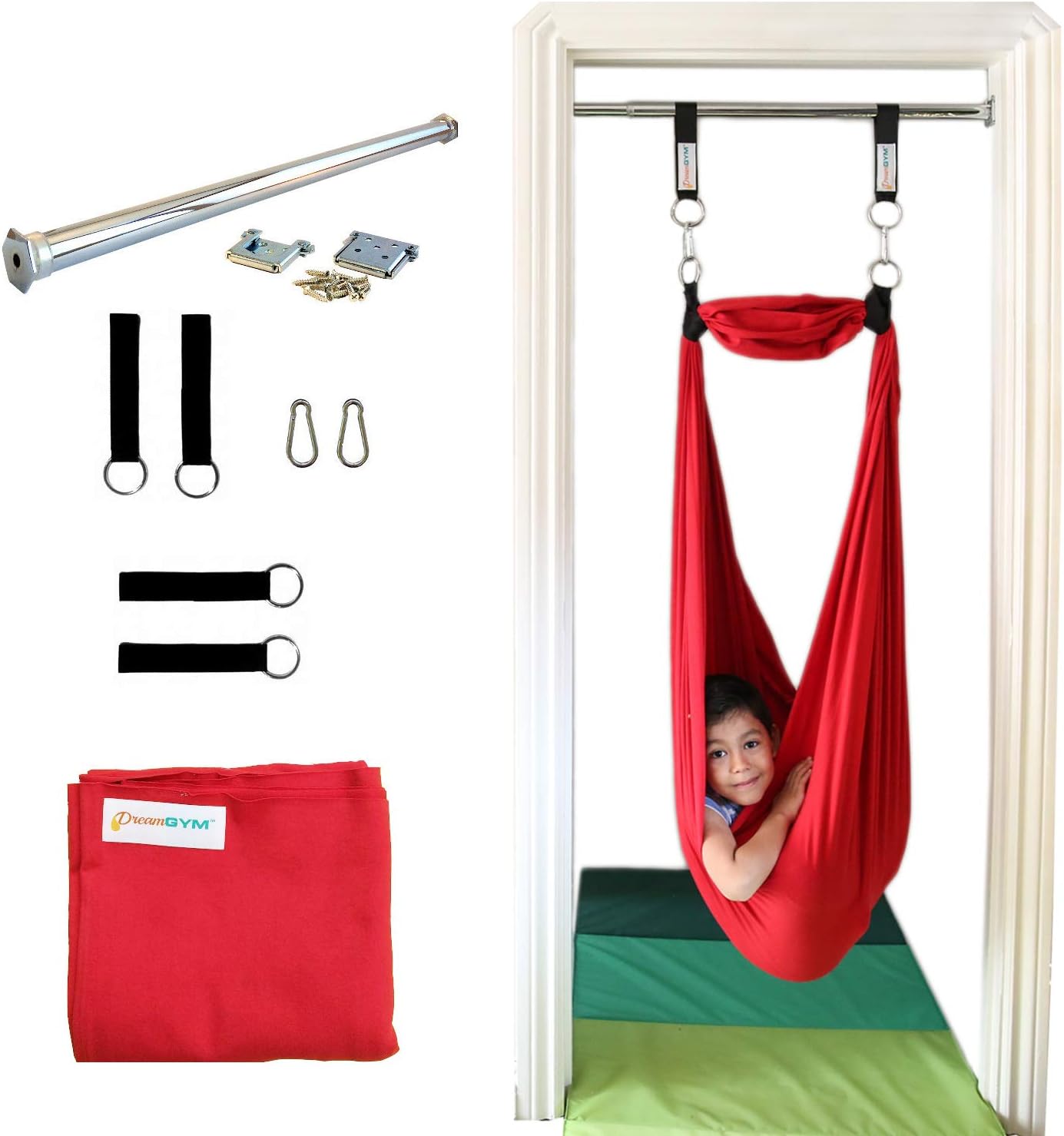
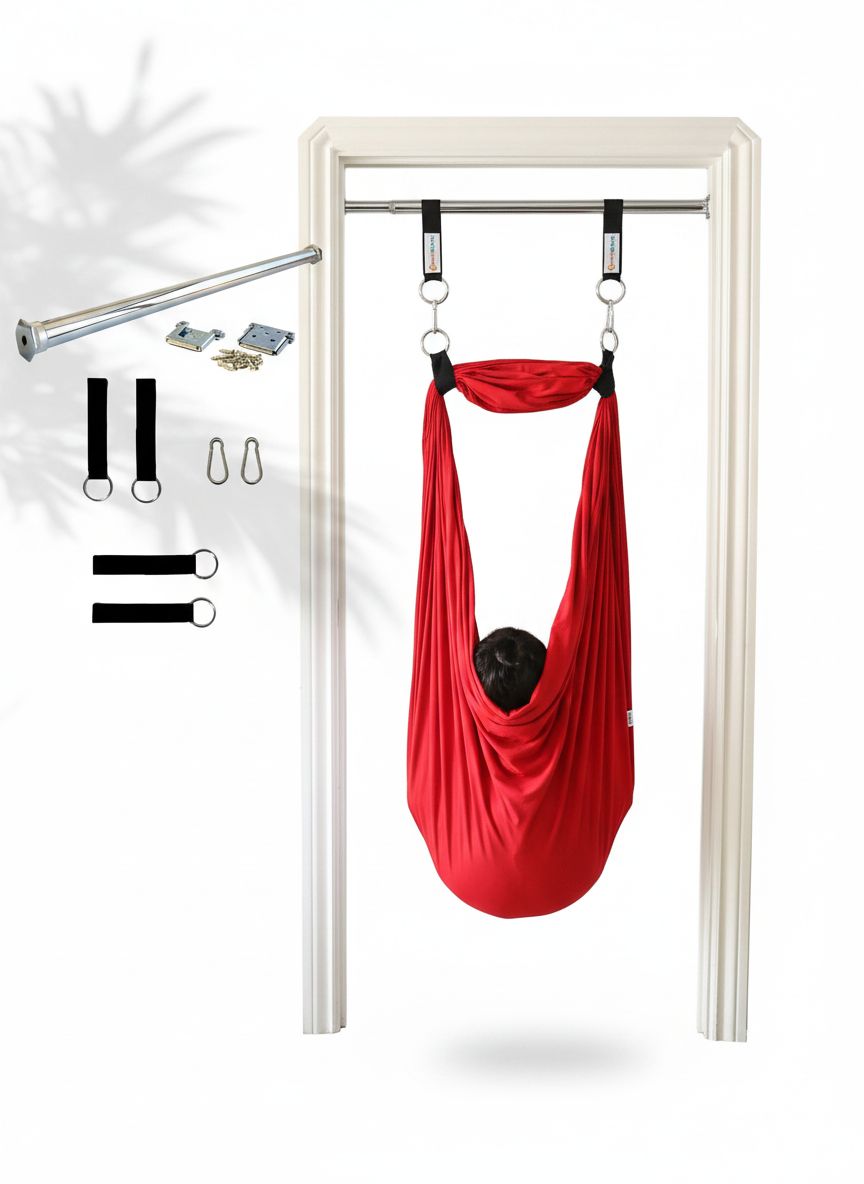
I filed it away the way you file away things that feel slightly out of reach, and then promptly forgot about it until our own preschooler started her sensory-seeking phase in earnest. A quick search later, and the DreamGYM was the name that kept surfacing in trusted parenting gear roundups and occupational therapy forums alike. The 220-pound weight capacity and the bracket-secured steel bar were what made me pause and actually read the listing properly.
How It Actually Plays / Works
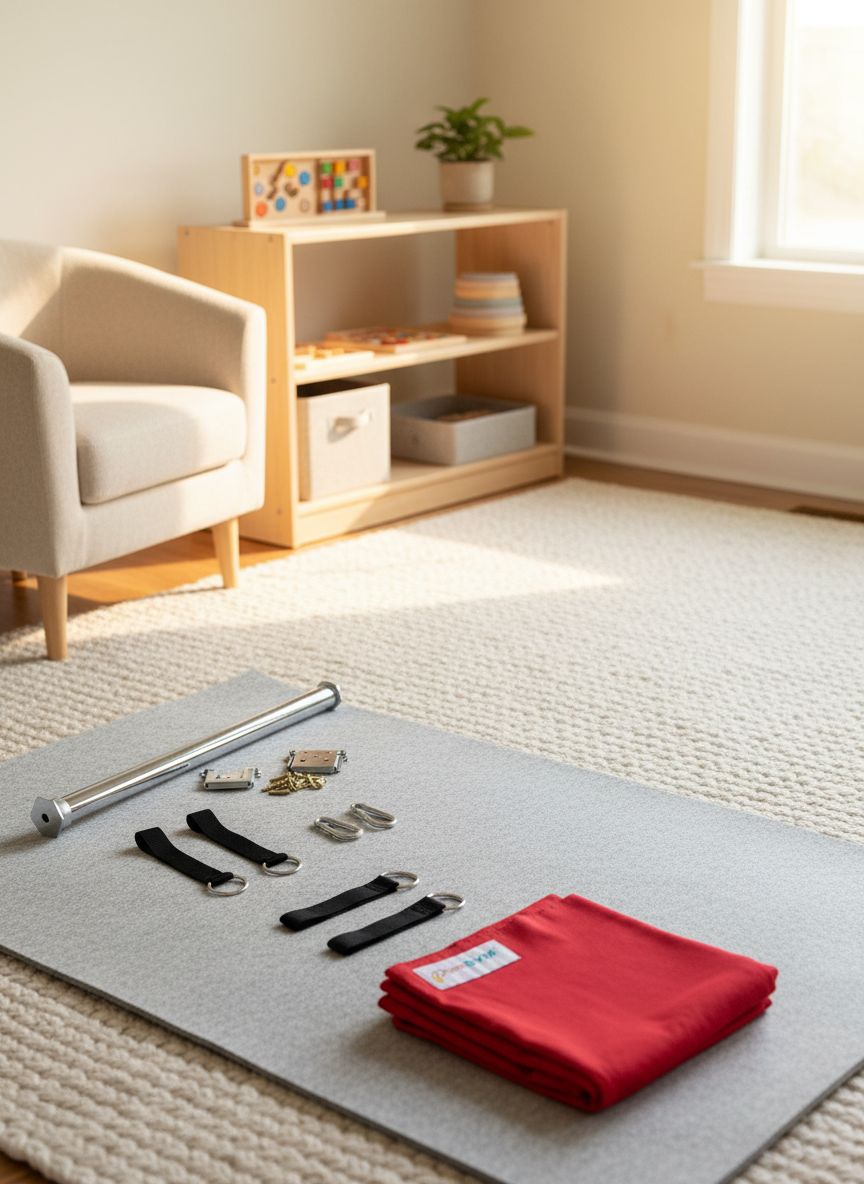
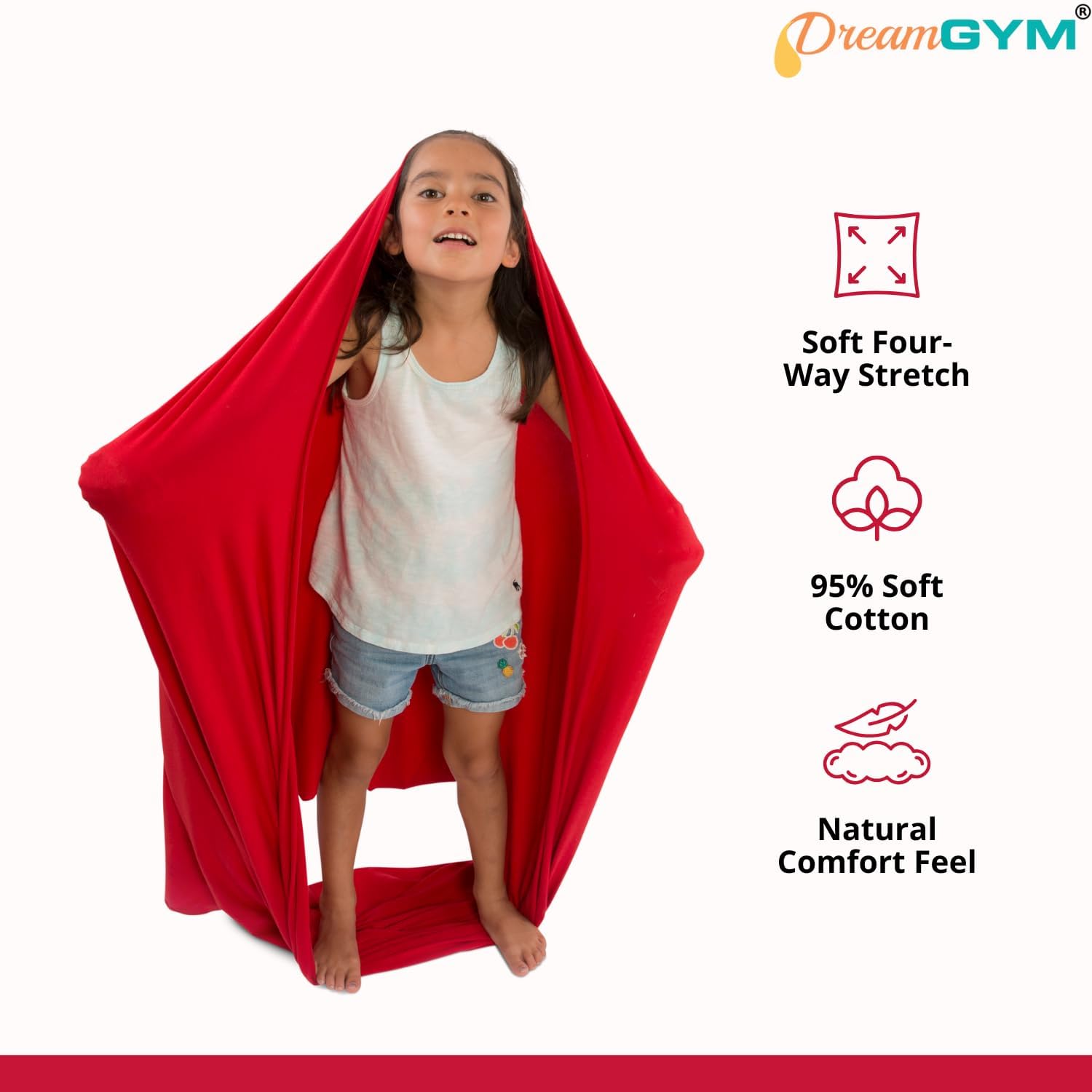
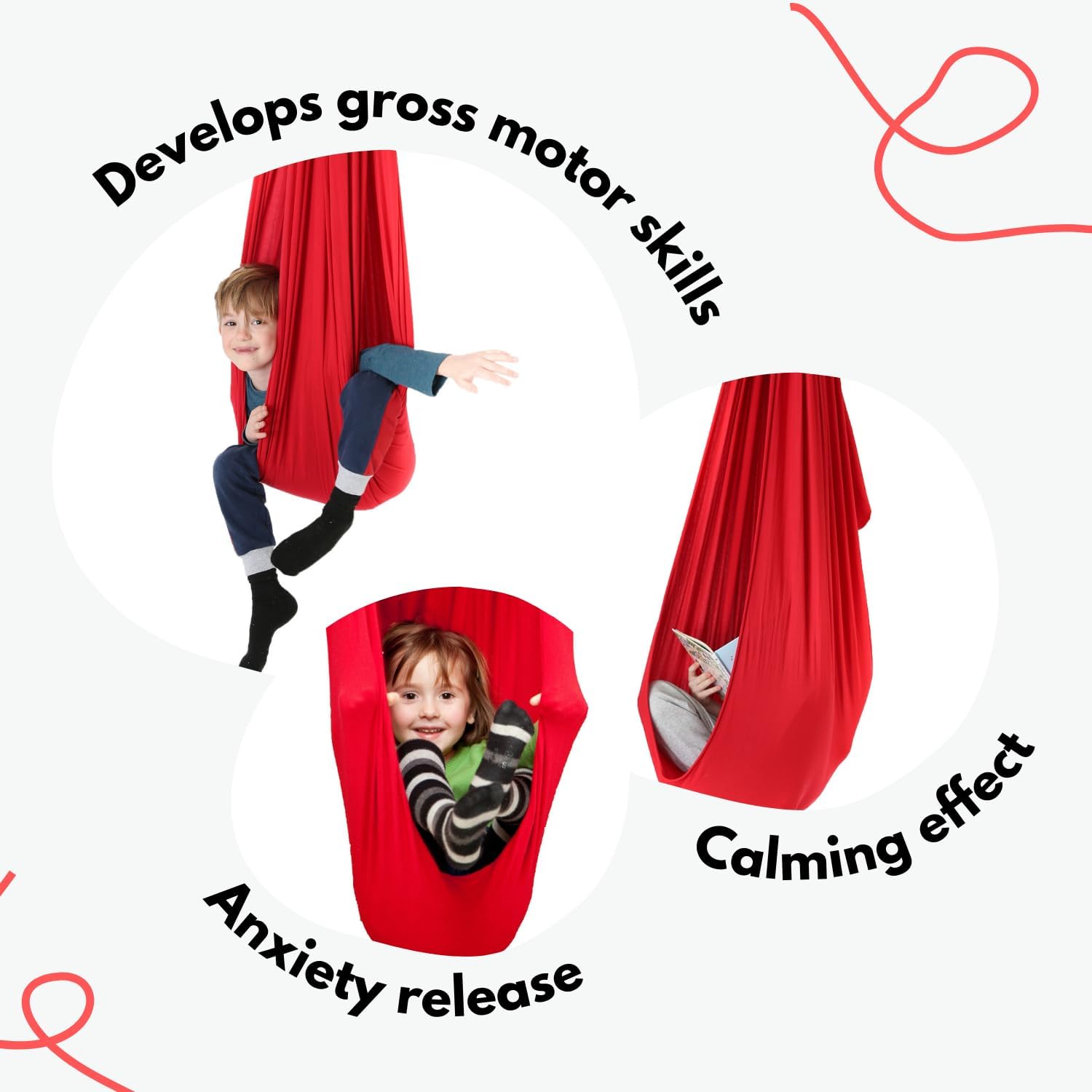
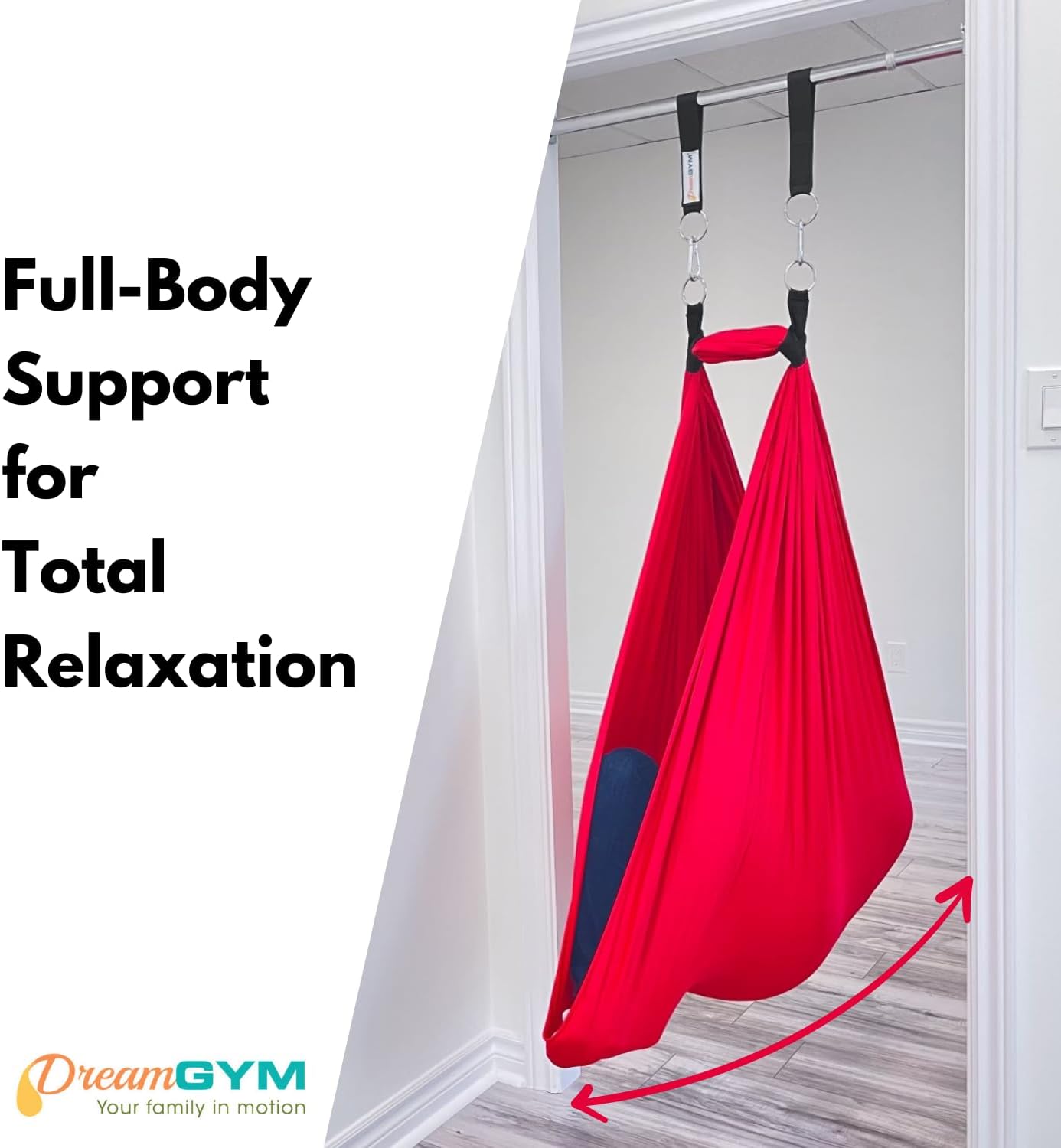
The swing is a 95% cotton compression cocoon that wraps snugly around a child’s body when they climb inside, providing what therapists call “deep pressure input,” the same sensory feedback that weighted blankets and tight bear hugs deliver. It hangs from a steel bar mounted across a doorway with weight-bearing brackets, not the flimsy tension-rod style that makes you nervous every time your kid pushes off. The motion is gentle and contained, more of a slow pendulum sway than a full playground arc, and that’s intentional. The compression plus the rhythmic swinging together signal the nervous system to downshift.
“This is not a toy. It is a tool, and once you understand the difference, you will use it differently and get completely different results.”
The first week, my daughter used it mostly for fun, treating it like a novelty pod she could zip herself into. By week two, she started going to it unprompted when she felt overwhelmed, which is the actual goal. It’s worth noting that this kind of sensory-based self-regulation support is well-documented by pediatric health researchers, though every child’s response will be different. The swing doesn’t replace professional guidance for kids with diagnosed sensory processing challenges. It’s a complement, not a cure.
The Real-Life Scenarios I Used It In
Scenario 1: Sunday Morning, Pajamas Still On
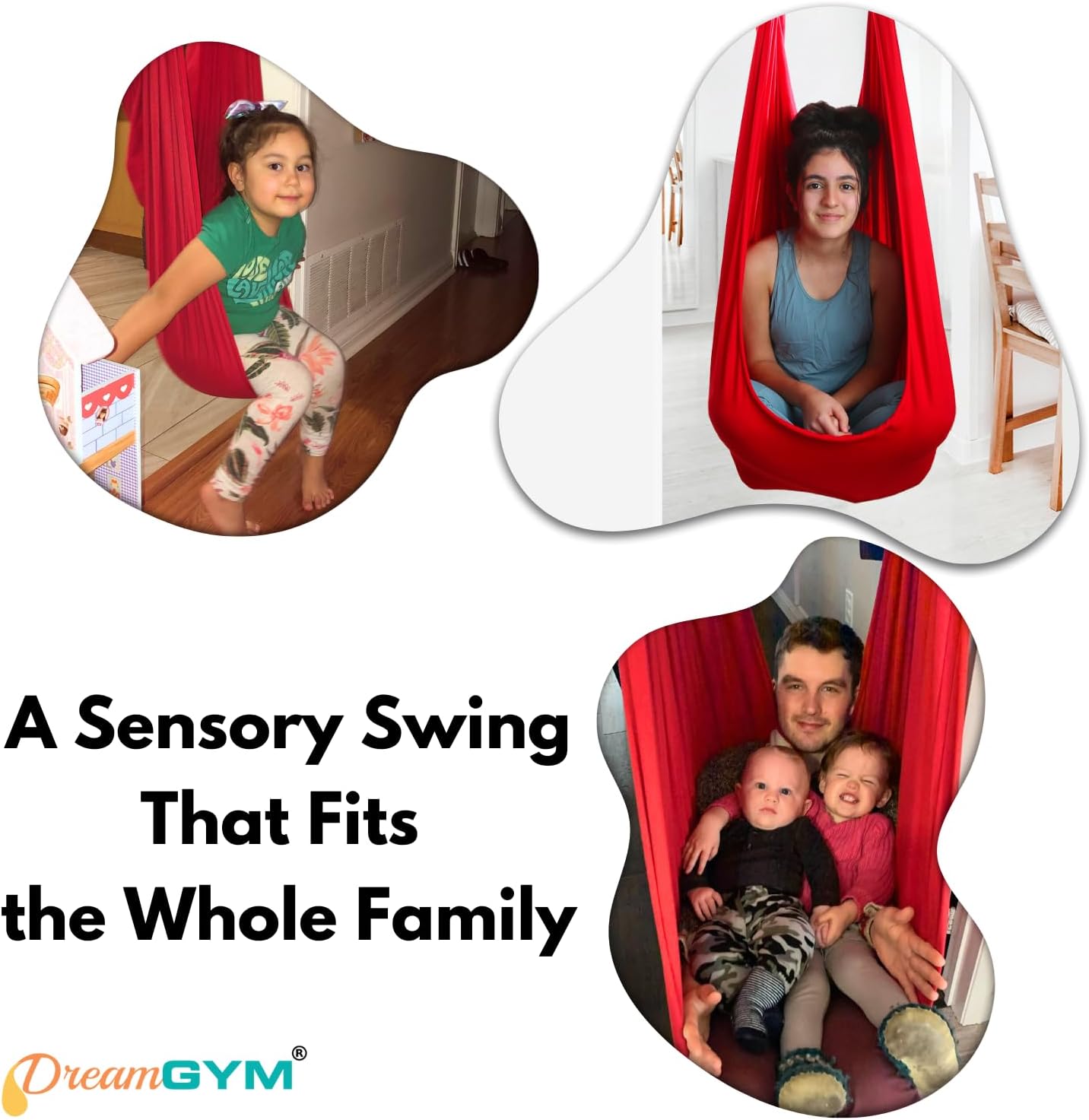
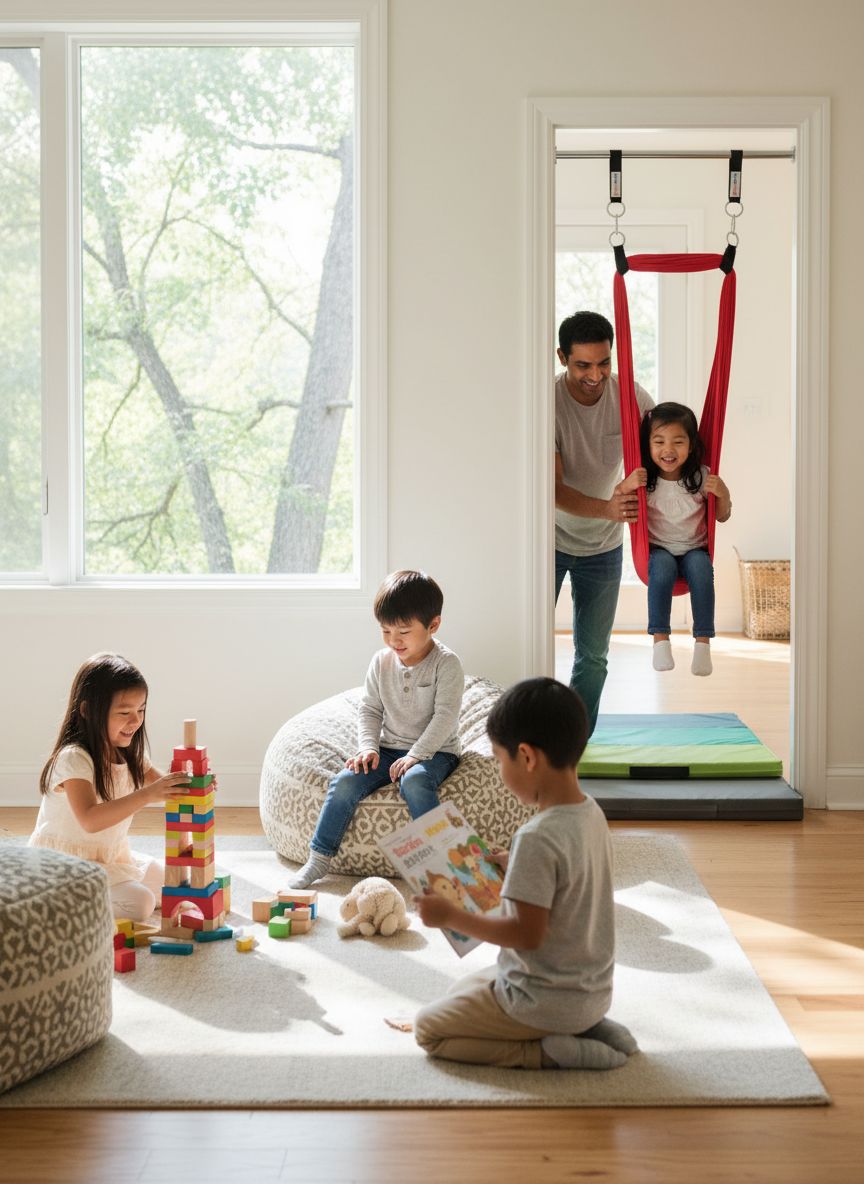
Weekend mornings in our house are deceptively chaotic. No schedule, no preschool bus to anchor the day, and my daughter wakes up running hot with energy she has no obvious outlet for. By 8:30 a.m. last Sunday she was already climbing the couch arm and attempting to use a throw pillow as a trampoline. I pointed toward the hallway without a word. She climbed into the red cocoon in her cloud-print pajamas and swung, humming something tuneless, for a full eleven minutes. After that, she sat down and ate her entire breakfast without getting up once. Eleven minutes of swinging bought us forty minutes of calm.
Scenario 2: Tuesday After Preschool Pickup
The post-preschool window is well-documented as a pressure cooker moment for young kids. They’ve held it together for six hours and the second they see you, the seams come undone. On this particular Tuesday, my daughter was crying about her shoes before we reached the front door. Rather than engage with the shoes conversation, I helped her out of her backpack and steered her toward the swing. The preschool sensory swing did what a snack and a conversation couldn’t do in that moment: it gave her body what it was actually asking for. She swung, I made tea, and ten minutes later she told me about her day voluntarily, coherently, and with a normal volume of voice.
Scenario 3: The Grandparent Visit Weekend
When both sets of grandparents descend simultaneously, the stimulation level in our house triples. More voices, more questions, more being passed between laps. By mid-afternoon of day two, my daughter was visibly fraying, and I could see my mother-in-law interpreting it as misbehavior rather than overwhelm. I quietly set her up in the swing and explained what I was doing. By the time she climbed out, she was grounded enough to go back to the living room and engage. My mother-in-law watched the whole thing and asked me to text her the product link that evening. That felt like a win.
What Other Parents Are Saying
With 142 ratings averaging 4.4 out of 5, the pattern in the feedback is consistent: parents of sensory-seeking preschoolers report the swing working faster than they expected, and parents who bought it more casually report needing a few weeks before their kids understood how to use it intentionally. A handful of reviewers mention the installation taking longer than anticipated, which tracks with any bracket-mounted system that requires finding wall studs or doorframe anchors.
The 4.4 average is credible precisely because it’s not a perfect score. The swing earns high marks for doing its therapeutic job well, and loses a few points on the setup experience, which is an honest and useful thing to know before you buy.
Who Should Skip It
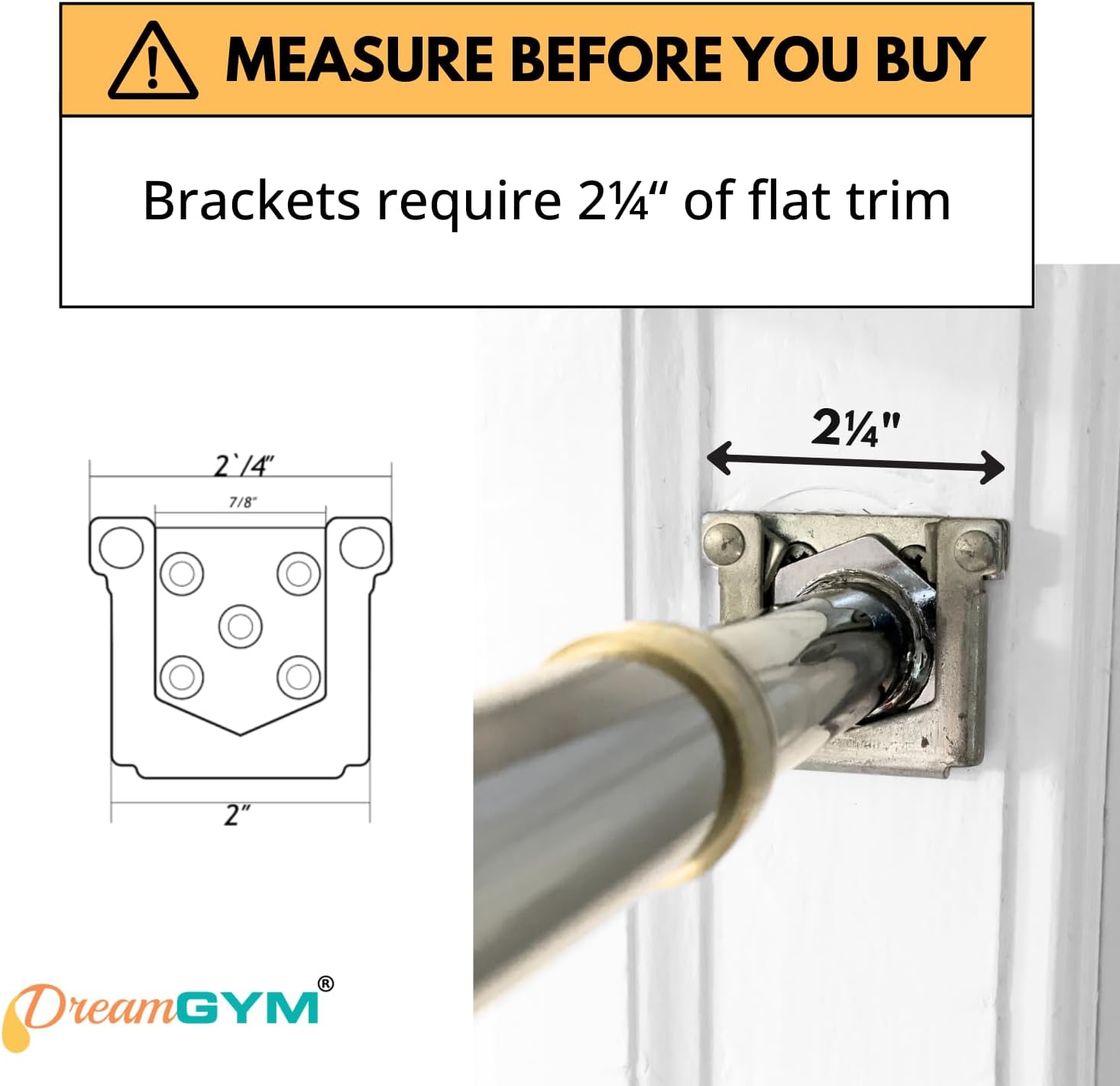
If your doorway frames are hollow-core or your rental agreement prohibits drilling, this is not the right fit. The bracket mounting system requires screws into a solid frame, and improvising that installation is not worth the risk. Kids under three should sit this one out, both because the compression function is harder to use safely without some body awareness and because the American Academy of Pediatrics flags that very young children benefit most from floor-level sensory play before graduated equipment like swings. Kids who are strongly averse to tight spaces or being enclosed will likely resist the compression design entirely, which makes this the wrong sensory tool for them specifically. And if your child’s sensory needs are significant enough to warrant professional support, loop in an occupational therapist familiar with child development before adding equipment to the home environment.
What It Replaces (or Complements) at Home
Before this swing, I was doing a lot of heavy work improvisation: couch cushion sandwiches, tight rolling in a blanket, piggyback carries with extra squeeze pressure. These worked, but they required me to be the tool, which is not sustainable at 5 p.m. on a weekday. The DreamGYM toddler sensory swing gave my daughter an independent way to access the input she needs, which is developmentally appropriate and honestly a relief. We still have a fabric tunnel and a weighted lap pad in the preschool active play rotation, and the swing complements both without overlapping them. If you’re already building out a preschool sensory and STEM toolkit, this fits naturally into that mix. It doesn’t replace tactile play or imaginative play. It fills the self-regulation gap that nothing else in our collection was addressing.
FAQ
Is this swing safe for a three-year-old who’s still a little unsteady?
Yes, with supervision. The compression design keeps kids contained rather than exposed, so the risk of a sideways fall is much lower than an open seat swing. Always spot your child until they’ve demonstrated they can get in and out consistently on their own.
Does the cotton fabric hold up to daily use?
After six weeks of daily use, the fabric on ours shows no pilling, stretching, or fraying at the seams. It wipes down easily with a damp cloth, though I’d recommend spot cleaning only given the steel bar hardware. Deep washing would require full disassembly.
Will my kid actually use this past the first month?
This depends almost entirely on whether your child has a genuine need for compression and vestibular input. If they’re a sensory seeker, the novelty never really wears off because the sensory payoff is real and repeatable. If they’re neurotypical and low-stimulation-seeking, interest may taper after the initial curiosity phase.
Does the quality justify the investment for something a child might grow out of?
The 220-pound weight capacity means this swing has a functional lifespan well beyond the preschool years, which significantly improves the value equation. If it gets used even three times a week across three or four years, the durability and replay value are genuinely strong. For what you’re paying, the materials and construction read above what you’d expect at this price point.
Would this work as a gift for a sensory-seeking child?
It’s a practical therapeutic gift that works best when the parents are already aware of their child’s sensory needs and have a doorway available for installation. Include a note about the setup requirements so nothing sits in a box waiting for a hardware store run. Browse our full curated gift ideas for preschoolers if you want companion picks to round out a sensory-supportive gift set.
The Verdict
Six weeks in, the red cotton cocoon in our hallway has become as unremarkable as the coat hooks beside it, which is to say it has become necessary. My daughter walks past it on her way to the kitchen and sometimes just climbs in for a few minutes because she knows what it does for her. That kind of self-directed regulation in a four-year-old is something I don’t take lightly. I can picture us still using this in a year, the compression just as snug, the steel bar just as steady, and my daughter a little taller but reaching for the same familiar reset.
If your child is a preschooler who seeks out tight spaces, craves being squeezed, or comes home from school running so hot they can’t land anywhere, this is worth a serious look. Read up on how preschool play styles connect to self-regulation if you’re still mapping your child’s sensory profile, and explore the broader preschool category for gear that supports the whole developmental picture. The editor’s picks for early childhood are a solid starting point if you’re building a rotation from scratch. For sensory-seeking kids aged three to five, the DreamGYM Doorway Sensory Swing is one of the more purposeful, honest-working pieces of gear I’ve added to our home. It does one thing, it does it well, and on a Thursday afternoon when everything was going sideways, it gave my daughter and me both a way out.
Bottom line: if your preschooler’s body is asking for something you can’t provide fast enough, this swing might be the answer you’ve both been looking for.
Every Angle
The product as photographed for Amazon — front, side, detail, in use.
As an Amazon Associate I earn from qualifying purchases.