Wooden Swing Set with Slide for Toddlers: Honest Review
The morning my four-year-old climbed the rock wall for the first time without asking for help, I understood exactly why we’d dragged every piece of cedar lumber across the backyard the weekend before.
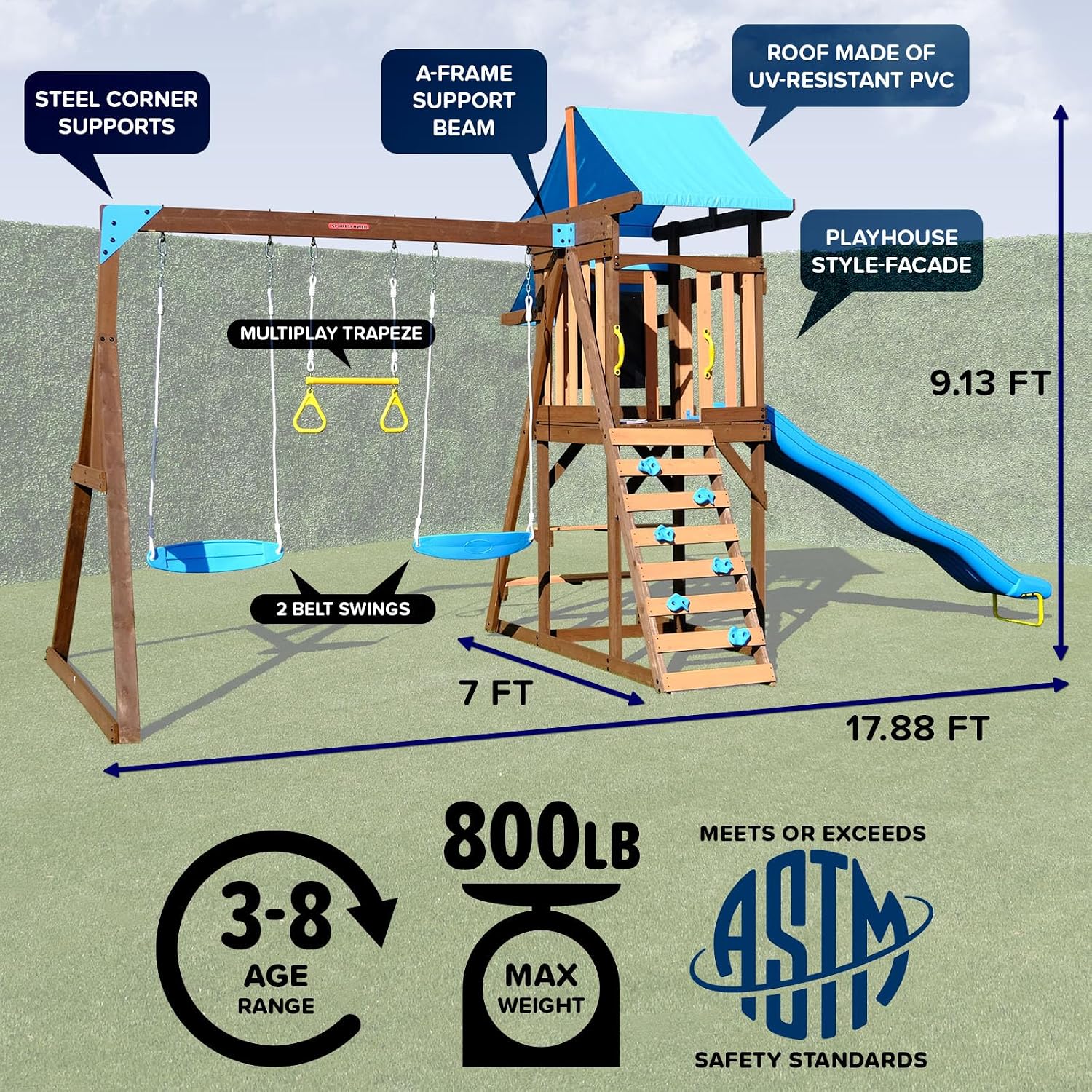
It was a Saturday that smelled like cut wood and sunscreen. My daughter had been circling the nearly-finished structure for two days while my husband and I worked through the instruction booklet in shifts, the kind of weekend project that tests a marriage and rewards you handsomely on the other side. The moment we tightened the last bolt on the trapeze bar and stepped back, she was already at the base of the rock climber, sneakers on the wrong feet, completely unbothered. **The Sportspower Rosemont Cedar Wooden Swing Set** didn’t just arrive in our backyard. It rearranged it entirely, the way a sofa rearranges a living room, except louder and with significantly more wood chips.
The First Time I Saw It
I’d been looking for an outdoor preschool play structure that didn’t read like a plastic fast-food playground dropped onto residential grass. We’d gone through two seasons of a small plastic slide set that wobbled on hot days and eventually cracked along the base. I wanted something that felt permanent. Something that looked like it belonged in a backyard rather than in a parking lot.
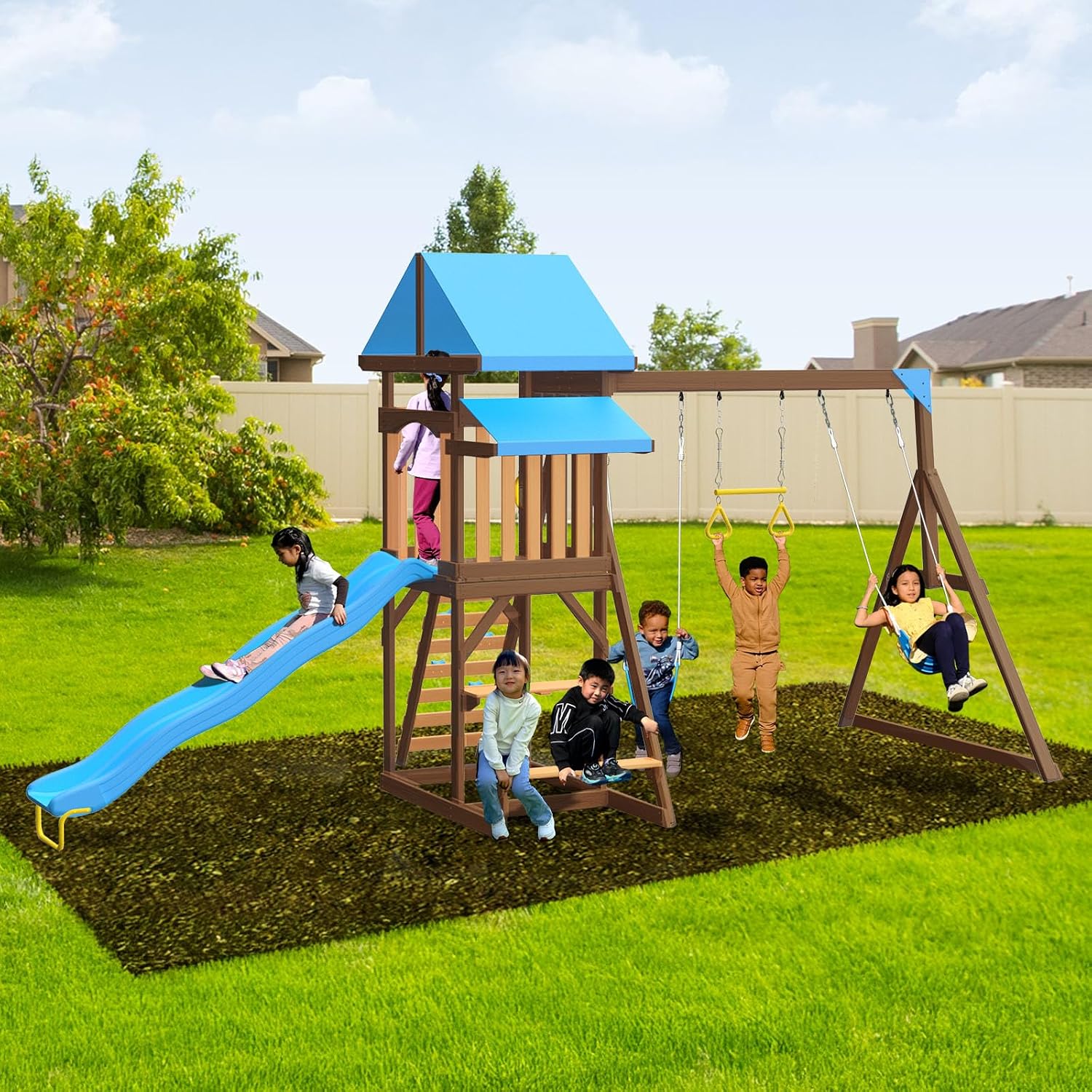
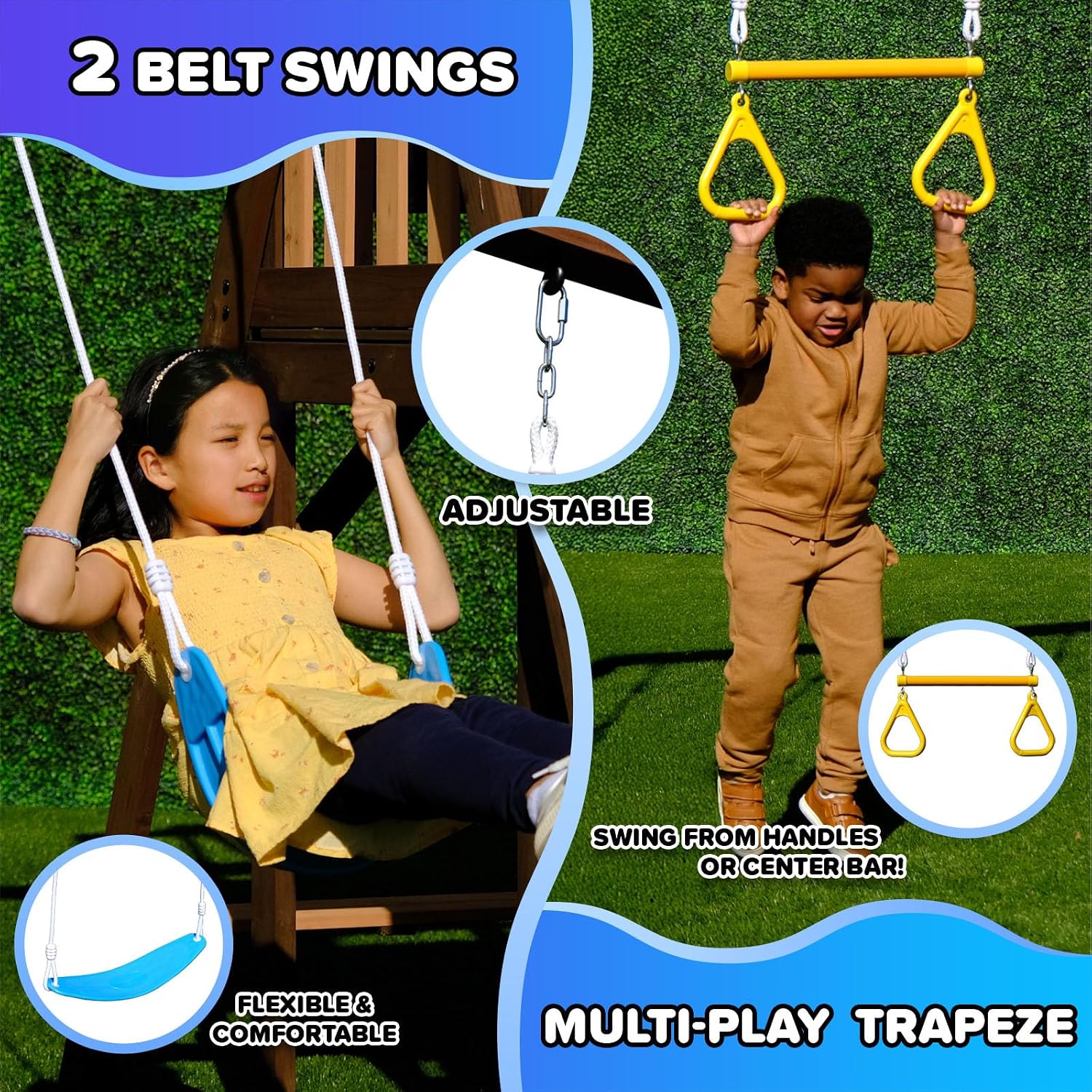
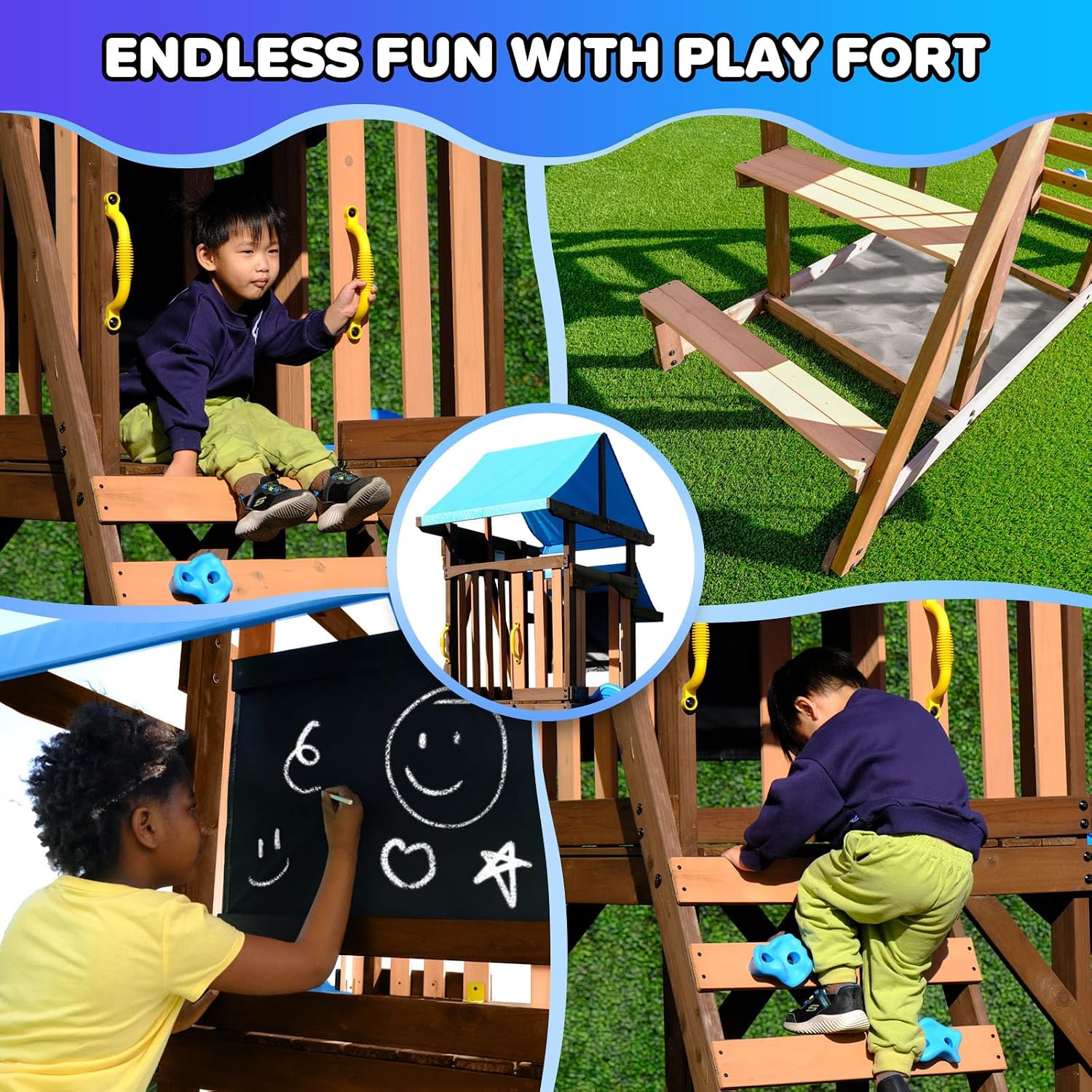
I came across the Sportspower Rosemont on a late-night scroll, pulled in first by the cedar finish and then by the feature list, which read less like a toy description and more like a blueprint for an entire afternoon. A sandbox, a picnic table, a chalk tarp, a rock climber, two adjustable swings, a trapeze, and an eight-foot slide under one roof. I bookmarked it and then kept coming back to it, which is usually the sign I should just buy the thing.
How It Actually Plays / Works
The first afternoon, my daughter did not choose a single activity and commit to it. She rotated, the way kids that age do, touching everything like she was cataloging it. She went down the slide four times, then discovered the sandbox, then stood on the picnic table until I told her not to, then hung from the trapeze bar with both hands and looked at me like she’d invented something. **The physical range this outdoor playset for kids covers in a single session is genuinely impressive** for one structure.
“By week three, she was inventing games I hadn’t seen before, and the backyard had become the loudest room in the house.”
By the third week, the rotation had become more intentional. She started combining zones: chalk drawings on the tarp, then “delivery” of imaginary packages via the slide, sandbox as the “kitchen.” The developmental range this kind of open-ended outdoor play supports is broad, covering gross motor coordination, balance, and early imaginative sequencing, which tracks with what we saw in practice. The only honest caveat in these early weeks: the chalk tarp collected water after rain and needed to be tilted and drained before she could use it again, a small maintenance note nobody mentioned.
The Real-Life Scenarios I Used It In
Scenario 1: Sunday Morning, Nobody’s Dressed Yet
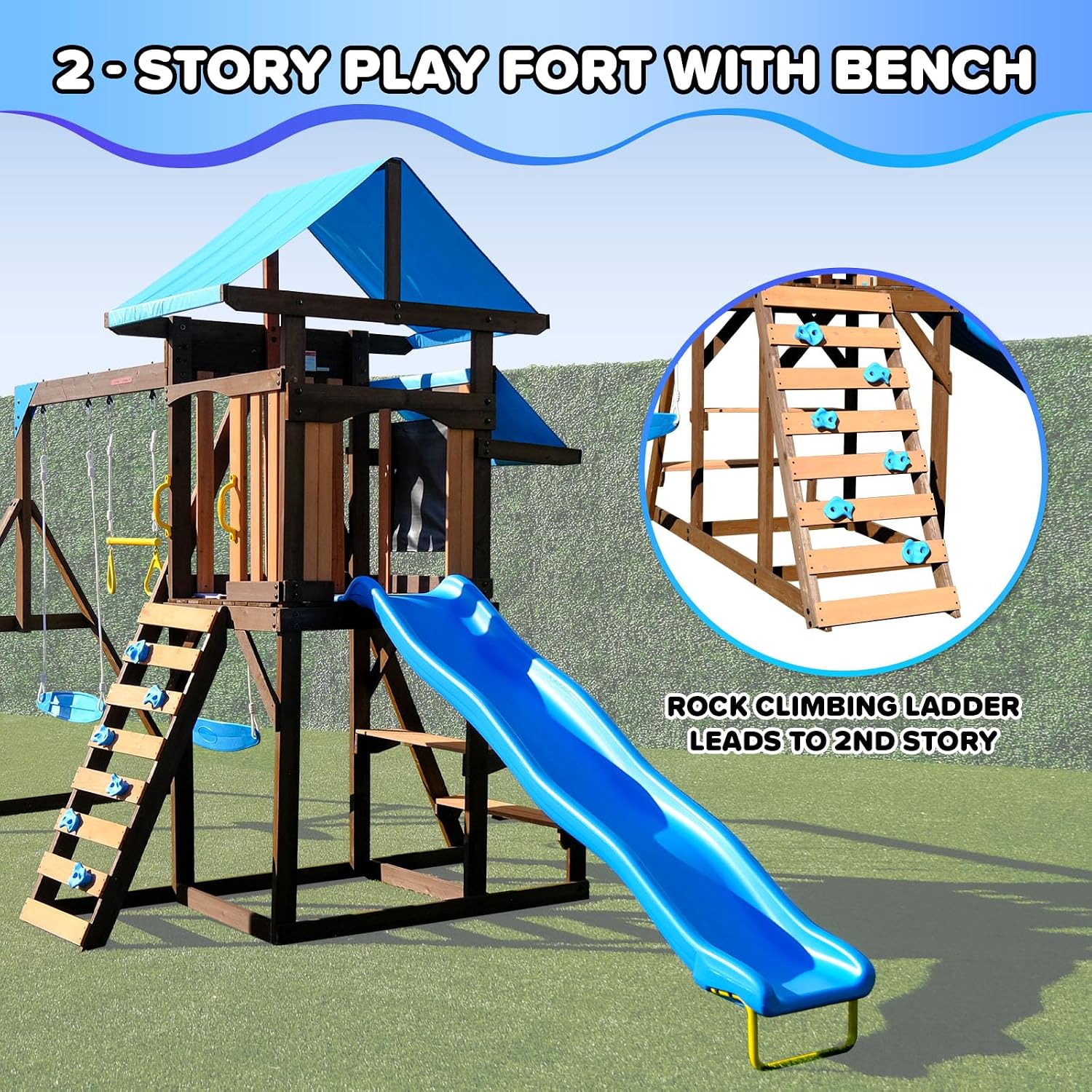
It was one of those slow weekend mornings where neither kid wanted to watch TV but nobody had a plan. My daughter wandered outside in her pajamas at 7:45 AM, still holding a piece of toast, and climbed directly to the play fort level without prompting. She stayed up there for twenty minutes, talking to herself, arranging small figures along the railing, fully absorbed. I got a second cup of coffee. **This is the kind of independent, self-directed outdoor play** that feels almost miraculous at this age, and it happened because the structure gave her a contained world to inhabit rather than a single activity to complete.
Scenario 2: Tuesday After Preschool Pickup
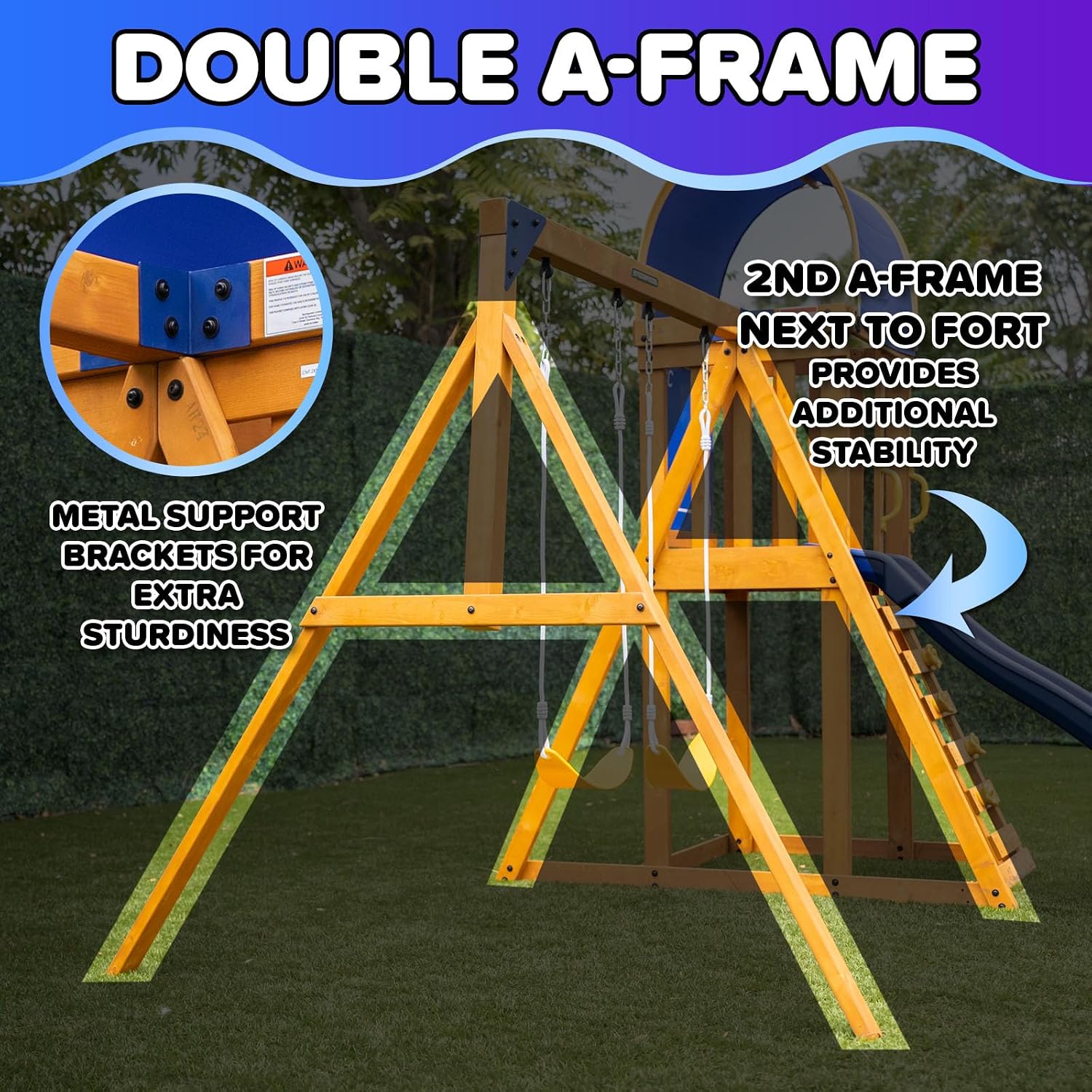
The post-preschool window is the hardest. She’s tired but wired, needs movement but can’t handle anything that requires too many rules. We came home, dropped the backpack at the door, and she went straight to the swings while I started dinner. The two adjustable swing bays meant I could set the height appropriately for her, which matters more than it sounds because a swing that’s too high at this age creates anxiety rather than joy. She pumped her legs and asked me to watch her “go to space” exactly eleven times. I counted.

Scenario 3: A Cousin Visit with Four Kids Ages Three to Seven
The real test of any multi-feature toddler learning structure is whether multiple kids can use it simultaneously without it becoming a negotiation crisis every four minutes. When my niece and two nephews came over, the range in this preschool outdoor playset actually worked in its favor. **The older kids gravitated to the rock climber and trapeze** while the younger two occupied the sandbox and the swings, which meant everyone had a lane without us assigning one. The picnic table became a snack station and then, inexplicably, a courtroom where someone was on trial for taking too much sand. I did not intervene.
What Other Parents Are Saying
This playset launched recently enough that the review pool is still relatively small, so community consensus is still forming. That said, the pattern in early feedback clusters around assembly complexity and structural sturdiness once built, which mirrors the experience of assembling any multi-component cedar outdoor playset for kids ages three to eight.
The early four-star average suggests buyers are satisfied but not without notes, the most common of which involve the assembly timeline being longer than expected. Worth planning a full weekend, not just a Saturday afternoon.
Who Should Skip It
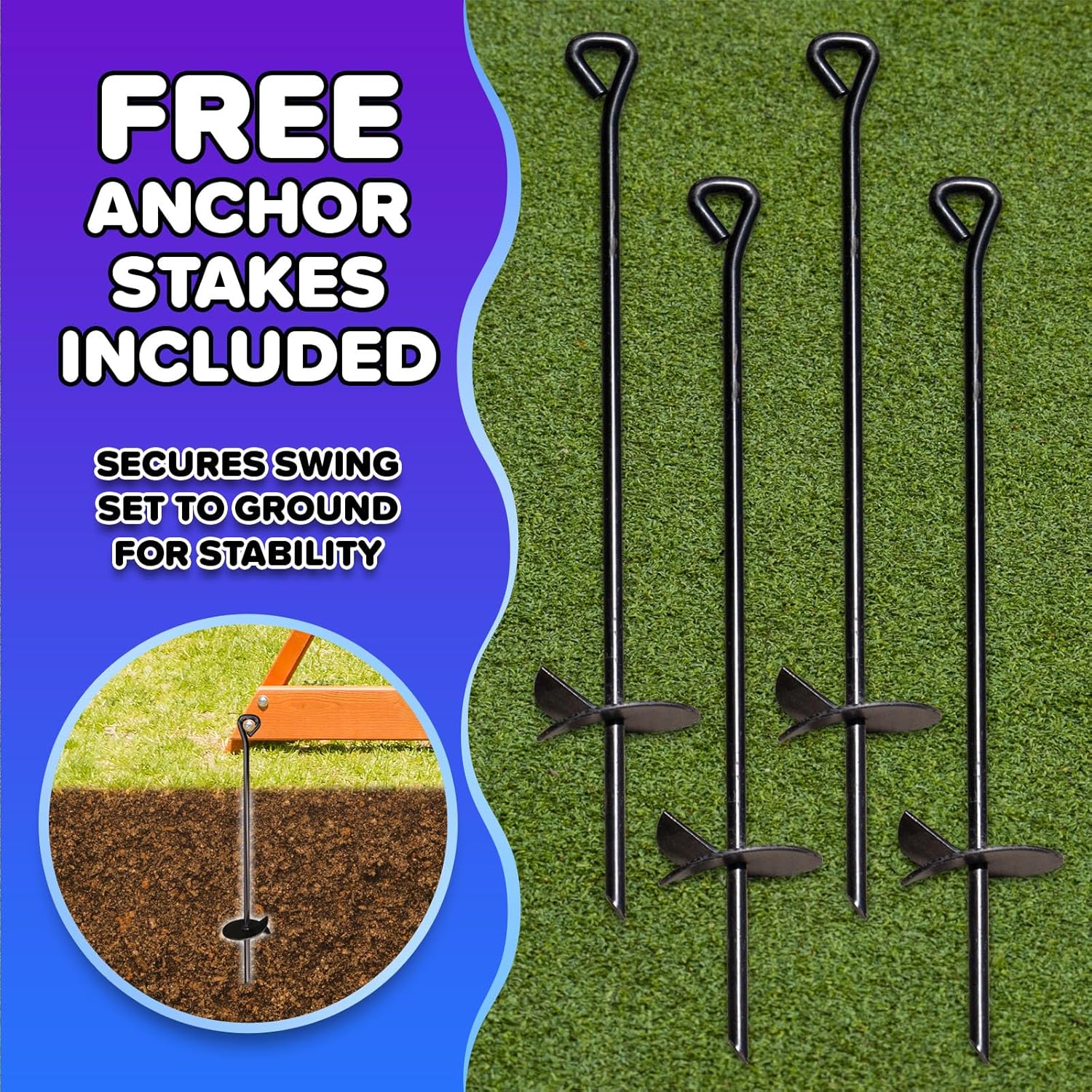
If your yard is not reasonably level, this structure is not the one. The anchor kit is included and necessary, but it works best when the ground underneath is flat and the installation can be done properly. Families renting a home or planning a move in the next year should also think carefully before committing to something this substantial. **This is not a portable or casual purchase.** It’s a yard fixture. Also worth noting for parents of younger toddlers: the slide is eight feet, the rock climber has meaningful height, and the trapeze requires some upper-body confidence. The HealthyChildren.org guidance on outdoor play safety is consistent on adult supervision for climbing structures in this age range, and that guidance applies here, especially for kids under four who are still building the balance and grip strength the climber demands.
What It Replaces (or Complements) at Home
We retired our small plastic slide structure the week this arrived. It had served its purpose for the toddler years, but she’d aged out of its proportions and the structural integrity had become, to put it charitably, a concern. **The Rosemont fills the gap between “little kid” gear and real outdoor infrastructure** in a way that the market doesn’t always address cleanly. We also moved our small sandbox to a neighbor’s yard because the built-in sandbox here made a standalone bin redundant. The picnic table is now where she eats lunch in good weather, which means we’ve genuinely gained an outdoor dining spot we didn’t have before. Explore our full backyard gift ideas if you’re building out a complete outdoor play space this season.
If you’re complementing rather than replacing, this pairs well with a water table positioned at ground level near the sandbox zone, which doubles the sensory play options without overlapping what the structure already offers. See our other preschool STEM and outdoor activity picks for accessories worth pairing with a playset investment like this one.
FAQ
Is this playset actually safe for three-year-olds, or is the age range optimistic?
The swings and sandbox are genuinely accessible at three. The rock climber and trapeze are better suited to kids closer to four or five who have developed grip strength and some body awareness. Supervise actively for the youngest end of the age range, and consider how your specific child handles heights before giving full independent access to the upper fort level.
Does cedar wood require special maintenance outdoors?
Cedar is naturally more weather-resistant than most woods, but annual sealing with a child-safe outdoor wood sealant will significantly extend the life of the structure and keep it looking sharp. Check hardware tightness at the start of each season as well.
Will my kid still use this past the first month, or is it a novelty?
In our experience, the multi-zone design is what keeps it rotating rather than collecting dust. When one feature loses novelty, another one picks up, and the open-ended nature of the fort and sandbox means kids reinvent the space rather than outgrow it quickly. Our preschool pretend play category covers why this kind of open-ended environment matters developmentally.
Does the quality justify the investment for a playset at this tier?
Cedar construction, metal hardware, and a multi-feature design at this price point read above what you’d expect from the accessible end of the backyard playset market. Given how many seasons a well-maintained cedar structure can survive and the number of kids it can accommodate simultaneously, the value compounds across years rather than being a single-summer calculation.
Is this a good birthday or holiday gift for a preschooler?
It’s the kind of gift that redefines the backyard and anchors a whole season of outdoor time, which makes it a natural big-ticket centerpiece for a milestone birthday or a significant holiday gift. Factor in that it’s a gift the whole family uses, not just the child, and the impact feels proportionate to the occasion. Check our editor’s picks for preschool gift recommendations for complementary ideas worth pairing with a structure this size.
The Verdict
Six months from now, I expect the cedar will have deepened in color, the sandbox will have hosted about forty imaginary restaurants, and my daughter will have developed opinions about which swing is hers and which one guests may use. That is the arc of a good outdoor playset for kids, the way it becomes infrastructure rather than equipment. **The Sportspower Rosemont Cedar Wooden Swing Set is a genuine backyard investment** for families with kids in the three-to-seven range who want a structure that covers gross motor development, imaginative play, and basic outdoor dining in one footprint. The AAP’s longstanding support of active outdoor play for preschool-age children gives this category a lot of developmental credibility, and a structure this comprehensive earns its square footage. Assembly is a two-adult weekend project, and level ground is non-negotiable, but if those conditions are met, **this outdoor playset for kids ages three to eight is exactly what a backyard should become.** You can also browse the full preschool age-stage category for more picks that complement an active outdoor setup like this one.
Every Angle
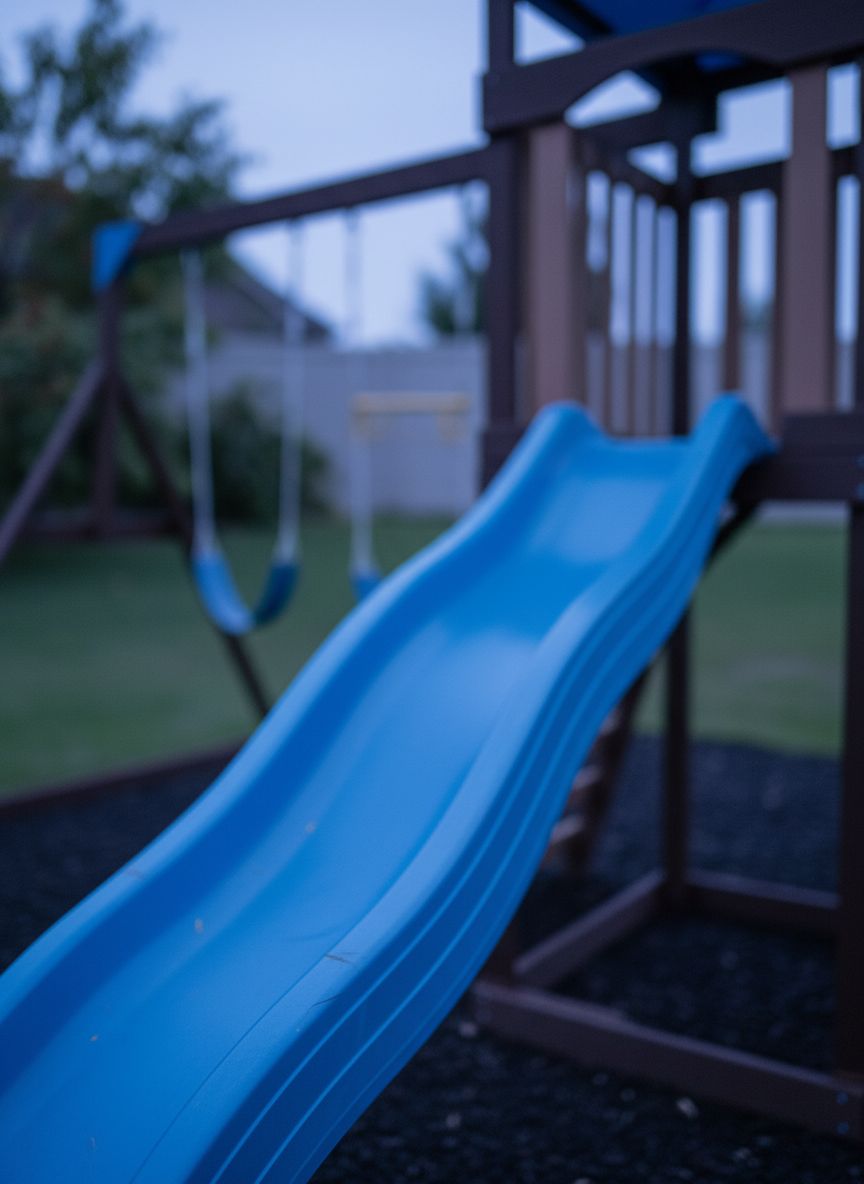
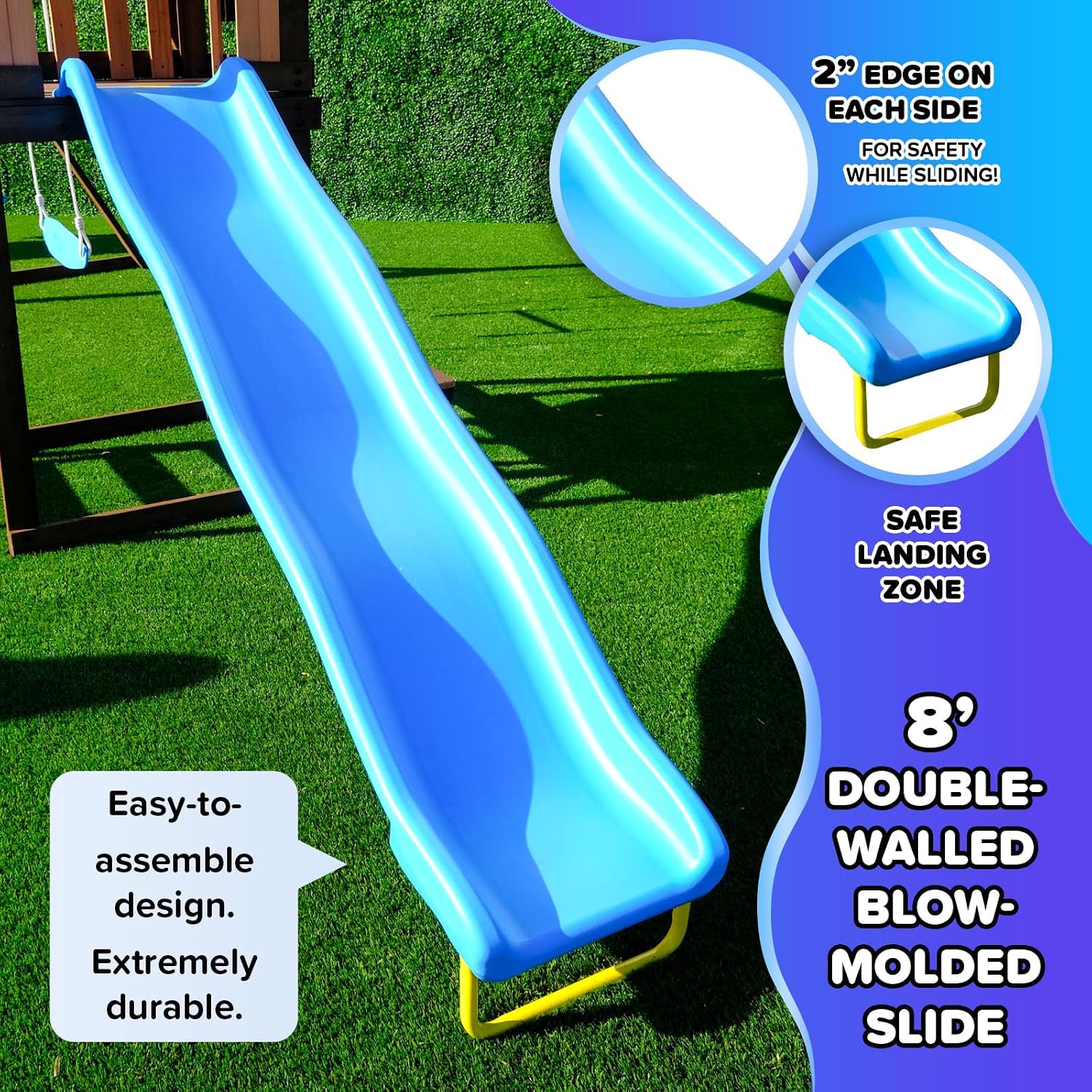
The product as photographed for Amazon — front, side, detail, in use.
As an Amazon Associate I earn from qualifying purchases.