Outdoor Playhouse with Canopy for Toddlers: Honest Review
The moment my daughter dragged her stuffed elephant outside, announced she was “opening the restaurant,” and spent forty-five minutes taking orders from the hydrangeas, I knew this backyard setup had done something I hadn’t expected.
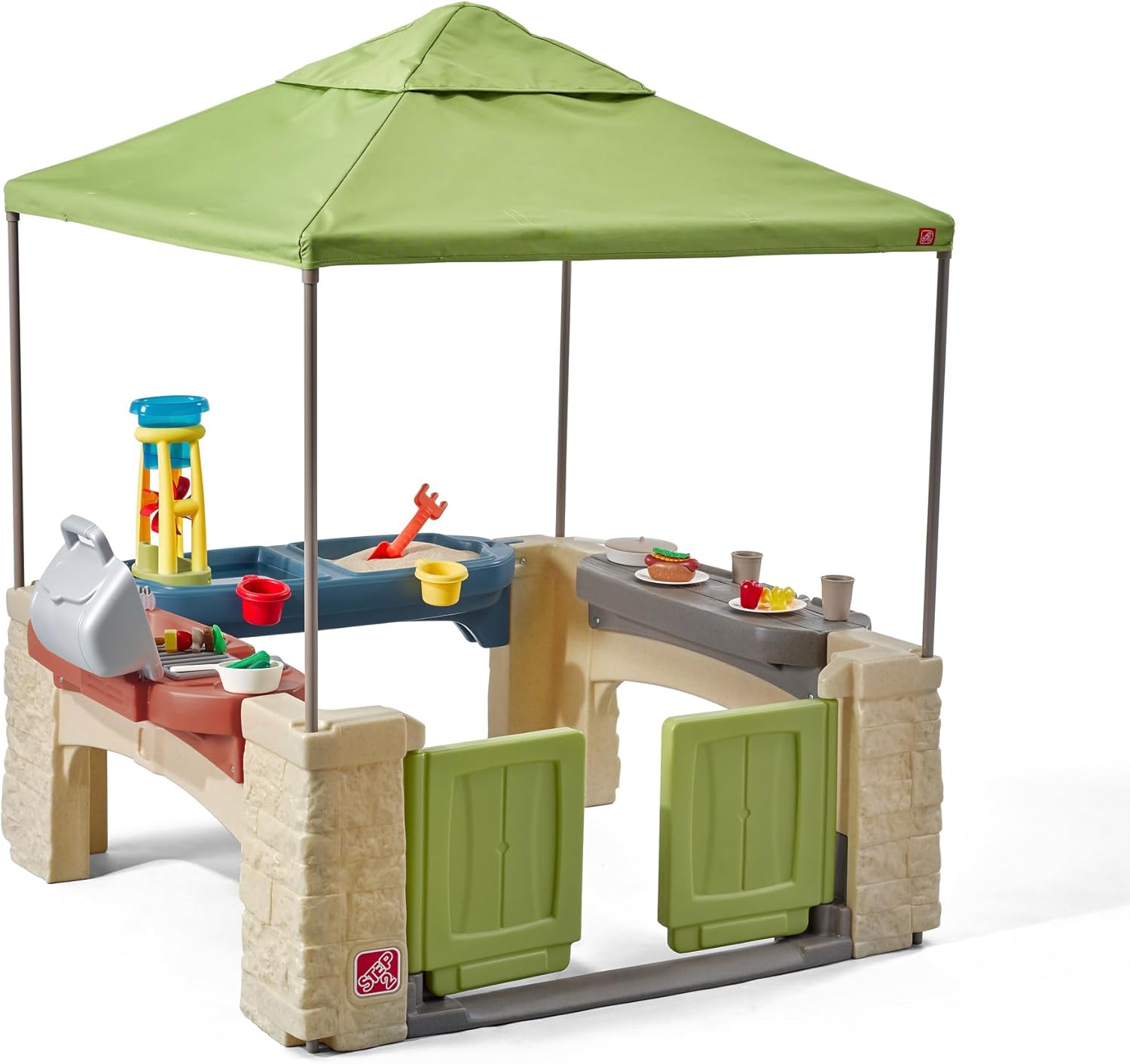
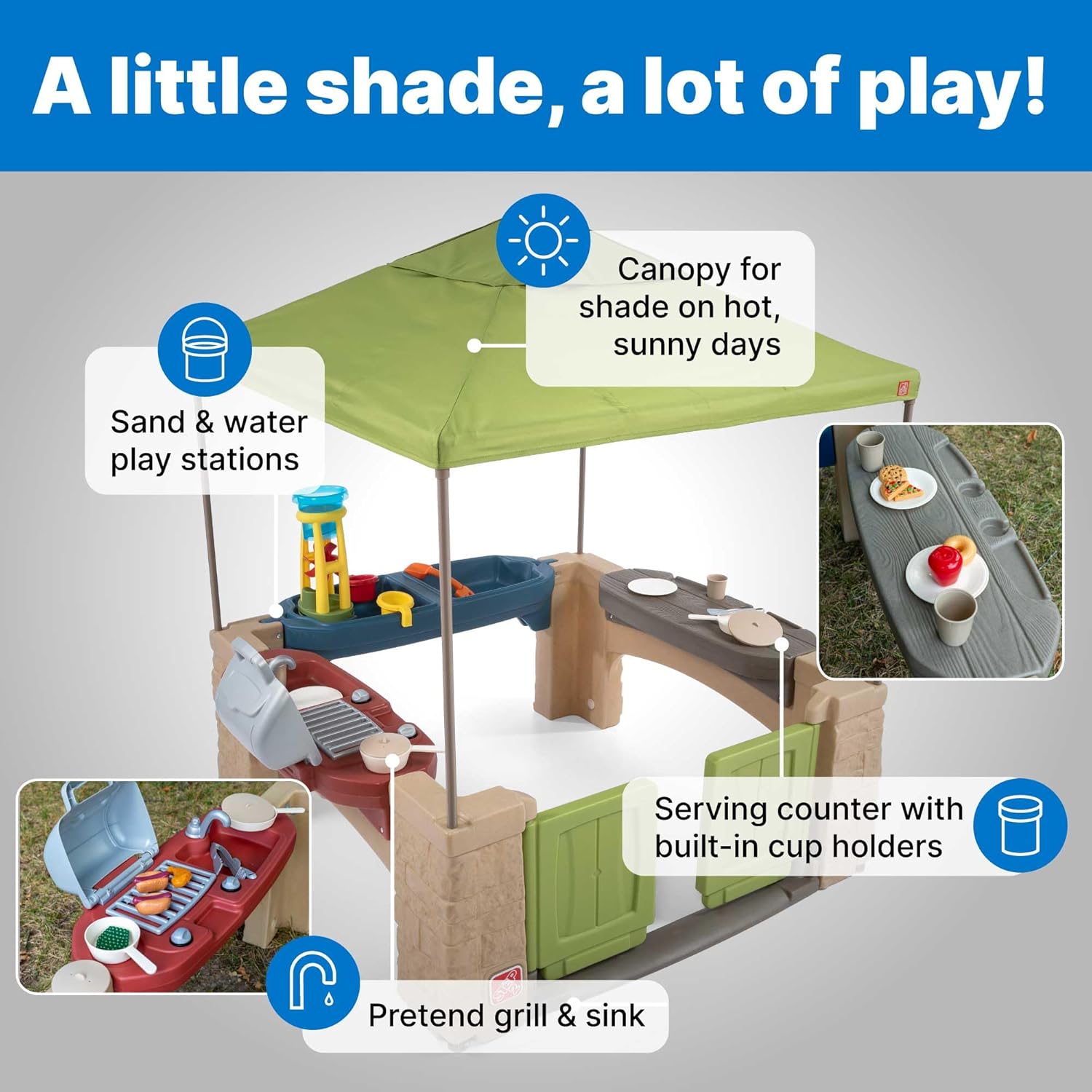
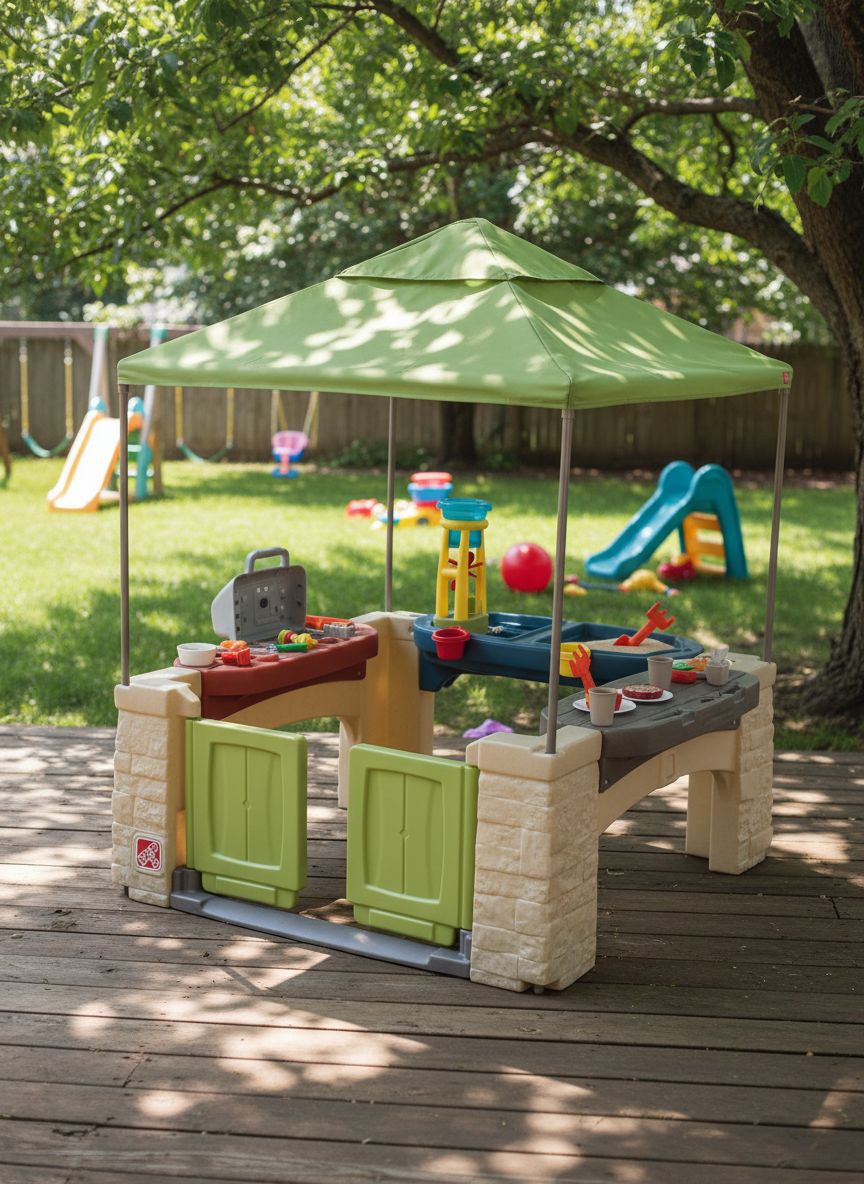
It was a Saturday in late May, the kind where the air still smells like cut grass and everyone migrates outside before 8 a.m. My daughter, newly three, was in the phase where every flat surface became a counter and every adult became a customer. I had set up the Step2 All Around Playtime Patio with Canopy Playset the evening before, after a longer-than-expected assembly session and one very specific moment of staring at the instruction sheet wondering if I was holding it upside down. But by morning, the structure was standing in the corner of our backyard, shaded and sturdy, and she hadn’t even finished her cereal before she was outside, barefoot, pulling open the little door like she owned the place. That first hour told me almost everything I needed to know.
The First Time I Saw It
I came across this toddler outdoor playhouse during one of those late-night rabbit holes where you start looking at one thing and end up forty tabs deep. A friend had mentioned that her twins, ages two and four, had been spending entire afternoons outside without requesting a screen, and I’d made the mistake of asking what the setup looked like. She sent a photo. There was a canopy, a little window, what appeared to be a kitchen area, and two very focused toddlers running a fictional bakery.
I bookmarked it immediately and then spent about a week talking myself into it. The scale looked substantial. The canopy looked like it would actually block sun. And the phrase “room for multiple toddlers” kept pulling me back, because solo play is one thing, but anything that holds up to a group of preschoolers without becoming a conflict zone is worth a serious look. That’s a rare quality in preschool pretend play equipment, and it’s what ultimately pushed me toward an order.
How It Actually Plays / Works
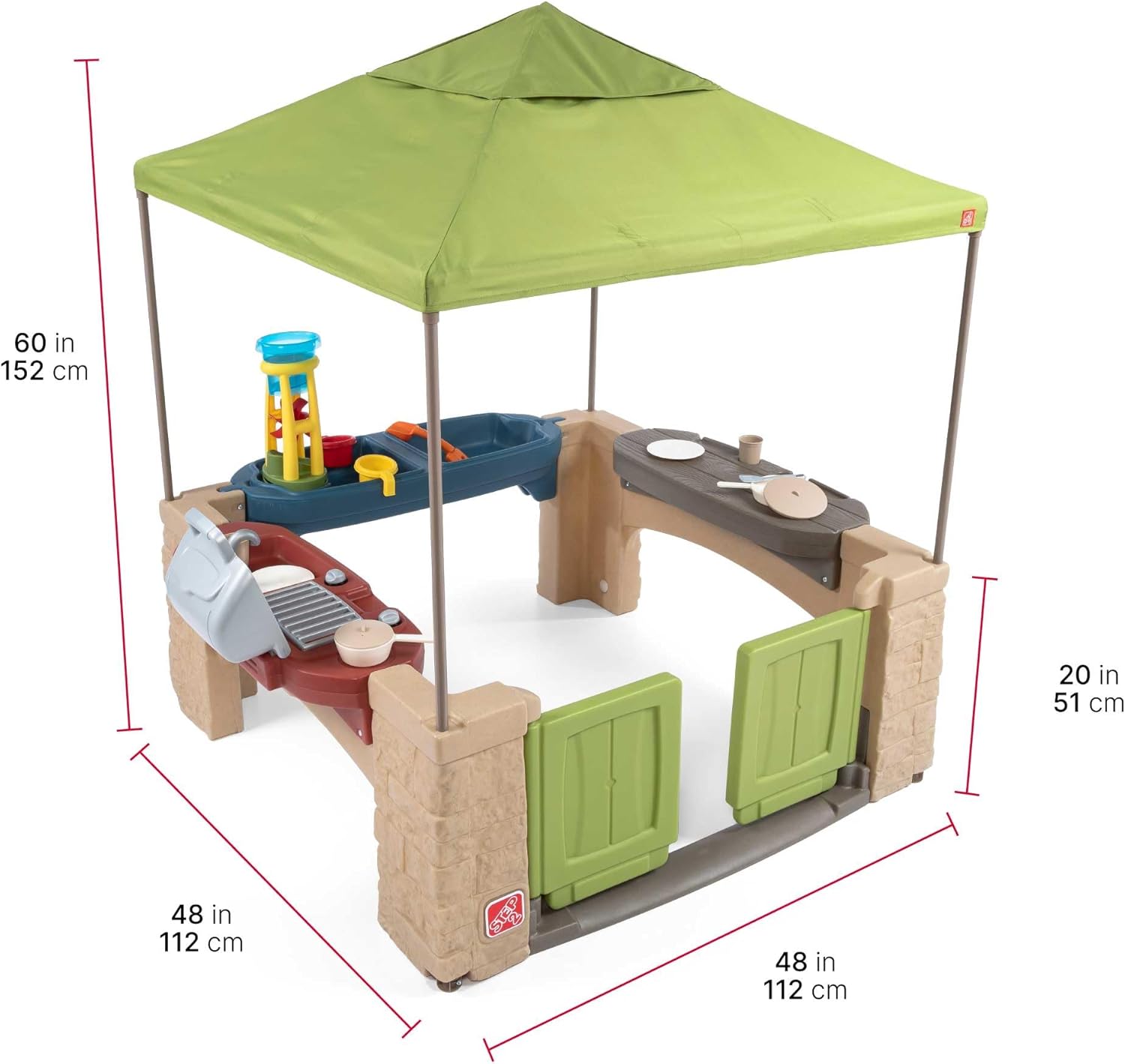
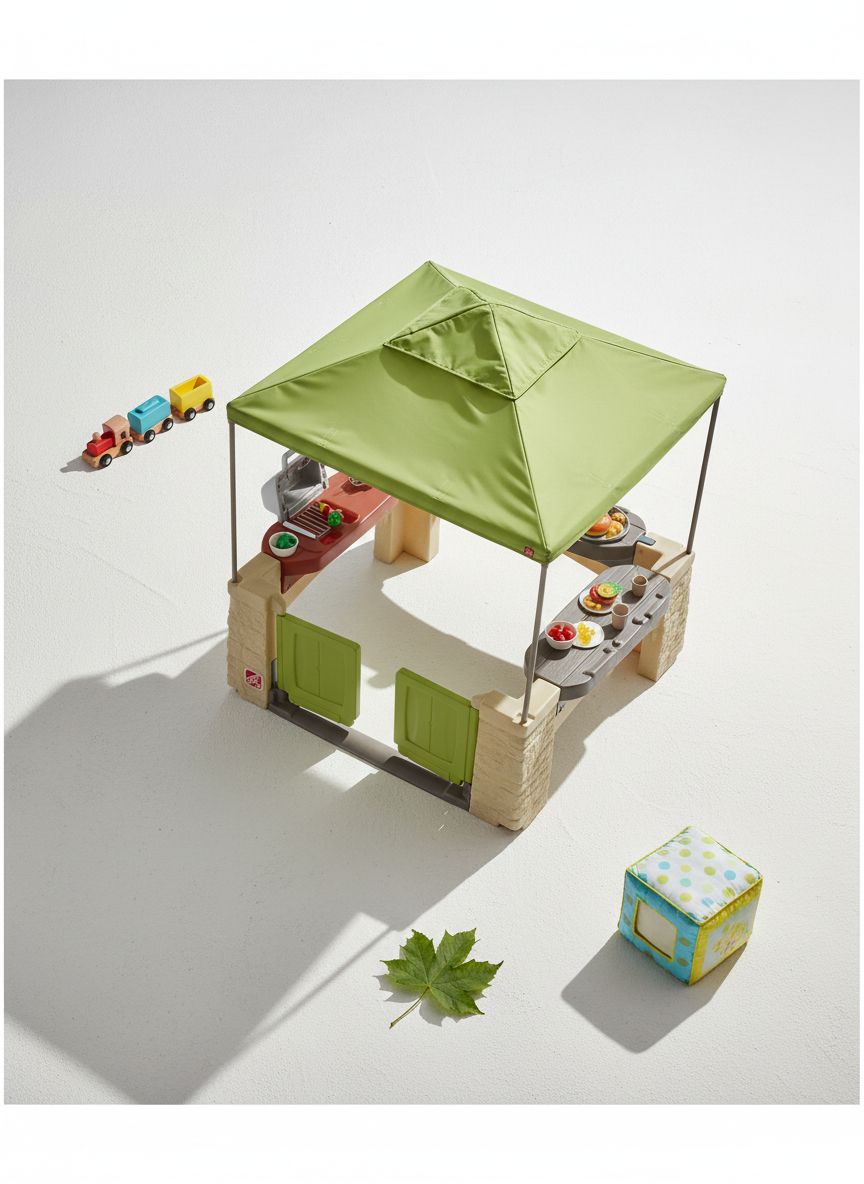
The structure arrives as a collection of panels and hardware that, once assembled, feels genuinely solid underfoot and overhead. At 60 inches tall, it doesn’t feel miniaturized or flimsy. The canopy does real work on sunny days, casting enough shade that my daughter will stay out through the late morning stretch that normally sends us inside. The interactive features, a spinning dial, working phone, and small kitchen-style details built into the panels, are the kind that make a toddler stop and investigate rather than just run past.
“It doesn’t perform like a toy. It performs like a place, and that distinction changes everything about how long a child stays engaged.”
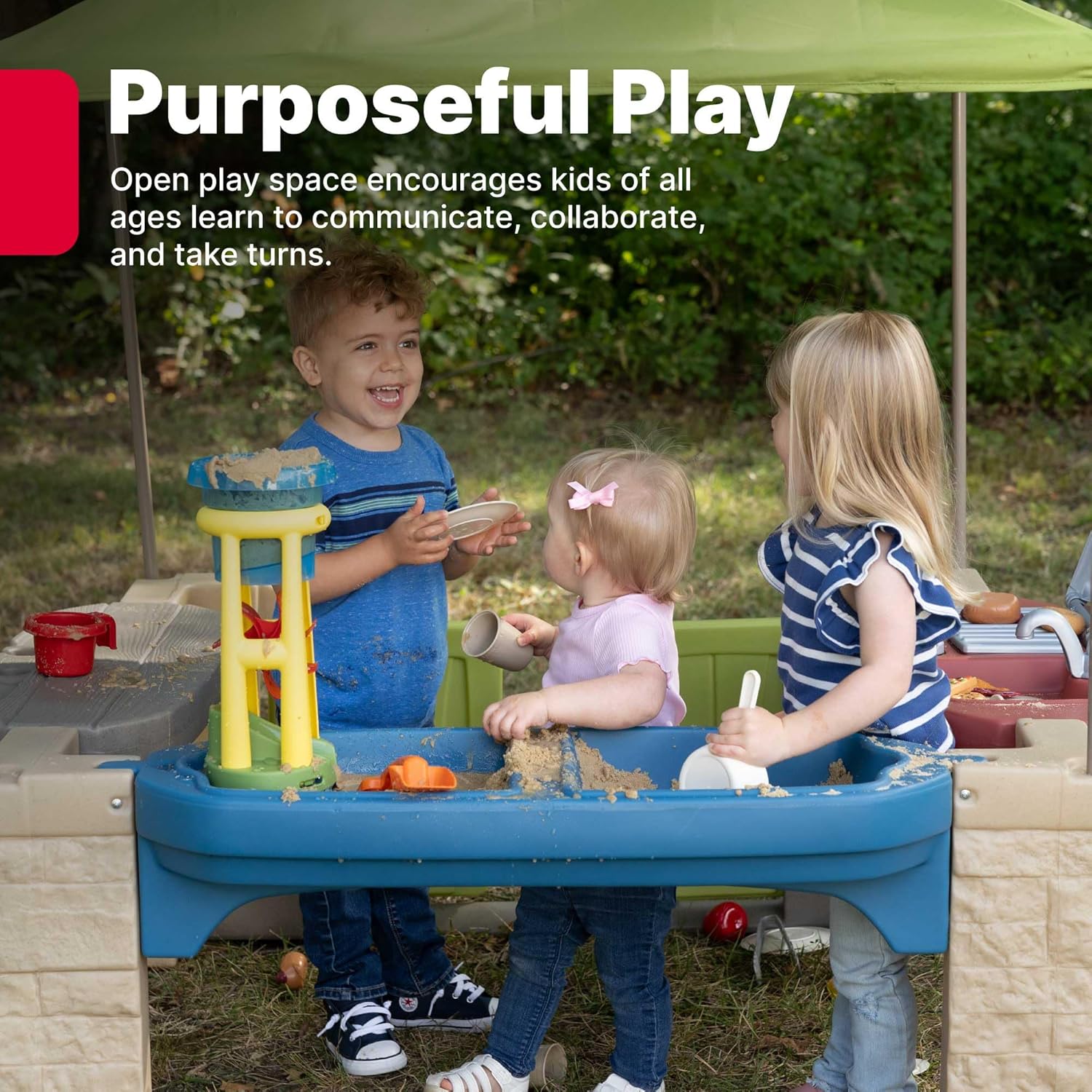
What I didn’t anticipate was how dramatically it would shift the dynamic between my daughter and her older cousin, five, who usually steamrolls the younger-kid toys in about four minutes. Here, they had separate stations. There was enough architectural interest for two different imaginary narratives to run simultaneously without collision. It’s worth noting that the American Academy of Pediatrics emphasizes cooperative play as a critical developmental skill for the two-to-five window, and anything that creates a physical framework for that kind of interaction is doing meaningful work beyond just “keeping kids busy.”
The Real-Life Scenarios I Used It In
Scenario 1: Sunday Morning, Pajamas Still On
The first true stress test was a Sunday in June. My daughter had been awake since 6:15, which meant by 9 a.m. she was in that overtired, overstimulated window where everything is either the best thing ever or cause for dramatic tears. I opened the back door and pointed at the playset. She was out there in her pajamas and rubber boots, no prompting after that. The canopy was doing its job, and she had arranged a row of plastic vegetables along the window ledge like she was running a farmer’s market. The outdoor pretend play setup absorbed a full hour and a half of that tricky morning energy, which is not a small thing.
Scenario 2: Tuesday After Preschool Pickup
Post-preschool is a loaded time of day. My daughter comes home either buzzing and social or depleted and prickly, and there’s genuinely no way to predict which version you’re getting until she’s in the car. On this particular Tuesday she was the buzzing version, talking constantly about a game her class had played involving “cooking.” I pointed her toward the backyard instead of turning on anything with a screen. She spent the next hour running what she called “the soup shop,” narrating loudly and asking me to sit on the patio steps and wait for my order. The interactive features on the panels kept pulling her back every time she wandered toward the edge of the yard. The toy earned its square footage that afternoon.
Scenario 3: Grandparent Visit, Three Kids Under Five
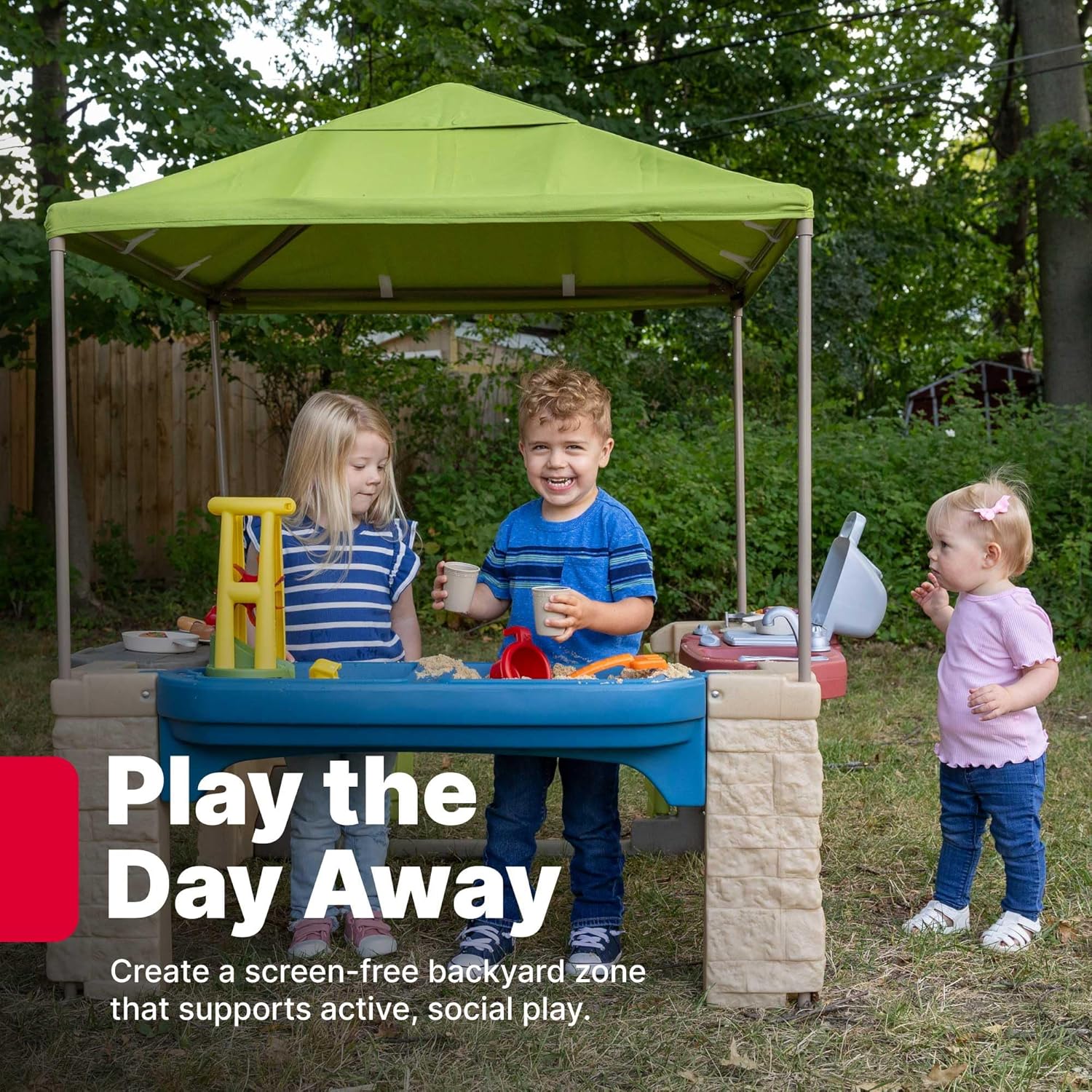
This was the real test. My parents came through for a long weekend and brought my nephew, who is two and a half and currently in what I can only describe as his “tornado era.” We had three kids: my daughter at three, her cousin at five, and the nephew at two. I will be honest, I braced myself. But the structure of this outdoor playhouse for kids created a natural geography. The five-year-old ran the “front counter,” my daughter managed the “kitchen,” and the nephew was perfectly content spinning the dial and pressing buttons at the side panel for stretches that surprised everyone. My mother looked at me from across the yard and mouthed “where did you get this.” Multiple toddlers in the same small space without a single territorial meltdown is, frankly, remarkable.
What Other Parents Are Saying
This product has no public reviews available to reference at time of writing, so I’m going on firsthand experience and conversations with parents in my immediate circle who have run it through similar paces.
That said, the patterns I’ve observed match what you’d expect from a well-constructed toddler outdoor playhouse at this level: high initial excitement, a brief plateau around week three, and then a second wind when a new playmate or narrative concept enters the picture.
Who Should Skip It
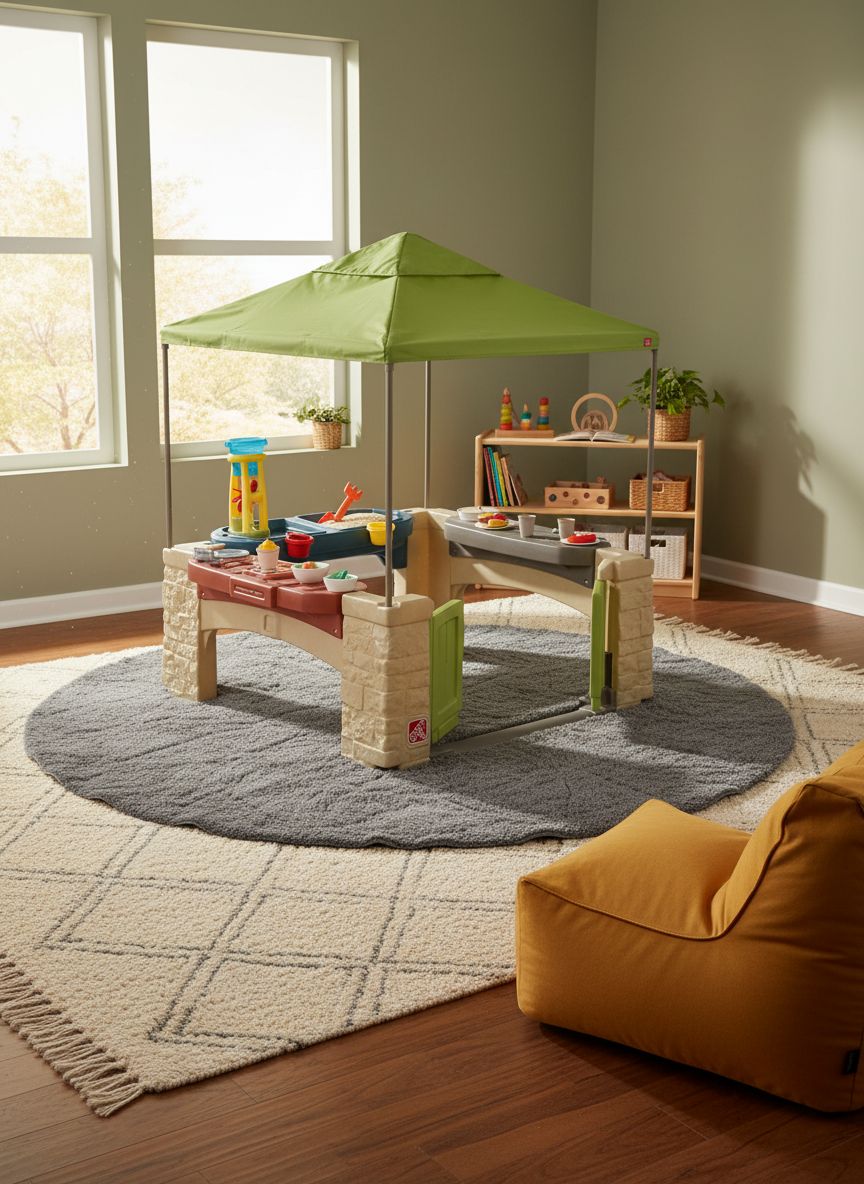
If you have a small urban balcony or a patio that measures less than about eight by eight feet, the footprint here will feel consuming. At nearly 48 inches in both width and depth, this is genuinely a backyard commitment, not a porch accessory. It also requires adult assembly on stable, level ground, which means uneven yards or sloped patios aren’t ideal installs without some prep work. For families with children under two, the interactive features may not land yet and the scale can feel overwhelming for a young toddler who’s still getting comfortable outdoors. And if your household skews toward preschool STEM-focused activities and less toward open-ended dramatic play, this particular setup may not be the right fit when compared to other structured learning formats. Supervising multiple children during play is genuinely necessary, not just a fine-print disclaimer.
What It Replaces (or Complements) at Home
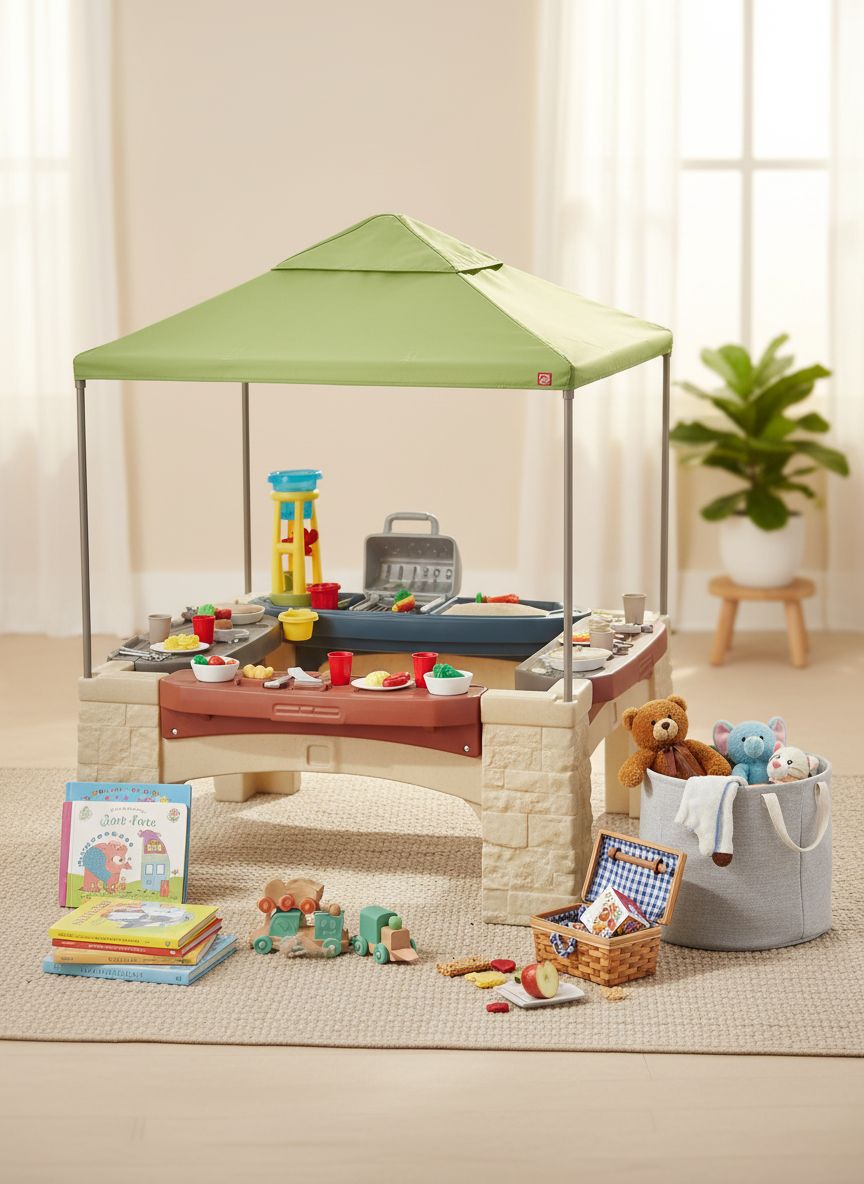
Before this arrived, we had a low plastic sandbox table and a scatter of outdoor balls that mostly collected under the deck. The sandbox got used maybe twice a week; everything else was decoration. The Step2 playhouse consolidated outdoor play into one location with enough going on that my daughter stopped asking to come inside after twenty minutes. We moved the sandbox table to a neighbor with a younger baby, and I have zero regrets about that edit. If you’re already running a solid backyard preschool art and crafts station outdoors, this complements it beautifully because imaginative play and creative play run on adjacent energy without competing. They feed each other.
It also fills a gap I didn’t know I had: a shaded outdoor structure that works on the hottest days of July without me having to watch the clock worrying about sun exposure. That practical detail has probably extended our total outdoor time by close to an hour per day in peak summer. For more ideas on structuring the outdoor play space, our editor’s top picks for outdoor toddler setups covers the broader picture.
FAQ
Is the Step2 All Around Playtime Patio safe for two-year-olds?
The age range is two through five, and a confident two-year-old who is comfortable outdoors and walking steadily will engage with this well. Adult supervision is important, especially when multiple children are using the structure at the same time.
How difficult is the assembly, and do I need two people?
Two adults make the assembly process significantly smoother and faster, particularly when attaching the canopy panels. Most parents report completing it in one to two hours with a partner and basic hand tools.
Will my preschooler still use this past the first month?
In my experience, yes, with the caveat that replay value spikes dramatically when other children are present. Solo play stays strong through the toddler pretend play phase, but this structure really earns its footprint when it becomes a social space. The developmental arc of preschool-age imaginative play supports the idea that cooperative scenario-based play deepens over time rather than plateauing.
Is the quality worth it given the investment?
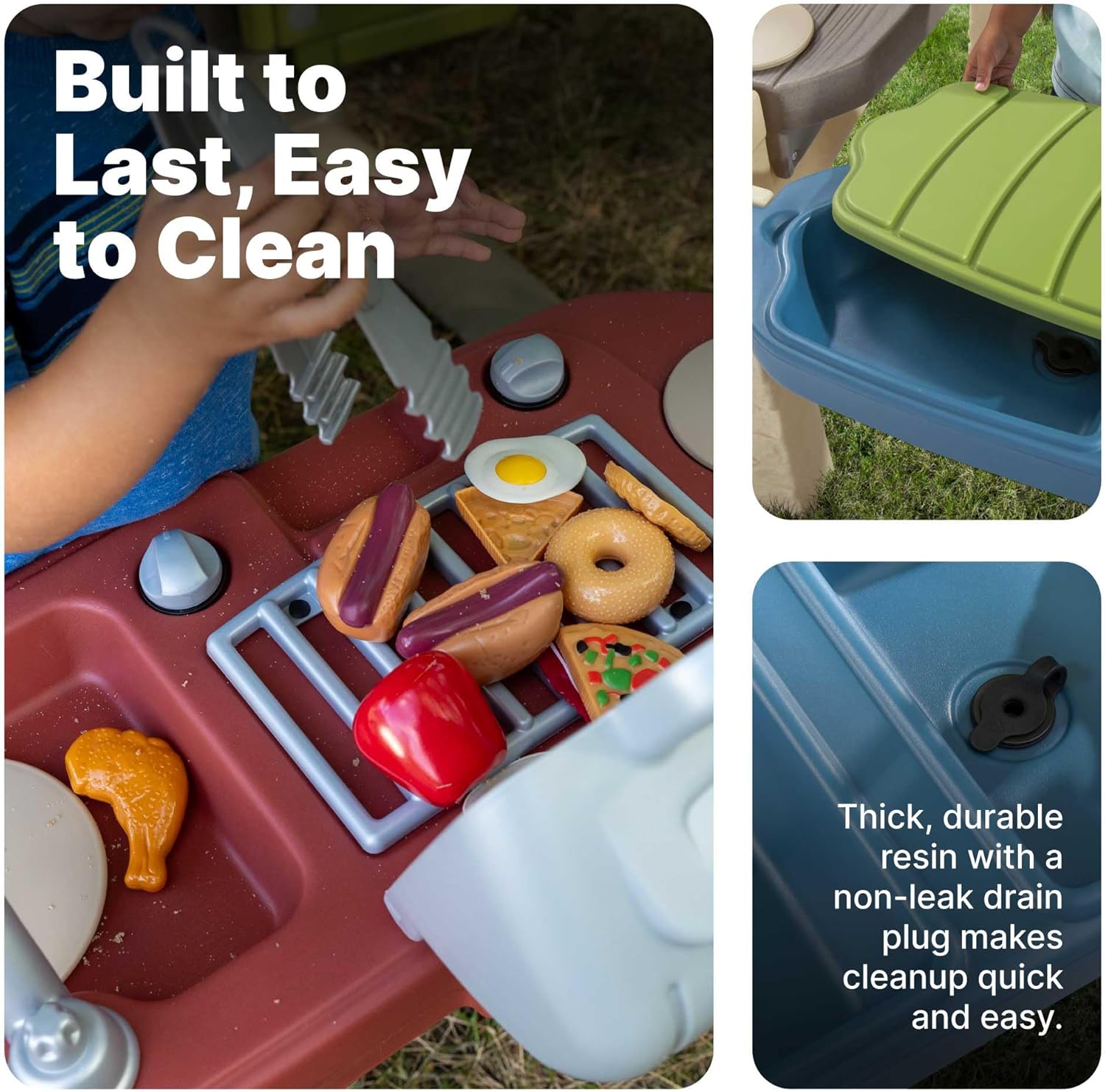
The outdoor-grade construction and UV-protected material mean this isn’t a one-summer purchase. It hands down to younger siblings, weathers actual weather, and the interactive panels don’t show wear the way painted surfaces do. The value reads well above what you’d expect for a backyard investment at this tier, especially when you calculate the hours-per-use over a two-to-three year span.
Is this a good gift option, and for what age?
It’s a strong centerpiece birthday or holiday gift for children in the two-to-four range, especially when the family has outdoor space and at least one other child who visits regularly. Check out our gift ideas guide for more big-ticket outdoor picks in this age stage. It photographs beautifully and has the kind of presence that reads as genuinely special on a birthday morning.
The Verdict
Six months from now, I expect my daughter will have renamed the playset three more times, cycled through at least five different imaginary businesses, and convinced every visiting child that there is a specific way to place an order at the window. The Step2 All Around Playtime Patio with Canopy has become one of those backyard fixtures that I genuinely don’t notice anymore because it has simply become part of how our outdoor space functions. That invisibility is, I think, the highest compliment a large play structure can earn. It stopped being a thing we bought and became a place where things happen. For families with toddlers in the two-to-five window who have yard space and want an outdoor pretend play structure that holds up to real use, multiple kids, and actual weather, this is a considered and confident recommendation. Browse more options for this age group in our full preschool category, or dig into the HealthyChildren.org resources on outdoor play and development if you’re weighing the developmental case alongside the practical one. If your kid is in their pretend play era, give them a real stage to perform on.
Every Angle
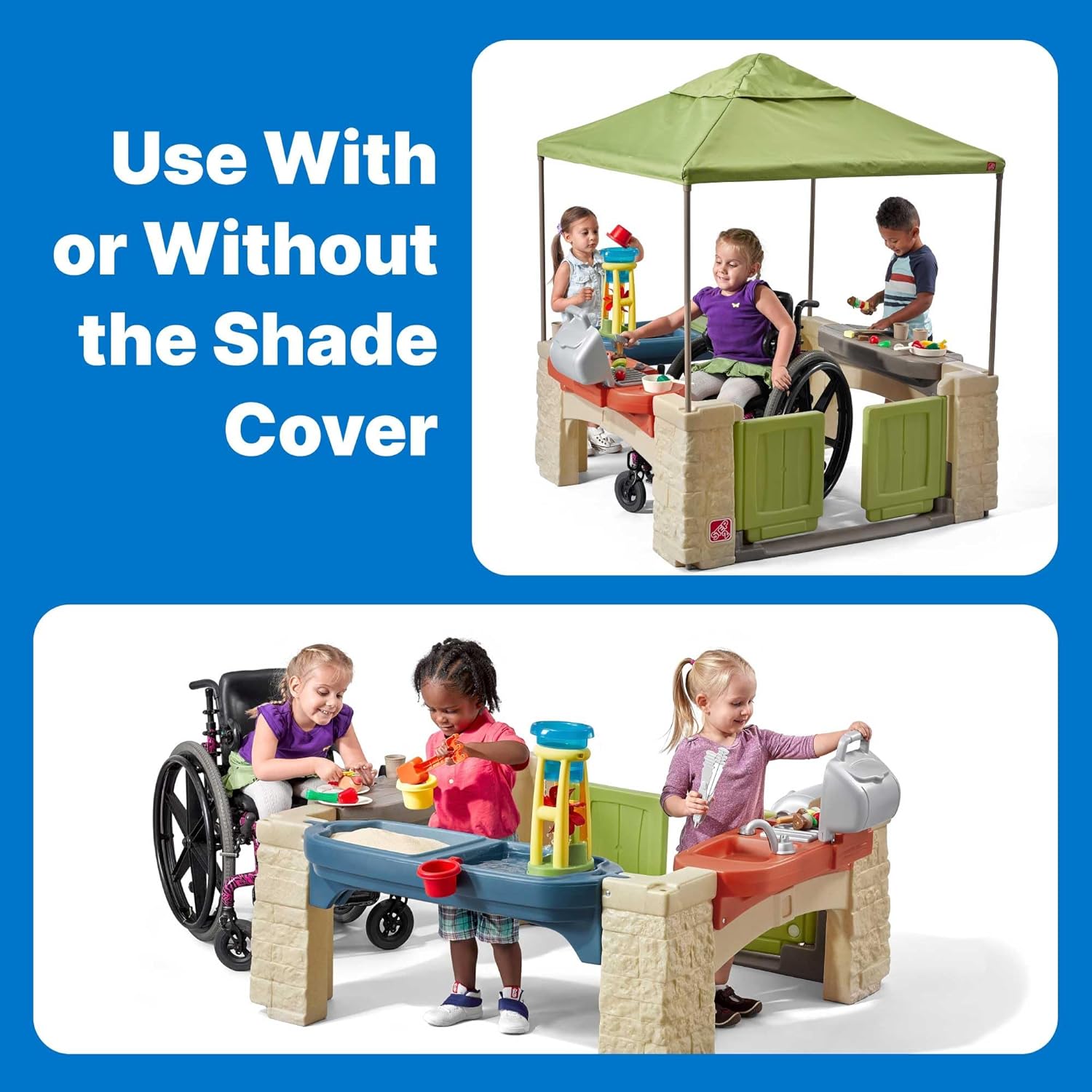
The product as photographed for Amazon — front, side, detail, in use.
As an Amazon Associate I earn from qualifying purchases.