5-Piece Play Tent & Tunnel Set for Toddlers: Worth It?
The moment my fourteen-month-old disappeared into a rainbow tunnel and emerged on the other side looking genuinely astonished by her own accomplishment, I understood exactly why the Playz 5pc Kids’ Play Tents & Tunnels set had taken over my living room floor.
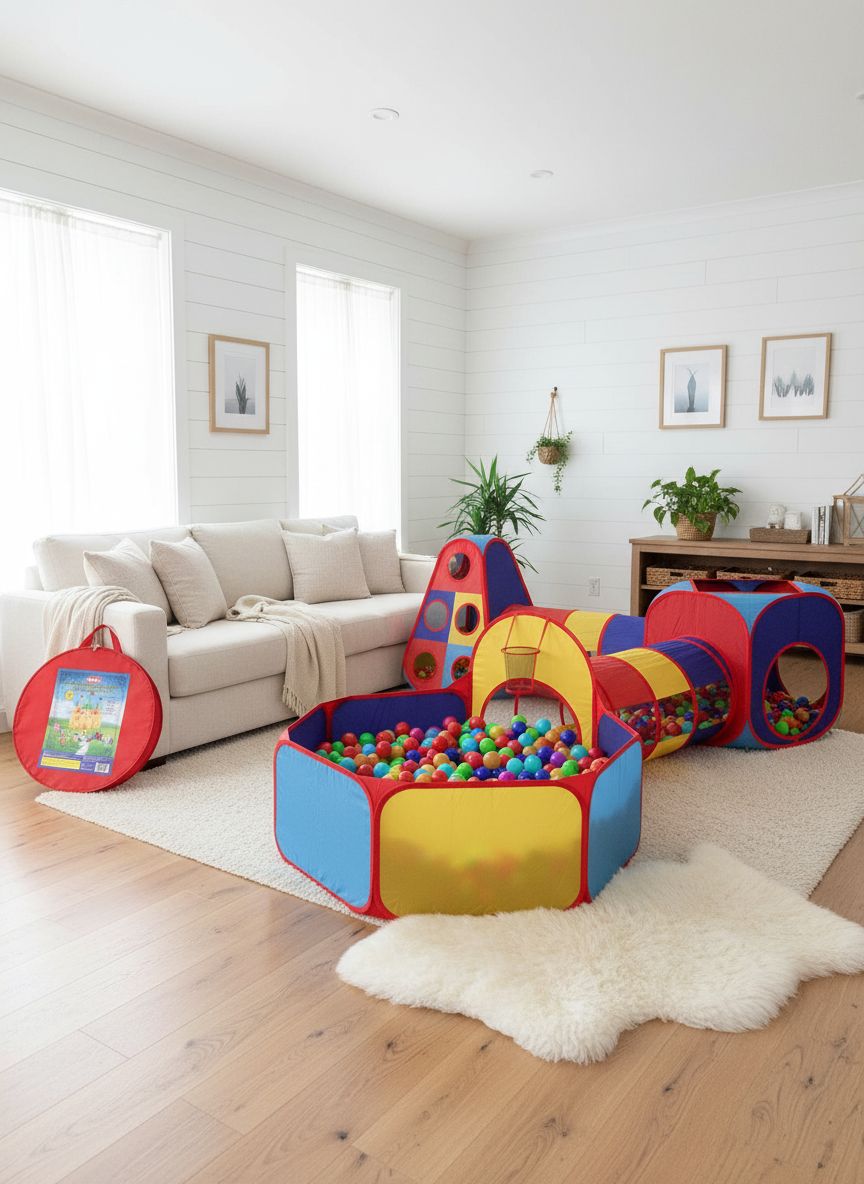
It was a gray Wednesday, the kind where the park is out of the question and every toy in the rotation has been rejected by 9 a.m. I had pulled the Playz 5pc Kids’ Play Tents & Tunnels out of its carrying bag mostly out of desperation, spreading panels and tubes across the rug while my daughter watched with that suspicious toddler squint she reserves for new things. Within four minutes, she was belly-crawling through a crinkle-walled tunnel. Within ten, she was launching soft balls into the basketball hoop with the concentration of someone who takes this very seriously. By noon, I had reclaimed exactly zero square footage of my living room, and I did not particularly mind.
The First Time I Saw It
I found this set the way I find most things these days: a friend texted me a photo at 11 p.m. with the caption “we’ve had this up for three weeks and I literally can’t take it down.” Her toddler, eighteen months old at the time, was pictured mid-crawl inside a bright tunnel, mouth open, delighted. That image sat in my camera roll for two weeks before I ordered one for myself. A recommendation from a parent you actually trust cuts through the noise faster than any algorithm.
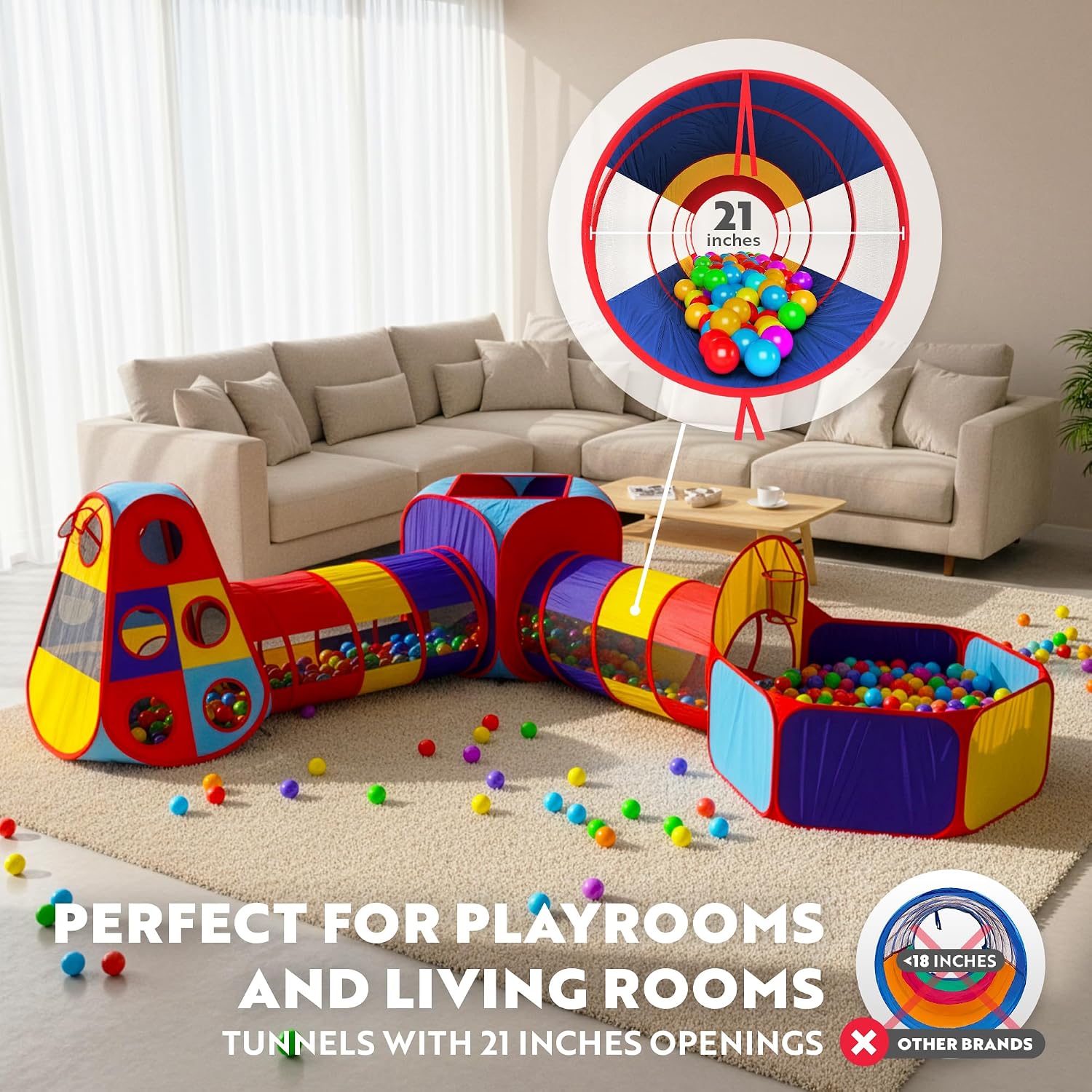
What caught my attention beyond the photo was the modular concept. This isn’t a single pop-up tent you fold into a corner. It’s a five-piece indoor play system that links together into something resembling a tiny obstacle course, and the configuration is flexible enough that you can rearrange it when the novelty of one layout starts to fade. That alone felt like it justified the space.
How It Actually Plays / Works
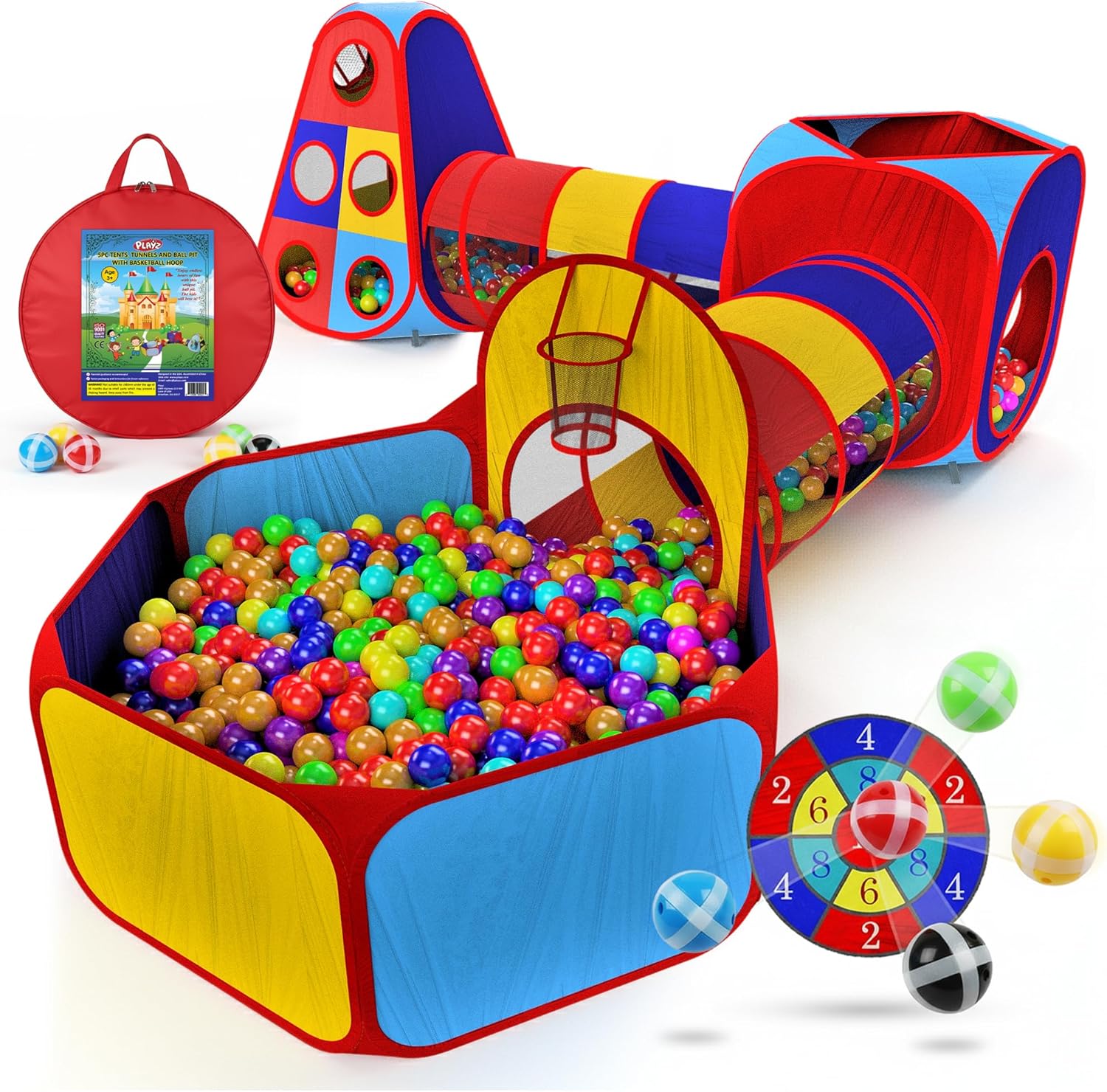
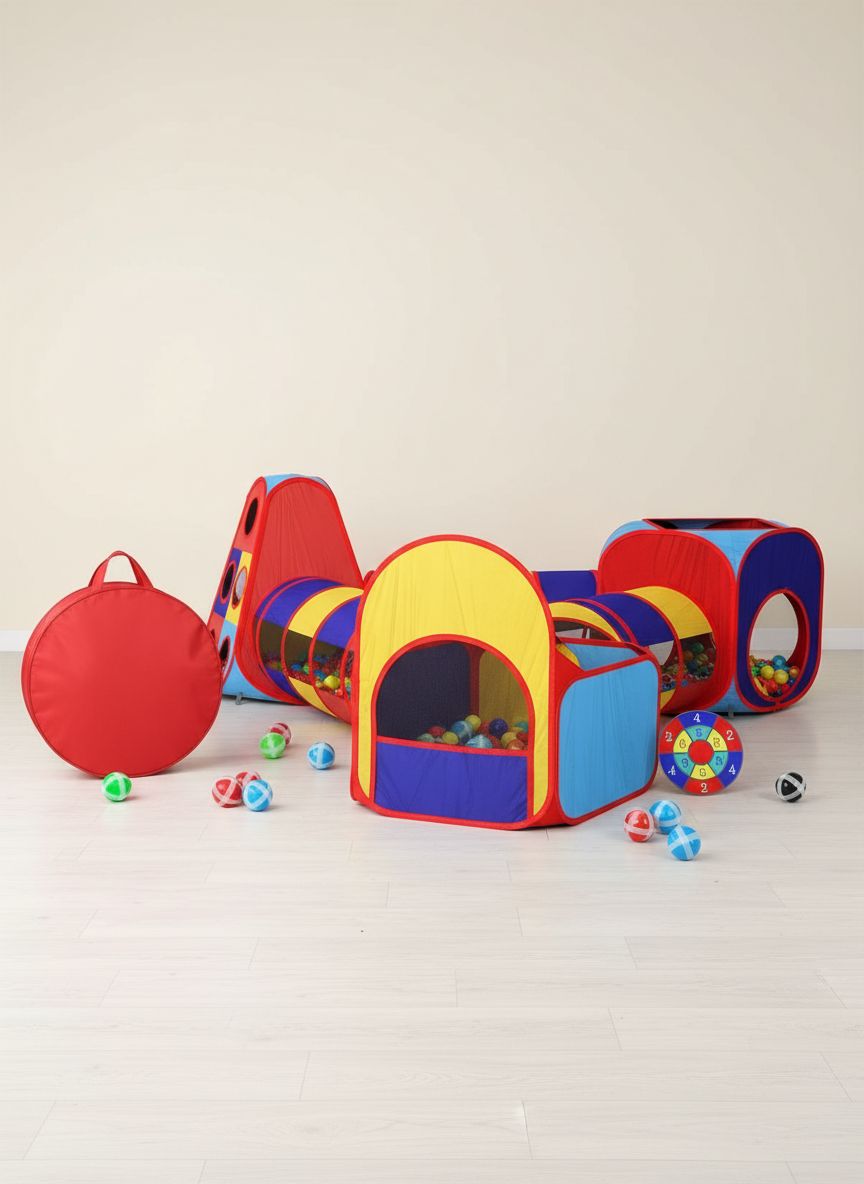
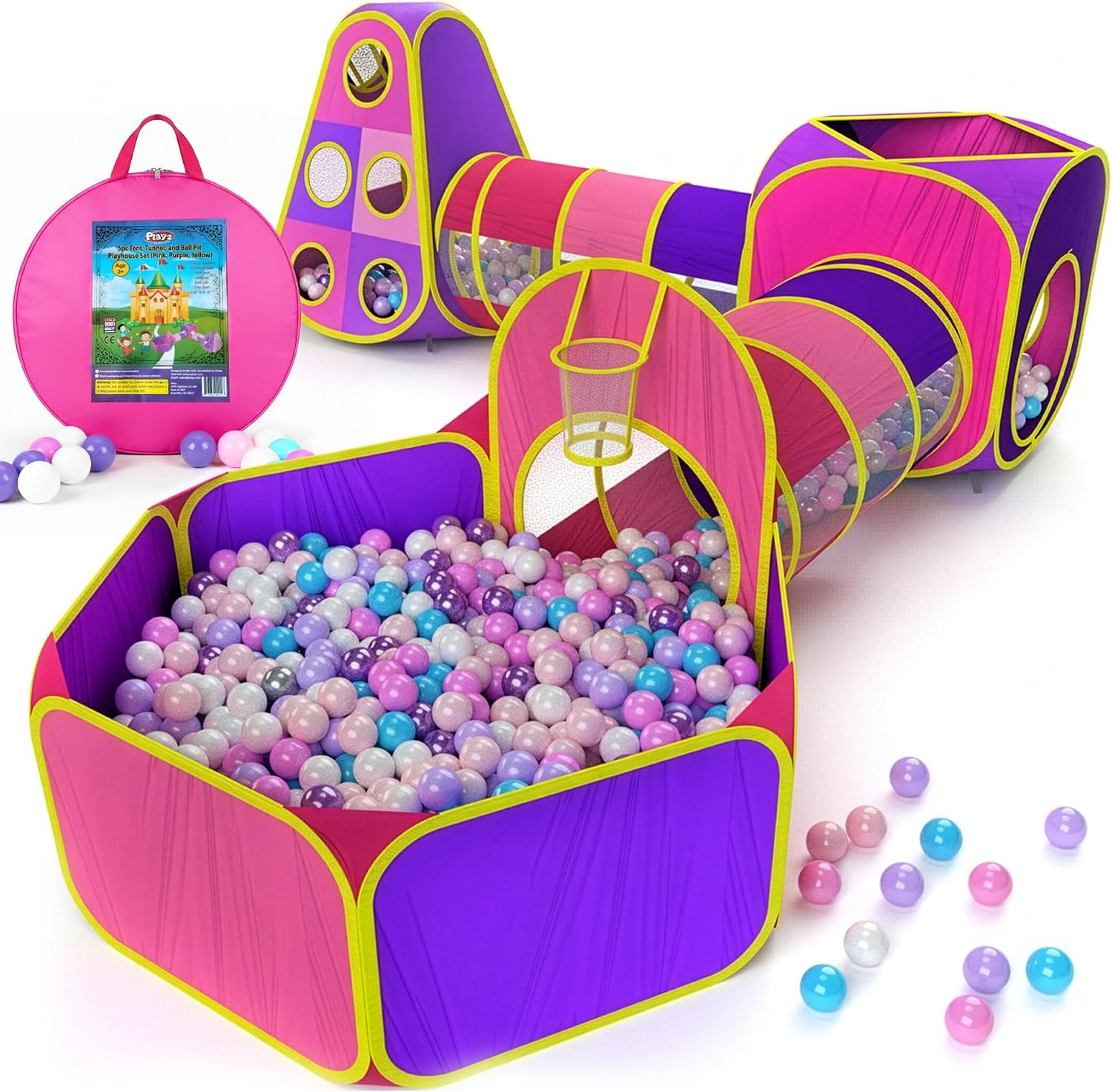
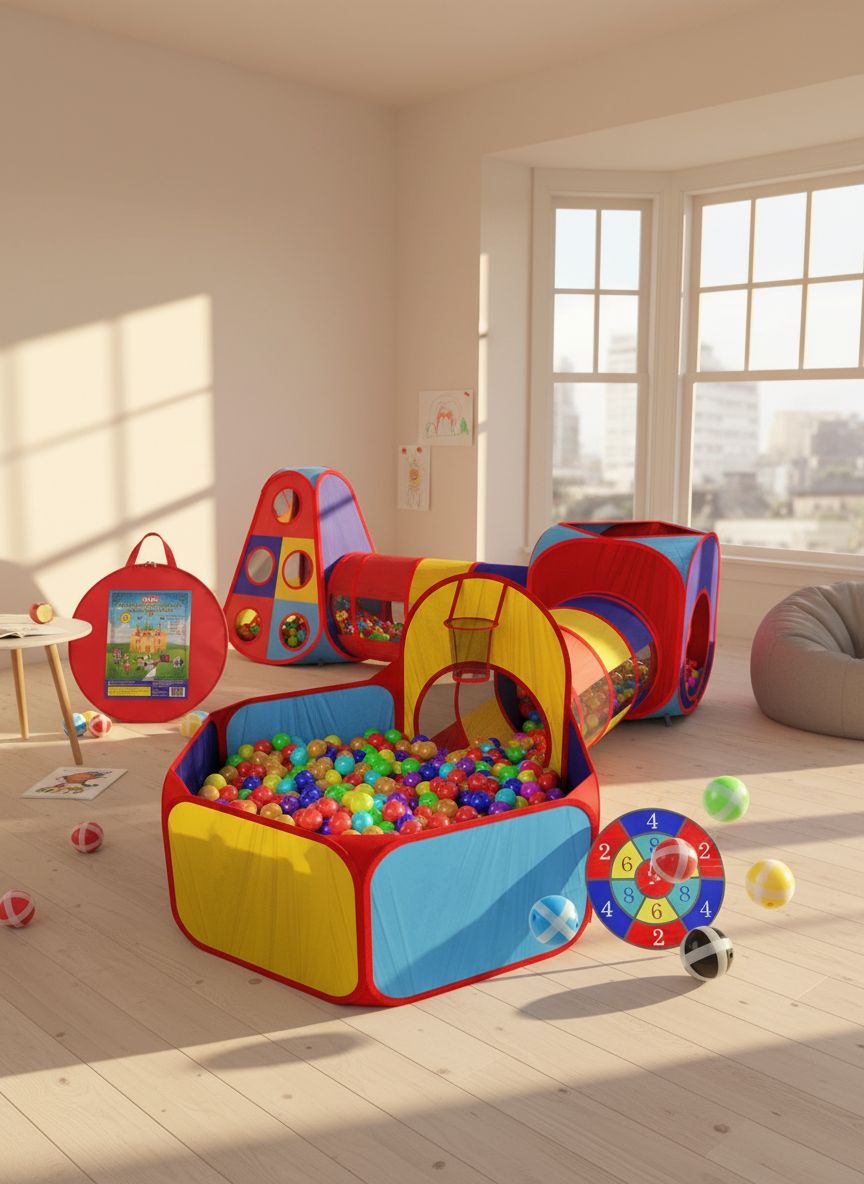
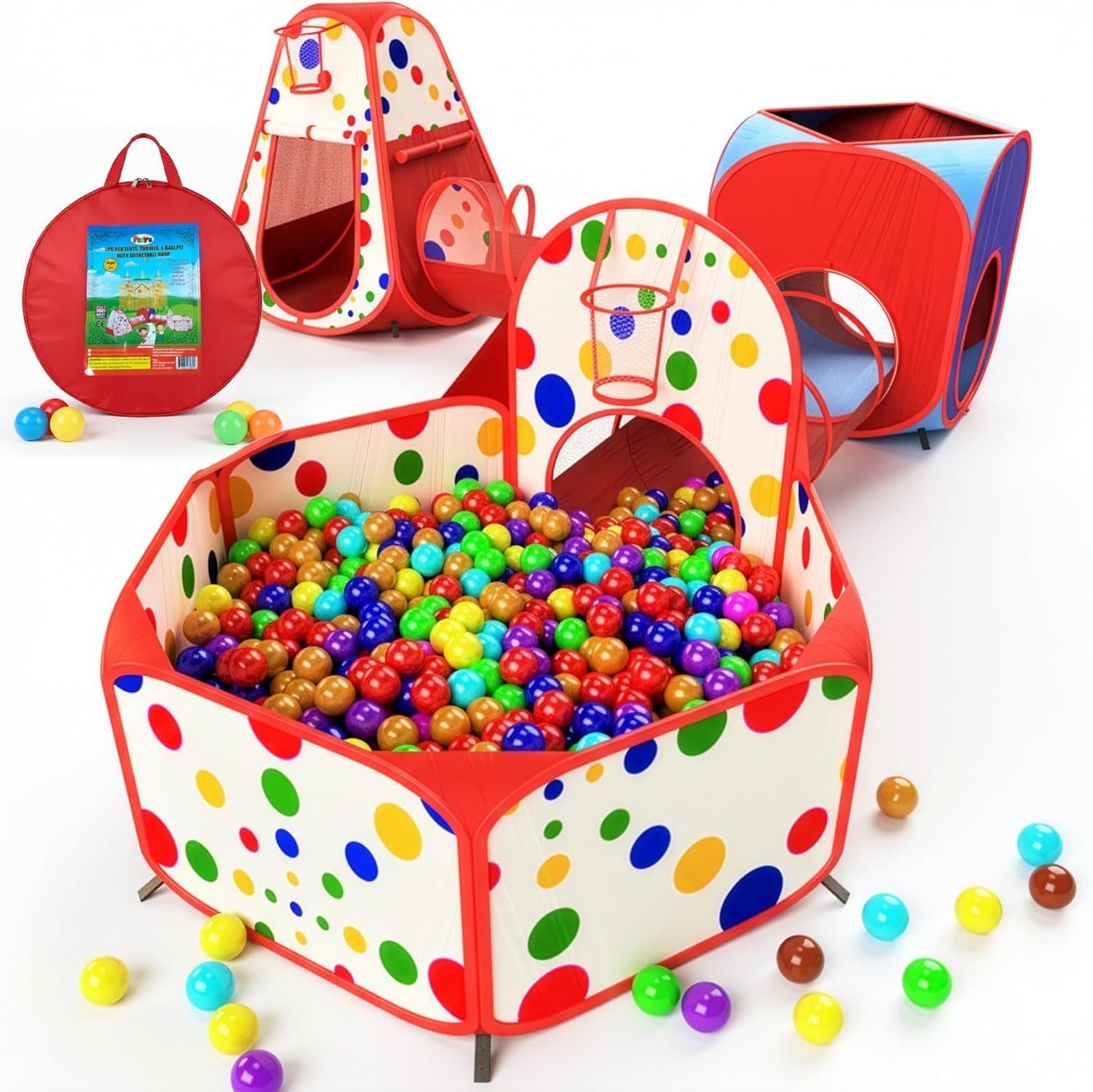
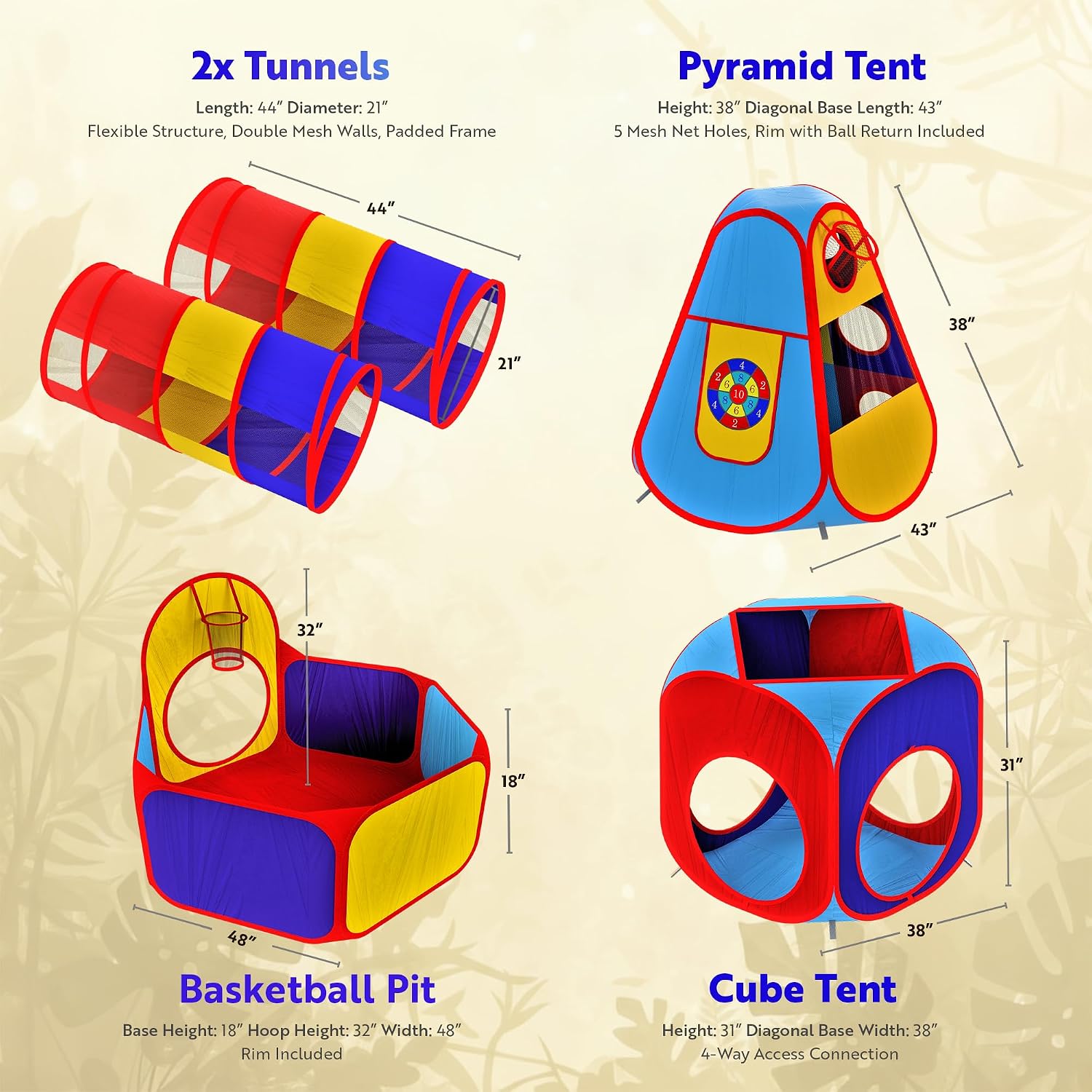
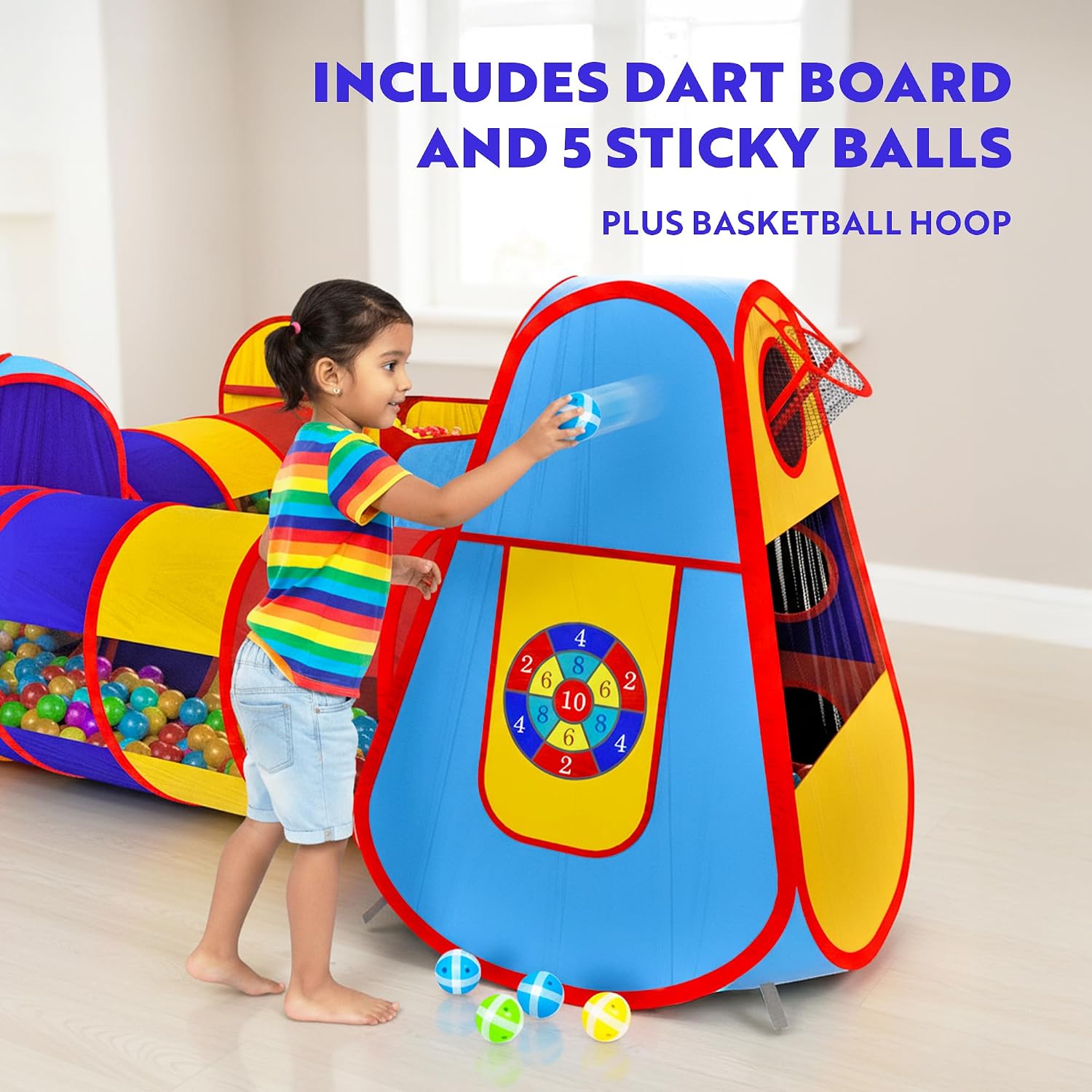
The set includes two pop-up tents, one crawling tunnel, a ball pit ring with soft balls, and a small basketball hoop, all in the brand’s signature rainbow multicolor palette. The polyester fabric is lightweight but holds its shape, and the ABS plastic connectors click together with a satisfying snap that even an impatient parent can manage solo in under ten minutes. The whole structure sits low to the ground, which is the right call for the 12 to 24 month age range: nothing here is tall enough to create a falling risk, and toddlers can pull themselves in and out independently.
“This is one of those toddler learning toys where the skill-building is completely invisible to the child doing the learning.”
The crawling tunnel in particular gets heavy traffic. My daughter figured out quickly that she could enter from either end, which became its own game for several days. The ball pit, which you can attach directly to one of the tents, holds soft balls well without spilling constantly, though I’d recommend setting it on a rug rather than hardwood for obvious reasons. For parents thinking about gross motor development in babies and toddlers, it’s worth knowing that crawling-based play is consistently highlighted by pediatric health resources like HealthyChildren.org as a meaningful contributor to upper body strength and spatial reasoning in the first two years. The fact that this set makes crawling feel like an adventure rather than a therapy exercise is genuinely its best design feature.
The Real-Life Scenarios I Used It In
Scenario 1: Saturday Morning, Nowhere to Be
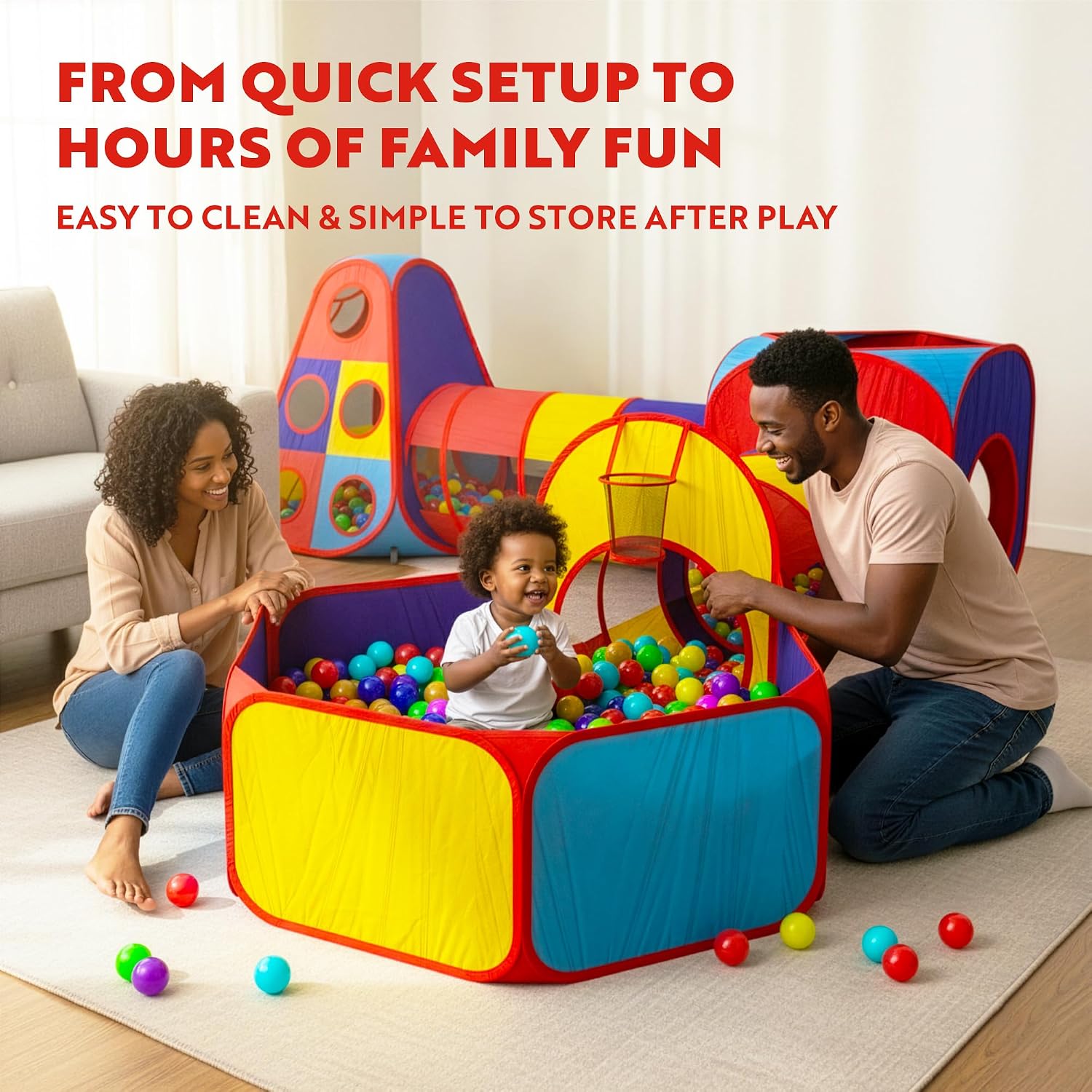
This is peak playset territory. My daughter woke up at six-something and was in a loose, exploratory mood, the kind where she wants to move but doesn’t want to be directed. I set up the full configuration in the living room, linked the tunnel between both tents, and attached the ball pit to the larger tent opening. She spent forty minutes rotating between all three zones independently while I sat on the sofa with coffee that was almost hot. The pop-up playhouse design gives toddlers a sense of enclosure that seems to genuinely soothe them, the way a blanket fort always has. There’s something about having a defined small space that is entirely theirs.
Scenario 2: Tuesday After a Long Car Ride
We had been in the car for two hours visiting family, and by the time we got home my daughter was that particular flavor of overtired and overstimulated that usually ends in tears within minutes. I set up just the tunnel and the basketball hoop, skipping the full configuration to keep the space manageable. She crawled through the tunnel four times in a row, which seemed to reset something in her nervous system. Then she stood at the hoop and dropped balls in with methodical focus for another stretch. Sensory and tactile play at this age isn’t decoration, it’s regulation, and this set offers it in a format that doesn’t require an adult to facilitate every moment.

Scenario 3: The Grandparent Visit Afternoon
When my parents came to visit, my daughter immediately wanted to perform. She led my mother through the tunnel, insisted my father sit next to the ball pit, and spent a full twenty minutes demonstrating the basketball hoop to an audience of two very charmed grandparents. The multicolor rainbow palette photographs well, which I mention because grandparents will absolutely take photos. More practically, the toddler obstacle course setup gave my daughter a way to show off her physical capabilities, the crawling, the throwing, the climbing into tents, in a context that felt celebratory rather than clinical. That kind of confidence-building through movement is exactly what this age stage needs.
What Other Parents Are Saying
With over sixteen thousand ratings averaging 4.5 stars, the pattern that surfaces repeatedly is setup speed and how long the set actually stays in rotation. Parents of toddlers in the 12 to 24 month window consistently note that their kids return to it across weeks, not just the first afternoon. A few reviewers mention the tunnel as the runaway favorite piece, which matches our experience entirely. The honest complaints cluster around storage, because five pieces, even collapsible ones, require a dedicated spot, and around the ball pit’s capacity, which is smaller than photos might imply.
Who Should Skip It
If you’re tight on indoor space, think carefully before ordering. The full configuration is genuinely large, and even the minimum setup of tunnel plus one tent takes up a meaningful footprint. Apartments without a dedicated play zone or living rooms that double as dining rooms will feel the squeeze. This is also not the right pick for a child who is still pulling to stand but not yet crawling with confidence, because the tunnel entry requires getting down and moving forward on hands and knees, which some babies closer to the twelve-month floor aren’t ready to do independently. And if you have a toddler who is deeply averse to enclosed spaces, the tent portions may sit unused for longer than you’d like. The developmental stage a child is actually in matters more than the age range printed on the box, so use your knowledge of your specific kid.
What It Replaces (or Complements) at Home
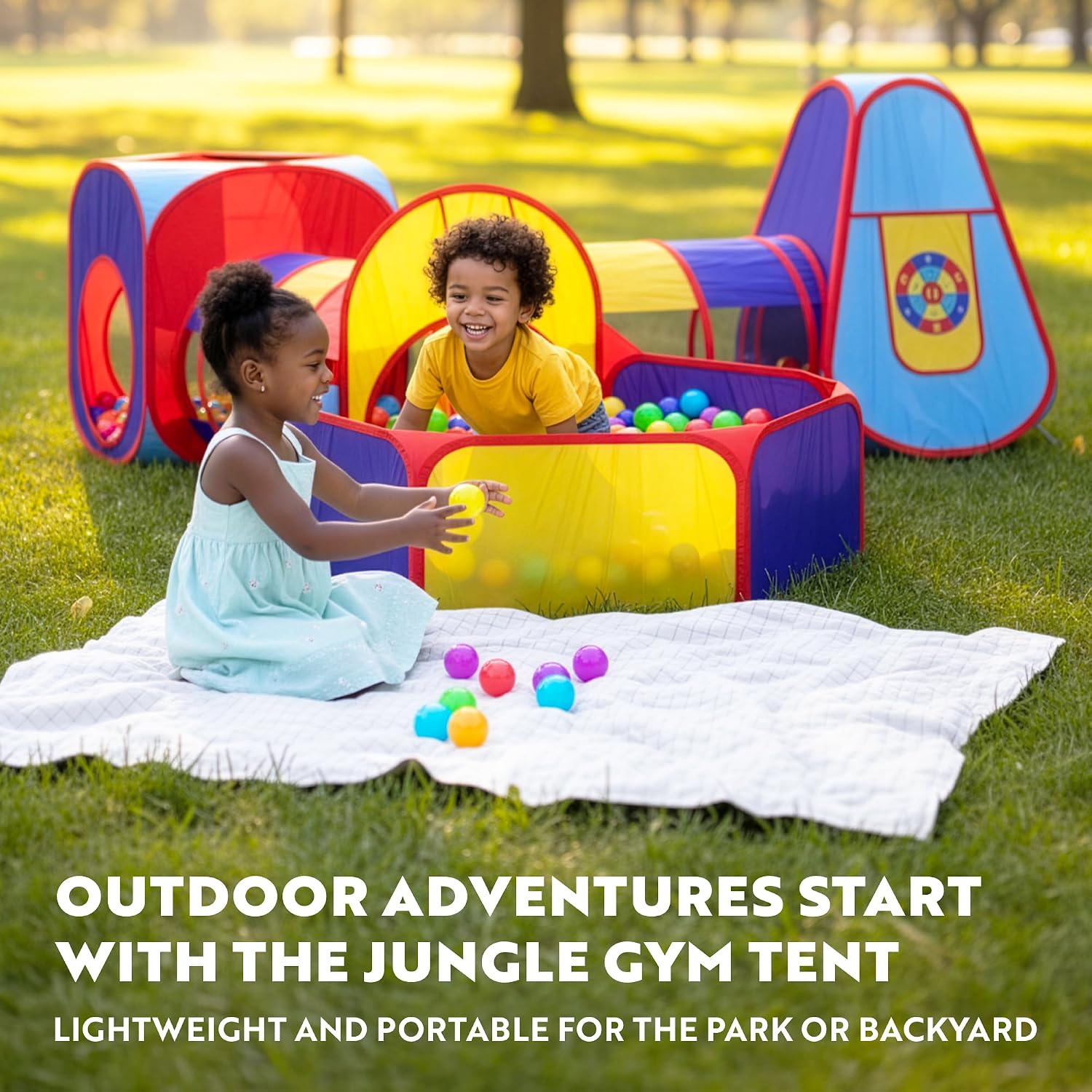
For us, this set quietly retired a foam climbing block that had become more of a tripping hazard than a play object by month sixteen. The Playz system offers more variety of movement in the same approximate floor space, and my daughter engages with it more intentionally because it has distinct zones rather than one feature. It also complements our existing toddler learning toy rotation well because it covers the gross motor and sensory categories without overlapping with puzzles or stacking toys. If your current setup leans heavily toward fine motor play, this is a natural counterbalance. For rainy day activity planning specifically, having something that burns physical energy indoors is the difference between a manageable afternoon and a very loud one. You can also browse our toddler outdoor play picks for warmer months when this set migrates to the backyard.
FAQ
Is this actually appropriate for babies under eighteen months?
The listed range starts at twelve months, and we found it genuinely usable from that point forward for babies who are crawling independently. Babies who are not yet mobile on all fours will need more direct adult involvement to get value from the tunnel and tent portions, though the ball pit functions well even for younger sitters with supervision.
How hard is it to clean, and does the fabric hold up to repeated use?
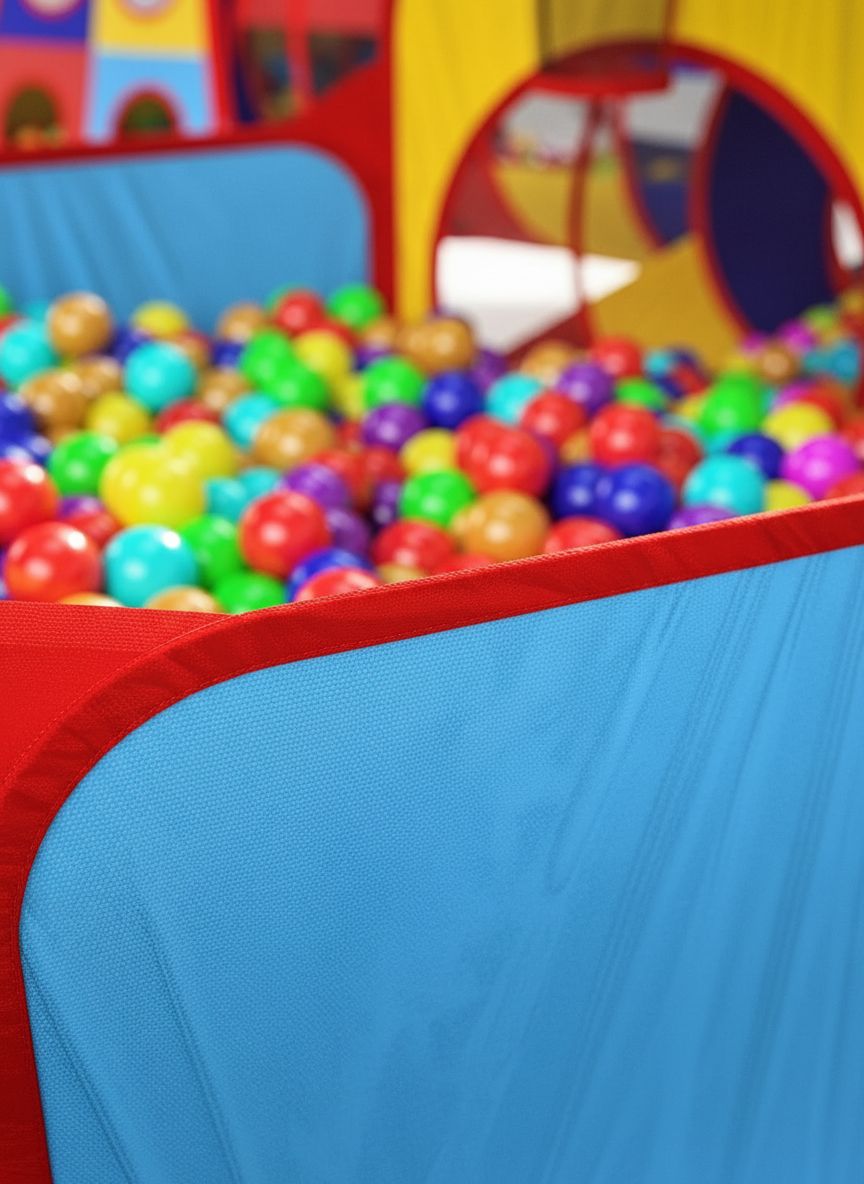
The polyester fabric wipes down easily with a damp cloth for surface messes, and the structure hasn’t shown significant wear after several months of daily use in our household. The ABS plastic connectors have not cracked or bent even with enthusiastic toddler handling, which was my main durability concern going in.
Will my toddler actually play with this past the first week?
In our experience, yes, particularly if you change the configuration periodically. Rearranging the tunnel entrance or swapping which tent the ball pit attaches to is enough novelty to restart interest when engagement starts to dip. The basketball hoop also seems to hold attention longer than I expected as throwing accuracy slowly improves over weeks.
Is the quality worth it at this price point?
Given how long it stays in active rotation and the fact that it covers multiple developmental play categories in one purchase, the value reads above what you’d expect. The construction quality is solid enough that it could realistically be handed down to a younger sibling or gifted to another family after your child ages out of it, which extends the return considerably.
Is this a good birthday gift for a one-year-old?
It photographs beautifully, sets up fast enough that you can do it at a birthday gathering without losing the moment, and the rainbow palette feels festive without being gendered. For parents who want a toddler birthday gift that isn’t a duplicate of what the child already has, a five-piece active play set lands differently than another set of stacking cups. Our full gift ideas archive has more options sorted by age stage if you want to compare.
The Verdict
Six months from now, I am fairly confident this set will still be assembled in some configuration in our home. My daughter is currently seventeen months old and shows no signs of outgrowing the crawling tunnel phase. By the time she does, the basketball hoop will have become more interesting, not less, because her aim and intention will have sharpened. That’s the thing about a well-designed baby obstacle course for indoor play: the same physical structure grows with the child’s capabilities rather than staying fixed at one skill level. For parents researching a Playz toddler play set review for 12 to 24 months, the honest answer is that this hits what it promises without overcomplicating setup or storage beyond what an average household can absorb. The American Academy of Pediatrics emphasizes movement-rich play as foundational in the first two years, and this set delivers that in a format that feels like play, not like a prescription. If you’re looking for the best indoor toddler learning toy that covers gross motor, sensory, and imaginative play simultaneously, this is a strong answer. Browse our broader toddler category or check our editor’s top picks for the full picture of what we keep in rotation. Buy it for the tunnel. Keep it for everything else.
Every Angle
The product as photographed for Amazon — front, side, detail, in use.
As an Amazon Associate I earn from qualifying purchases.