Montessori Mirror with Pull-Up Bar: Honest Review
The moment my seven-month-old pressed her palm flat against her own reflection and laughed, I understood why Montessori educators have been putting floor mirrors in front of babies for decades.
It was a Thursday morning, the kind where the breakfast dishes were still on the counter and the living room looked like a soft-toy explosion had occurred overnight. I had propped my daughter, Lena, into a seated position near the wall, and she was doing what seven-month-olds do: gumming a wooden ring, staring at nothing, periodically being outraged by gravity. Then she caught sight of herself. **She went completely still for a full three seconds** before breaking into the widest, most unself-conscious smile I have ever seen on a human face. That was the first morning with the Jasdego Montessori Mirror with Bar, and honestly, I have thought about that moment almost every day since.
The First Time I Saw It
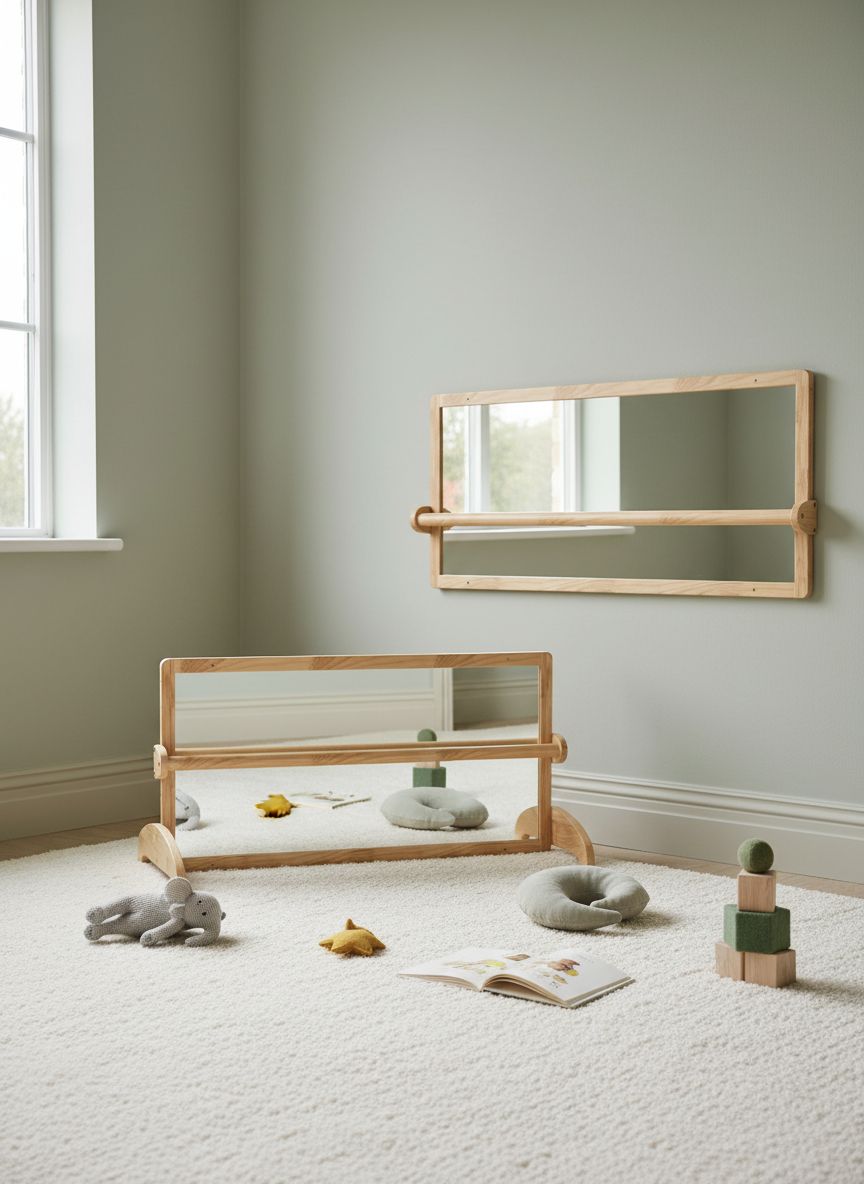
I came across the Jasdego Montessori Standing Mirror the way I come across most things these days: down a rabbit hole at 11 p.m. after Lena went to sleep. A friend had posted a photo of her son’s nursery corner, that specific aesthetic of pale wood, woven baskets, and negative space, and I spotted the tall mirror leaning against a soft sage wall with a wooden bar running across the lower third. I stopped scrolling immediately. Not because of the visual, though the natural wood finish is genuinely beautiful, but because I remembered reading about the Montessori philosophy on infant self-awareness and its connection to early independence, and I had been looking for a way to bring that into our space without it feeling like a classroom installation.
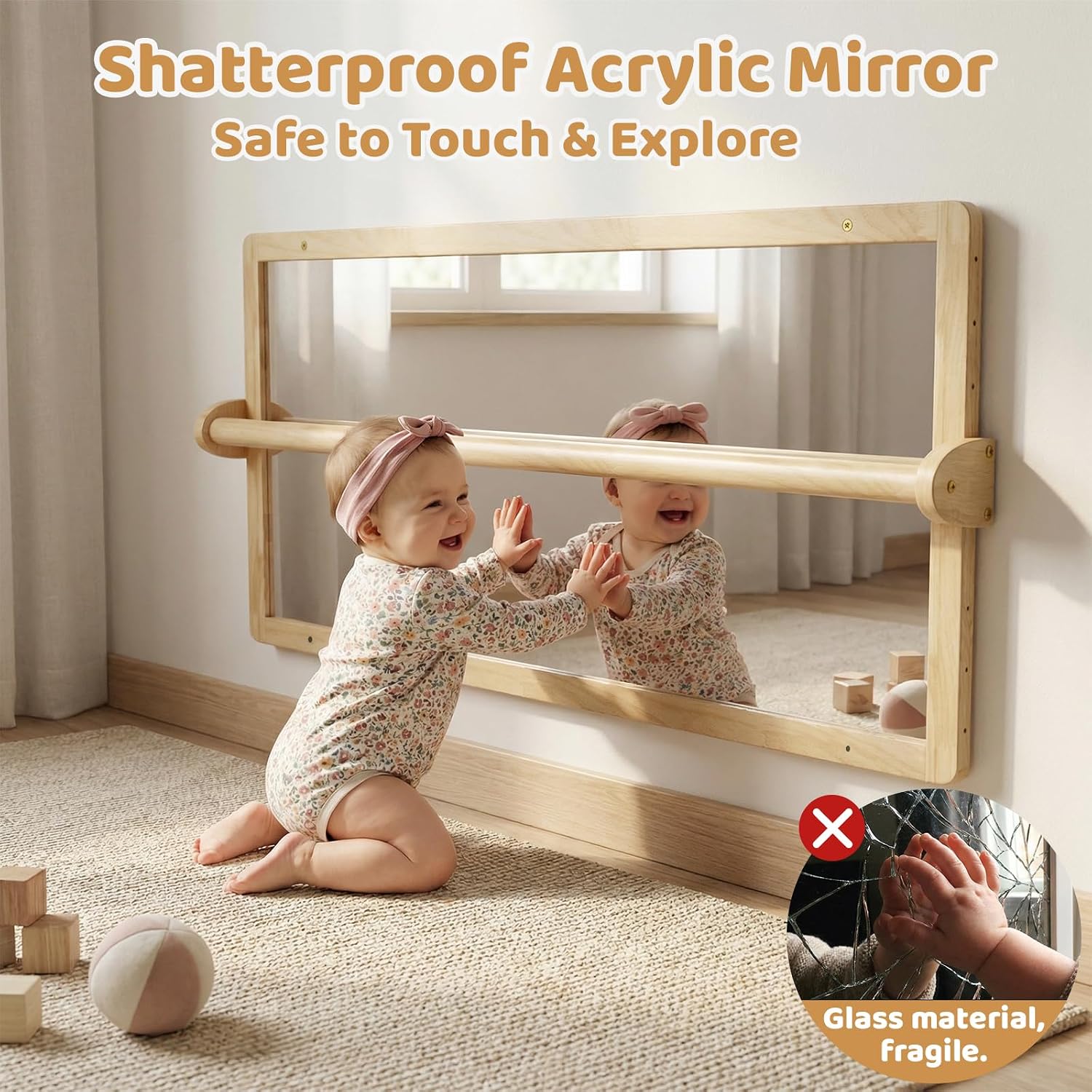
A few days of research later, I had ordered it. The box arrived in two large, flat panels, heavier than I expected, and my husband spent a focused Saturday morning getting it anchored properly to the wall. Which brings me to the first and most important thing I want to say before anything else: wall mounting is not optional. More on that in a moment.
How It Actually Plays / Works
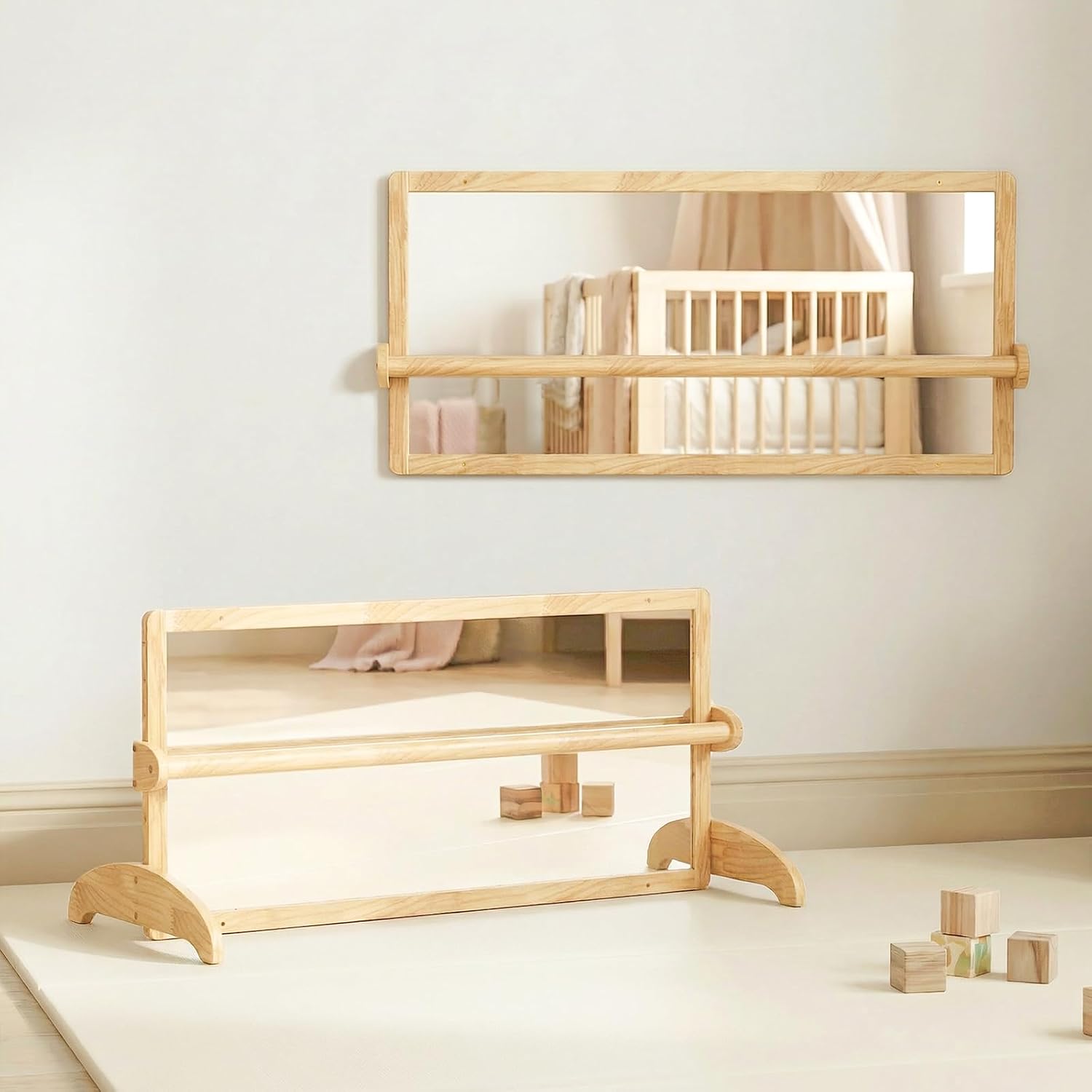
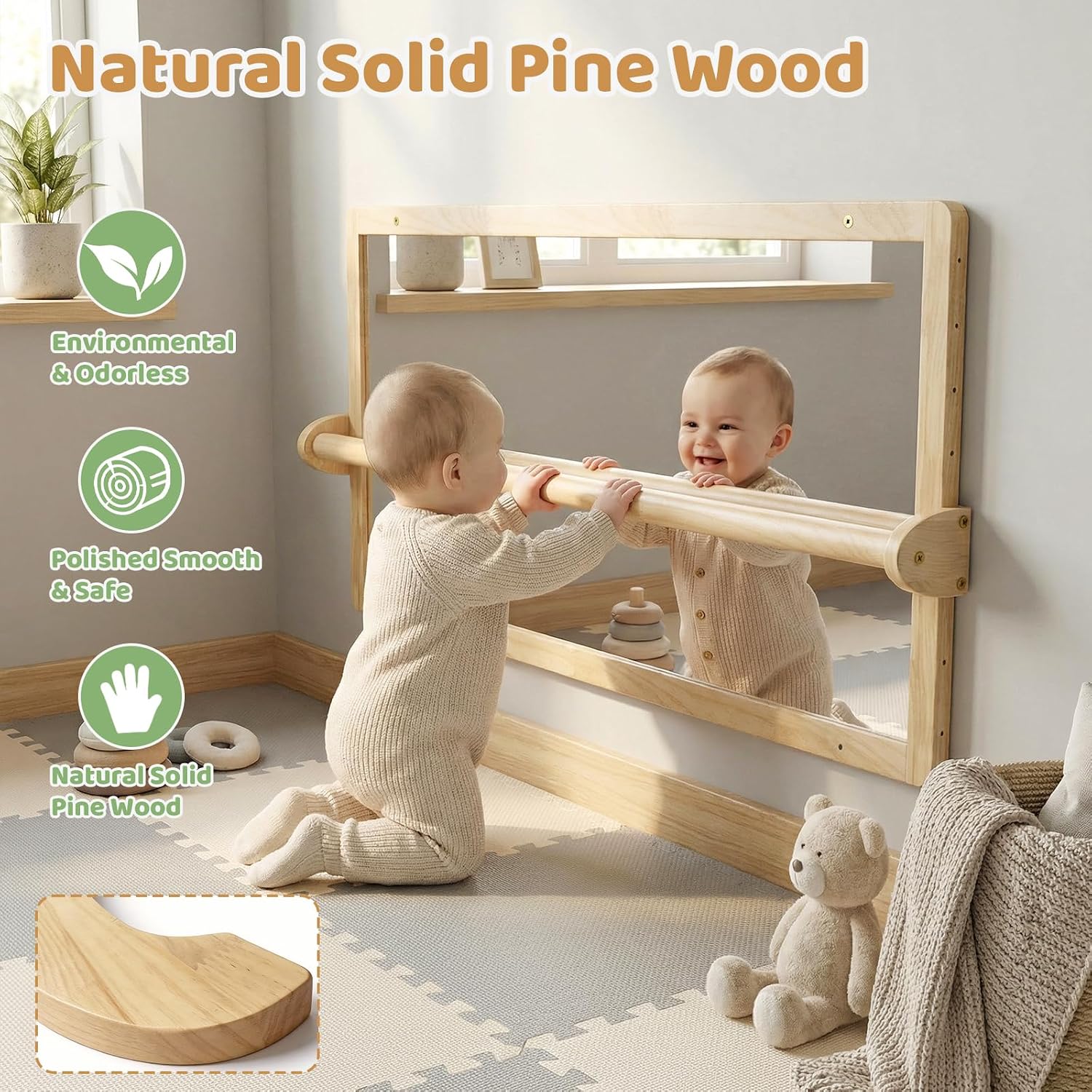
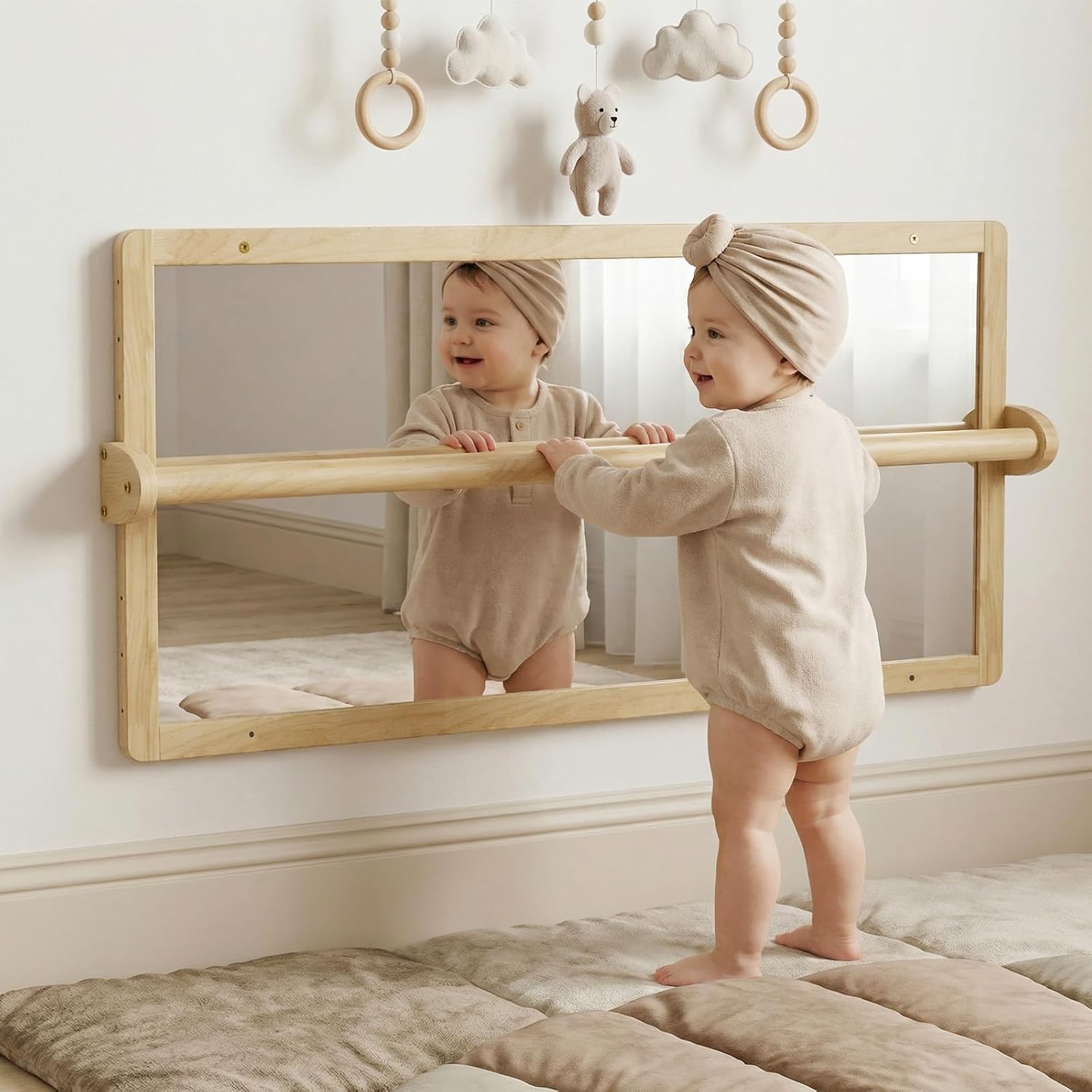
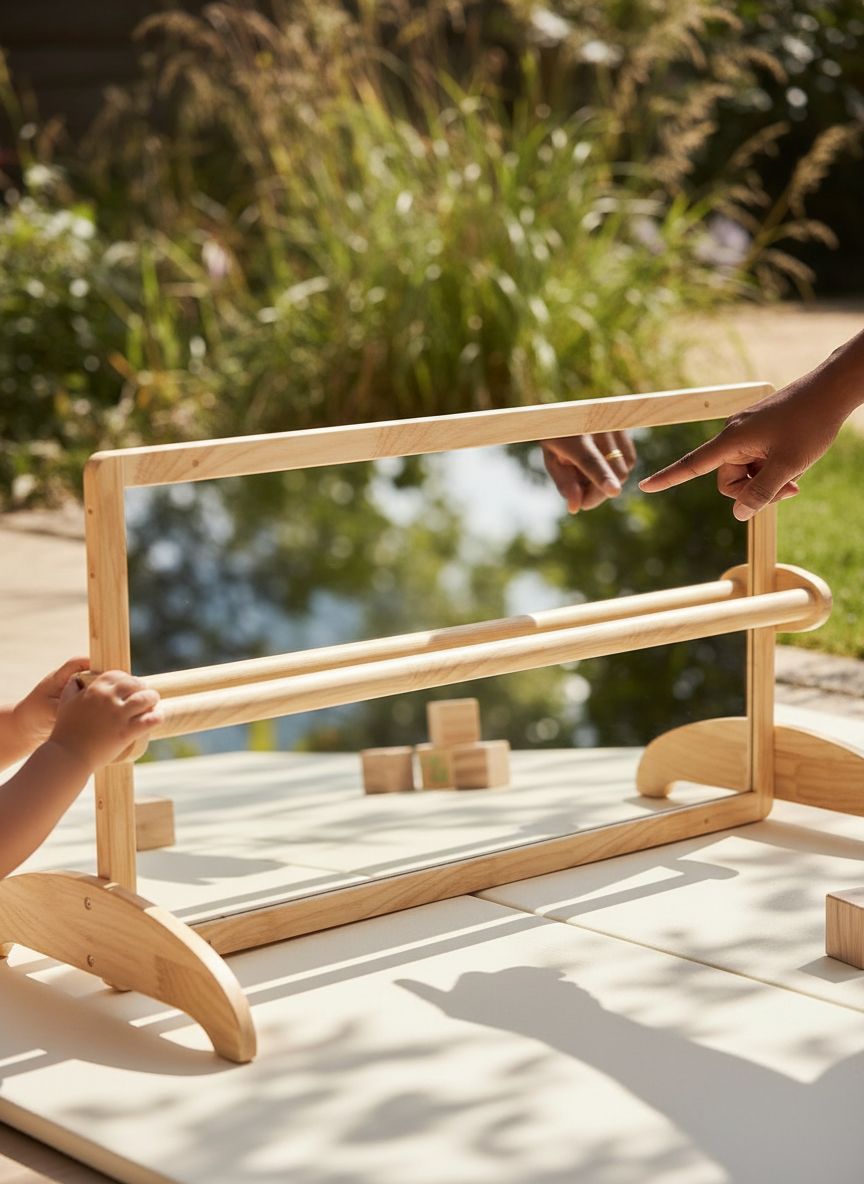
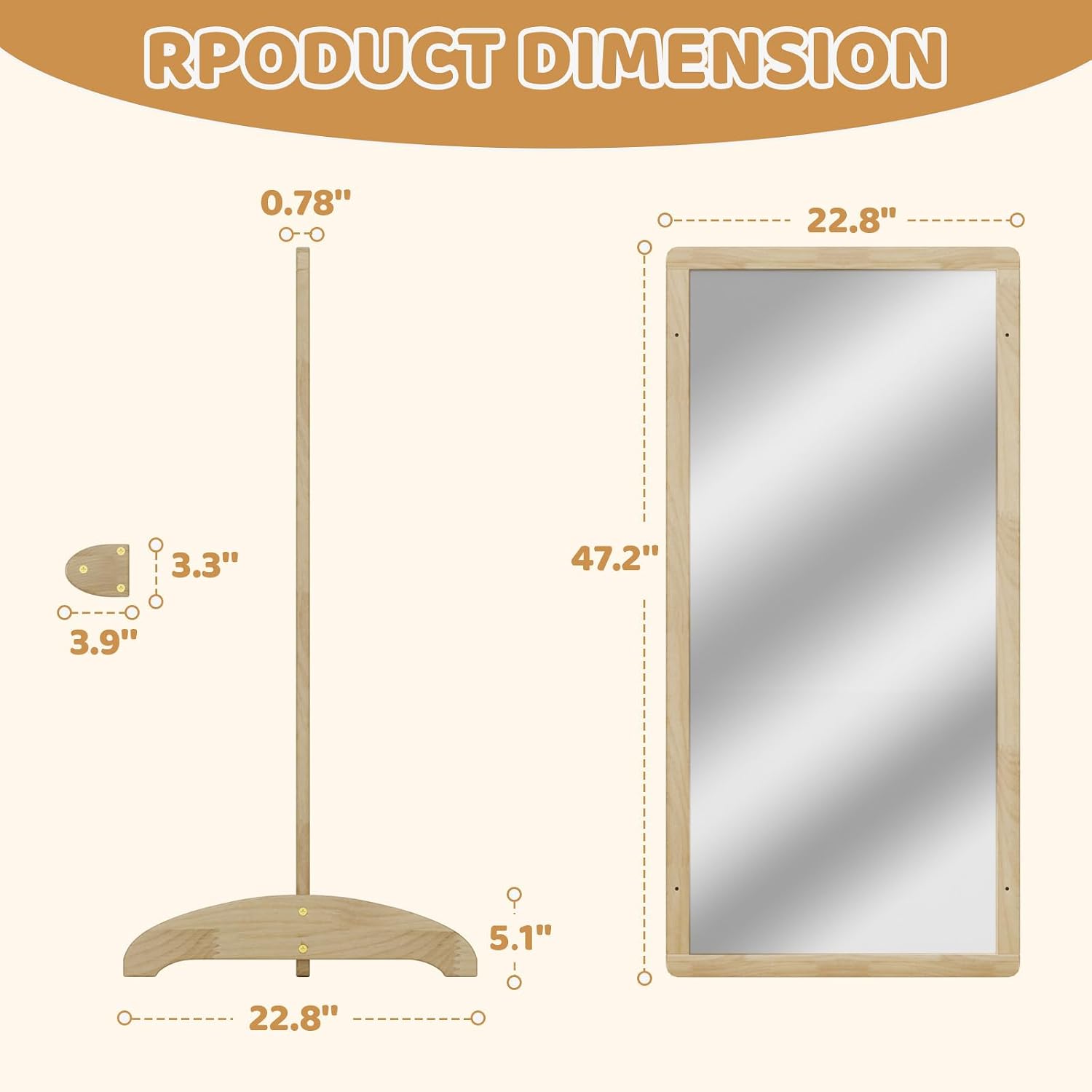
The Jasdego mirror stands 47.2 inches tall and 22.8 inches wide, which means it is nearly floor-to-ceiling presence in a standard nursery. The pull-up bar runs horizontally across the lower section, positioned at a height that makes intuitive sense for a baby moving from sitting to kneeling to standing across the six-to-eighteen-month window. In practice, what Lena does with it has changed almost monthly. At seven months, she sat in front of it, touching the glass, making faces. By nine months, she was using the bar to pull herself up to kneeling. By eleven months, she was cruising along the bar with the focused expression of someone training for a competition.
“A baby learning to stand needs two things: something solid to hold and something interesting to look at. This gives them both at once.”
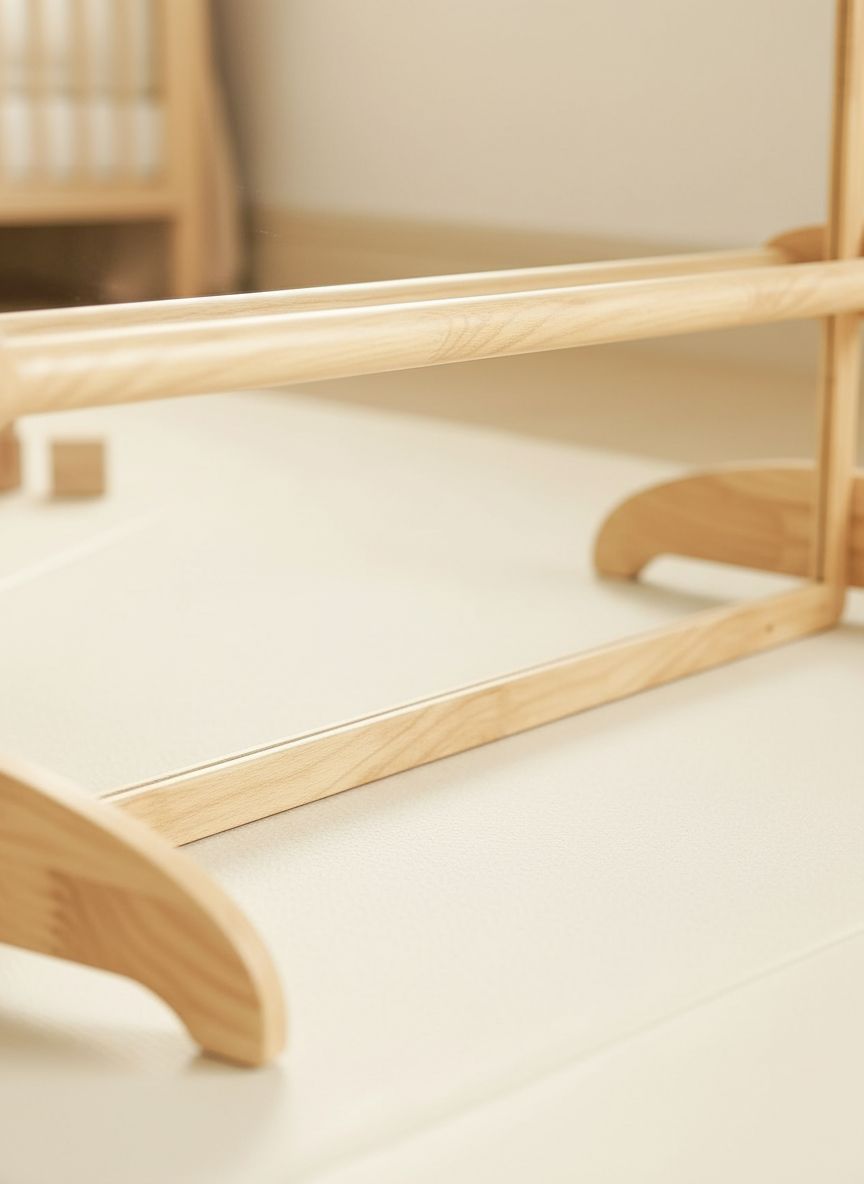
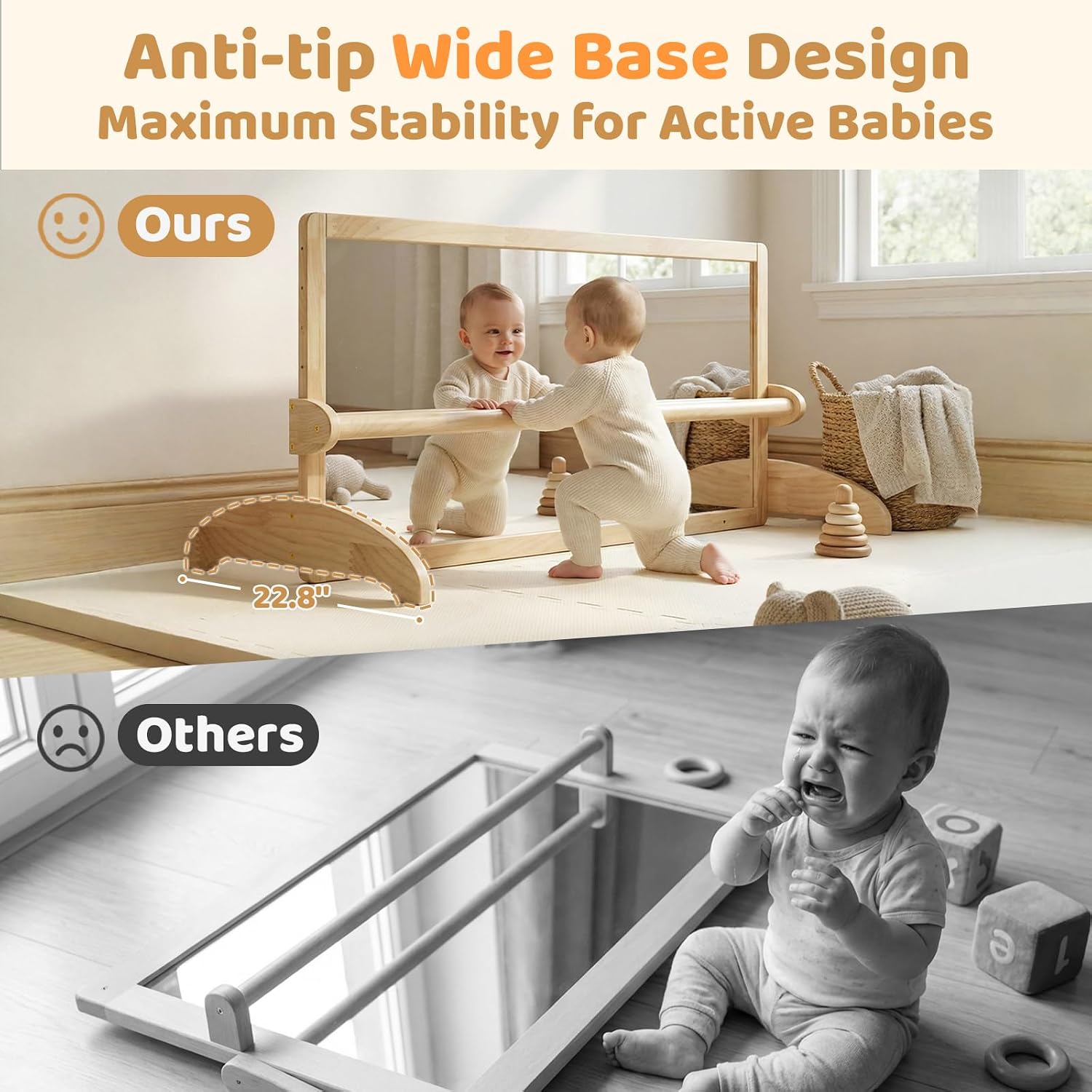
The solid wood construction feels substantial in a way that cheap alternatives simply do not. There is no wobble, no flex, no alarming creak when she grabs the bar and hauls herself upright. I will note honestly that the mirror surface itself, while clear and well-sized, picks up fingerprints at an impressive rate, and I wipe it down every other day. According to the American Academy of Pediatrics’ developmental guidance, self-recognition in mirrors typically begins emerging around nine months, which tracks exactly with what I observed. The product’s design seems to account for this developmental arc rather than just one snapshot moment.
The Real-Life Scenarios I Used It In
Scenario 1: Early Morning, Before the Rest of the House Woke Up
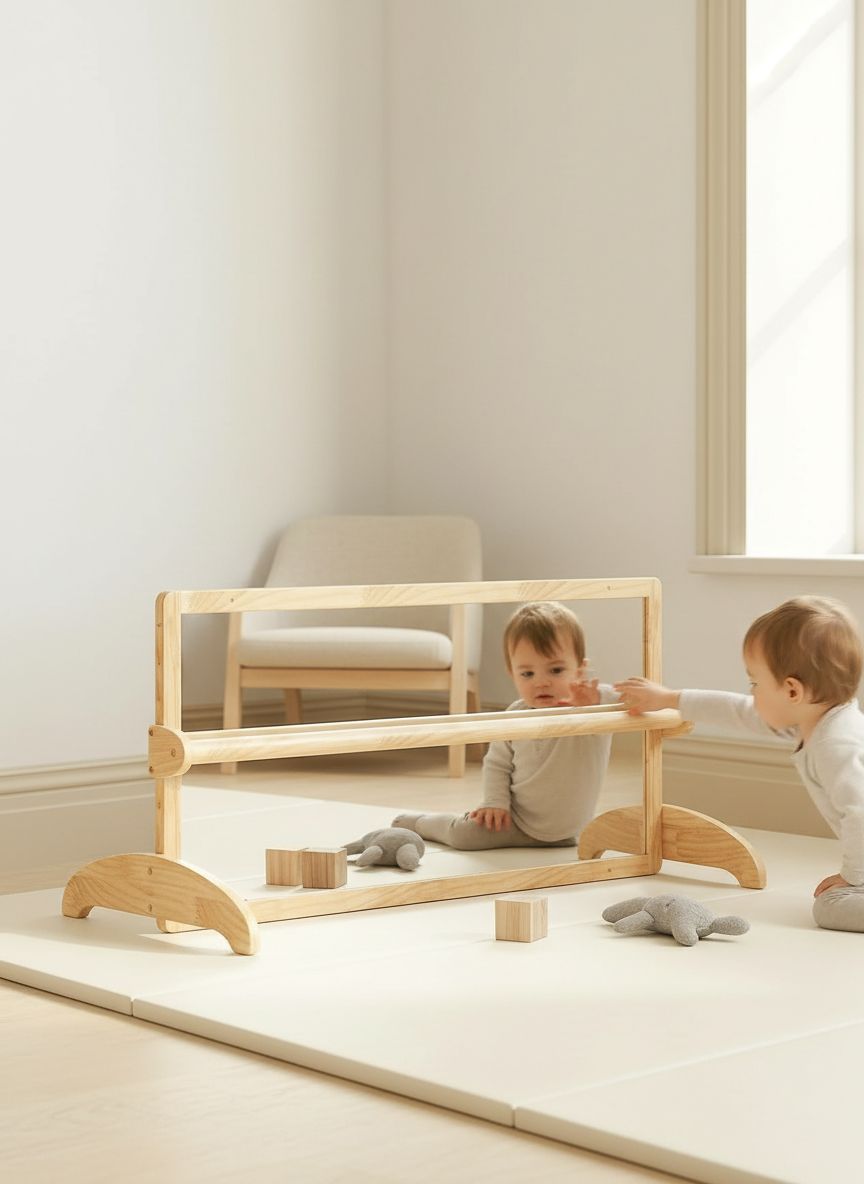
There is a window in Lena’s room that faces east, and between six-thirty and seven a.m., it throws a stripe of pale light across the floor directly in front of the mirror. I started placing her there during that window almost by accident, and it became a ritual. She would sit, watching herself in the warm light, occasionally reaching for the bar, occasionally just studying her own face with the intense philosophical seriousness that babies bring to everything. It bought me twenty quiet minutes every single morning, which, if you have an infant, you understand is not nothing. The room, the light, the gentle focus of it, it felt genuinely calm rather than stimulating in a jangled way.
Scenario 2: After Afternoon Nap, Peak Energy Window
Post-nap Lena is a different creature entirely. She wakes up with the energy of someone who has had a full night’s sleep and a double espresso, and the mirror became a physical outlet for that. She would pull up, sit down, pull up again, the bar taking the full weight of her as she found her footing. I noticed that the gross motor development happening in front of that mirror was different from what I saw with floor mats or activity gyms, it was purposeful, repetitive in the way that actual skill-building is repetitive. She was not playing. She was practicing. Explore more about baby playtime tools that support motor milestones if you are building out a similar corner.
Scenario 3: Grandparent Visit, Showing Off New Skills
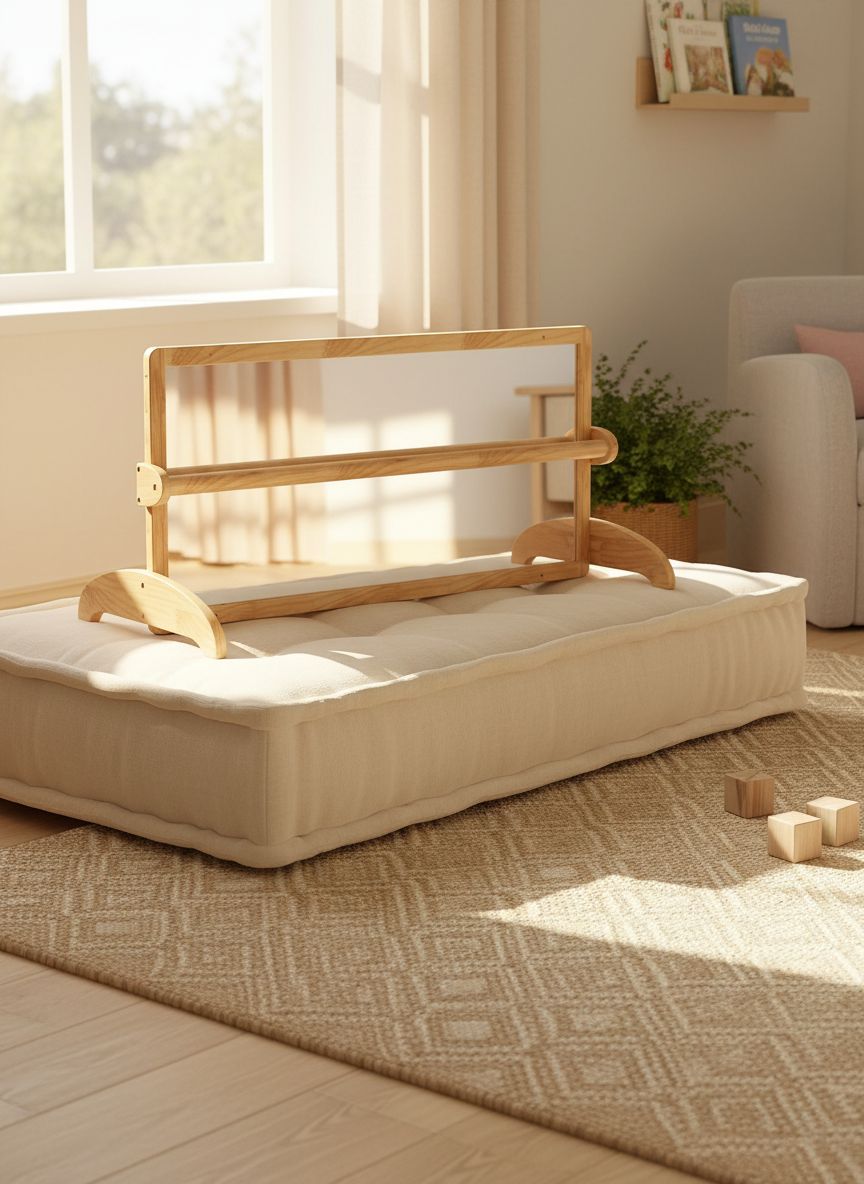
My mother-in-law visited when Lena was ten months old, right at the peak of her pull-to-stand obsession. We walked her into the nursery and Lena immediately crawled to the mirror, grabbed the bar, and hauled herself upright like she had been doing it for years. My mother-in-law actually gasped. There is something about watching a baby see themselves stand for the first time that is affecting in a way that is hard to explain. The mirror makes the milestone visible to the baby herself, and that feedback loop, seeing your own body accomplish something, is exactly what developmental researchers describe as foundational to early self-concept. It is a good party trick, and also a genuinely meaningful moment.
What Other Parents Are Saying
The Jasdego Montessori Mirror with Bar is relatively new to market, and the review pool is still building, so I am drawing primarily on my own extended use here rather than a broad community consensus.
What I can say is that the early feedback mirrors my own experience: parents notice the quality of the wood immediately, and the longevity of engagement surprises them. A baby sensory mirror review for six to twelve months that could equally apply at eighteen months is a rare thing.
Who Should Skip It
If your nursery is genuinely small, this mirror will dominate it. At nearly four feet tall and almost two feet wide, it requires a real wall and a real floor footprint, and in a room under 100 square feet, it can feel like the mirror is wearing the room rather than the other way around. Families in rentals should think carefully about whether wall anchoring is feasible given lease restrictions. It is also not appropriate for a child who is not yet sitting independently, the bar is not useful and the mirror is not engaging in the same way for babies under about six months. And if you are looking for the best baby sleep and soothing gear rather than an active developmental piece, this is not that. It belongs in a wake-window, movement-focused corner of the room, not near the sleep space.
What It Replaces (or Complements) at Home
We retired a standing activity center that Lena had outgrown both physically and interest-wise around eight months. It was taking up the same floor real estate but delivering a fraction of the developmental return. The Jasdego mirror slid into that corner and immediately felt more intentional. It also complements, rather than competes with, our small basket of developmentally appropriate open-ended toys, things like wooden rings, soft balls, cloth books, that Lena can bring to the mirror and use in that space. The combination of Montessori-inspired baby furniture and simple loose materials creates a play corner that has held her attention far longer than I expected. If you are building out a similar setup, our editor-curated picks for early developmental gear are a good place to cross-reference.
FAQ
Is this actually safe for babies under twelve months?
Yes, with the right setup. The mirror must be fully wall-anchored before any use, and babies in the six-to-nine-month range will engage with it primarily as a sensory mirror, not yet using the bar for pulling up. Supervised use only until your child has reliable head and trunk control.
Does the non-toxic finish hold up to daily contact?
After several months of daily use, including a phase where Lena was mouthing the bar regularly, the finish shows no peeling, chipping, or visible wear. The wood has developed a slight patina in the high-contact areas, which I personally find appealing rather than concerning.
Will my baby still use this past twelve months?
In my experience, yes, and arguably more actively. The twelve-to-twenty-four-month window is where the pull-up bar becomes a genuine gross motor tool, supporting cruising, early walking confidence, and the kind of physical repetition that toddlers find deeply satisfying. The Montessori toddler mirror use case is actually broader than the infant phase.
Does the quality justify what you are paying for it?
The solid wood construction, the clean finish, and the sheer scale of the piece read above what you would expect in this tier. Given that it will likely be in active use from six months through at least twenty-four months, and could reasonably be passed to a sibling or resold, the value per month of use is genuinely strong.
Is this a good gift for a baby shower or first birthday?
It is a centerpiece gift rather than a stocking-stuffer, the kind of thing that anchors a nursery and that parents remember. For a first-birthday or nursery-refresh gift guide, it sits comfortably at the top of the list. Pair it with a note about the wall-mounting requirement so parents can plan ahead.
The Verdict
I picture Lena at eighteen months, standing at that mirror with the focused, serious expression she gets when she is working something out, practicing a new word at her own reflection, or doing the particular toddler dance that requires watching yourself do it. I am already certain the mirror will still be there. That is the thing about well-made Montessori baby developmental furniture: it does not expire with a phase. The Jasdego Montessori Mirror with Bar earns its place on the wall because it meets the child where they are at six months and keeps meeting them at nine, twelve, eighteen, and twenty-four. For anyone building a thoughtful, low-stimulation nursery environment, or looking for the best developmental tools for babies zero to three, this is among the most considered pieces I have encountered. It is not decorative. It is functional in a way that deepens over time. Buy it once, use it for two years, and watch your child discover themselves in it.
Every Angle
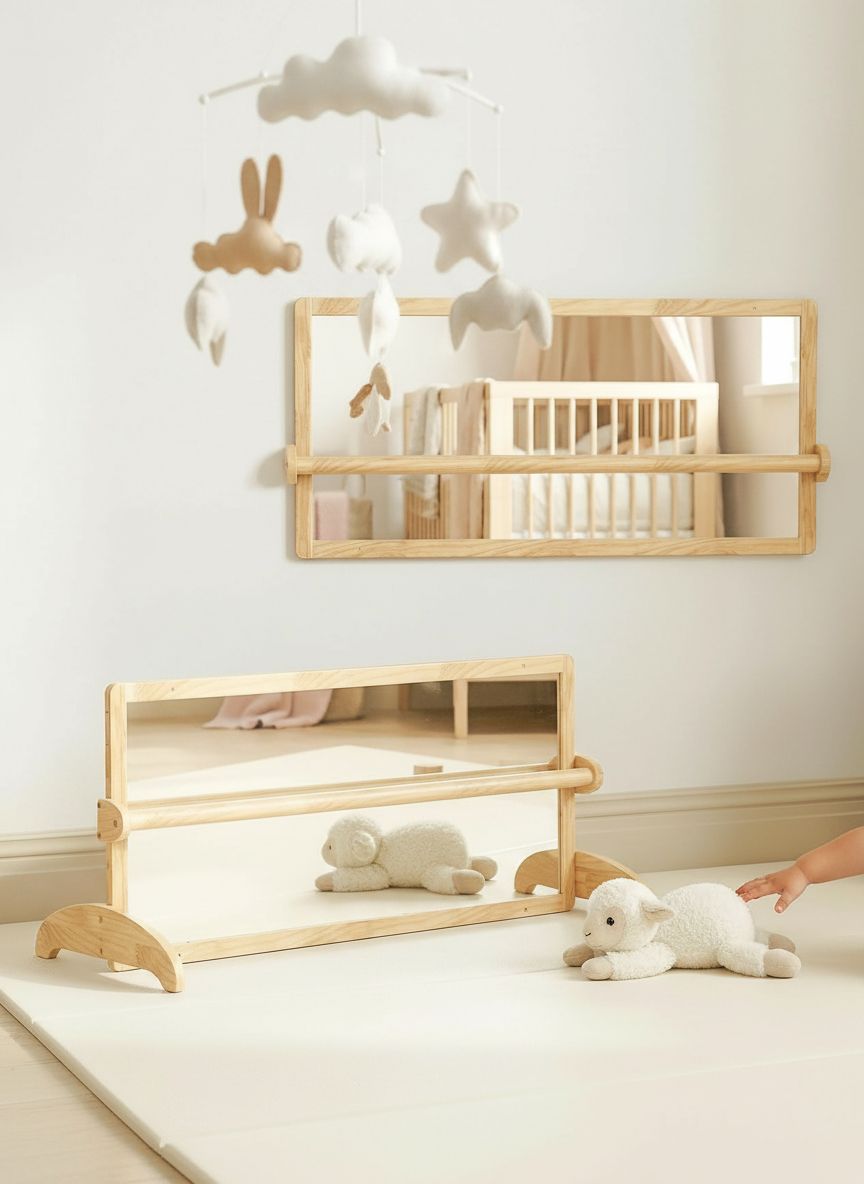
The product as photographed for Amazon — front, side, detail, in use.
As an Amazon Associate I earn from qualifying purchases.