8-in-1 Toddler Climber Slide: Honest Review
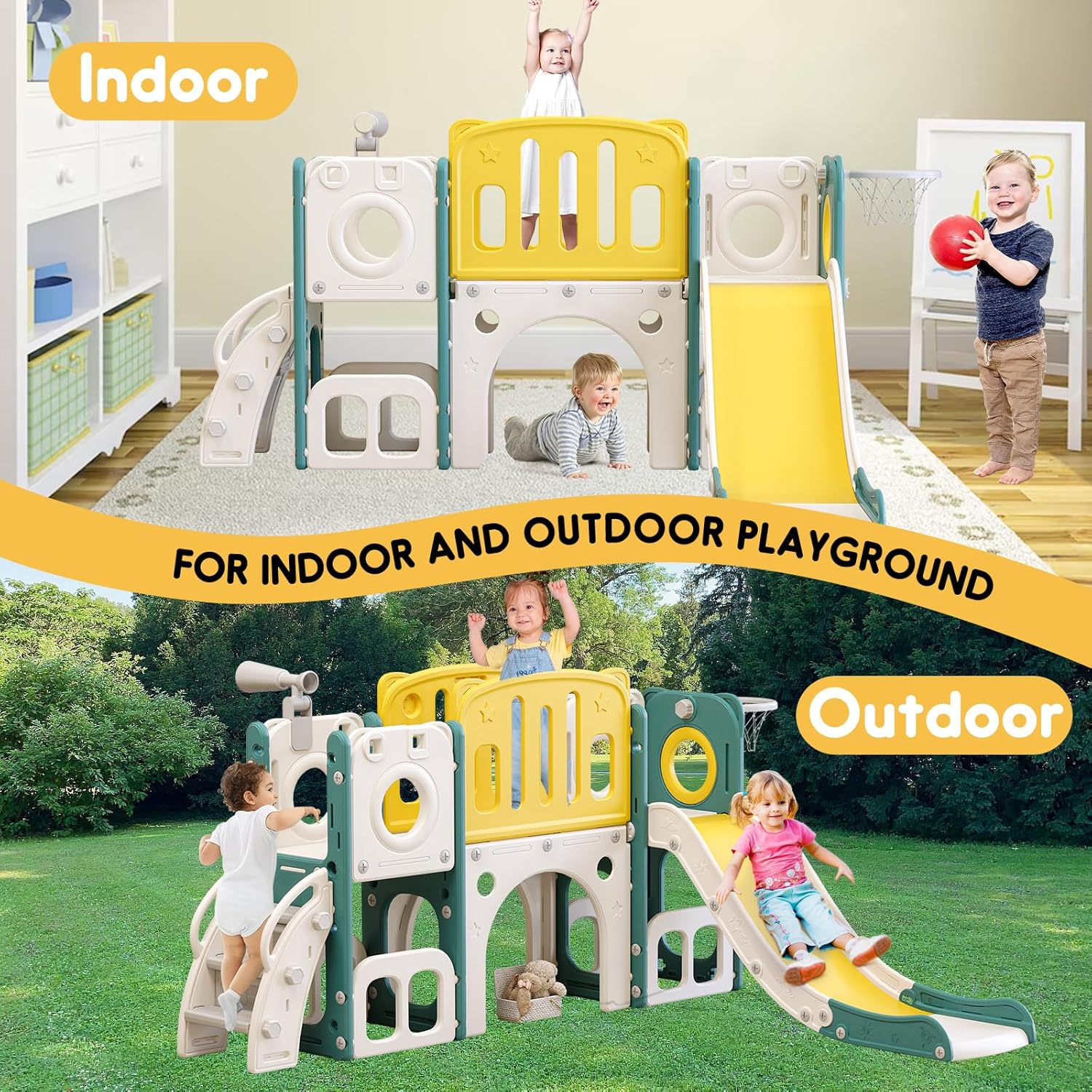

The moment my two-year-old crested the top of the MOCUTEEN 8-in-1 Toddler Climber and Slide Playset, planted both feet, and raised her arms like she’d just summited Everest, I understood exactly why people buy these things.
It was a Saturday morning in February, the kind where leaving the house feels like a negotiation with the weather gods and losing. My daughter, Wren, was twenty-six months old and running laps around the kitchen island with the focused intensity of someone training for a half-marathon. My son, four and a half, had already dismantled the couch cushion fort twice. I had approximately forty-five minutes before someone cried, and I needed something to redirect that energy before I became the thing they climbed on. **The MOCUTEEN 8-in-1 Toddler Climber and Slide Playset arrived in a box that made the UPS driver raise an eyebrow**, and by the time I had it assembled, both kids were already circling it like it was the monolith from 2001. That was three months ago. It has not moved from the corner of our playroom since.
The First Time I Saw It
I spotted this toddler indoor playground gym on a parenting forum thread that started with “what do people actually buy for second birthday parties” and spiraled into forty-seven responses, half of which were climber recommendations. Someone had posted a photo of their living room setup, and this particular configuration stopped me mid-scroll. Eight activities in a footprint that didn’t look like it required a second mortgage on square footage. I made a note, forgot about it, then came back to it two weeks later when Wren launched herself off the arm of our sectional for the third time in a single afternoon.
There was also the pediatrician visit factor. Our doctor had been nudging us toward more active, screen-free play options for toddlers in the 2–3 age window, specifically anything that encouraged climbing, balance, and controlled risk-taking. This checked every box she’d mentioned. I ordered it that night.
How It Actually Plays / Works
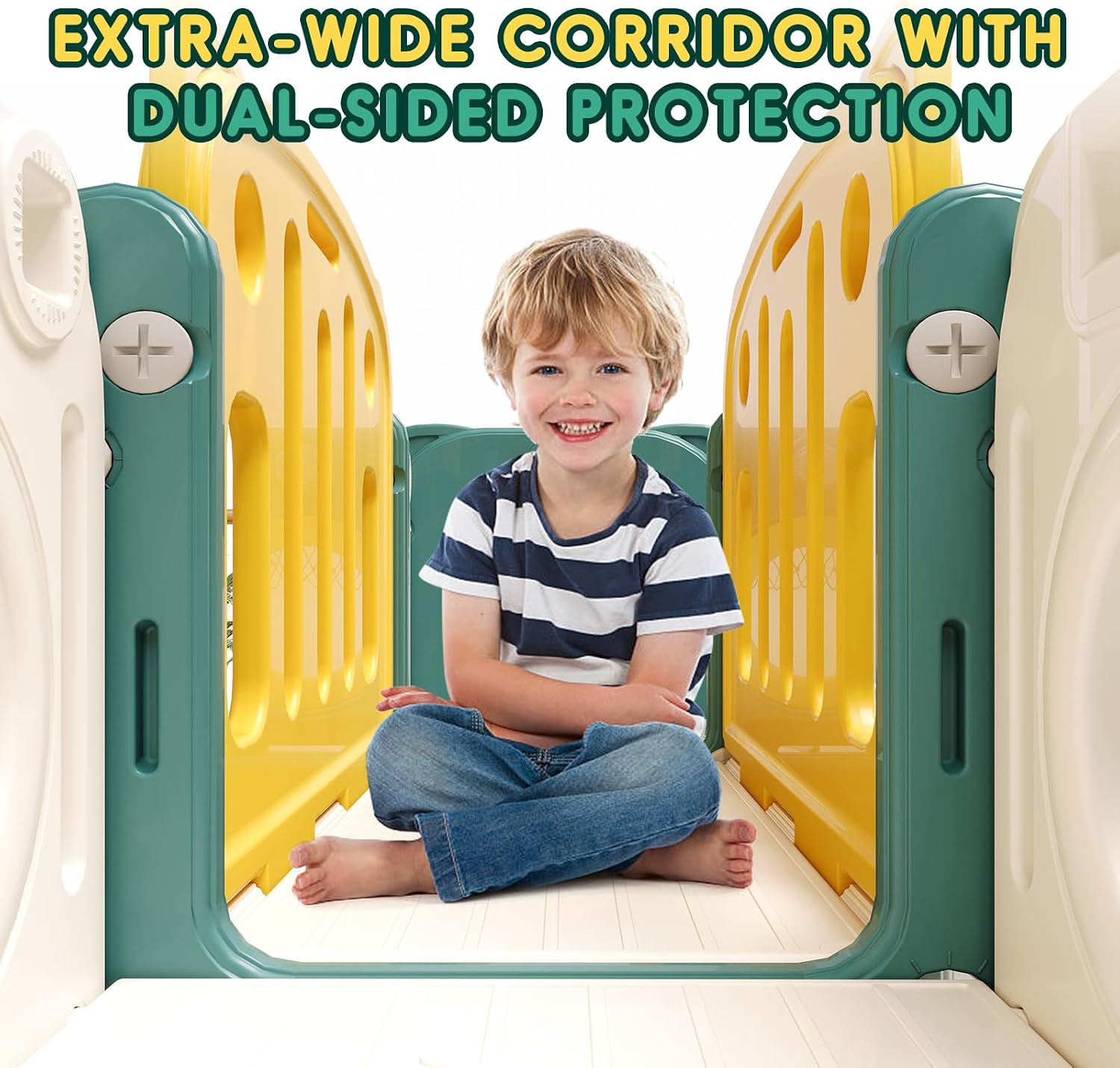
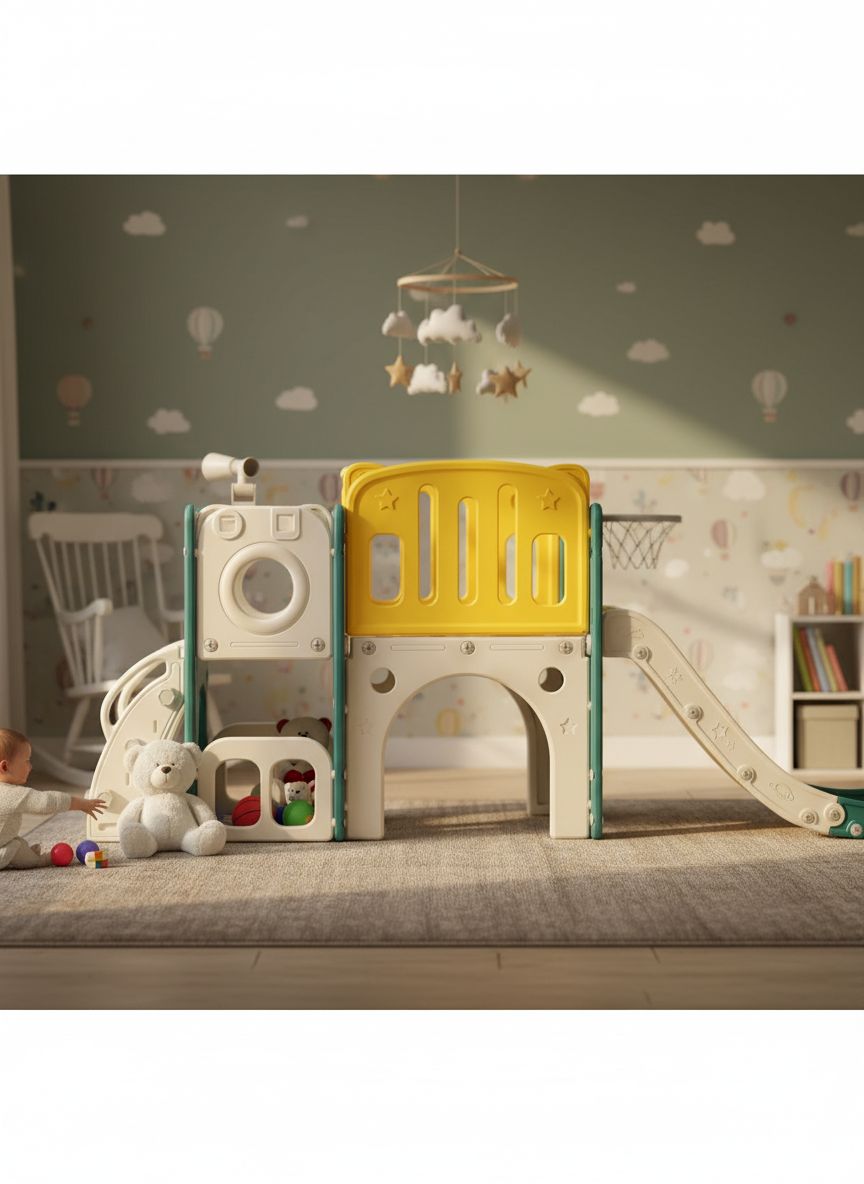
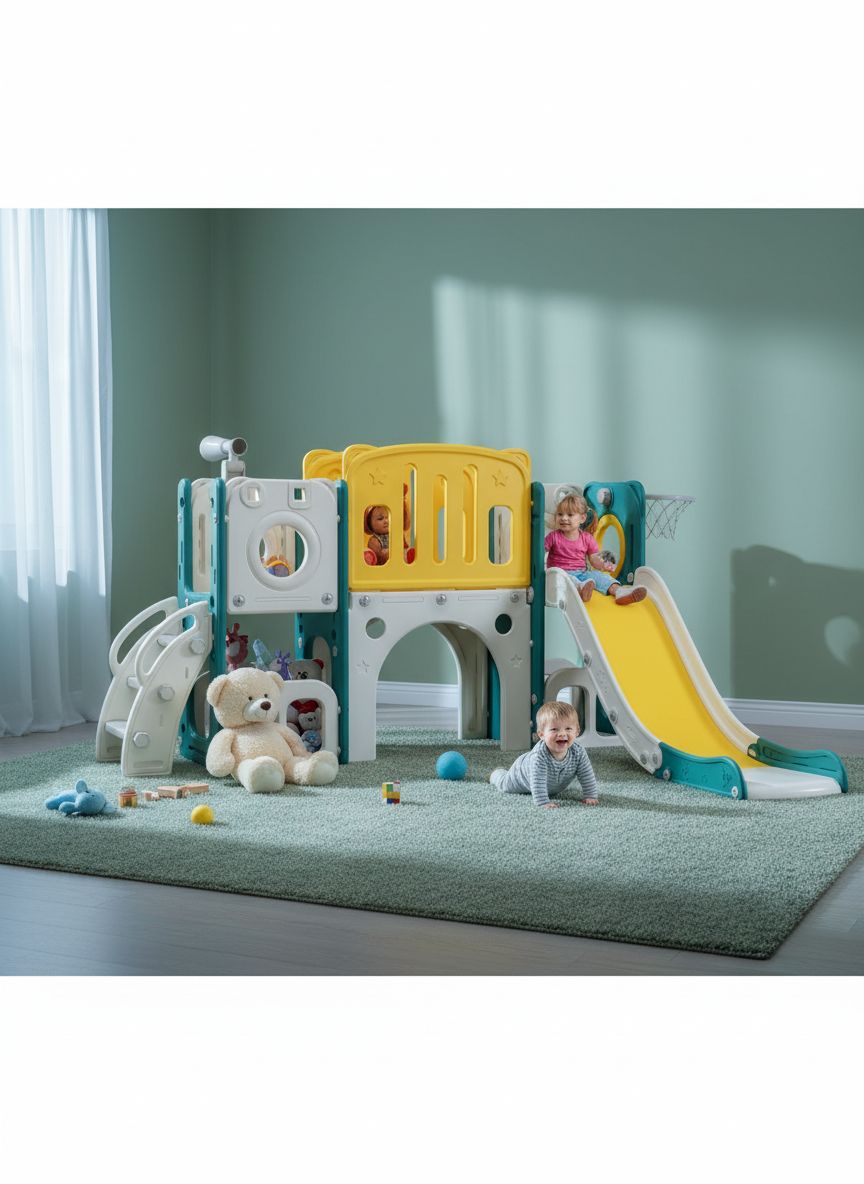
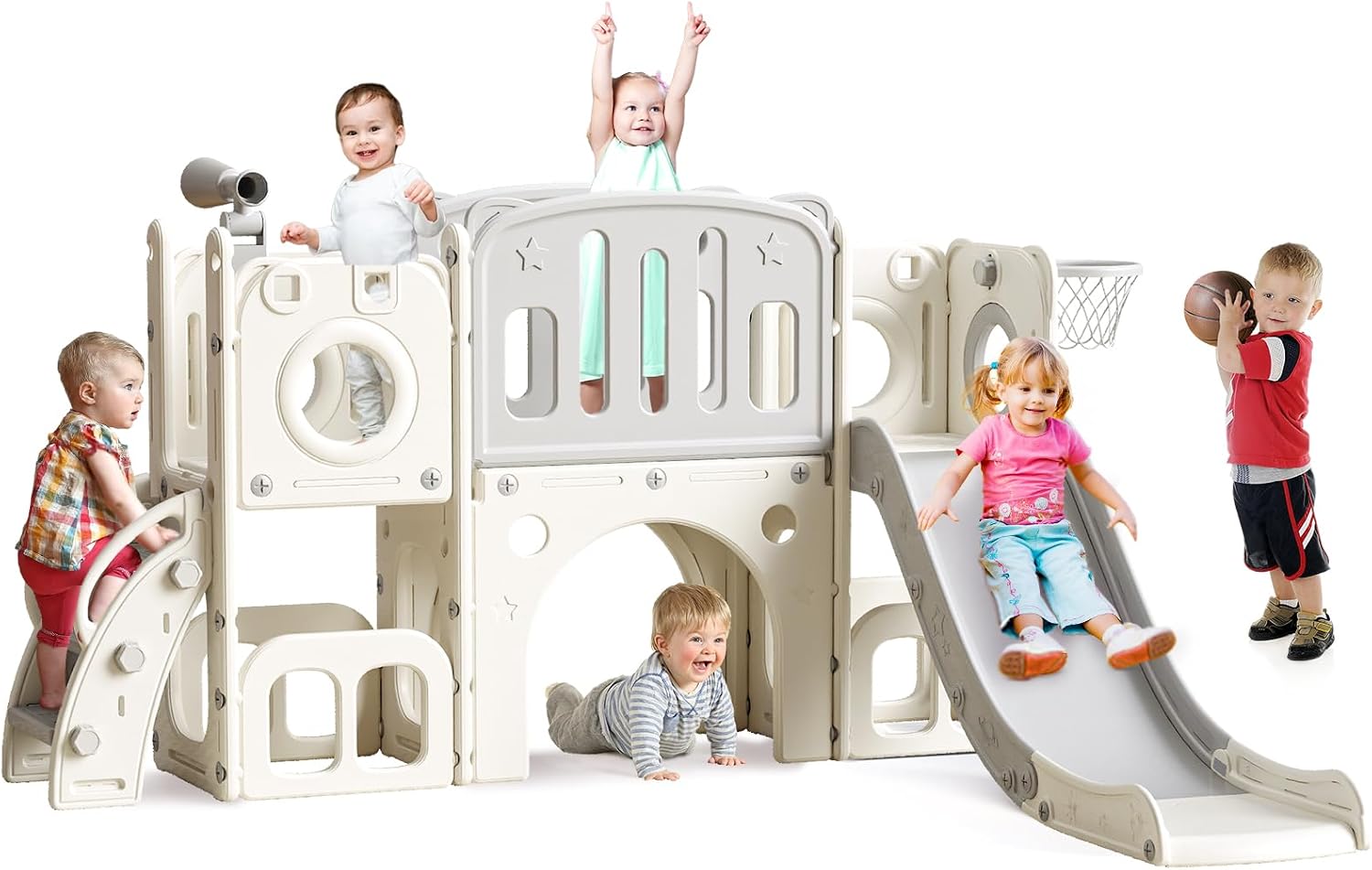
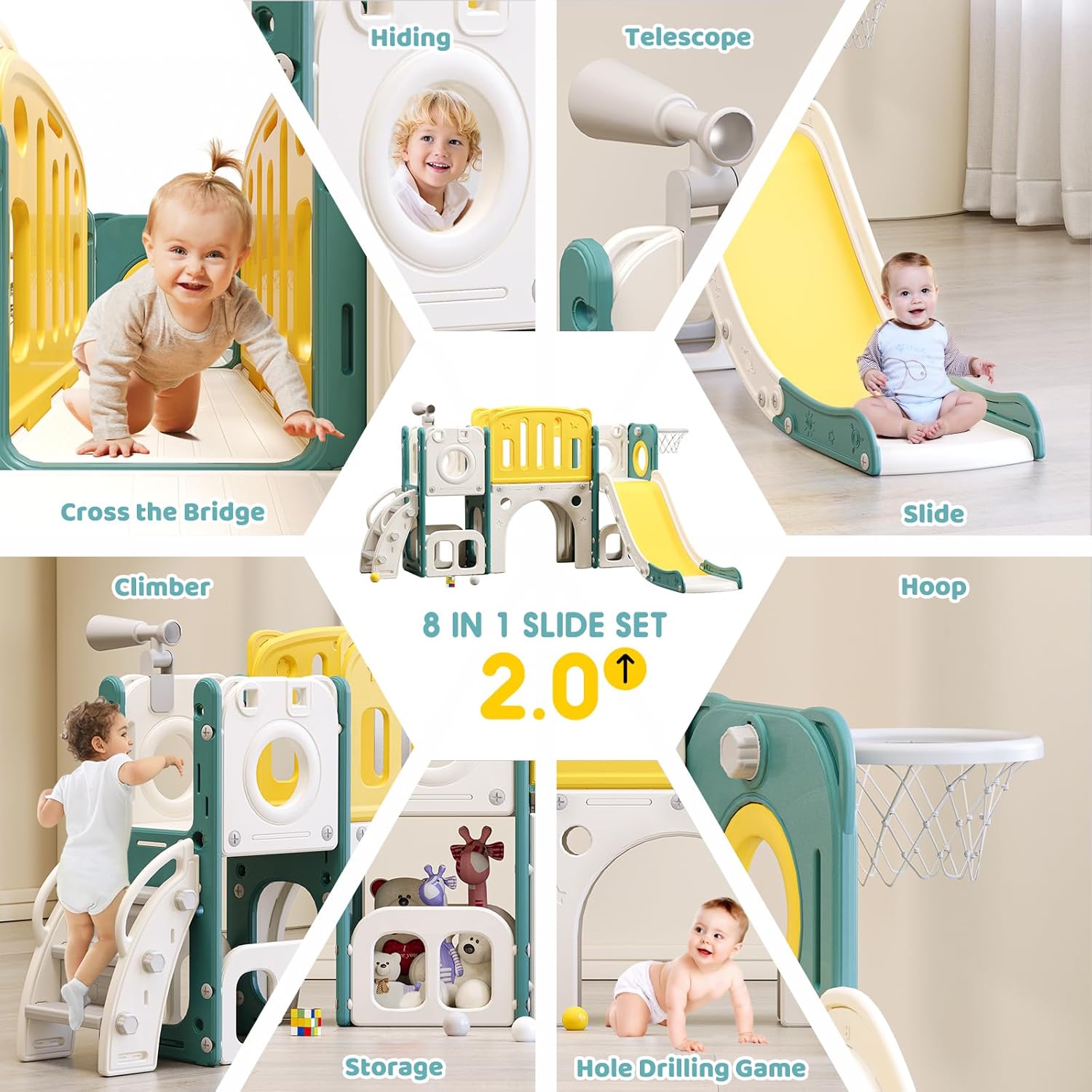
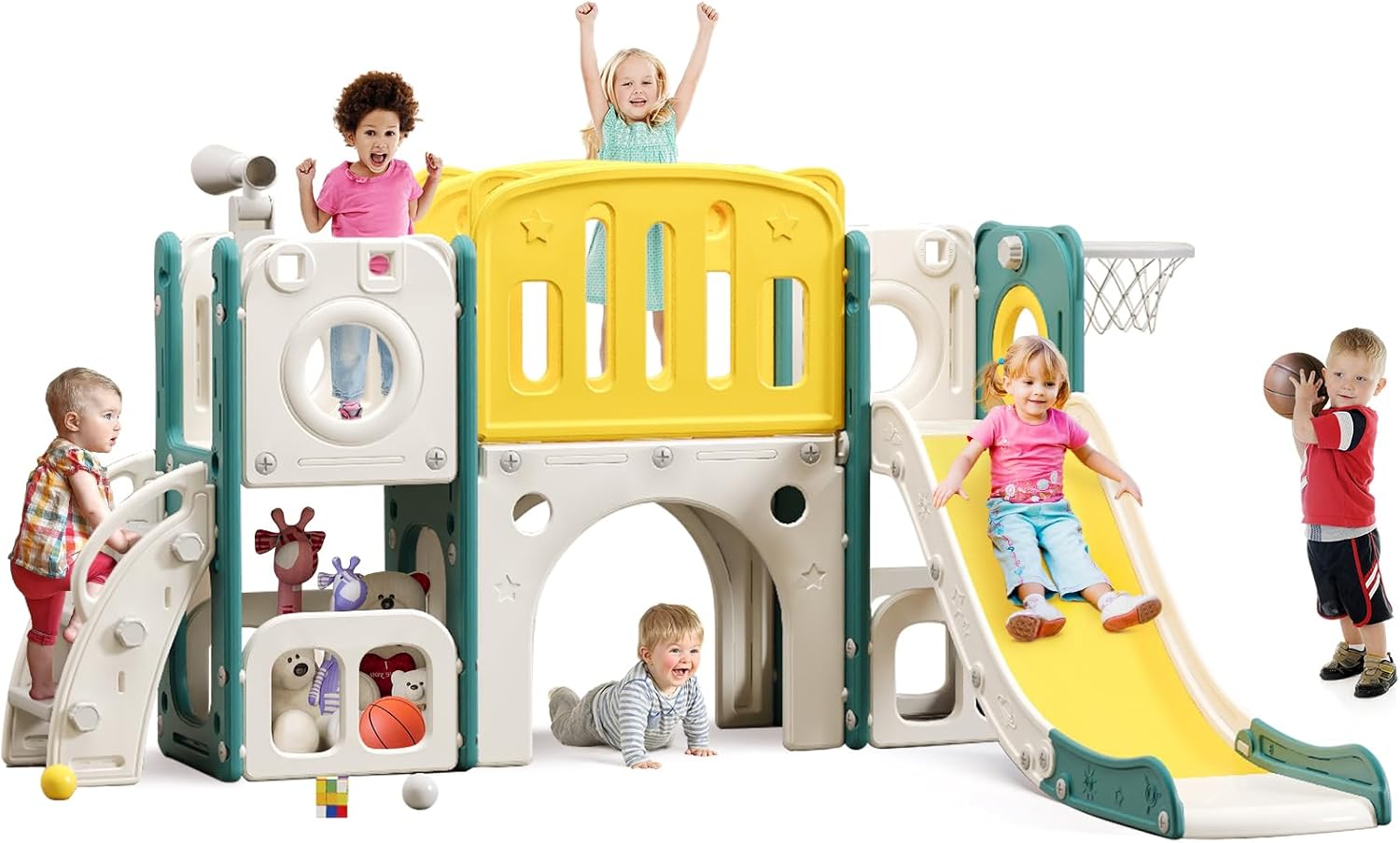
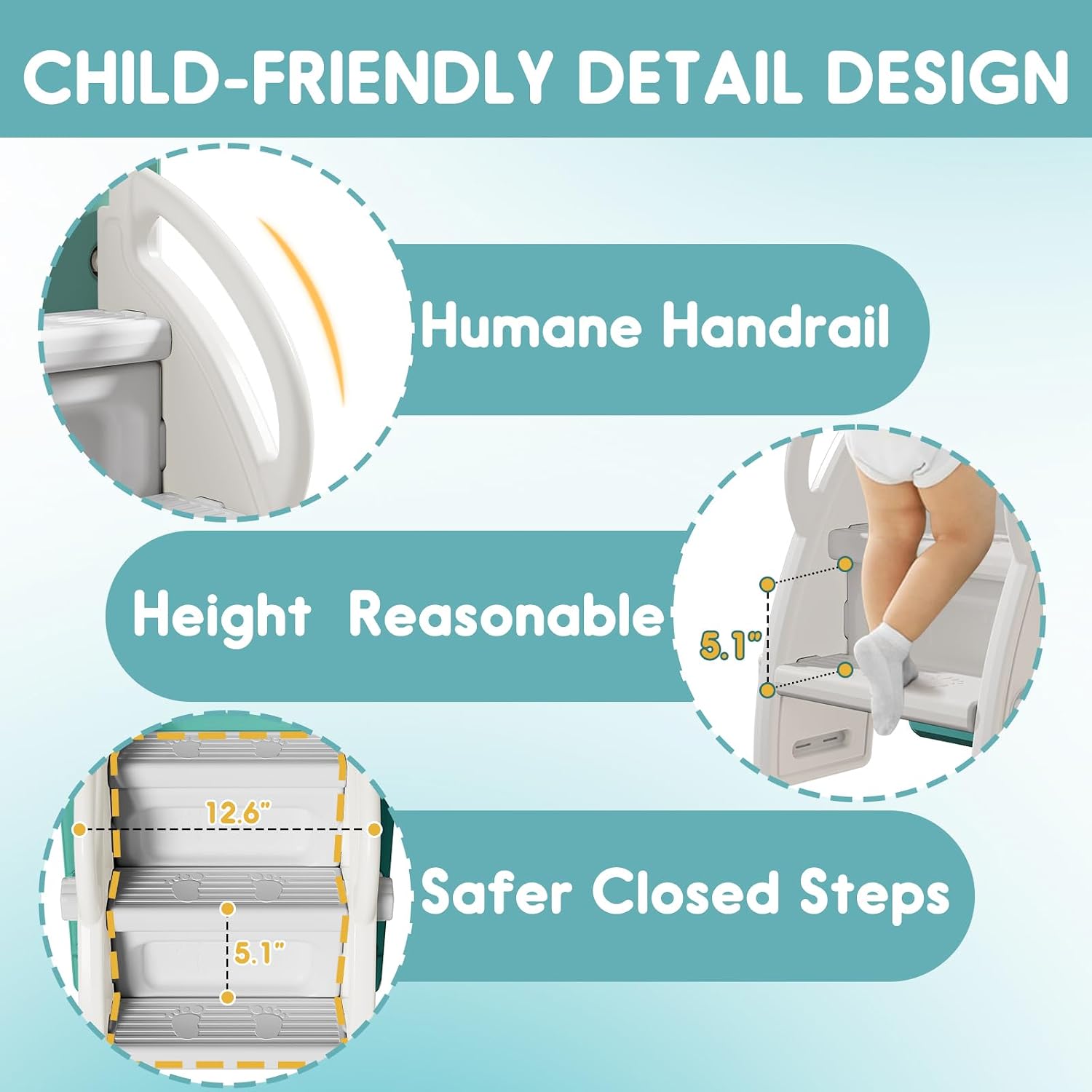
The setup took me about forty minutes with a second adult holding panels, which is worth knowing upfront. Once assembled, the structure is genuinely solid. The ABS plastic panels have a slight texture that small hands grip well, and the metal frame underneath doesn’t wobble or shift when a determined thirty-pound person launches off the platform. The slide is smooth without being terrifying, angled at exactly the pitch that makes a two-year-old feel brave without the parent standing three feet away in a full panic crouch. The basketball hoop, which I assumed would be the forgotten feature by week two, has become the centerpiece of an elaborate game my son invented involving “dunking championships” that somehow also involves the slide.
“Eight activities sounds like a marketing stretch until your kid cycles through all of them in a single hour and comes back for more.”
The honest detail: the activity variety is real, not padded. Climbing wall, slide, basketball hoop, crawl tunnel, steering wheel, and several ladder configurations give kids genuinely different physical challenges rather than six versions of the same motion. That said, the steering wheel and some of the smaller sensory features are most engaging for the younger end of the age range. By four and a half, my son had mentally filed those as “baby stuff” and was primarily using the climbing and hoop elements. Gross motor development in early childhood tends to move faster than we expect, which is actually part of why this toddler climber and slide holds its value across the full 2–5 window rather than aging out quickly.
The Real-Life Scenarios I Used It In
Scenario 1: Sunday Morning, Pajamas Still On
This is the scenario I didn’t know I needed. Sunday mornings in our house have a particular texture: both kids are up by 6:15, no one is ready to go anywhere, and the energy in the room is already vibrating at a frequency that suggests something will get knocked over within the hour. Wren padded into the playroom in her fleece footed pajamas, walked directly to the climber, and started ascending the ladder without breaking eye contact with me. **She did this for twenty-five minutes straight**, which is approximately the same amount of time I needed to drink one full cup of coffee while it was still hot. That alone made the purchase feel justified.
Scenario 2: Tuesday After Preschool Pickup
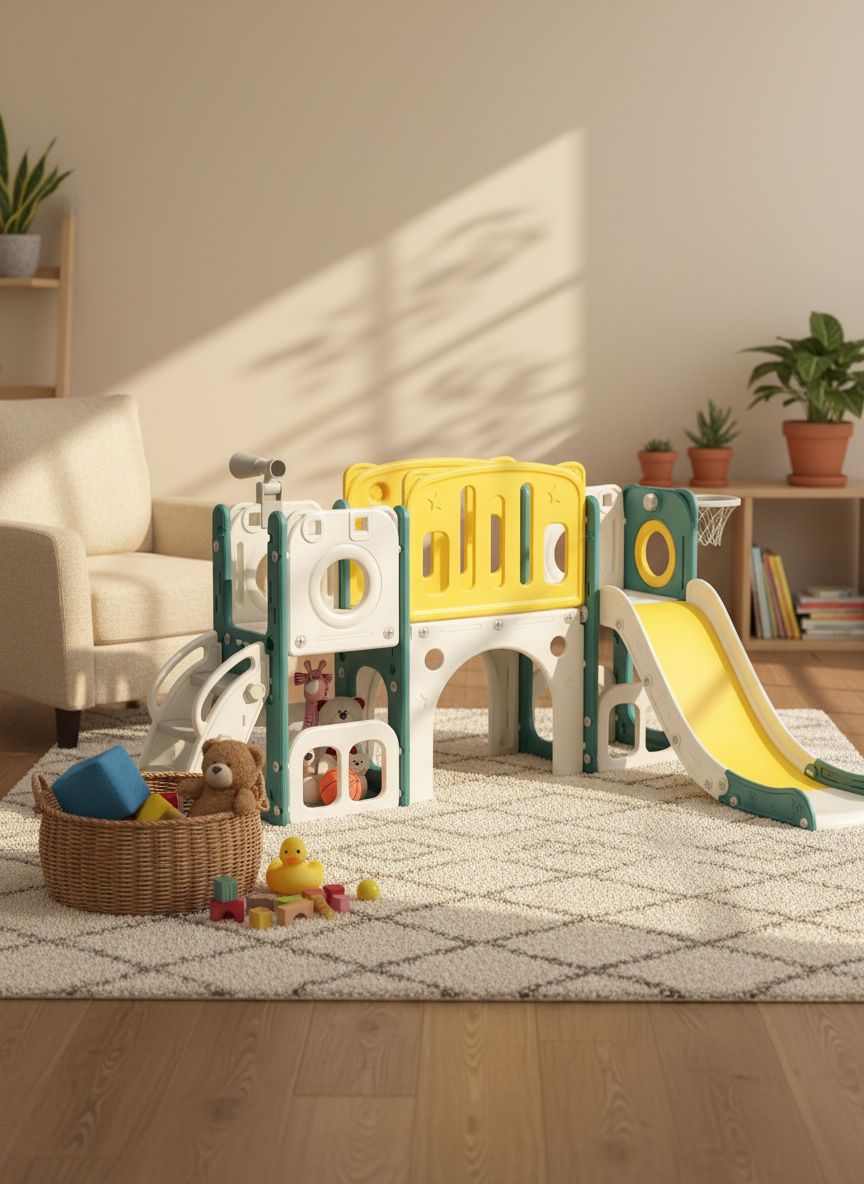
The post-preschool window is its own particular challenge, the hour between 3:30 and 4:30 when everyone is tired, overstimulated, and weirdly not ready to stop moving. I used to default to outdoor time, but our winters make that genuinely unpleasant for weeks at a stretch. Having an indoor-outdoor toddler activity gym that functions as a legitimate movement outlet changed that window for us. My son would come in, drop his backpack, and be on the slide within four minutes. Wren would follow. The physical exertion seemed to actually help them wind down faster than screen time ever did, which surprised me more than I expected it to.
Scenario 3: The Grandparent Visit Weekend
My in-laws visited for a long weekend in March, and I will say without hesitation that **the basketball hoop became the unlikely star of the entire trip**. My father-in-law spent an entire Saturday afternoon running “hoop competitions” with both kids, adjusting the height, narrating imaginary sportscasts, and generally having more fun than I expected a sixty-three-year-old man to have with a toddler playset. There is something about the multi-activity format that invites adults to participate rather than just supervise, which shifts the whole dynamic of the play session. The climber became a prop in at least four different games that weekend that I did not invent and could not have predicted.
What Other Parents Are Saying
This product is relatively new to market, and the review pool is still building, which means the sample size is small enough that I’d treat the current aggregate with appropriate caution rather than as a settled consensus. What I can say is that the pattern in existing feedback mirrors my own experience: the build quality and sturdiness come up repeatedly, and so does the versatility across the toddler age range. A few reviewers note that assembly is a two-person job, which tracks exactly with my experience.
The 4.1 rating across a small number of reviews suggests real satisfaction without the suspicious uniformity of review-stuffed listings, which I find more trustworthy than a perfect score. For context on how to read toddler play equipment reviews, Consumer Reports’ guide to evaluating children’s product ratings is worth a skim before any larger play equipment purchase.
Who Should Skip It
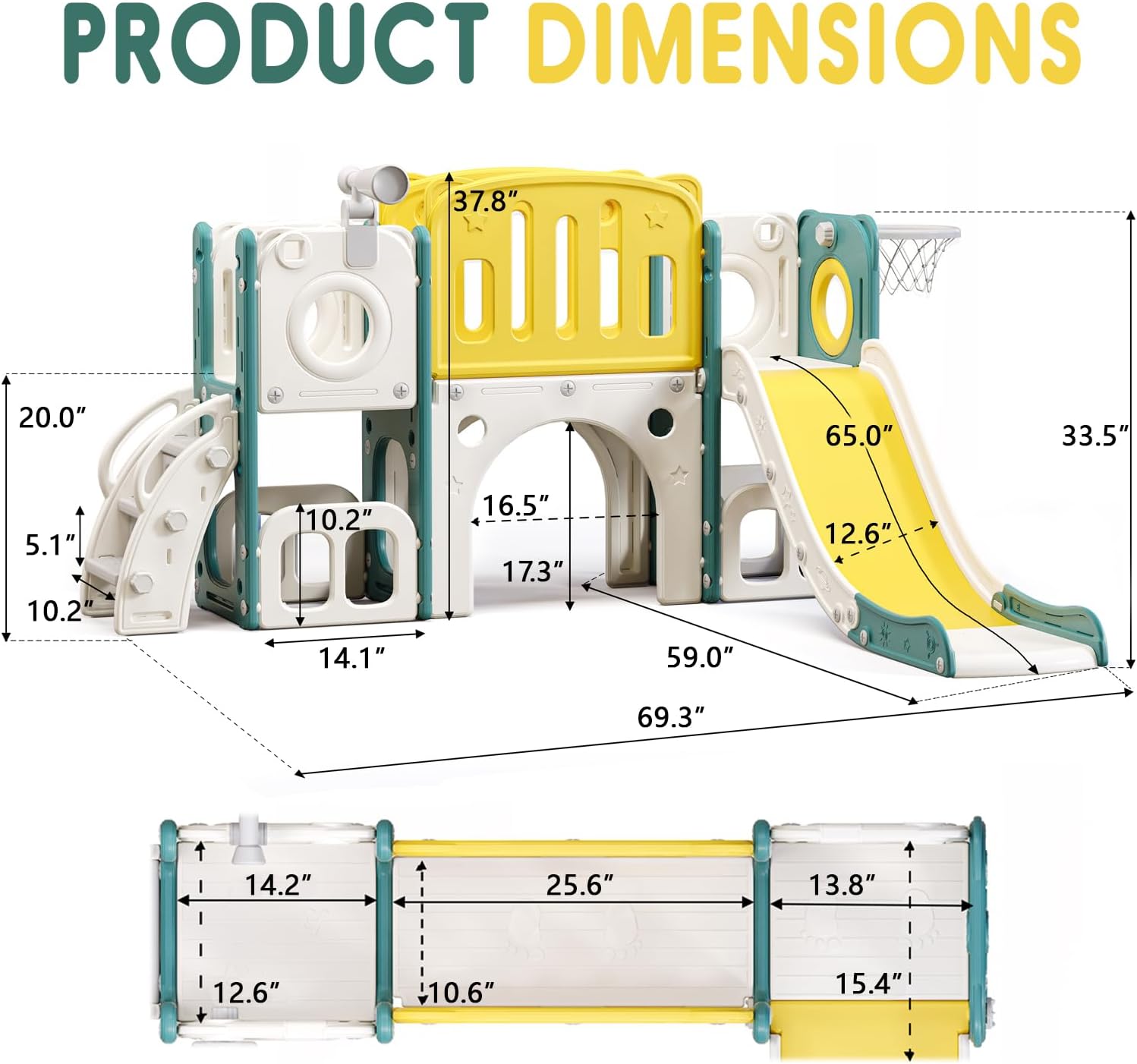
If your child is under two, this is not the right fit. The climbing elements require enough coordination and body awareness that younger toddlers will need constant hands-on assistance, which defeats some of the independence this setup is designed to encourage. **Kids who are sensitive to visual stimulation may find the primary color scheme and busy design overwhelming** in a smaller space, and if your playroom or living area is already working hard, the footprint is real enough that you’ll want to measure before ordering. I’d also flag this for households with very small apartments where “indoor/outdoor” leans heavily toward outdoor use: this is a substantial structure that benefits from room around it, not just floor space under it.
One practical note for parents of children under three: while the product has no traditional small-parts choking hazard, the assembly requires ensuring all bolts and connectors are properly secured before each use season. This is a standard precaution for any gross motor play equipment recommended by the AAP for toddler development, and the MOCUTEEN instructions are clear about the checking process.
What It Replaces (or Complements) at Home
We retired a foam balance beam set and a standalone mini slide that had been taking up corner real estate in our playroom for almost a year. Both were fine for what they were, but they were also separate pieces that required separate setup and separate storage negotiations. **The 8-in-1 toddler learning and movement gym consolidated about six different “physical play” items into one anchored structure** that doesn’t migrate across the room or get kicked under the couch. If you’re in the market for the best indoor climber for toddlers ages 2 to 5 and you’re starting from zero, this functions as a complete gross motor station rather than a supplement to something else.
It also pairs naturally with softer flooring elements. We added a foam mat underneath for landing softness, which I’d call an unofficial requirement rather than an optional extra. Browse our toddler learning toys and active play picks if you’re building out a full indoor play setup, and check our editor’s curated gift ideas if this is landing on a birthday list and you want to round out the occasion with something smaller alongside it.
FAQ
Is the MOCUTEEN 8-in-1 Toddler Climber and Slide actually safe for two-year-olds?
Yes, with appropriate supervision and proper installation on a stable, flat surface. The age range of 2–5 is accurate for this particular structure’s height and activity complexity, though younger two-year-olds will benefit from an adult nearby for the first several weeks of use.
Does the plastic hold up outdoors, or is it really an indoor toy?
The ABS plastic and metal frame handle outdoor use in fair weather well, but like most play structures in this category, prolonged UV exposure and wet conditions will shorten the lifespan of the finish over years of outdoor-primary use. Most families I’ve spoken with use it indoors primarily and move it outside for warm-weather months.
Will my toddler actually use this past the first month?
In my experience, yes, specifically because the eight activities create enough variety that different developmental stages unlock different elements over time. What my daughter used at twenty-six months and what she gravitates toward at twenty-nine months are already different, which suggests the play value extends well across the 2–5 toddler age range rather than hitting a ceiling early.
Is this toddler indoor playground gym worth the investment?
Given that it replaces multiple individual pieces of gross motor equipment and covers the full 2–5 toddler developmental window, the value reads meaningfully above what you’d expect from a single-activity equivalent. It’s also the kind of piece that can be handed down to a younger sibling or cousin in good condition, which stretches the per-use cost further than the initial price point suggests.
Is this a good birthday gift if I don’t know the family’s space situation?
It’s a centerpiece gift rather than a casual add-on, which means it’s most appropriate when you have reasonable confidence the family has the indoor or outdoor footprint for it. For a more flexible gifting approach, pair a heads-up conversation with the order, or explore our full toddler play recommendations for slightly more compact alternatives in the same developmental category.
The Verdict
Six months from now, I can picture Wren, almost three, running her own “basketball championships” the way her brother does now. I can picture the structure still anchored in the same corner, the foam mat still slightly askew underneath it, the slide still producing the same triumphant squeal it produced the first weekend. **This MOCUTEEN 8-in-1 toddler climber and slide review for ages 2 to 5 comes down to one honest conclusion: it earns its square footage.** It’s not a decorative object, and it’s not subtle, but it delivers consistent, independent, physically engaging play across years rather than weeks. For families looking for the best indoor-outdoor toddler climber with real developmental staying power, this hits. For a quick cross-reference on age-appropriate gross motor play, the Montessori approach to movement-rich environments aligns closely with exactly what this structure encourages. See the full toddler category for how it fits into a broader play rotation at this stage.
For any toddler between two and five who has more energy than your furniture can handle, this is the structure that finally gives that energy somewhere worthy to go.
Every Angle
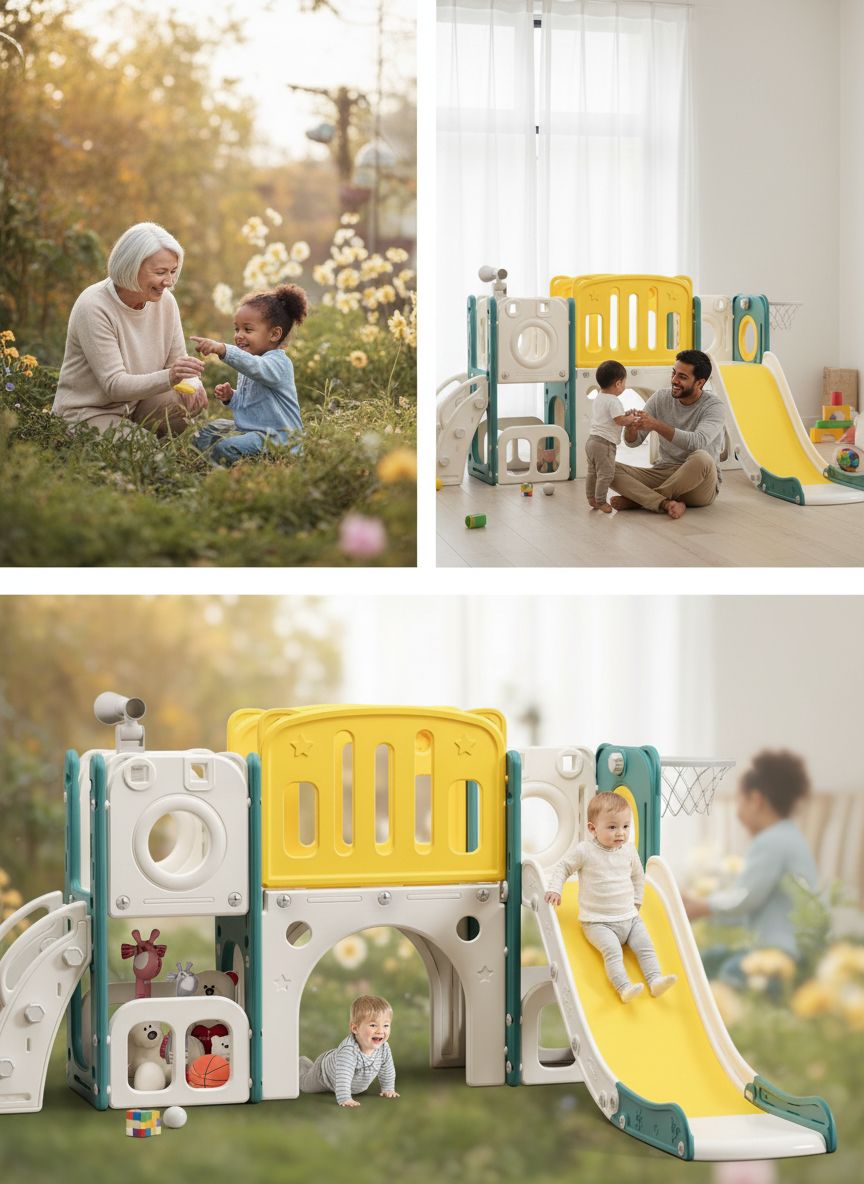
The product as photographed for Amazon — front, side, detail, in use.

As an Amazon Associate I earn from qualifying purchases.